


Pair Art Pottery Vases
Pair art pottery vases bring together matched ceramic forms and expressive surface decoration, sought after for symmetry and period character.
Pair Art Pottery Vases
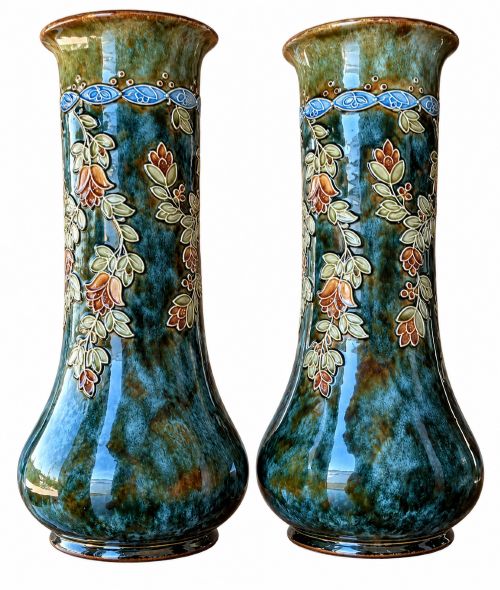
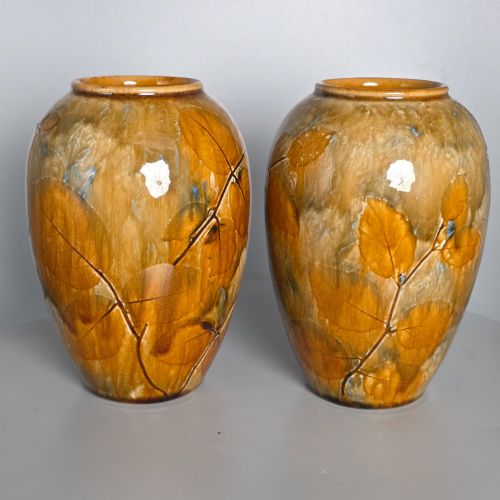
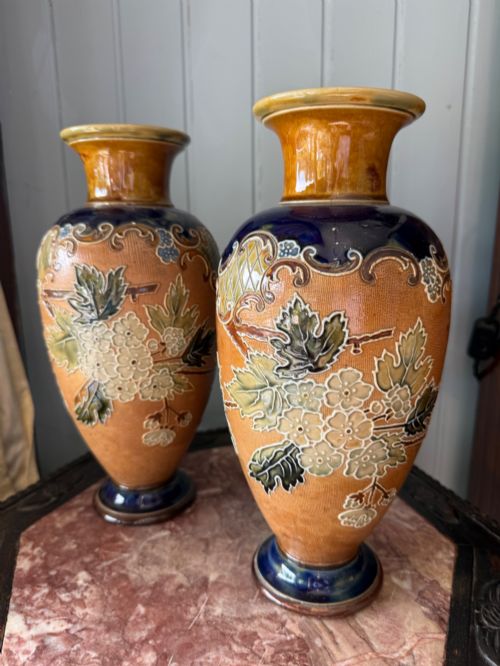
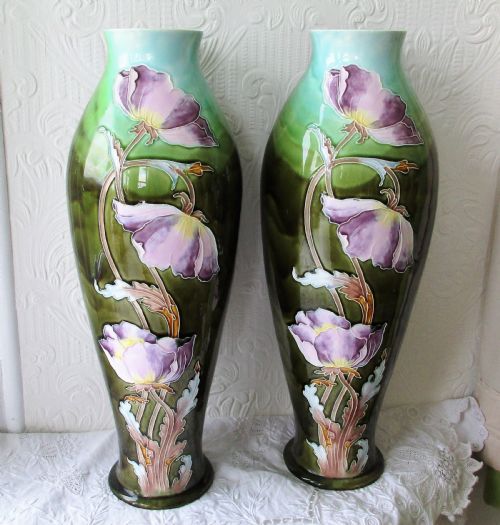
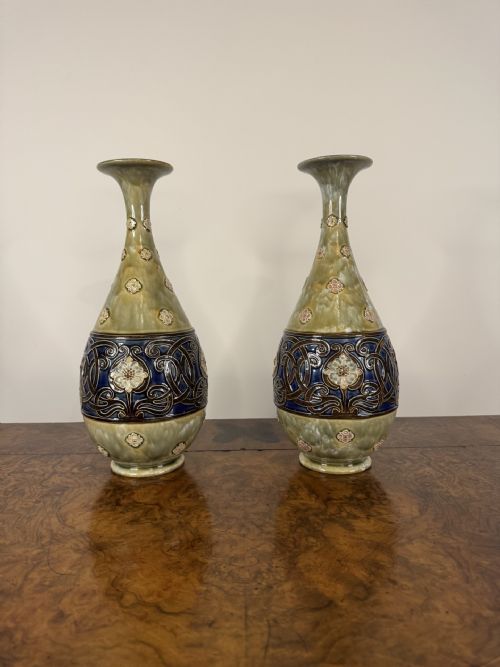
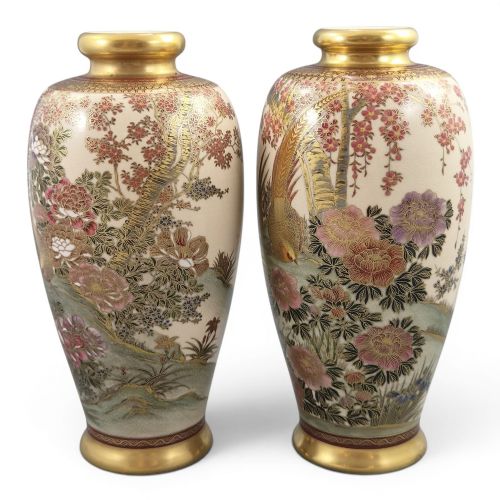
A pair art pottery vases selection comprises matched pairs of decorative vessels produced during the late nineteenth and early twentieth centuries. These objects reflect various stylistic movements including Art Nouveau, Arts and Crafts, and Art Deco, spanning periods from the Victorian era to the nineteen thirties. Buyers encounter works from British potteries like Royal Doulton alongside continental and Japanese examples.
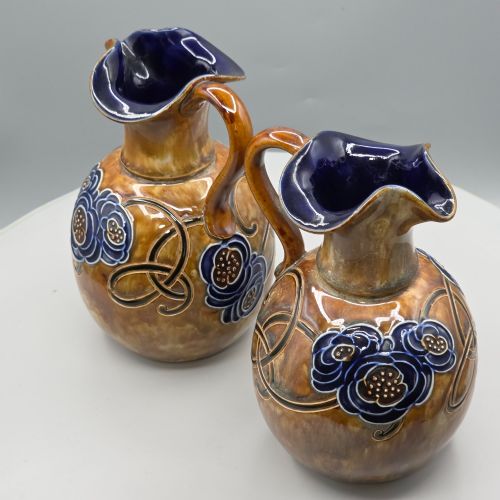
Forms range from baluster vases and jugs to ewers and bottle vases, intended for domestic display and interior ornamentation. The listings demonstrate a strong presence of stoneware and earthenware production, often created in matched sets for symmetrical placement on mantelpieces or tables. Many items combine utilitarian origins with ambitious artistic glazing and hand painting.
How they were made
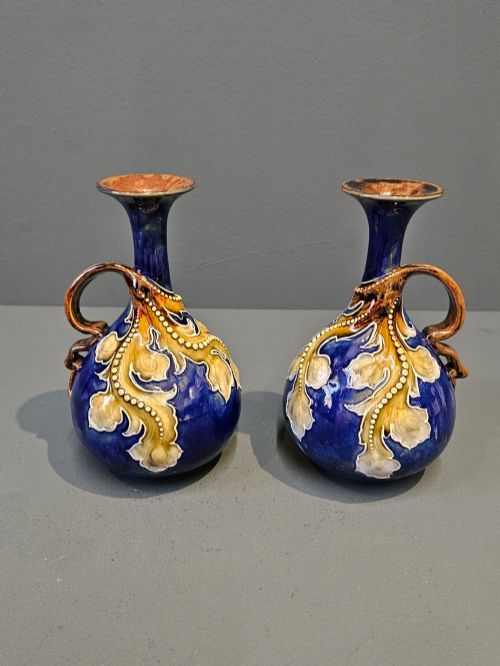
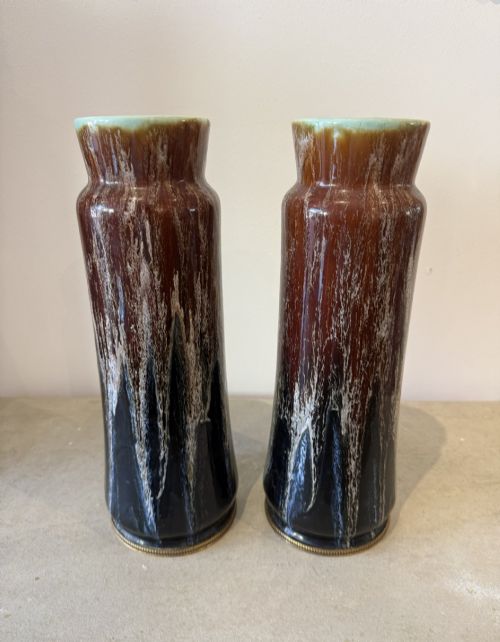
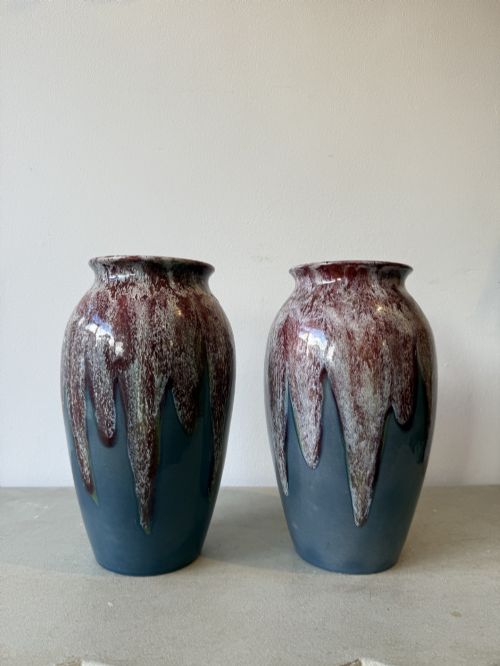
Potters utilised stoneware and earthenware bodies, shaping them on the wheel or moulding them into specific baluster and jug forms. Glaze application was central to the process, ranging from lustrous metallic finishes to rich autumnal tones and intricate enamel detailing. Surface decoration frequently involved hand painted motifs, incised patterns, and specialised techniques such as Moriage or tube lining.
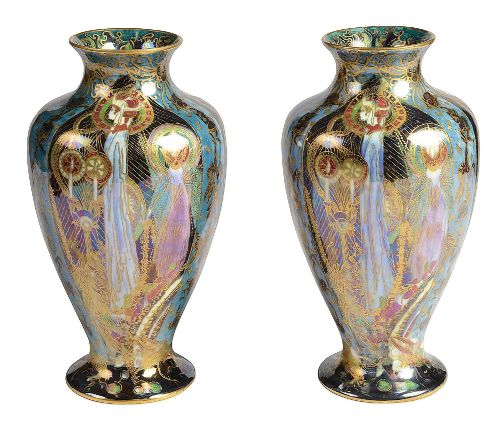
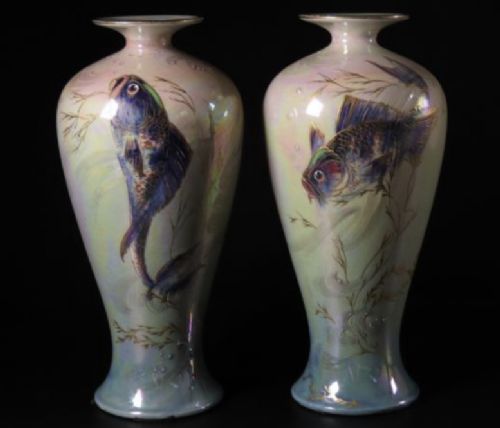
Kiln firing transformed these ceramic bodies, where controlled temperatures interacted with metallic oxides in the glazes to produce distinctive colour variations. Workshops applied gold leaf and specialised lustre finishes to select pieces after initial firings, achieving the iridescent surfaces seen in various Lustre and Fairyland designs.
Listings feature items spanning the Victorian era through the nineteen thirties, with significant representation from nineteen ten.
What varies in quality
The distinction between standard production items and superior examples lies in the ambition of the design and the precision of the hand decoration. Pieces painted or incised by named artists command greater attention due to the individual artistic input recorded on the ceramic body. Crispness in moulded relief work and depth within the glaze layers separate basic utilitarian items from high decorative art pottery.
Preservation of delicate elements such as enamel floral decor, gold leaf details, and lustre finishes dictates overall integrity. The uniformity of the matched pair also influences desirability, as true pairs maintain identical proportions and balanced decorative application across both vessels.
Royal Doulton·Wedgwood·Boch Freres·Shelley·Mettlach·Minton·Bretby·Poole Pottery·Moorcroft·Pilkingtons
The Pair Art Pottery Vases Glossary
- Stoneware
- A type of pottery fired at high temperatures until vitrified and impermeable to water. It provides a durable body suited for the heavy incised decoration seen in nineteenth century British workshops.
- Lustre
- A ceramic glaze containing metallic elements that produce an iridescent sheen upon firing. This technique creates shimmering surface effects found on decorative pieces from the early twentieth century.
- Baluster
- A vertical architectural form featuring a rounded lower body tapering to a narrow neck. This shape serves as a common structural profile for symmetrical pairs of decorative vessels.
- Faience
- Earthenware decorated with opaque coloured glazes, often associated with continental European workshops. It allows for vibrant pictorial and abstract surface designs.
- Earthenware
- Porous pottery fired at lower temperatures than stoneware, requiring a glazed surface to hold liquids. It forms the foundation for many painted Art Nouveau and Arts and Crafts ceramic objects.
Pair Art Pottery Vases: Frequently Asked Questions
Were these vessels used for flowers?
Many of these vessels were designed primarily as decorative objects for domestic interiors rather than utilitarian flower holders. Their intricate painted surfaces and delicate lustre finishes made them centerpieces for display on mantelpieces and cabinets.
Some larger forms, particularly jugs and ewers, retained a functional capacity while still functioning as ornamental art pottery within the home.
How can I tell a true pair apart from assembled ones?
A true pair displays consistent dimensions, identical clay bodies, and corresponding hand painted or incised decorative motifs executed by the same hand or workshop. The numbering or signatures on the bases often align sequentially or share matching artisan ciphers.
Assembled pairs may exhibit subtle variations in glaze tone, height, or the application of surface enamels due to being produced at different times or in separate kiln batches.
What is the difference between stoneware and earthenware?
Stoneware is fired at significantly higher temperatures, resulting in a dense, vitrified body that is naturally waterproof and highly durable. Earthenware remains more porous and requires a complete glaze layer to hold liquids, though it allows for bright surface colours.
British and continental art potteries utilised both mediums depending on the desired aesthetic and the specific decorative techniques employed by the workshop.