
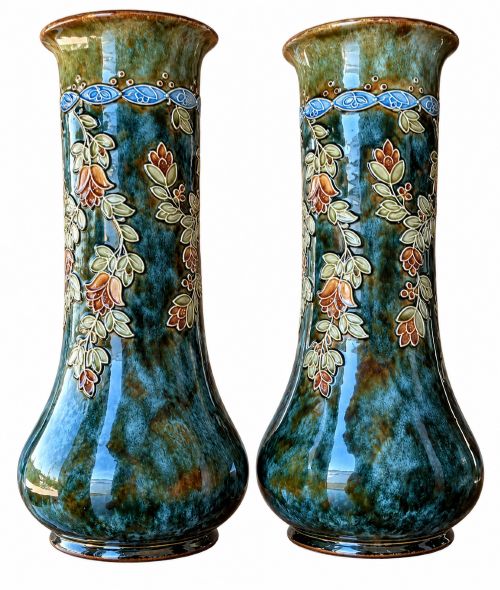
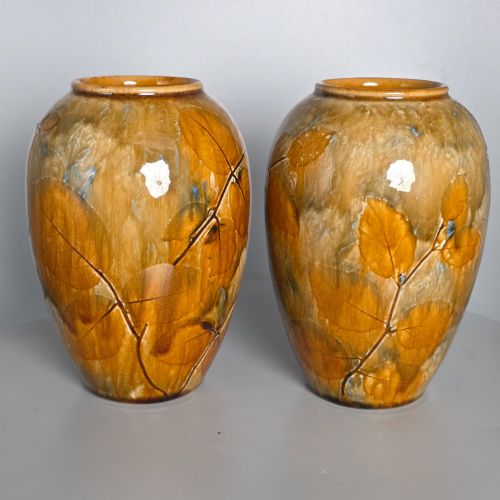
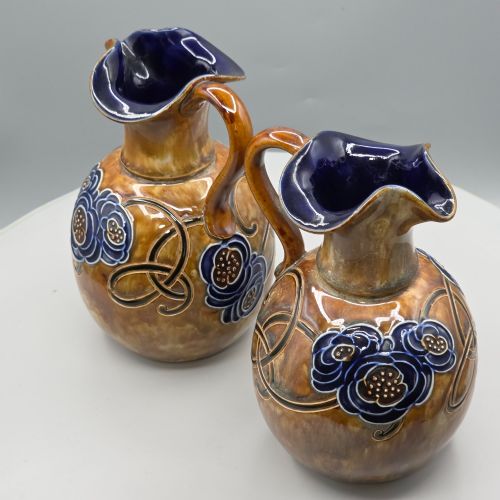
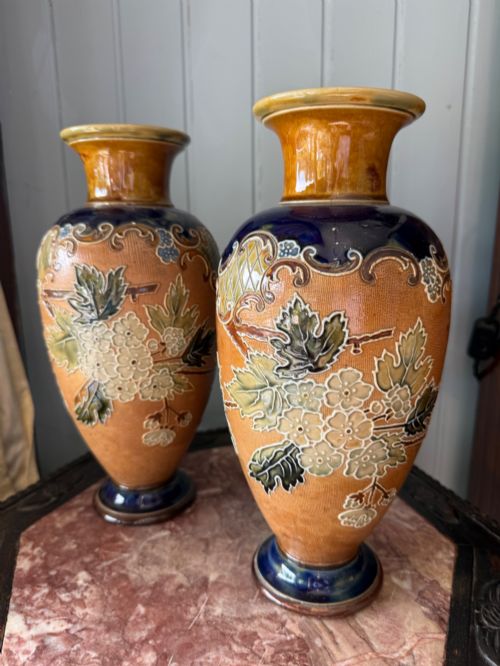


Glazed Stoneware Vases Pair
These glazed stoneware vases pair selections bring robust studio pottery and balanced symmetry into a room through enduring nineteenth and early twentieth century forms.
Glazed Stoneware Vases Pair
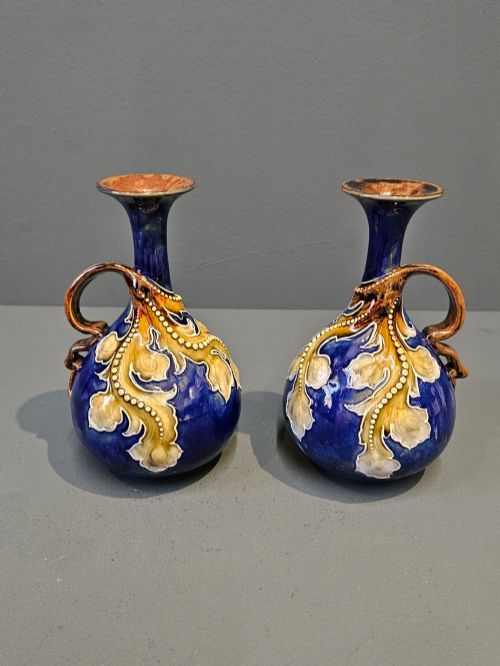
When you search for a glazed stoneware vases pair, you encounter balanced sets originating predominantly from the Victorian, Edwardian, and Art Nouveau eras. The selection here leans heavily towards robust British production, most notably factory work from Lambeth, alongside continental and Chinese examples.
The objects take the form of baluster vessels, jugs, ewers, and globular containers designed to function as symmetrical decorative accents. These pairs showcase coordinated surface decoration, matching proportions, and identical maker markings that confirm their joint origins.
How they were made
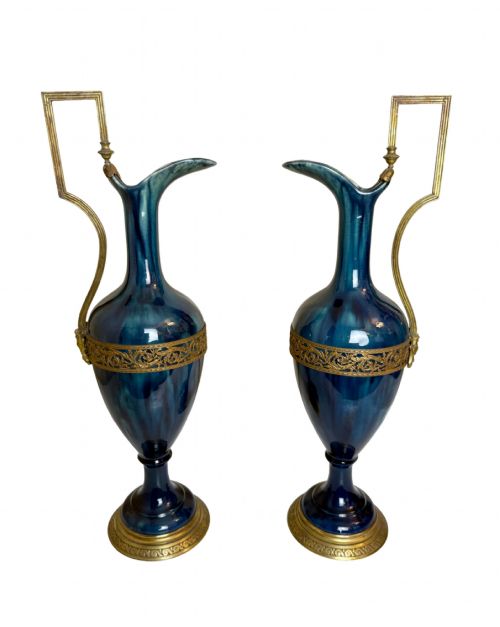
Potters shaped these heavy-bodied vessels on the wheel or in moulds using dense clay bodies that fired at high temperatures to achieve vitrification. This dense ceramic substance received hand-applied glazes, enamel details, and sometimes gilt bronze trim.
Makers utilised incised, slip-trailed, and embossed decorative techniques while the clay remained leather-hard before firing the pieces to fix the vitreous surfaces.
The listings here feature stoneware, porcelain, and ceramic materials produced across the Victorian and Arts and Crafts periods.
What varies in quality
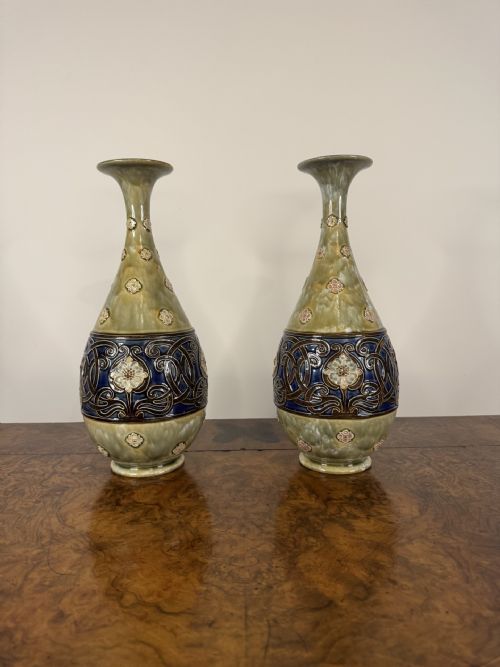
The distinction between standard production and top-tier examples rests upon the crispness of the hand-incised ornament and the control of the glaze reactions. Named artist decorators achieved a level of depth and botanical precision that generic workshop output lacks.
Balanced proportions and a successful matching of the pair during the kiln firing process determine the visual harmony of the set. Heavier potting and sophisticated enamel layering elevate specific baluster and globular forms above simple utilitarian vessels.
Royal Doulton·Doulton Lambeth·Mettlach Pottery·Louisa Wakely·Emily Edwards·Ethel Beard
The Glazed Stoneware Vases Pair Glossary
- Stoneware
- A dense, vitreous ceramic fired at high temperatures until the body becomes impermeable to liquids even without glaze. It provides a robust foundation for heavy decorative vessels.
- Baluster
- A vertical vessel form featuring a rounded body that tapers toward a narrow neck and flares at the rim. This traditional silhouette offers stability and ample surface area for ornament.
- Glaze
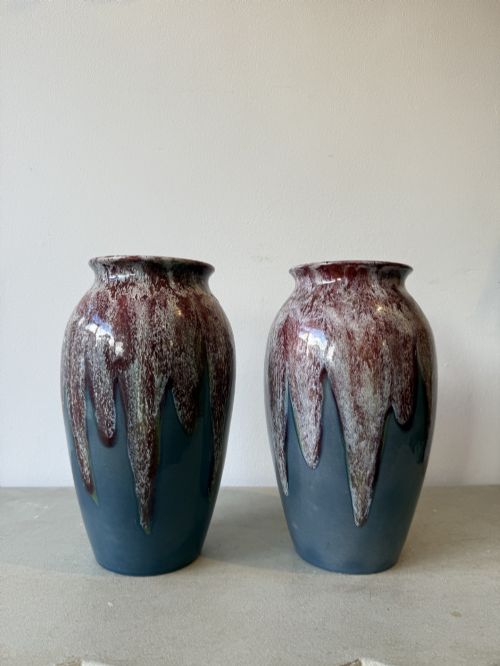
- A glassy coating fused to the ceramic body through heat to provide colour, texture, and a protective seal. Variations in the chemical composition create matte, glossy, or mottled finishes.
- Ewer
- A large jug with a wide spout and an elevated handle, originally designed for pouring water. In decorative contexts, it serves as an ornamental vase pair component.
- Gilt Bronze
- Metal mounts plated with a thin layer of gold to accent ceramic rims and bases. This decorative addition appears on select continental and porcelain vessels.
Glazed Stoneware Vases Pair: Frequently Asked Questions
How do I display a pair of vases?
Place them symmetrically on a mantelpiece, sideboard, or console table to create visual balance in a room. Their matching profiles work best when given enough space to be viewed as a unified composition.
Ensure the surface supports their substantial weight safely. Keep them away from heavy foot traffic areas where the edges might suffer accidental impacts.
What periods do these pieces represent?
The items span from the late nineteenth century through the early decades of the twentieth century. Victorian, Edwardian, and Art Nouveau aesthetics dominate the selection.
Stylistic shifts appear in the transition from floral Victorian motifs to organic, flowing Art Nouveau designs. Maker marks and registration numbers help date individual examples more precisely.
Are these vases waterproof?
The dense stoneware body and interior glaze make most of these vessels naturally water-resistant. They function securely for holding fresh floral arrangements.
Dry dusting with a soft cloth remains the safest method for routine maintenance. Avoid submerging antique pieces with delicate enamel or gilt bronze mounts in water.
How are matched pairs identified?
Matched pairs share identical dimensions, clay bodies, and corresponding artist monograms or factory stamps. Their decorative motifs mirror each other rather than duplicating precisely.
Slight variations in the glaze finish often confirm hand-thrown production. The factory numbers on the base frequently sit in close numerical sequence.