
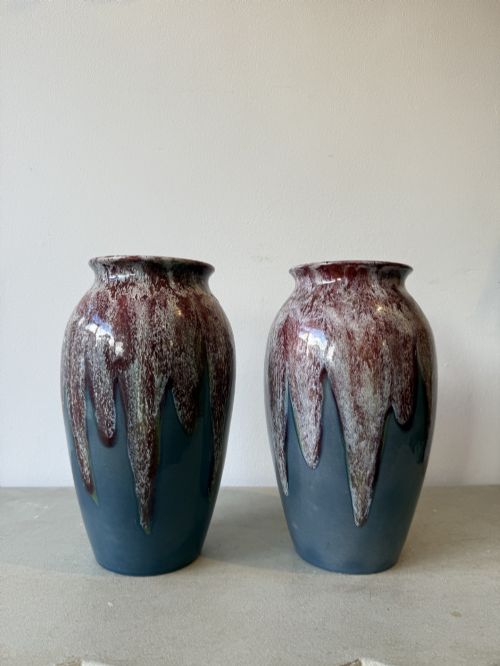


Decorative Pottery Table Vases
These decorative pottery table vases bring hand-painted motifs, rich glazes and distinct period character directly to a room.
Decorative Pottery Table Vases
Decorative pottery table vases span multiple decades and design movements, taking the form of baluster shapes, handled vessels, and converted table lamps. The selection includes British studio pottery alongside Japanese Meiji period wares and Chinese export ceramics.
Makers ranged from large factories like Royal Doulton and Bretby to specialised potteries such as Ruskin and Miles Mason. Buyers encounter both single statement vessels and matching pairs intended for mantelpieces and side tables.
How they were made
Potters shaped earthenware, stoneware, porcelain and ironstone on the wheel or by moulding before applying detailed hand-painted decoration, enamels or transfer prints. Surface finishes relied on specialised techniques such as crystalline glazes, raised paste work and gilt detailing.
Many pieces incorporate textural elements, including bamboo-form handles and textured Slater's patent grounds pressed into the clay body while leather-hard.
Some Victorian potters pressed actual lace directly into soft clay to create textured backgrounds for floral enamel decoration.
What varies in quality
The distinction between ordinary and superior pieces rests on the crispness of the hand-painting, the complexity of the glaze effects, and the ambition of the form. Crystalline glazes and intricate Chinoiserie or floral enamelling demand precise kiln control and skilled brushwork.
Subtlety in the modelled details, such as handles shaped like bamboo or balanced proportions on large baluster bodies, separates standard production items from ambitious studio or factory commissions.
Charlotte Rhead·Kinkozan·Miles Mason·Royal Doulton·Ruskin Pottery
The Decorative Pottery Table Vases Glossary
- Baluster
- A vertical vase form characterised by a rounded lower body that tapers toward the neck. This shape provides a stable base for display on tables.
- Crystalline glaze
- A ceramic finish that allows zinc silicate crystals to grow within the glaze during cooling. This creates star-like patterns across the surface.
- Chinoiserie
- European artistic styles reflecting Chinese motifs and landscapes. This aesthetic appeared frequently on Regency and nineteenth-century ceramics.
- Earthenware
- Porous pottery fired at lower temperatures, requiring an impermeable glaze to hold water. It forms the body for many traditional decorative vessels.
- Stoneware
- Dense, non-porous ceramic fired at high temperatures until vitrified. This durable material suits heavy decorative vases and utilitarian wares alike.
Decorative Pottery Table Vases: Frequently Asked Questions
What periods do these vases cover?
The available selection spans from the nineteenth century through the Art Deco era of the 1930s. Pieces reflect historical revivals and distinct regional movements.
Production dates range across Victorian, Edwardian, Meiji and Qing periods, showing diverse global ceramic traditions.
How were these vases used originally?
These vessels served as ornamental centrepieces on tables, consoles and mantelpieces rather than everyday utility items. Some larger examples were adapted later into table lamps.
Their primary function was displaying floral arrangements or simply showcasing the potter's artistic skill within a furnished interior.
How do I care for antique pottery?
Dust surfaces gently with a soft dry cloth and avoid harsh chemical cleaning agents that might damage delicate enamels or gilding. Keep them away from direct heat sources.
If used for fresh flowers, place a protective liner inside to prevent moisture from seeping into older porous ceramic bodies.
How do I identify different styles?
Study the glaze types, painting subjects and form characteristics to determine the artistic movement. Aesthetic Movement and Arts and Crafts pieces often feature naturalistic motifs.
Asian export wares display specific regional techniques like Satsuma crackle glaze or Famille Rose enamel palettes distinctive to their origin.