
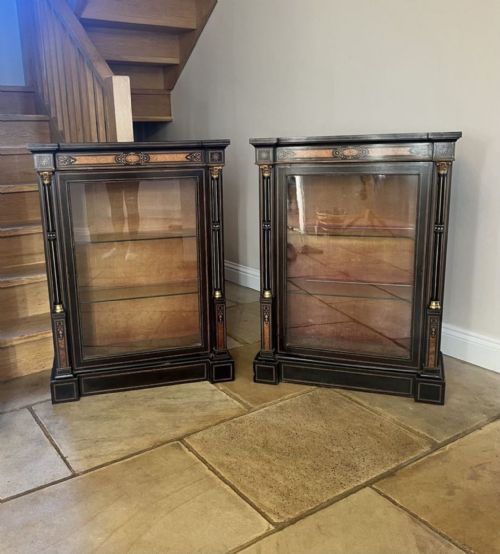


Pair Credenzas
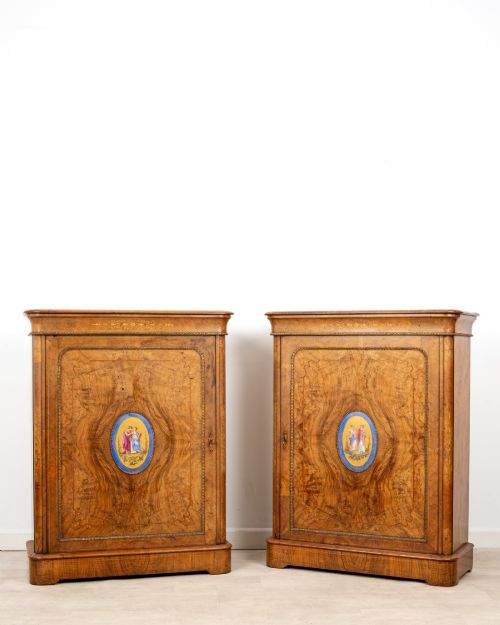
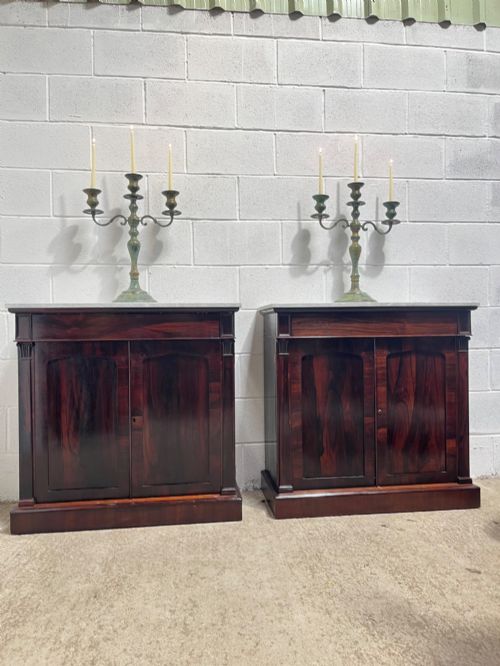
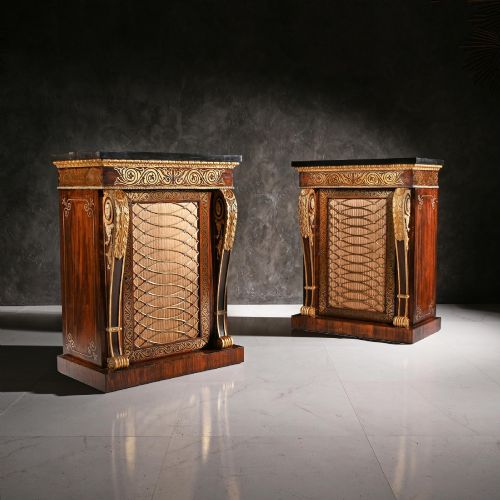
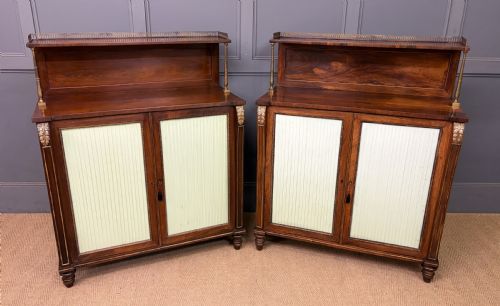
These pair antique credenzas are matched double cabinets built to anchor a formal room with balanced display and concealed storage.
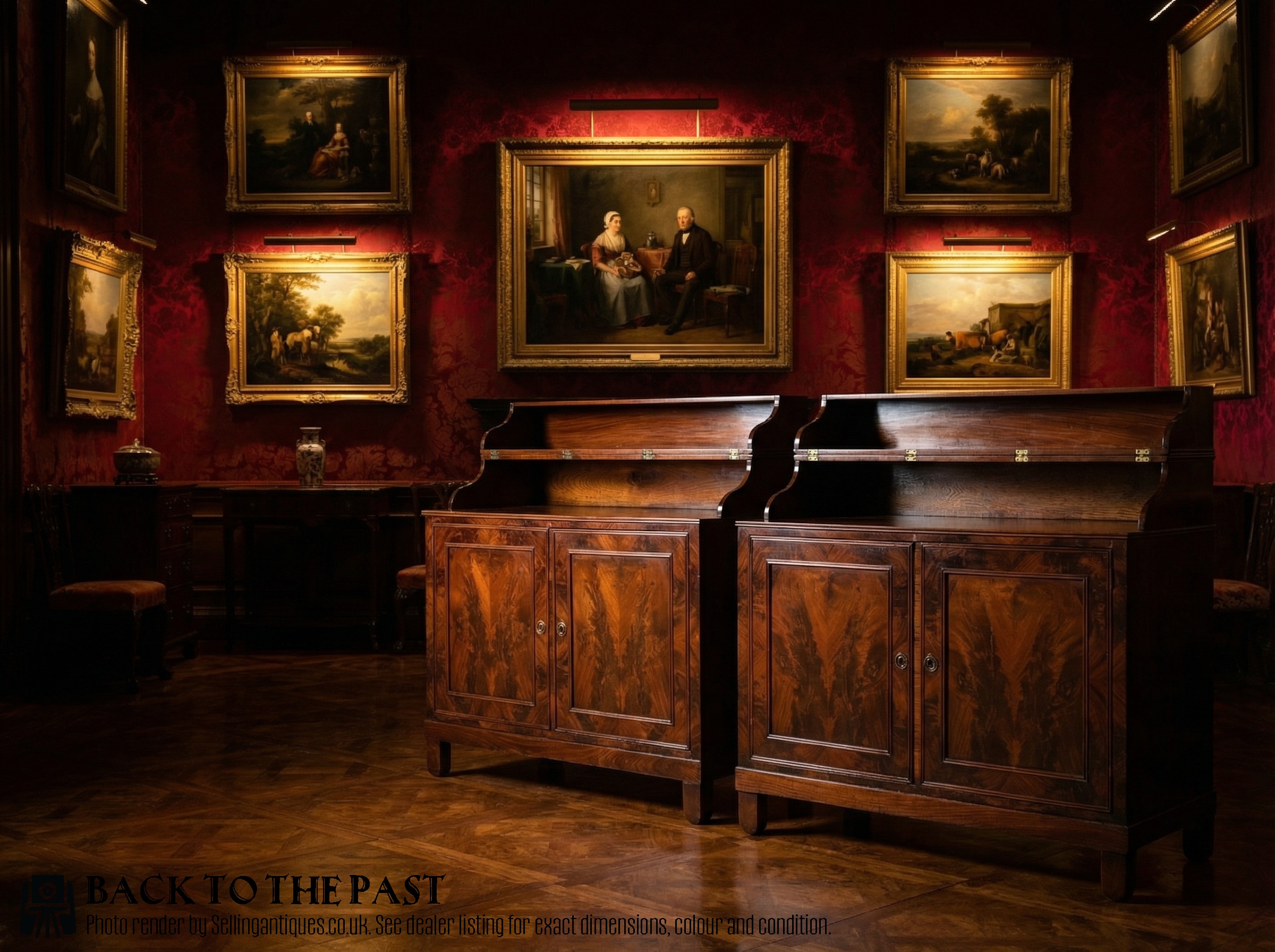
Understanding pair antique credenzas
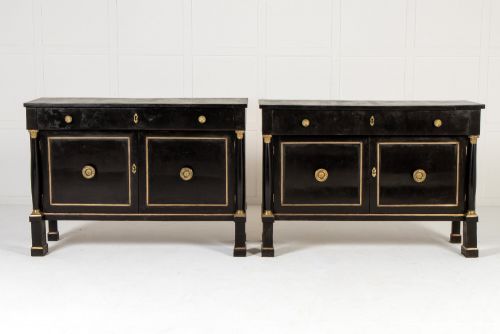
When you search for pair antique credenzas, you are looking at matched sets of large storage furniture designed for grand interiors. The examples available on this page primarily span the nineteenth century, including Victorian, Regency, and Sheraton Revival periods, alongside later twentieth-century interpretations.
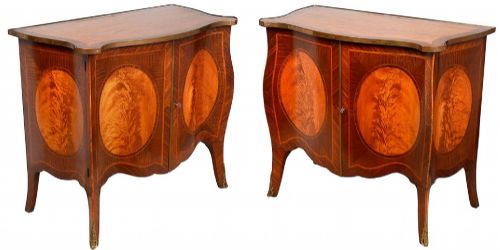
The forms range from breakfront side cabinets and serpentine commodes to pier cabinets and serving cupboards. These dual pieces offer symmetrical styling that nineteenth-century drawing rooms and dining spaces demanded.
Originating largely from British and French workshops, the surviving sets show diverse influences from Louis XVI Revival and Napoleon III design. Buyers meet everything from bowed side cabinets to monumental pietra dura display pieces.
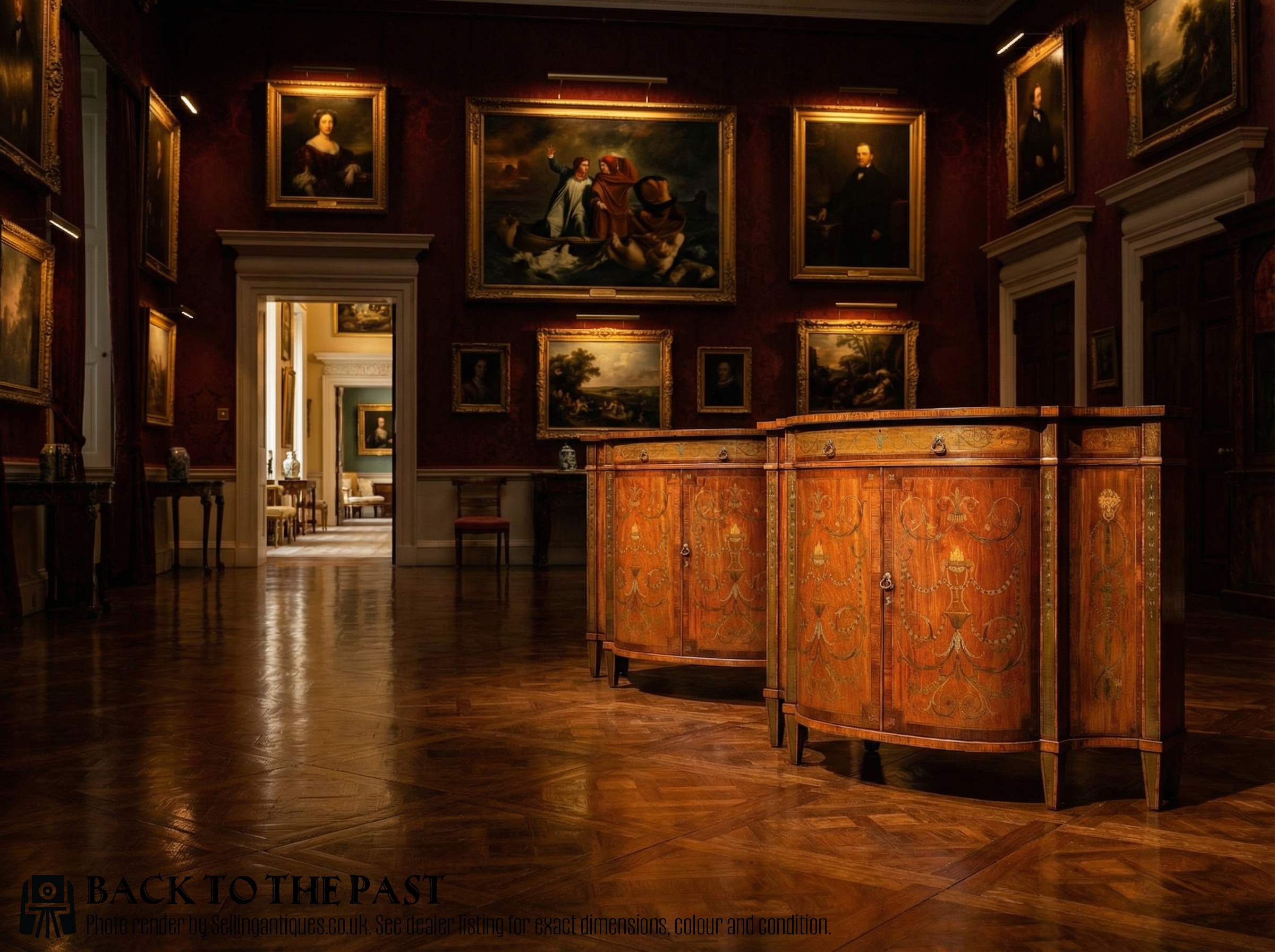
Materials and construction
Cabinet makers utilised dense hardwoods such as mahogany, rosewood, and burr walnut as the foundational structures for these dual cabinets. Satinwood provided pale contrast for inlaid details, while polished marble topped many of the surfaces.
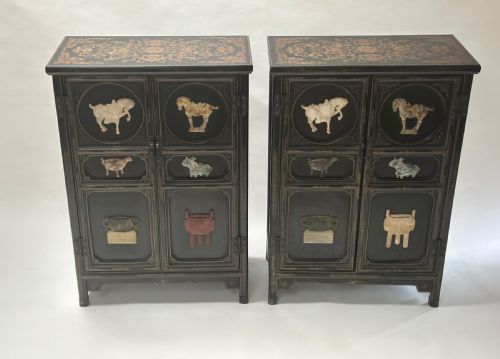
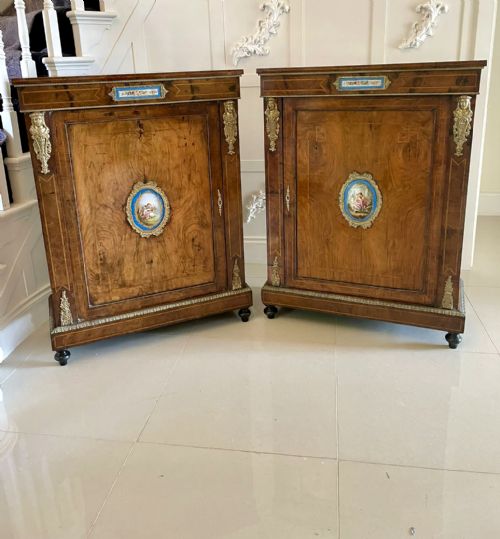
Decorative enrichment relied heavily on cast or chased ormolu and gilt bronze mounts framing doors and corners. Fine brass inlay, porcelain plaques, and hardstone pietra dura panels were meticulously set into the timber surfaces.
Retail Price Guide 2026
Typical UK retail prices for pair credenzas, calculated from the Sellingantiques database of over a million retail prices indexed since 2003. This retail price guide relies exclusively on Sellingantiques data; no external sources or auction records are used, so the figures do not describe the wider market.
The listings show nineteenth-century pieces incorporating diverse materials including burr walnut, marble, porcelain, and pietra dura.
Assessing quality
The distinction between ordinary and exceptional cabinets rests in the depth of timber figure and the precision of the joinery. Burr walnut and rosewood veneers selected for symmetry across both matched units command greater appreciation.
The integration of decorative elements dictates the upper tier of craftsmanship. Hand-chiselled ormolu mounts, finely fitted glass doors, and genuine pietra dura inlay demonstrate superior workshop investment compared to simpler brass stringing.
The Pair Credenzas Glossary
- Credenza
- A sideboard or display cabinet originally used for serving food or holding plate. In nineteenth-century usage, the term often applies to low side cabinets with glass doors.
- Pietra dura
- An artistic technique using cut and fitted polished coloured stones to create intricate pictorial designs. It appears on elite nineteenth-century cabinet doors and panels.
- Ormolu
- Gilded bronze used for decorative mounts and feet on fine furniture. The best examples feature sharp hand-chasing after casting.
- Breakfront
- A piece of furniture whose central section projects forward from the flanking sides. This architectural shaping creates depth and shadow on large wall units.
- Pier cabinet
- A narrow cabinet designed specifically to stand against the wall space between windows. These glazed pieces often formed matched pairs in Victorian drawing rooms.
Frequently Asked Questions
What is a pair of credenzas?
A pair of credenzas consists of two matching low cabinets designed to provide symmetrical storage and display surface in a room.
Historically placed against grand walls or flanking a fireplace, matched pairs allowed nineteenth-century decorators to balance large formal spaces.
How were antique credenzas used?
These cabinets served to store dining silver, porcelain, and linens while offering a flat surface for serving or display.
With the rise of glazed doors in the Victorian period, they also functioned as vitrines for showing off decorative objects and collections.
How do I date a credenza?
Dating relies on identifying the prevailing revival style, the timber species used, and the construction techniques visible inside.
Nineteenth-century pieces often combine period revival motifs like Sheraton or Louis XVI with construction methods specific to Victorian workshops.
Are matched pairs rare?
Finding two identical large cabinets that have survived together through centuries is significantly harder than finding single pieces.
Many credenzas were built as pairs for specific commission, making surviving sets desirable for balanced interior schemes.