



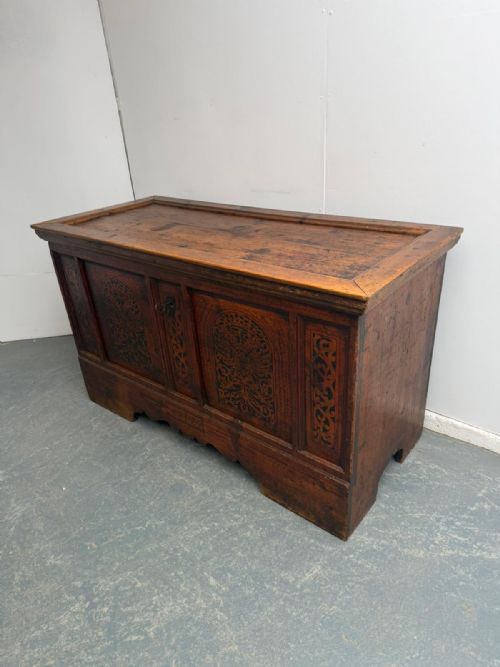
Painted Wooden Blanket Coffer
These painted wooden blanket coffer examples offer practical storage wrapped in folk tradition, originating across European regions from the eighteenth century onward.
Painted Wooden Blanket Coffer
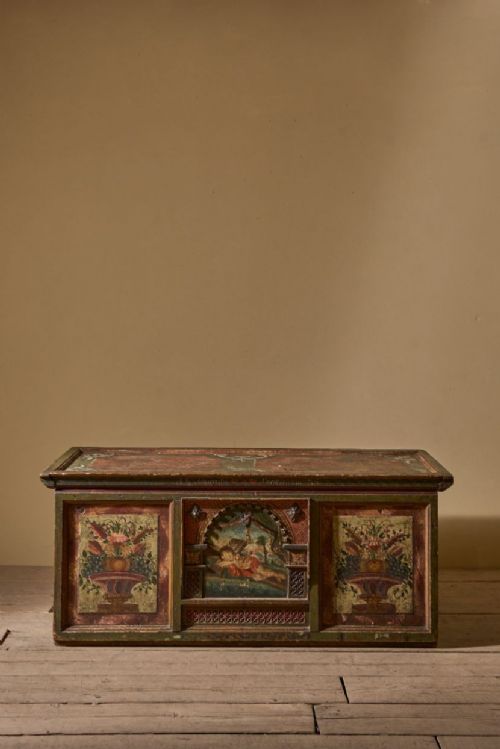
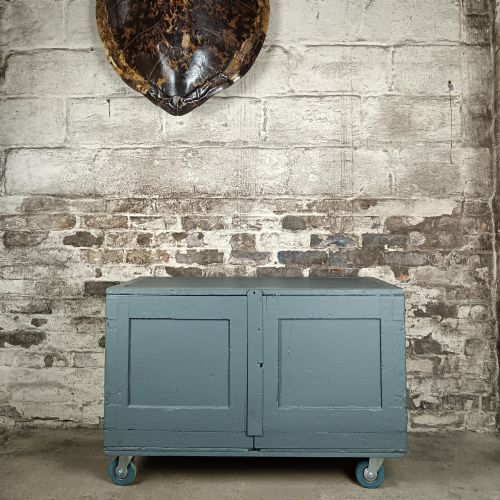
A painted wooden blanket coffer serves as a traditional storage container for textiles and household goods, appearing frequently across this selection in regional European forms. Buyers exploring this category encounter sturdy pine boxes bearing historical pigments, ranging from Swedish marriage chests to Hungarian coffer boxes.
The inventory leans heavily towards nineteenth-century examples, alongside pieces from the eighteenth century, Regency period, and early decades of the twentieth century. These objects function equally as functional blanket boxes and decorative statements within rustic or country interiors.
How They Were Made
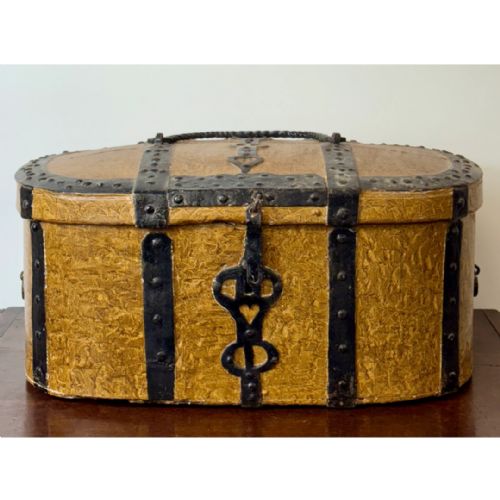
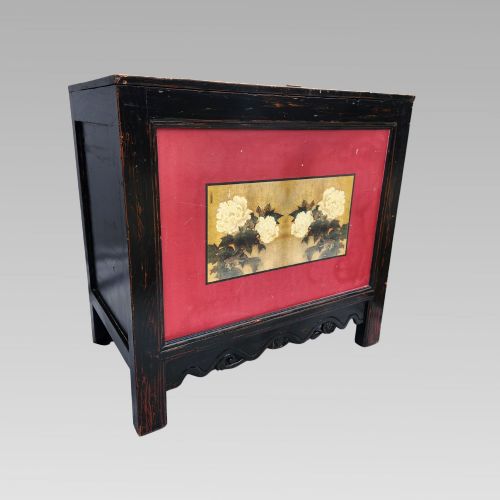
Constructed primarily from solid pine or general wood, these pieces utilise traditional joinery suited to heavy travel and domestic storage. Surfaces receive applications of pigment, oil paint, or black lacquer, sometimes enhanced by scumble techniques.
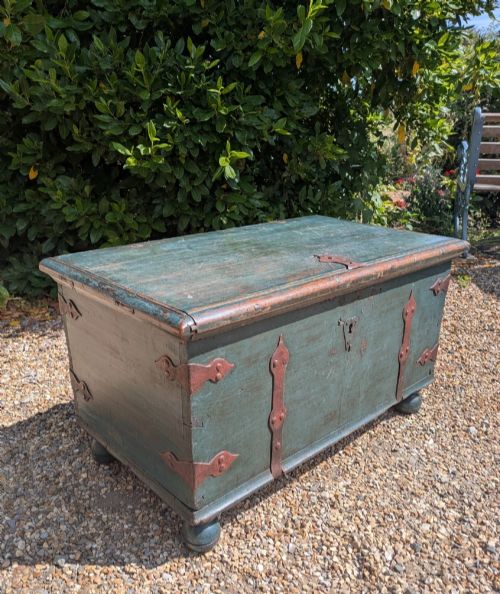
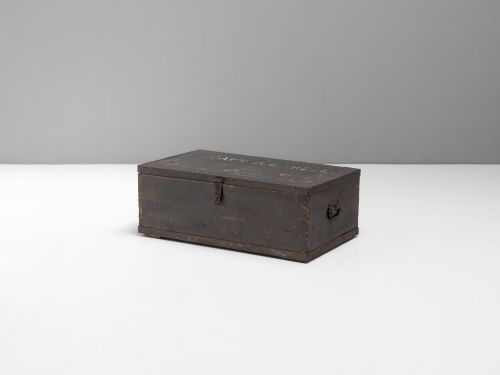
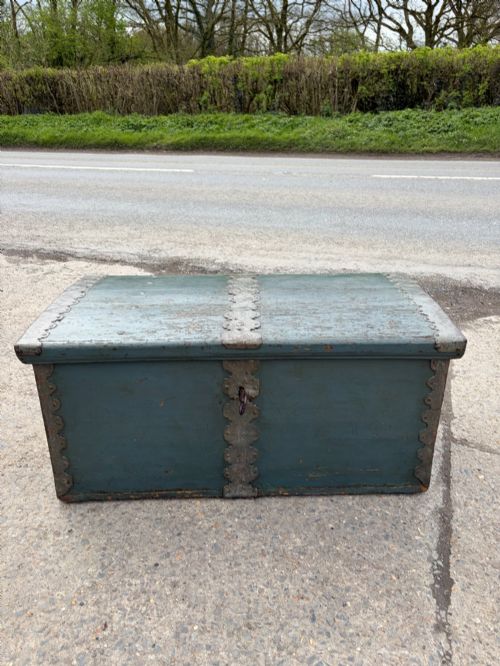
Hardware elements play a functional and structural role, incorporating hand-forged iron strapwork, wrought iron, and brass details to reinforce corners and secure hinged lids.
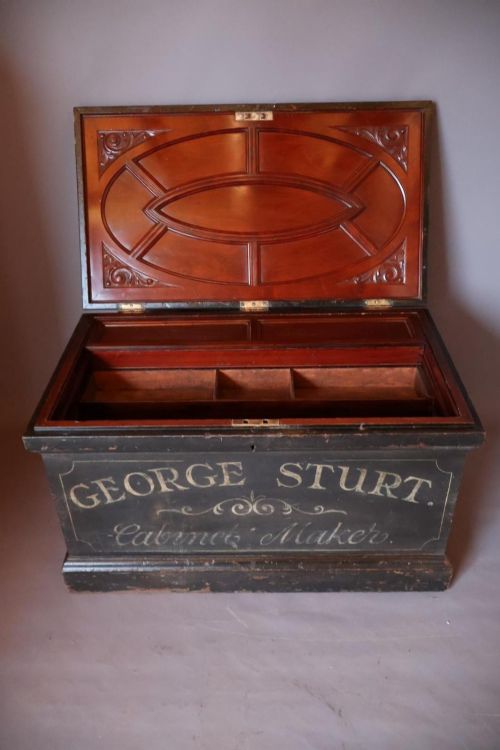
Several chests preserve vivid red interiors, offering a cheerful hidden splash of colour whenever someone lifts the heavy lid.
What Varies In Quality
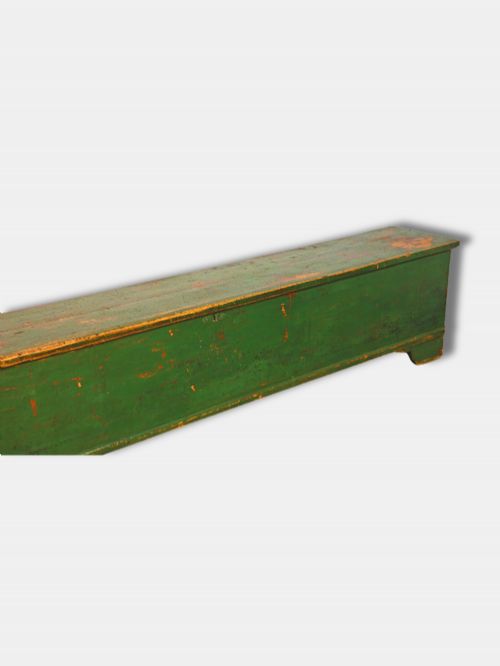
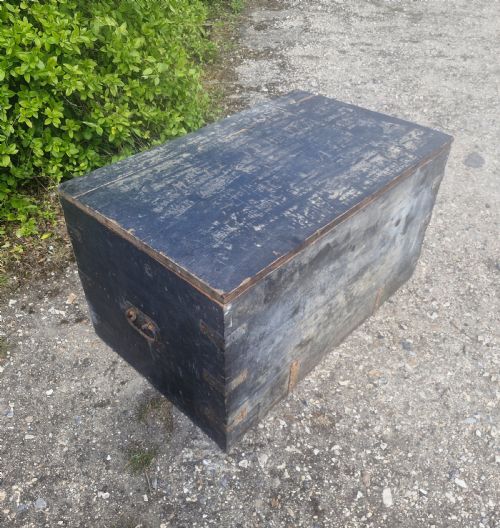
The survival of original surface decoration dictates much of the distinction between pieces, with untouched historical paint finishes holding greater visual weight than later overpainting. Depth of patina across the wood and pigment reflects the age and history of each storage chest.
Structural integrity relies on the preservation of original hinges, iron strapwork, and timber stability. Finer examples retain their initial hardware and unaltered interior compartments without modern intervention.
The Painted Wooden Blanket Coffer Glossary
- Mule chest
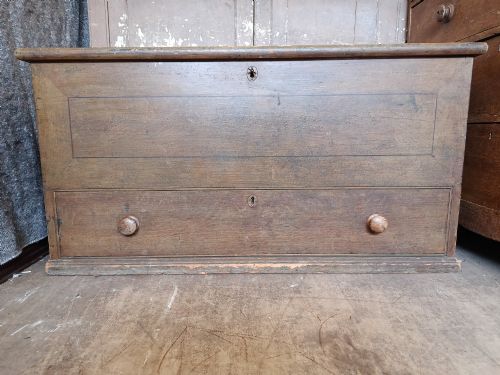
- A storage box featuring one or more drawers beneath the main primary compartment. This form bridges the gap between traditional blanket boxes and chest of drawers designs.
- Scumble pine
- Timber treated with a translucent glaze layer manipulated with tools or rags to simulate grain patterns. This decorative finish was common on nineteenth-century domestic furniture.
- Strapwork
- Flat bands of metal, often hand-forged iron, applied across the exterior corners and lids of chests for reinforcement. It provides structural strength while adding a decorative linear element.
- Marriage chest
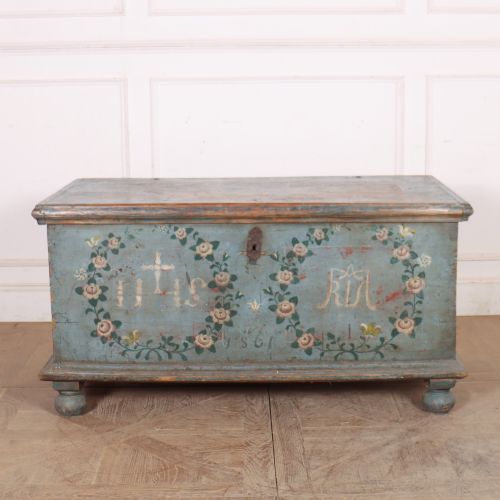
- A commissioned storage box created to hold a bride's dowry textiles and household linens. These pieces frequently display specific dates, initials, or regional folk motifs.
Painted Wooden Blanket Coffer: Frequently Asked Questions
What were painted wooden blanket coffer pieces used for originally?
These large boxes primarily stored woolen blankets, household linens, and valuable personal clothing away from dust and pests. Many functioned as dowry containers commissioned for weddings, holding the textiles a bride brought into a household.
Over time, travellers and military personnel also utilised heavy-duty variants for transporting belongings across long distances. Their robust construction allowed them to double as sturdy benches or tables inside modest homes.
How do I identify a Swedish folk art chest?
Swedish folk art examples often feature distinct architectural proportions, dome-shaped lids, and vibrant floral or geometric pigment decoration. Makers frequently applied light or dark base colours offset by contrasting painted details.
Examining the construction reveals traditional hand-cut dovetails and forged iron hardware typical of Scandinavian workshops from the eighteenth and nineteenth centuries.
Where should I place a blanket coffer at home?
These versatile storage pieces fit naturally at the foot of a bed to hold spare bedding and cushions. They also serve as low coffee tables or hallway seating where interior storage proves useful.
Keeping the wood away from direct heat sources and strong sunlight helps preserve the underlying nineteenth-century pigments and historical surface finishes.
What is the difference between a coffer and a trunk?
A coffer traditionally describes a heavy wooden box used for valuables, often featuring sturdier framing and more decorative exterior treatments. Trunks frequently indicate pieces intended for travel, incorporating iron carrying handles or protective strapwork.
In historical listings, makers and dealers often interchange these terms based on regional naming conventions rather than strict structural rules.