

Pine Coffer Trunk
A pine coffer trunk offers sturdy utility and plain charm, storing blankets or travel gear while anchoring a room with honest timber.
Pine Coffer Trunk
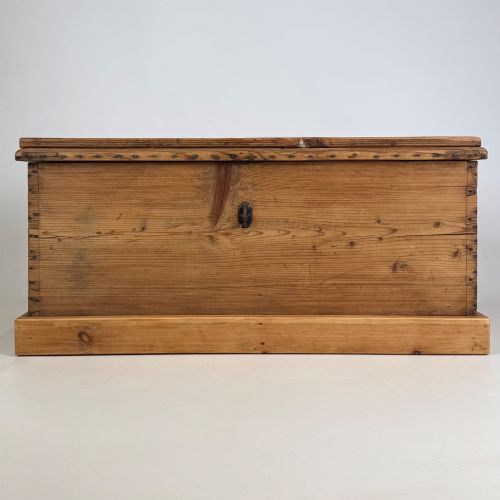
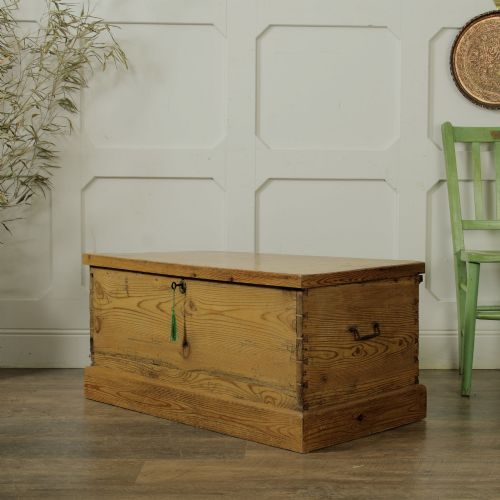
A pine coffer trunk serves as a capacious storage box or blanket chest, shaped by practical domestic needs across centuries. Buyers seeking a pine coffer trunk encounter pieces built for travel, estate service, or simple household storage.
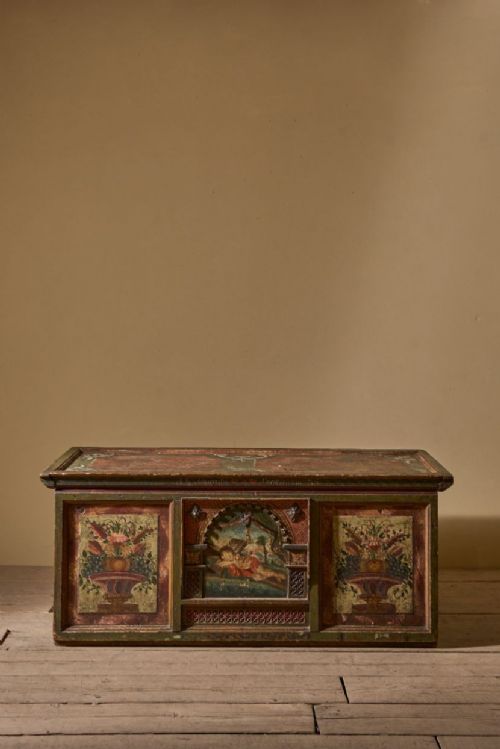
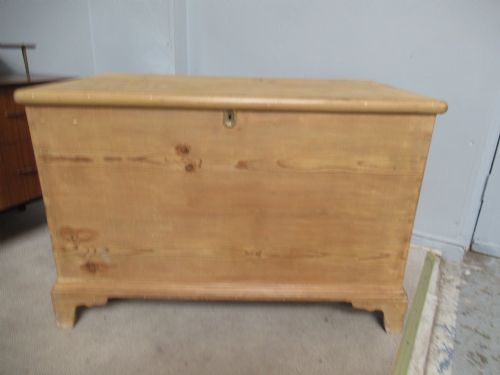
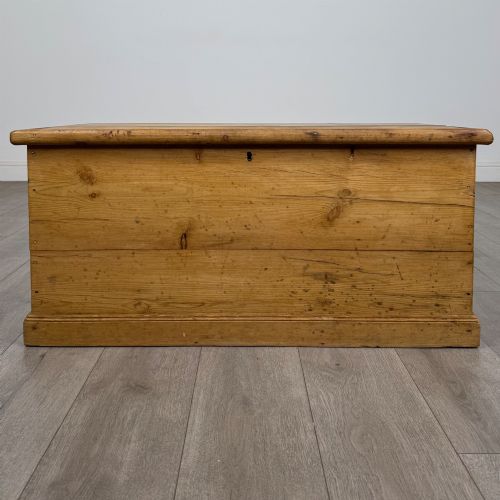
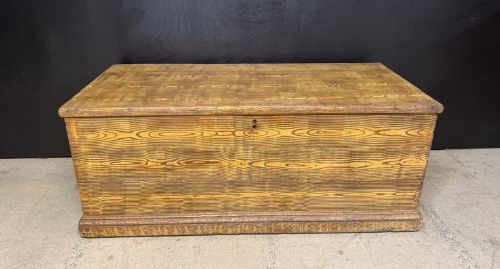
The selection ranges from robust Victorian blanket boxes and pitch pine travel chests to earlier Georgian mule chests and 18th-century European painted coffers. Most examples date from the Victorian era and the nineteenth century, finished with wax, paint, or scumble.
Regional variations appear frequently, spanning English country workshops, Welsh farmhouses, and continental origins including Swedish, Hungarian, and French examples. These pieces function readily at the foot of a bed or as a living room coffee table.
Materials and construction
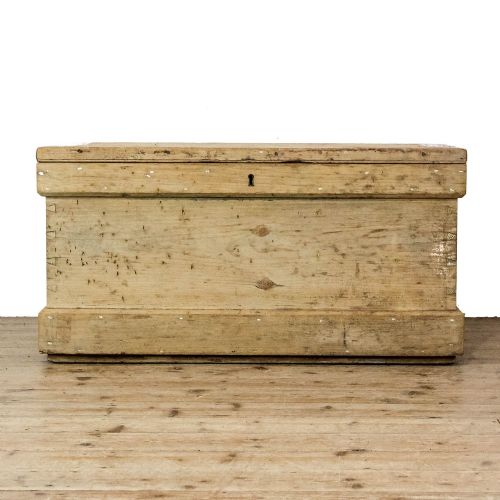
Makers utilised straight-grained pine and denser pitch pine, sometimes combining them with oak or elm for structural strength. Boards were joined to form solid boarded or panelled boxes designed to withstand heavy domestic or travel use.
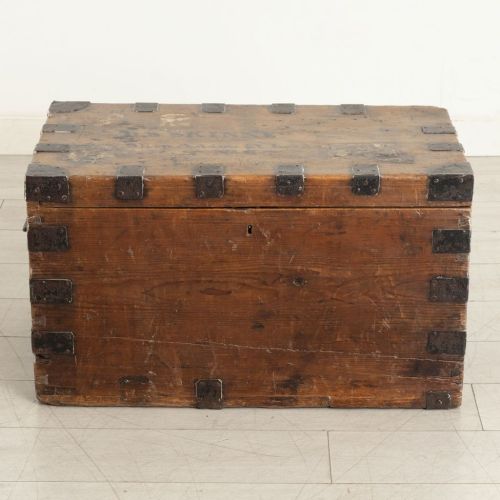
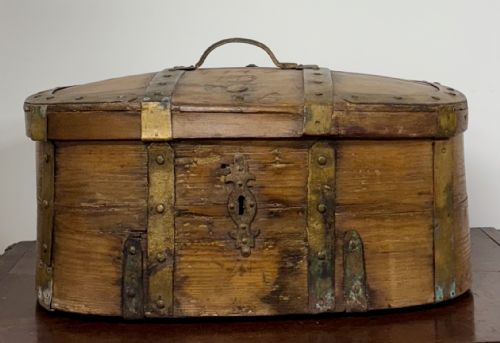
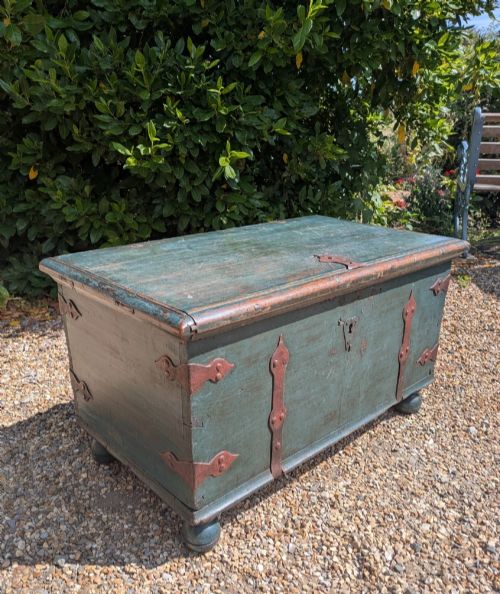
Iron hardware, including hand-forged strapwork, braces, and brass bindings, reinforced the corners and lids of travel trunks and strongboxes. Surfaces were treated with protective wax, applied paint, or decorative scumble finishes to enrich the soft timber.
One cheerful Hungarian box arrived bearing evidence of past travels, while another small chest once belonged to a resident of Sleepers Hill.
Markers of quality and craftsmanship
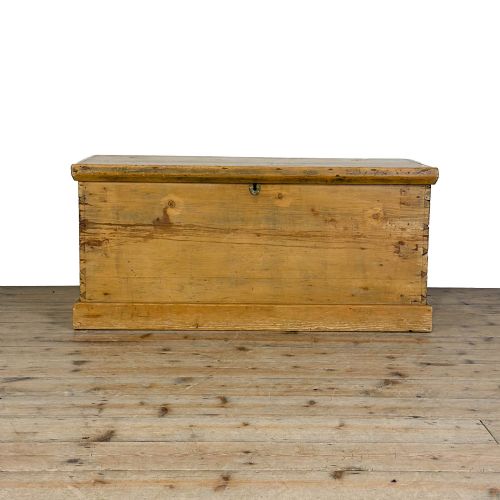
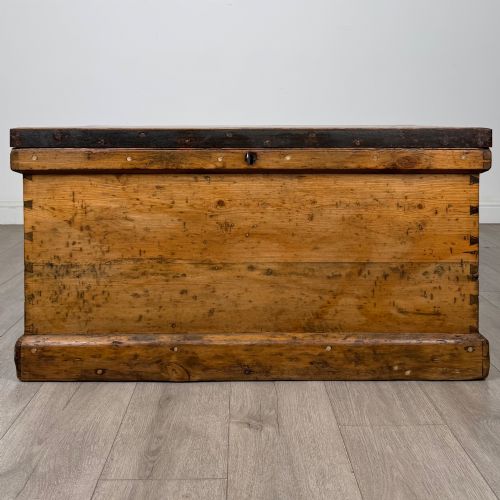
Quality rests in the integrity of the original construction, seen in dovetailed joints, solid timber bases, and intact hinges. Superior examples retain their early or original painted surfaces, iron strapwork, or fitted internal drawers rather than later restorations.
Proportion and surface patination distinguish finer chests, where decades of handling create a deep, warm glow across the pine. Pieces featuring specific regional forms, such as Georgian mule chests with lower drawers, demonstrate greater joinery ambition.
The Pine Coffer Trunk Glossary
- Mule chest
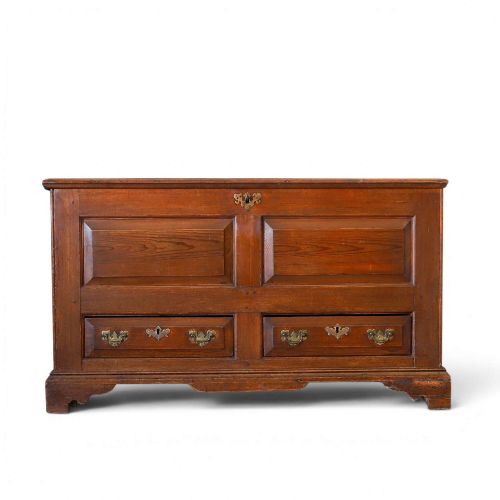
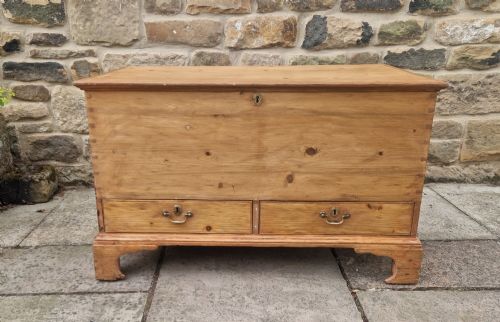
- A traditional storage chest featuring one or more drawers beneath the main lift-top compartment. This form bridges the gap between a simple coffer and a chest of drawers.
- Pitch pine
- A dense, resinous variety of pine noted for its prominent grain pattern and durability. It was frequently utilised for heavy-duty Victorian travel trunks and chests.
- Scumble
- A decorative painting technique involving a translucent top layer dragged or wiped over a lighter base colour to simulate grain. It appears on nineteenth-century painted trunks.
- Strapwork
- Flat metal bands, often hand-forged from iron, fastened across the exterior of a trunk to reinforce the corners and lid. It provides both structural security and visual contrast.
- Coffer
- A large, sturdy box traditionally used for storing valuables, textiles, or documents. The term is often used interchangeably with chest and trunk in historical records.
Pine Coffer Trunk: Frequently Asked Questions
How are pine coffer trunks dated?
Dating relies upon construction methods, such as hand-cut dovetails, forged iron hardware, and timber characteristics like the denser grain found in pitch pine pieces.
Secondary clues include original painted decoration, historical labels, and specific regional forms associated with Georgian or Victorian cabinetmaking.
What was a mule chest used for?
A mule chest combined the deep top storage of a blanket box with the easy access of lower drawers for smaller linens and garments.
Households utilised them in bedrooms and hallways for practical daily storage before fitted wardrobes became common.
Can I use a trunk as a coffee table?
These flat-topped storage pieces suit living room placement, providing hidden storage for blankets and books while serving as a sturdy surface.
Waxed and painted finishes withstand everyday use provided spills are wiped away promptly from historic wood.
What is the difference between a coffer and a blanket box?
A coffer is traditionally a heavily constructed storage chest with a heavy lid, often associated with valuables or travel, while a blanket box specifically holds textiles.
Many listings use the terms interchangeably based on general form and proportions rather than strict historical function.