
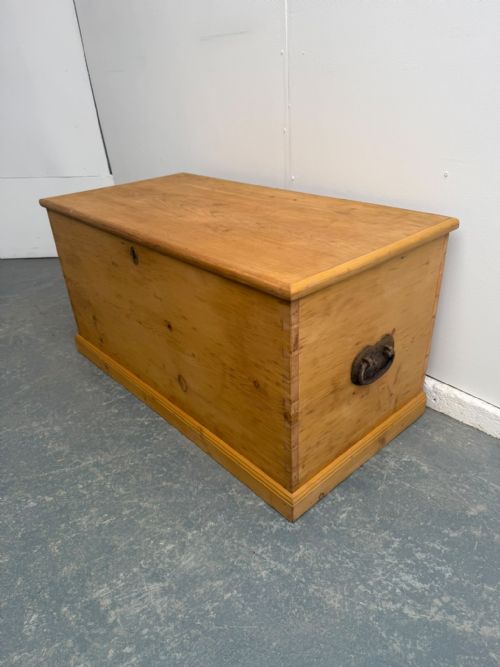
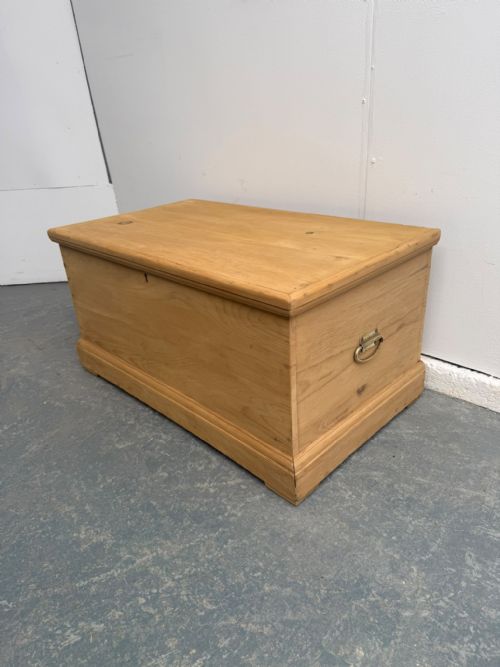


Waxed Pine Trunk
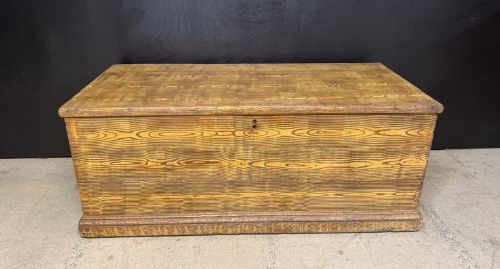
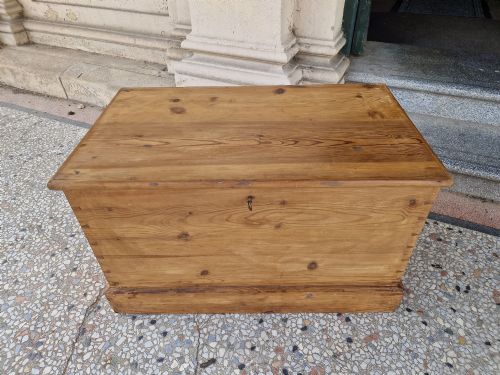
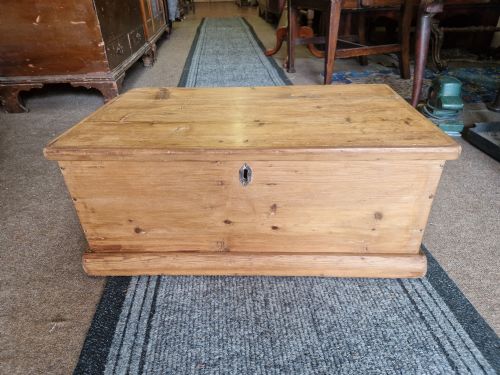
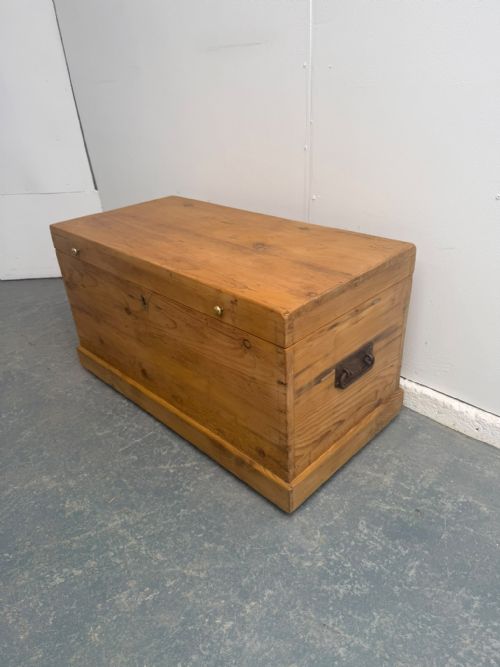
These waxed pine trunk examples span the Georgian and Victorian periods, offering sturdy domestic storage with warm, mellow finishes.
Waxed Pine Trunk
A waxed pine trunk serves as utilitarian storage for household textiles, blankets, and personal belongings. These pieces range from simple provincial blanket boxes to elaborate mule chests fitted with internal compartments and drawers.
The versions most commonly met on this page date from the Georgian and Victorian eras, often exhibiting regional characteristics such as Welsh country construction or rustic farmhouse proportions. Variations include low, wide forms adapted for modern use as coffee tables or media stands.
Formats vary from plain lidded coffers with a single long base drawer to multi-drawer configurations incorporating secret compartments. Scale spans from compact log boxes to enormous blanket chests.
How they were made
Construction relies primarily on solid pine boards assembled to withstand heavy daily use. Surfaces are finished with wax to nourish the softwood and develop a deep lustre over time.
Hardware details feature functional iron and brass fastenings, including strap hinges, carrying handles, and key escutcheons. Internal elements incorporate dovetailed drawers and fitted partitions.
What varies in quality
Quality is dictated by the complexity of the internal architecture and the integrity of the timber. Pieces featuring multiple secret drawers, fitted interiors, or lower drawer configurations demand superior cabinet-making skills compared to basic single-compartment boxes.
The depth and warmth of the wax finish contribute significantly to the visual appeal, alongside the preservation of original hardware such as brass handles and iron strapwork.
The Waxed Pine Trunk Glossary
- Mule chest
- A storage chest featuring one or more drawers beneath the main internal compartment. This form bridges the gap between a traditional coffer and a chest of drawers.
- Coffer
- A heavy wooden box traditionally used for safekeeping valuables and documents. Early examples often rest directly on the floor or feature short stile feet.
- Blanket box
- A large chest designed specifically for storing bedding and linens. These frequently double as seating at the foot of a bed.
- Dovetail
- A joinery technique utilising interlocking wedge-shaped fingers to bind corners securely. It provides exceptional tensile strength without requiring modern adhesives.
- Escutcheon
- A protective plate surrounding a keyhole. Brass or iron variants are commonly found on the front panels of these chests.
Waxed Pine Trunk: Frequently Asked Questions
What is a mule chest?
A mule chest combines the top-opening compartment of a traditional blanket box with one or more drawers built into the base. This hybrid form emerged to provide easier access to stored clothing without disturbing items piled on top.
Georgian and Victorian makers often produced these for domestic settings where bedroom storage space remained at a premium.
How do I care for a waxed pine surface?
Maintenance involves applying a natural beeswax polish periodically to maintain the moisture and sheen of the softwood. Avoid placing these pieces near direct heat sources to prevent the pine from splitting.
Regular buffing with a soft cloth removes dust and enhances the historic patina developed over centuries of handling.
Were these chests used for travel?
Domestic pine chests were generally built for stationary storage within the home rather than long-distance travel. Their softwood construction and heavy proportions suited farmhouse and country house interiors.
Sturdy iron handles were attached to facilitate repositioning around the room rather than mounting onto carriages or ships.
How can I distinguish Georgian from Victorian pine?
Georgian pieces often display earlier regional cabinet-making traits, such as deeper proportions, hand-cut dovetails, and simpler internal layouts. Victorian examples frequently incorporate more complex configurations, including multiple small drawers and fitted compartments.
Timber selection also shifts, with 18th-century pine showing different density and grain patterns compared to later 19th-century imports.
Can these chests be used as coffee tables?
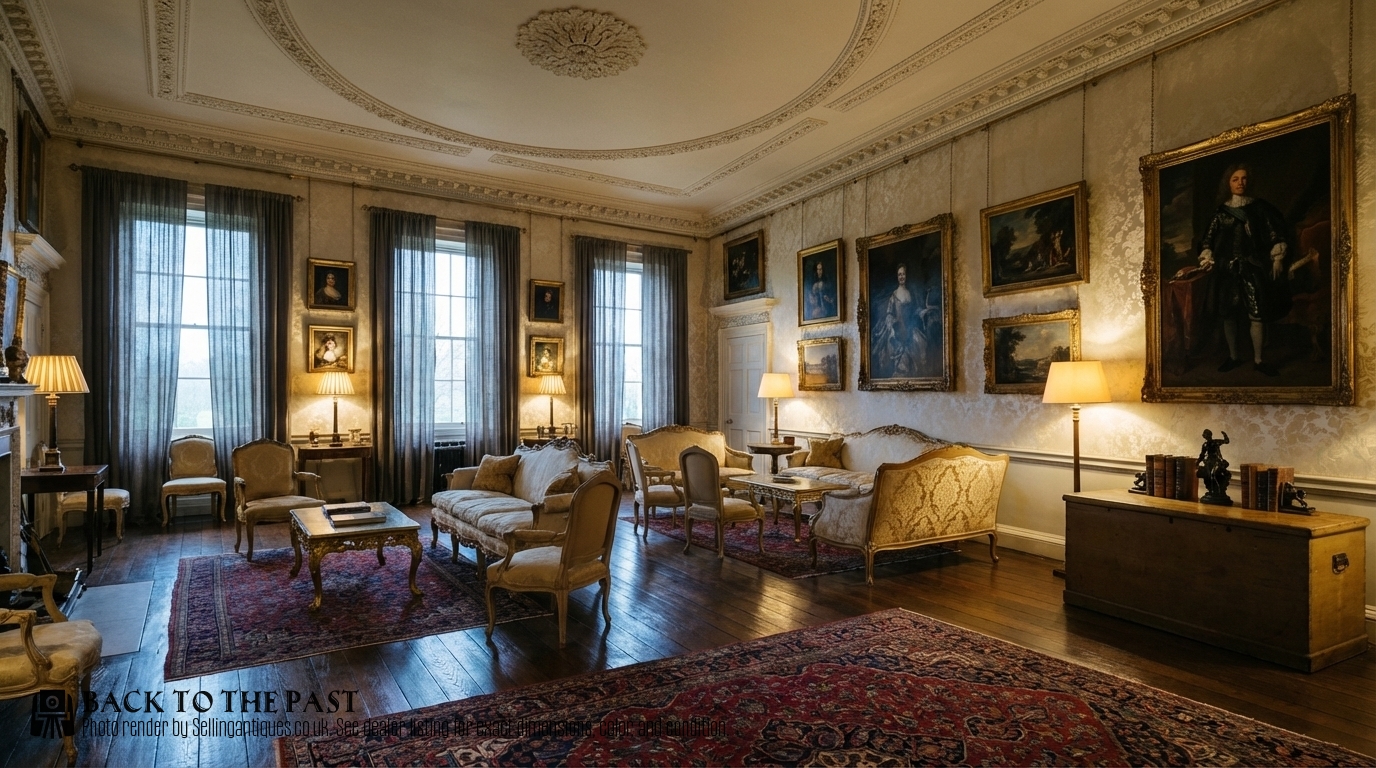
Lower and wider box proportions lend themselves well to adaptation as coffee tables or television stands in contemporary living spaces. Their flat lids provide a stable surface while retaining internal storage capacity.
Buyers frequently select these robust pieces to anchor a sitting room with functional historic character.