

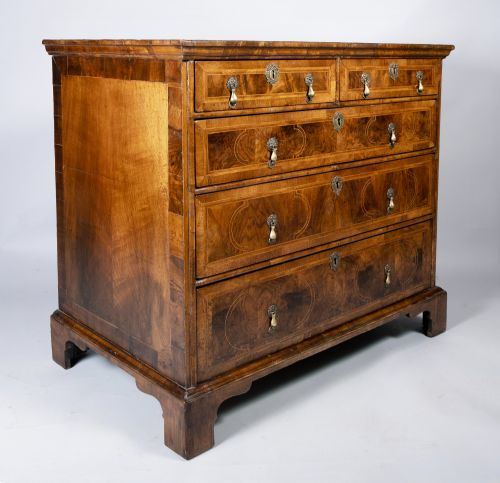


Early 18th Century Coffer
An early 18th century coffer provides heavy timber storage with centuries of practical utility.
Early 18th Century Coffer
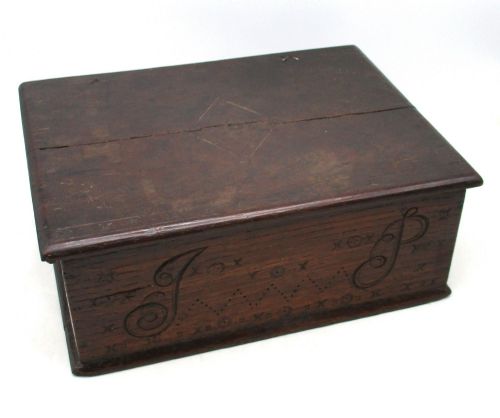
An early 18th century coffer is a heavy wooden storage chest built primarily for domestic security and household linens. The form ranges from simple plank construction to elaborate panelled boxes, often fitted with internal candle boxes or single base drawers.
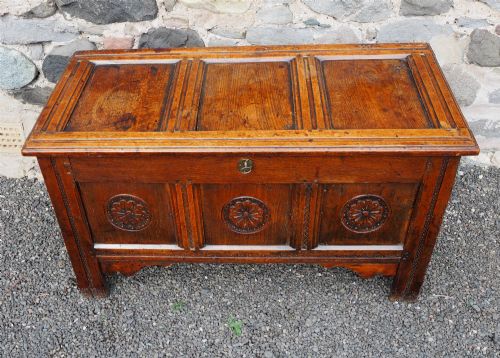
Oak dominates the surviving examples, appearing in regional variants such as Welsh coffer bachs, planked sword chests, and carved North Country models. Walnut and mahogany pieces also emerge from this era, shifting the domestic interior toward finer furniture.
Buyers encountering this selection will frequently find panelled oak coffers alongside smaller document boxes and chest of drawers variants from the George I and Queen Anne periods.
How they were made
Joinery defined the construction of these pieces, utilising traditional mortise and tenon joints to secure raised panels within sturdy frames. Early plank coffers relied on tongue-and-groove or simple edge-joined boards fixed with iron nails and wooden pegs.
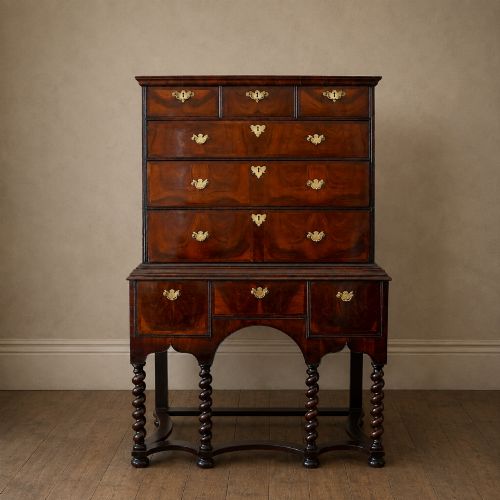
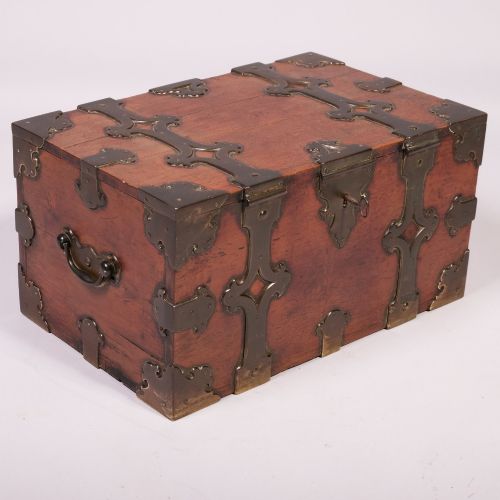
Surface ornamentation involved hand carving, geometric inlay, and walnutveneering on finer drawer chests, finished with beeswax or polish. Iron hinges, brass escutcheons, and brass mounted camphor details complete the hardware associated with these items.
Listings span oak, walnut, mahogany, pine, and camphor wood across periods from the late 17th century through the Georgian era.
What varies in quality
The degree of structural integrity and timber selection dictates the standing of an individual piece. Dense English and Welsh oak with tight growth rings and minimal replacement timber command greater regard than heavily restored examples.
Subtlety of carved decoration and crispness of panel mouldings separate provincial work from master cabinetmaking. Original surface patination and untouched brass or iron hardware further elevate the standing of surviving items.
The Early 18th Century Coffer Glossary
- Coffer bach
- A small Welsh storage chest, often raised on short legs or feet, used for household valuables and linens.
- Plank coffer
- A simple chest constructed from individual boards joined edge to edge rather than held within a framed panel structure.
- Mule chest
- A storage chest featuring one or more lower drawers beneath the main lift-top compartment.
- Escutcheon
- A protective plate surrounding a keyhole, frequently made of brass or iron on period furniture.
- Graduated drawers
- A series of drawers increasing in depth from top to bottom, common on early Georgian case pieces.
Early 18th Century Coffer: Frequently Asked Questions
What were early coffers used for?
These chests served primarily for securing valuables, important documents, and winter blankets in domestic households before fitted wardrobes existed.
Their heavy timber construction and secure lids also allowed them to double as seating benches around the hearth.
How do I care for antique oak?
Maintain dry conditions away from direct heat sources to prevent the timber from splitting or warping.
Apply a traditional beeswax polish occasionally to nourish the grain and preserve the historic surface patination.
How to tell oak from walnut?
Oak displays prominent medullary rays and an open, coarse grain structure suited to robust joinery.
Walnut offers a finer, darker grain with rich figure patterns that made it the preferred choice for veneered drawer fronts.