
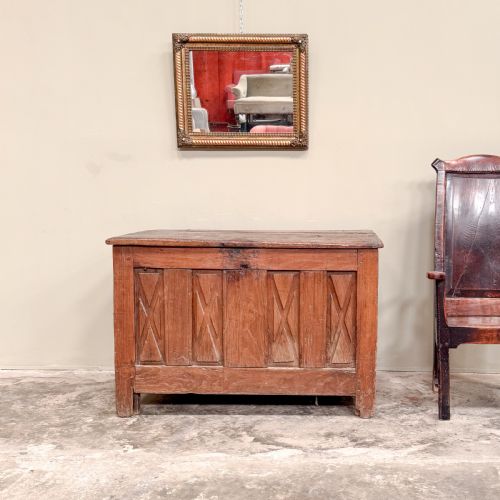
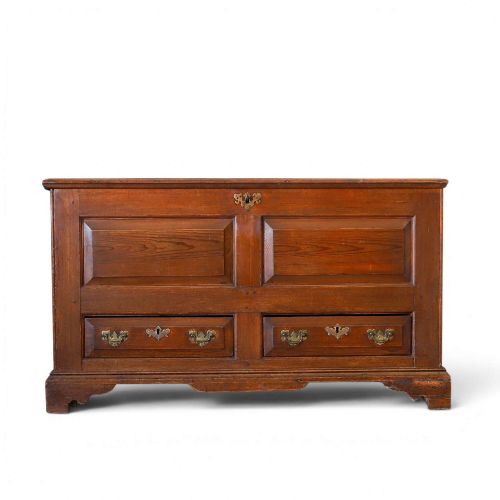


Panelled Pine Chest
These panelled pine chest pieces are solid timber utility boxes that bring straightforward rural storage and enduring construction into a room.
Panelled Pine Chest
When you search for a panelled pine chest, you are looking at sturdy wooden storage containers built with framed and panelled construction. These items serve as functional blanket chests, mule chests with drawers, and blanket boxes originating from the eighteenth and nineteenth centuries.
The versions you are most likely to meet on this page span Georgian and Victorian periods, often showing rustic farmhouse, French provincial, or country styles. They combine practical internal space with panelled exterior details created by regional makers.
Many examples utilise native softwood alongside iron or brass hardware for hinges and handles. Some pieces arrive in a waxed finish, while others retain older painted surfaces or have been stripped to reveal the grain.
How they were made
These chests rely on sturdy timber construction where vertical stiles and horizontal rails frame flat or raised panels. This traditional technique allows the wood to expand and contract with seasonal changes in humidity without splitting the main structure.
Makers utilised pine alongside oak for internal components, securing joints with wooden pegs and hand-forged iron or brass hardware. Surfaces were finished with wax, paint, or left as bare timber according to regional domestic customs.
Several examples arrive ready to store your boots, blankets, or smuggled gin reserves just as they did in Georgian farmhouses.
What varies in quality
Quality in these items rests on the integrity of the timber framing and the preservation of original surfaces. Pieces that retain their early brass or iron hardware and original fixings demonstrate a higher degree of authenticity.
The crispness of the panel mouldings and the tightness of the joinery separate standard utility boxes from finer country furniture. Proportion and scale also dictate value, with narrower or particularly deep examples showing greater versatility.
The Panelled Pine Chest Glossary
- Panelled
- Construction method using a frame of stiles and rails fitted with a central floating board. This technique prevents warping as the timber ages.
- Mule chest
- A storage chest featuring one or more drawers beneath the main compartment. It bridges the transition between a simple coffer and a chest of drawers.
- Coffer
- A heavy wooden box traditionally used for storing valuables or linens. Early versions often feature hand-cut joints and simple hinged lids.
- Pitch pine
- A dense, resinous softwood variety prized for its prominent grain patterns. It provides robust durability in large nineteenth century furniture.
- Stiles and rails
- The vertical and horizontal framing members that hold panels in place. They form the structural skeleton of the chest.
Panelled Pine Chest: Frequently Asked Questions
What is a panelled pine chest used for?
These boxes provided secure storage for household linens, blankets, and garments in domestic settings.
Today, they function well as living room storage tables, bedroom blanket boxes, or hallway furniture.
How do I date a pine chest?
Dating relies on examining construction marks, nail types, and hinge styles alongside the overall proportion.
Eighteenth century examples often show hand-planed surfaces and peg joinery, while Victorian pieces feature machine-sawn timber.
Are these chests made from solid wood?
The listings consist of solid timber construction utilising pine, pitch pine, and occasional oak elements.
Makers built these pieces to withstand heavy daily use without relying on modern composite boards.
What is the difference between a mule chest and a standard chest?
A standard chest opens only from the top lid to access the primary storage well.
A mule chest includes one or more drawers built into the base beneath the main compartment for easier access.
How should I care for a waxed pine chest?
Maintain the wood by applying a natural beeswax polish periodically to nourish the dry timber.
Avoid placing the chest near direct heat sources or in damp areas to protect the original finish.