




Painted Wood Desk
These painted wood desk pieces bring patterned surface colour and practical writing surfaces together into working rooms.
Painted Wood Desk
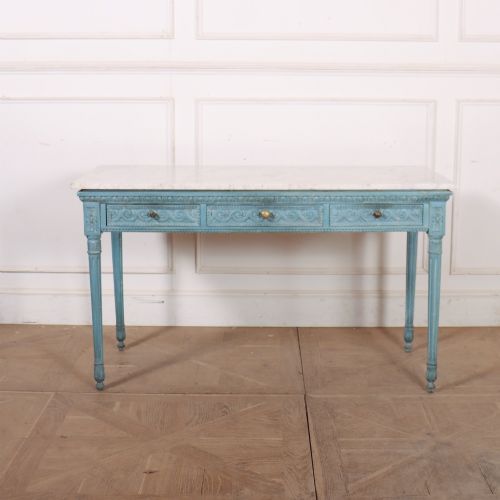
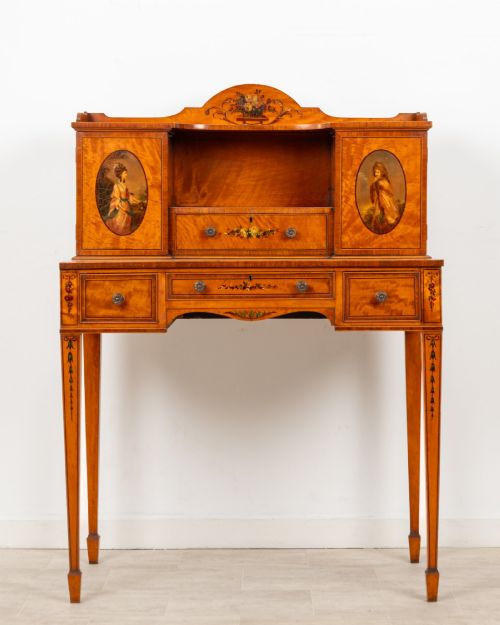
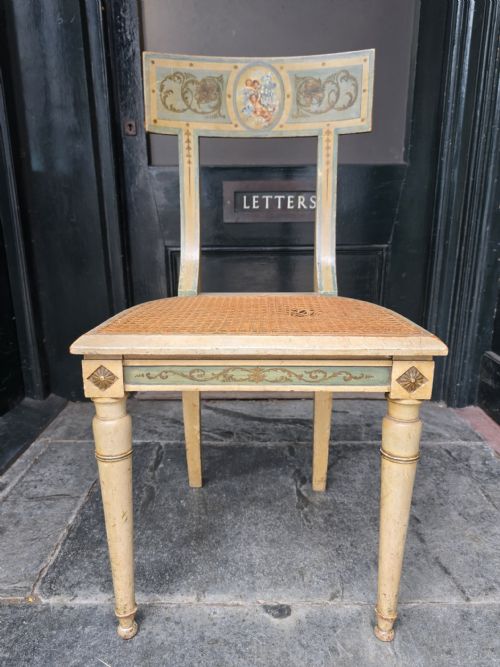
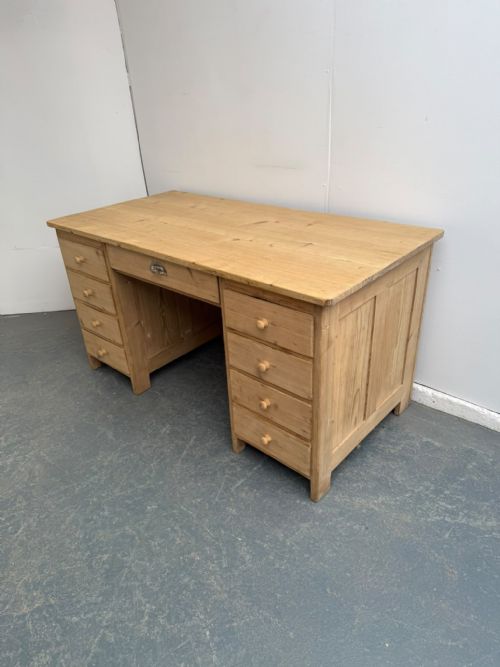
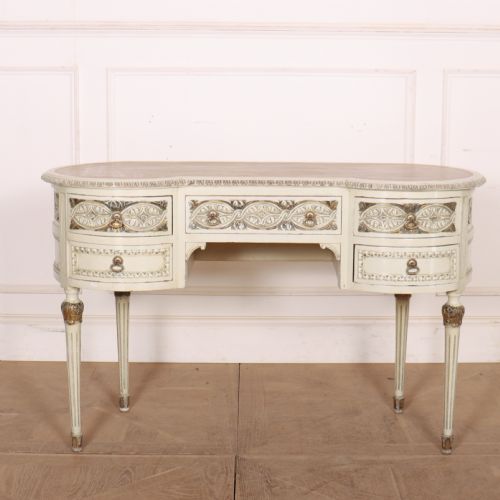
A painted wood desk brings together traditional writing forms and decorative painted finishes, spanning periods from the 18th century through the Edwardian era. You will encounter compact writing desks, larger kneehole formats, and elaborate Carlton House configurations designed for domestic studies.
The selection ranges from early English pine pieces to refined Edwardian satinwood examples bearing hand-painted floral motifs. Alongside standard desks, related forms such as writing cabinets, bureaux, and stationary tidies appear across the inventory.
Origins stretch across English, French, Italian, and Kashmiri workshops, incorporating styles from Regency and Chinoiserie to Sheraton Revival and Louis XVI. Each piece demonstrates how historical makers applied colour and lacquer over timber carcases.
Materials and construction methods
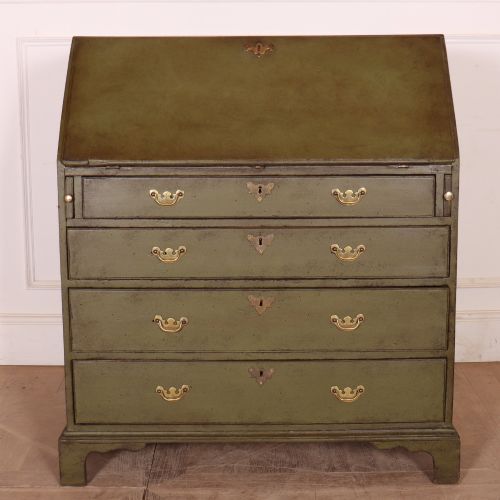
Carpenters constructed these carcases primarily from pine, walnut, and satinwood, applying surface coats of paint, lacquer, or Falu paint directly to the timber. Brass hardware frequently completes the structural fittings on drawers and compartments.
Decorators applied hand-painted ornamentation, stencilling, and gilt details over prepared wooden grounds, often utilising ochre, cream, or grey pigments. These decorative layers were sealed to protect the underlying painted wood through decades of daily use.
Listings feature painted wood desk items spanning the 18th century, Regency period, Victorian era, and Edwardian times in pine and satinwood.
Distinctions in craftsmanship and finish
Superior examples display crisp, hand-painted botanical or Chinoiserie motifs executed with fine brushwork directly onto satinwood or prepared pine grounds. Lesser pieces rely on simpler stencilled patterns or later surface resprays that obscure the original timber underneath.
The integrity of the structural joinery and the survival of original pigmented finishes dictate the standing of individual items. Pieces retaining their early unblemished surface decoration command greater interest than those with heavily restored or replaced paintwork.
The Painted Wood Desk Glossary
- Carlton House desk
- A form of writing desk featuring a curved superstructure of small drawers and compartments enclosing the rear of the writing surface.
- Satinwood
- A hard, yellow timber imported from tropical regions, valued for its lustrous grain and used extensively as a smooth ground for painted decoration.
- Chinoiserie
- A European artistic style reflecting Chinese motifs, characterised by figurative scenes, pavilions, and floral patterns rendered in lacquer or paint.
- Kneehole desk
- A large freestanding desk featuring a central recessed space for the user's legs, flanked by pedestals of stacked drawers.
- Faux bois
- An artistic imitation of wood grain painted onto a plain timber or plaster surface to simulate a more costly wood.
Painted Wood Desk: Frequently Asked Questions
How do I date a painted wood desk?
Examine the secondary timbers inside the drawer construction, the composition of the brass hardware, and the style of the painted decoration. Hand-mixed pigments and specific motifs often align closely with Georgian, Victorian, or Edwardian manufacturing practices.
Compare the timber shrinkage and the wear patterns around the primary writing area with documented examples from the same period. Structural clues beneath the painted surface provide reliable indicators of age.
Are these desks suitable for daily writing use?
Most antique writing desks function effectively for contemporary study tasks, provided the writing height and knee clearance match your requirements. Many retain stable drawers and smooth surfaces suitable for modern paperwork.
Protect delicate painted surfaces from moisture and direct heat by using appropriate desk pads or blotters. Regular dusting with a dry cloth helps preserve the original pigment layers.
How should I clean a painted wooden surface?
Dust the painted wood gently with a soft, dry microfibre cloth to remove loose particles without disturbing the finish. Avoid commercial solvents, abrasive household cleaners, or excessive water.
Consult a professional conservator if the painted decoration shows signs of flaking or lifting from the timber ground. Gentle maintenance ensures the historical surface remains stable.
What is the difference between satinwood and pine desks?
Satinwood furniture typically dates to the late 19th or early 20th century, featuring fine grain patterns intended as a smooth base for delicate floral painting. Pine examples often originate from earlier country workshops and carry heavier coats of solid paint or regional pigments.
Satinwood pieces lean towards refined drawing room aesthetics, while pine desks offer a sturdier domestic utility. Both materials respond differently to restoration and cleaning.