
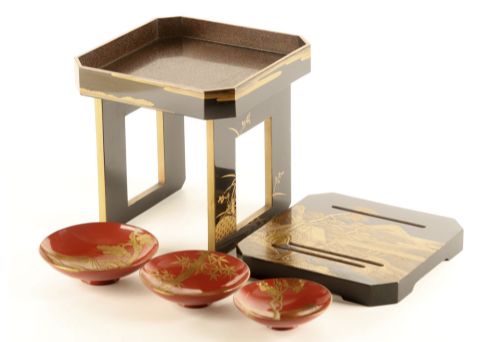
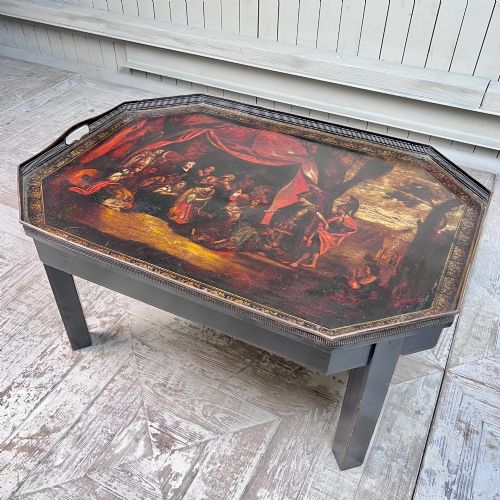
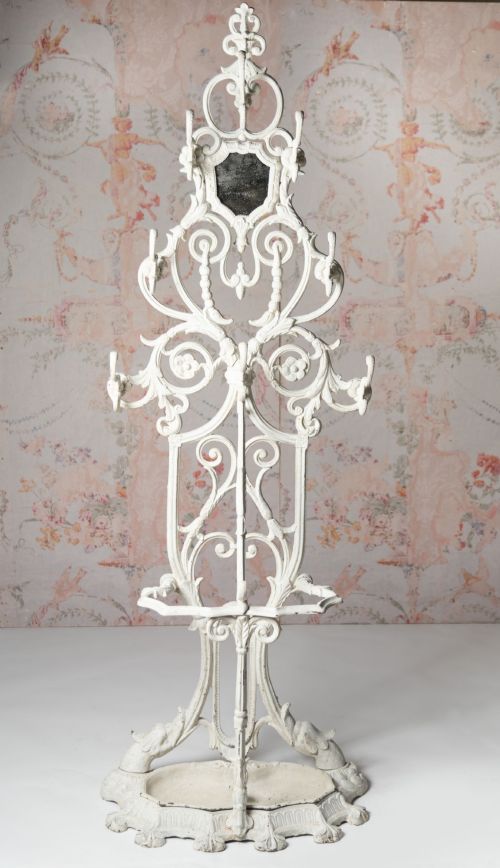
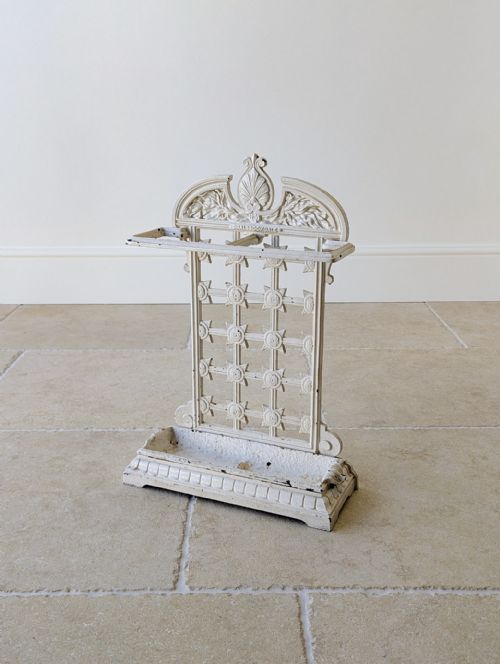



Painted Tray on Stand
A painted tray on stand combines a portable serving surface with a dedicated support, offering a practical display table for the home.
Painted Tray on Stand
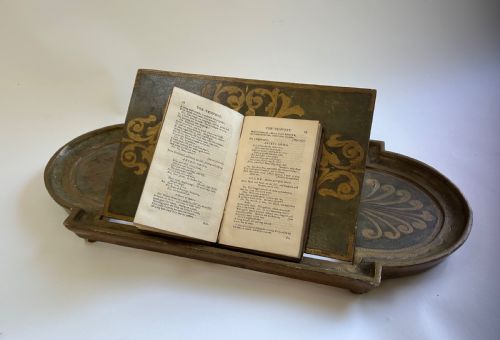
A painted tray on stand brings together a decorative surface, often formed from papier-mâché, toleware, or wood, mounted upon a bespoke or later base. You will frequently encounter examples originating from the Regency and Victorian periods, alongside later twentieth-century iterations.
Materials and Construction
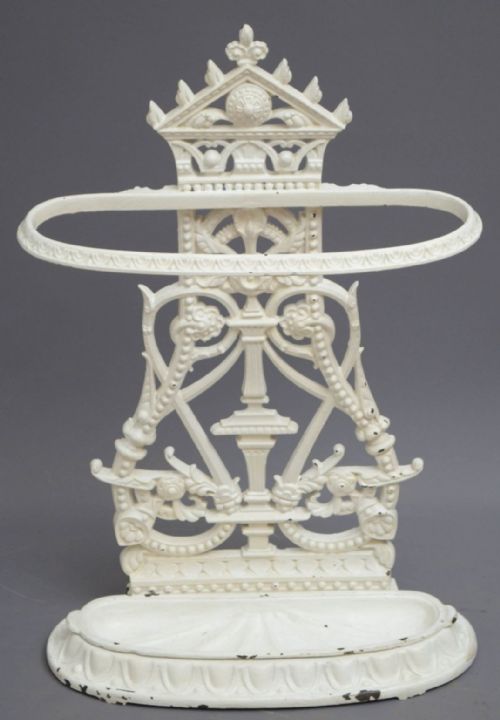
Papier-mâché and painted metal toleware serve as primary surfaces, layered with dark grounds and finished with meticulous hand painting and gold leaf details. Artisans constructed the supporting stands from timber, such as oak or walnut, or utilised cast iron frameworks.
Materials recorded across the inventory include papier-mâché, cast iron, lacquer, wood, and gold leaf.
Quality and Craftsmanship
The distinction between tiers rests upon the crispness of the hand-painted decoration, the preservation of the original gilt and pigment, and the integrity of the base. Superior examples exhibit fine brushwork on papier-mâché or toleware without extensive overpainting.
The relationship between the tray and its stand dictates the piece's character, with period-matching frames holding greater cohesion than later marriages of disparate elements.
Coalbrookdale·Jenners and Bettridge·Louis Pierre Malpass
The Painted Tray on Stand Glossary
- Toleware
- Lacquered or enamelled metalware, usually tin or iron, decorated with painted designs. This technique produced durable household trays and vessels during the Regency and Victorian eras.
- Papier-mâché
- A composite material made of paper pulp or sheets of paper mixed with glue and resin, pressed and dried into sturdy forms. It provided a smooth, lightweight base for intricate lacquer work and painting.
- Parcel-gilt
- Partially gilded with gold leaf or powder, leaving areas of the underlying painted or natural surface exposed. This treatment highlights carved details and borders on furniture and trays.
- Polychrome
- Painted, printed, or decorated in several colours. The term describes the diverse palette used in traditional hand-painted tray designs.
Painted Tray on Stand: Frequently Asked Questions
How do I use a tray on stand today?
These pieces function ideally as movable coffee tables or side tables in a drawing room or study. Their removable trays offer practical utility for serving drinks or displaying decorative objects.
Position them away from direct heat sources and strong sunlight to protect the painted surfaces and historic lacquerwork from fading or cracking over time.
Are the trays detachable from the stands?
Many traditional stands feature resting ledges that allow the tray to be lifted off independently. Others are fixed securely to the frame for greater stability during daily use.
Check the construction carefully before lifting, as nineteenth-century papier-mâché and tole trays require careful handling to avoid accidental drops or surface strains.
How do I clean a painted surface?
Dust the tray gently with a soft, dry, lint-free cloth to remove everyday particles. Avoid using water, chemical sprays, or abrasive polishes, which can damage delicate varnishes and pigments.
Professional restoration is recommended if the paintwork shows signs of flaking or instability, ensuring the historic integrity of the decoration remains undisturbed.
How do I distinguish Regency from Victorian examples?
Regency trays often display classical motifs, neoclassical scenes, or restrained japanning on deep black grounds. Victorian pieces frequently embrace bolder florals, rich mother-of-pearl inlay, and more elaborate Rococo Revival framing.
Examining the construction methods of the underlying wooden or iron stands also helps determine the exact period of manufacture.