




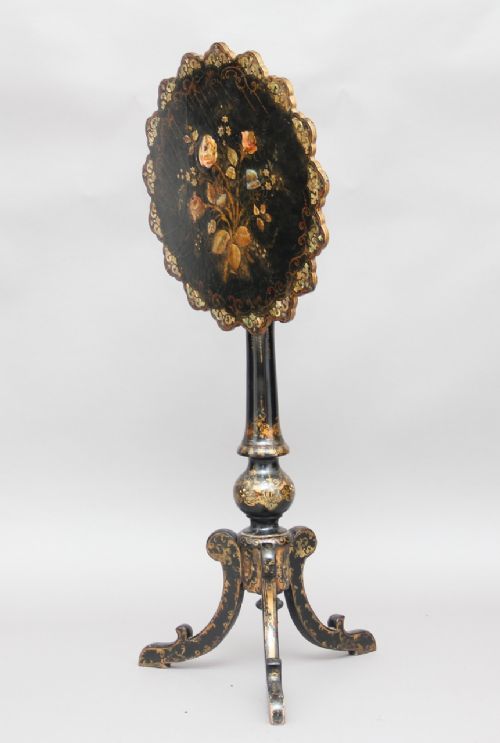


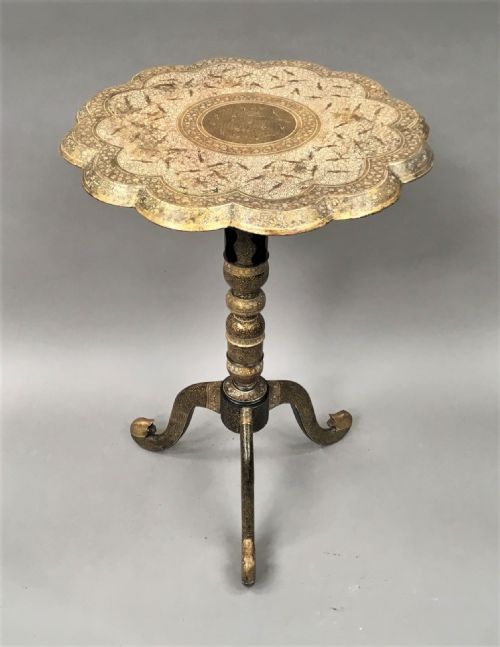
Floral Lacquered Side Table
These floral lacquered side table examples bring hand-painted botanicals and dark glossy finishes into a room, offering surface space with distinct character.
Floral Lacquered Side Table
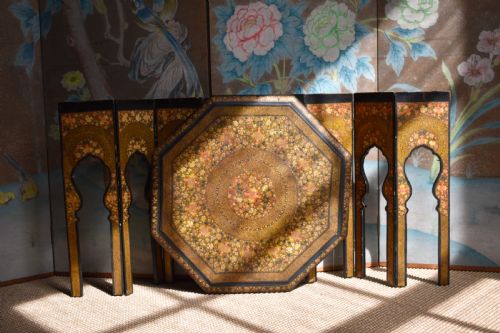
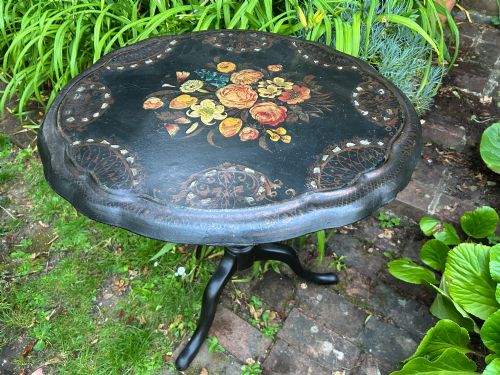
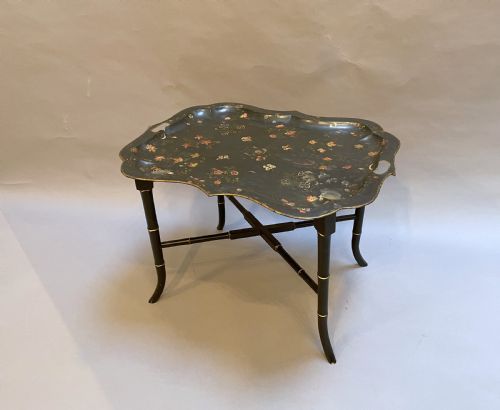
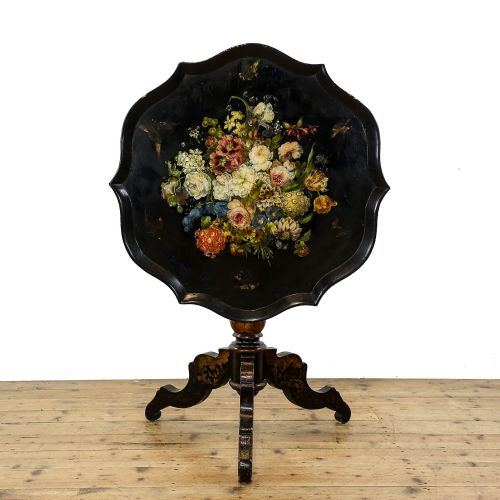
A floral lacquered side table unites dark finished surfaces with painted botanical motifs across various historical forms. Buyers exploring this search phrase encounter pieces designed for utility and display, ranging from compact wine tables to serving trays mounted on stands.
Form follows function across these tables, with tilt-top mechanisms, tiered sewing tables, and plant stands represented in the inventory. Each object provides a functional surface enriched by decorative painting and lacquer work.
Assessing quality and craftsmanship
Quality rests in the precision of the painted detail and the depth of the lacquer finish. Finer pieces display intricate brushwork and secure inlay work that remains intact across the surface.
The integrity of the structural joinery and the original relationship between top and stand dictate the standing of an individual piece. Tables retaining their original bases and tilt mechanisms demonstrate higher preservation standards.
Object forms on this page range from occasional wine tables and sewing cabinets to plant stands and serving trays on stands.
The Floral Lacquered Side Table Glossary
- Lacquer
- A durable resin finish applied in multiple coats to create a smooth, glossy surface. It protects the wood or papier-mâché beneath while providing a dark background for painted decoration.
- Papier-mâché
- A composite material made from paper pulp or layers of paper mixed with glue and resin, pressed and baked to form rigid table tops and trays. It accepts dark finishes and painted detail exceptionally well.
- Tilt-top
- A table construction featuring a hinge mechanism that allows the surface to pivot to a vertical position. This design saved space when the table was not in use.
- Torchere
- A tall, slender stand or pedestal originally designed to hold a candle or torch. Later Victorian and revival examples often feature decorative painted tops for displaying plants or ornaments.
Floral Lacquered Side Table: Frequently Asked Questions
Where should I place a floral lacquered side table?
These tables suit sitting rooms and halls where their painted surfaces can catch the light. They function well beside a chair to hold drinks or books.
Because finishes like lacquer and papier-mâché prefer stable environments, avoid placing them in direct sunlight or beside active heat sources. Gentle placement preserves both the paintwork and the underlying structure.
How do I clean a lacquered table surface?
Dust the surface regularly with a soft, dry cloth to prevent particle buildup. Avoid chemical polishes, abrasive cloths, and excessive water.
If moisture lands on the lacquer, wipe it away immediately with a dry cloth. Preserving the original finish relies on minimal intervention and gentle care.
What is the difference between papier-mâché and wood tables?
Papier-mâché tables utilise a pressed paper pulp composite that allows for smooth, rounded edges and a deep, glossy black background. Wooden tables rely on solid timber or bamboo frames for their structure.
Both materials provide stable surfaces for painted floral decoration, though papier-mâché pieces frequently feature tilt-top mechanisms or serve as removable trays.
How do I identify a Victorian piece?
Victorian examples often combine black lacquer with gilt, painted flowers, and occasional mother-of-pearl inlay. Common forms from this era include wine tables, sewing tables, and papier-mâché trays on stands.
Examining the construction methods, wear patterns, and materials helps distinguish 19th-century production from later revival pieces.