


Painted Timber Board
A painted timber board brings immediate character to a wall, offering a tangible slice of commercial, theatrical or domestic history.
Painted Timber Board
A painted timber board encompasses a diverse group of objects, ranging from trade signs and fairground panels to dummy boards and theatre scenery. When searching for a painted timber board, buyers encounter works created across the eighteenth, nineteenth and twentieth centuries.
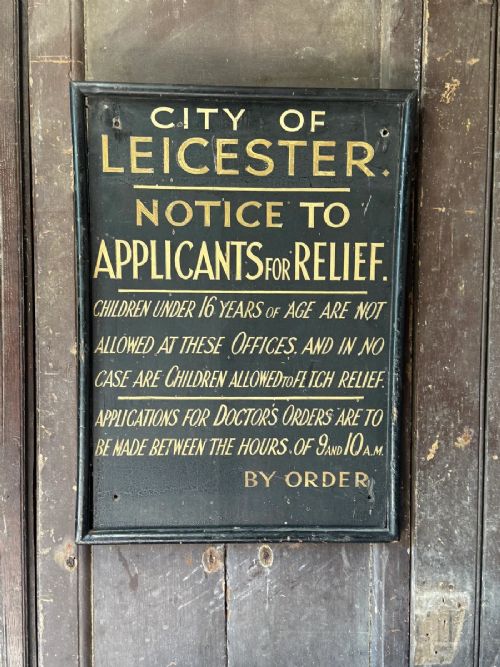
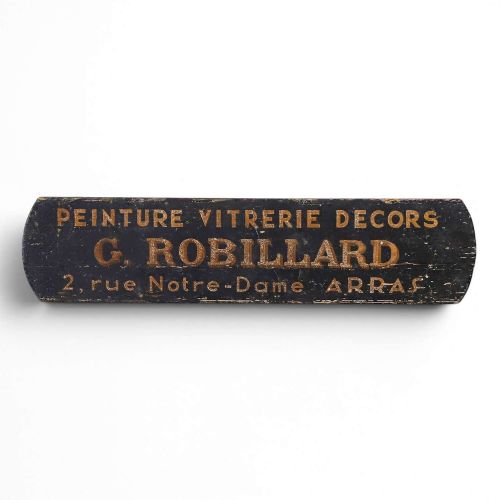
The selection on this page leans heavily toward early twentieth-century trade signs, carnival panels and nineteenth-century dummy boards. These pieces serve primarily as decorative wall art, bringing distinct visual presence to contemporary interiors through surface pattern and pigment.
How they were made
Makers utilised available timbers such as pine, applying oil paint and occasionally gold leaf directly to the wooden surface. Many pieces rely on simple carpentry for the structural board, shaped with saws before receiving hand-painted decoration.
Surfaces often show layers of historic paint applied for commercial signage, theatrical display or folk art representation. Iron fixings, glass panels and mirrored plates occasionally integrate with the timber structures.
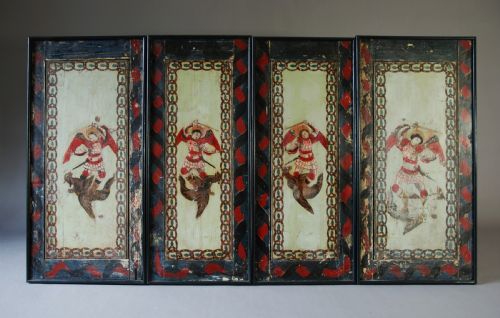
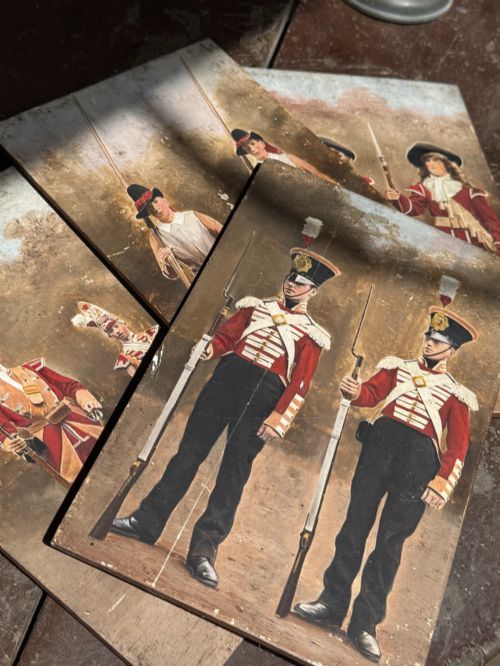
Several painted soldiers on panel stand ready to guard the room without making a single sound.
What varies in quality
The strength of the original hand-painted imagery separates exceptional examples from simpler functional items. Bold lettering, distinct figurative depiction and naivety of execution contribute directly to visual appeal.
The integrity of the painted surface and the survival of original framing or mounting dictate the overall character of each piece. Retaining the authentic early finish preserves the historical narrative carried by the timber.
George Whitton Johnstone·John Exley
The Painted Timber Board Glossary
- Dummy Board
- A flat wooden figure painted to depict a person, animal or soldier, designed to deceive the eye from a distance. These items are also known as silent companions.
- Trade Sign
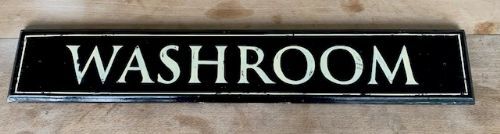
- A painted board or panel utilised by a shop, cinema or business to advertise services or goods to the public. These signs frequently incorporate lettering alongside pictorial elements.
- Folk Art
- Artistic work created within a traditional culture by self-taught or untrained makers, often seen in naive panels and decorative boards. This style prioritises direct visual expression over academic proportion.
- Gold Leaf
- Gold beaten into extremely thin sheets, applied to timber surfaces for highlights and lettering on signage. It provides a reflective contrast against painted wood.
Painted Timber Board: Frequently Asked Questions
What are dummy boards?
Dummy boards are flat timber figures painted to resemble people or animals, often displayed in hallways or near fireplaces.
Historically placed to surprise visitors or act as silent companions in rooms, they date across the eighteenth and nineteenth centuries.
How were trade signs used?
Trade signs hung outside shops, cinemas and businesses to advertise specific trades or goods to passers-by.
They rely on clear painted lettering and imagery to communicate services before the dominance of modern illuminated signage.
Where should I hang a fairground panel?
Fairground panels suit large wall spaces in living areas or kitchens where their bold painted graphics can act as a focal point.
Their robust timber construction and vibrant early twentieth-century palettes anchor contemporary interior schemes effectively.
How do I date a painted wooden sign?
Dating relies on examining the style of the hand-painted lettering, the type of timber used, and the composition of the paint layers.
Nineteenth-century examples often show distinct wear patterns compared to interwar or Belle Époque pieces.