
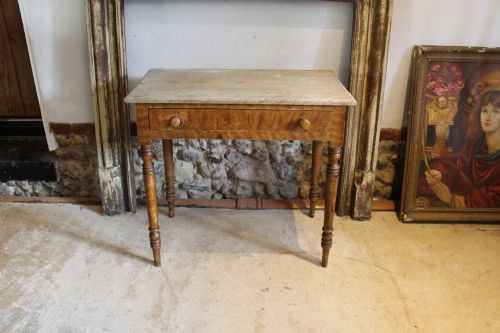

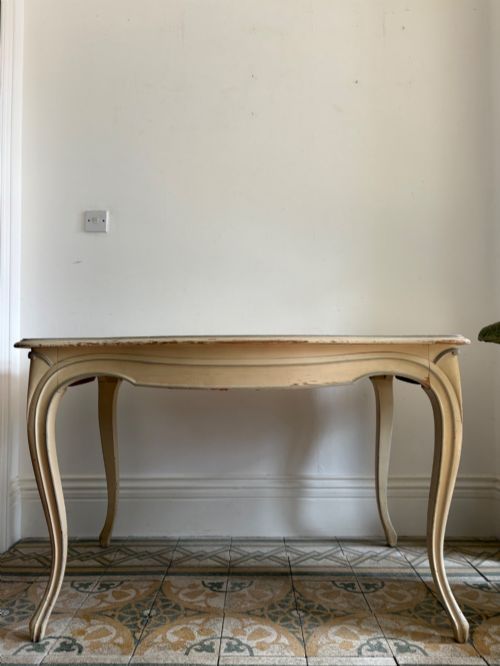
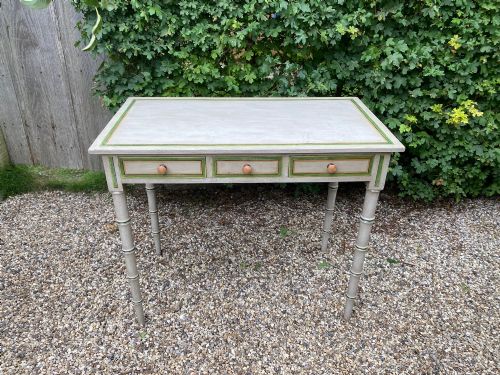
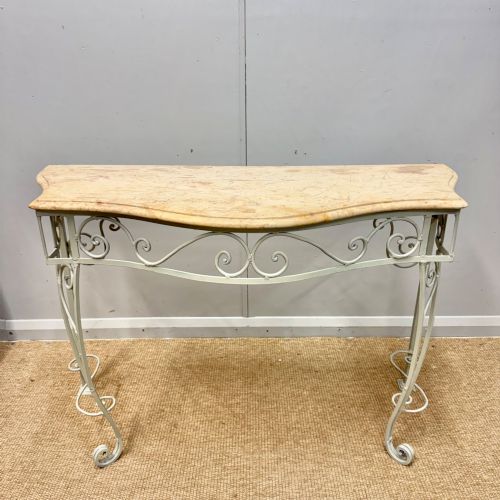
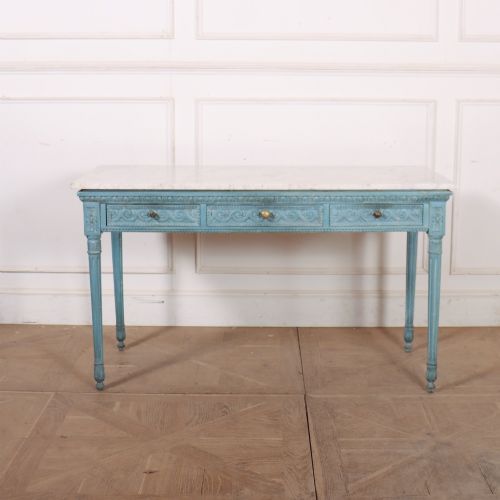
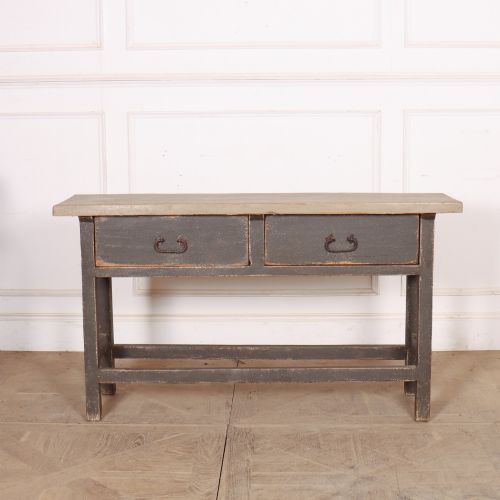
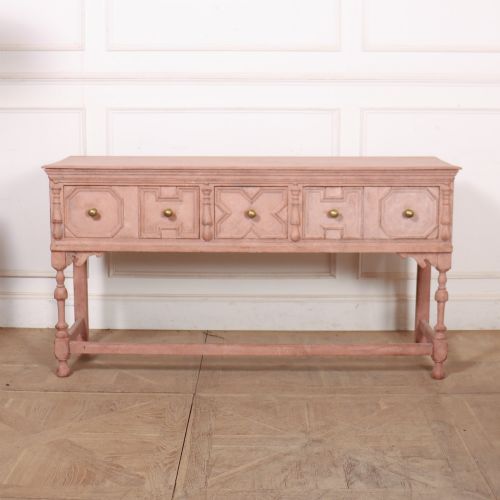
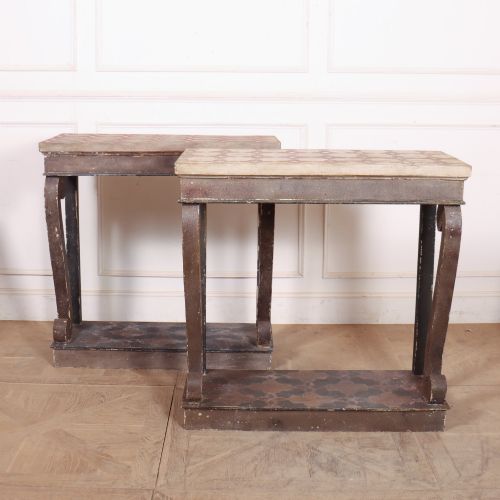
Painted Hall Console Table
A painted hall console table brings linear elegance and surface colour to a narrow hallway, grounding the entrance with architectural form.
Painted Hall Console Table
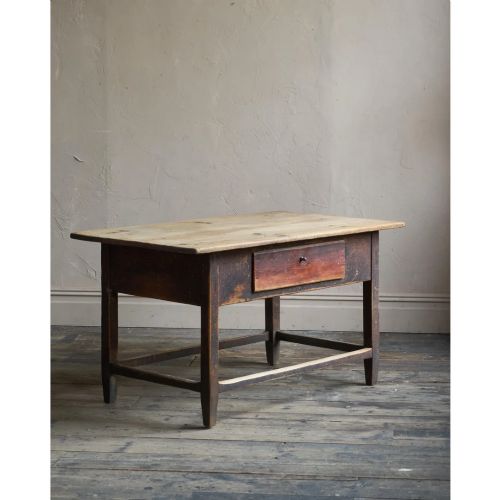
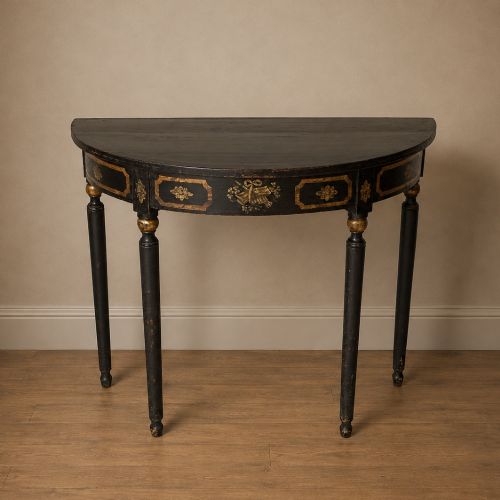
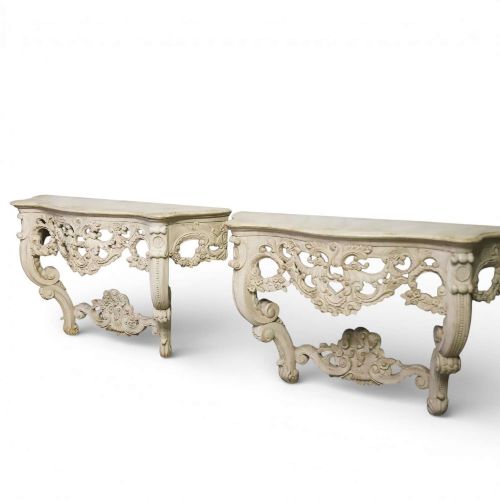
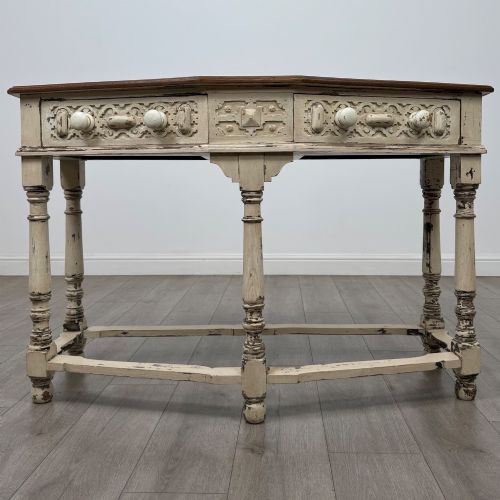
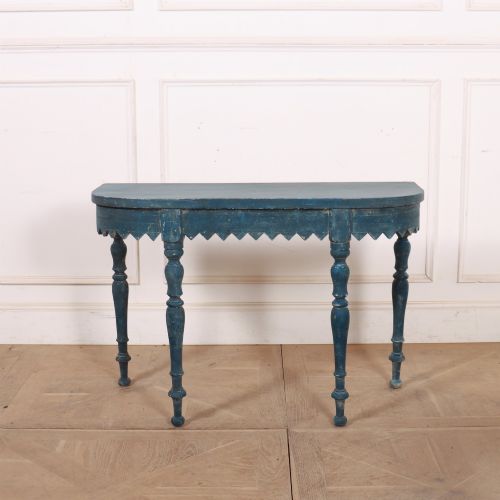
A painted hall console table offers a shallow surface designed to stand flat against an entrance wall without obstructing foot traffic. These pieces range from substantial Georgian and Regency demi-lune designs to lighter Edwardian and twentieth-century French or Swedish country models.
The selection on this page spans periods from the eighteenth century through to the interwar years, encompassing side tables, serving tables, and dresser bases adapted for hall use. Pine, oak, and mixed timber provide the structural foundation for painted, gessoed, or parcel-gilded surfaces.
Materials and construction
Carpenters typically built these tables using solid timber such as pine and oak, often shaping tops into demi-lune, rectangular, or bow-front profiles. Drawer frames utilise traditional joinery, while stretchers - including box stretchers - add stability to slender legs.
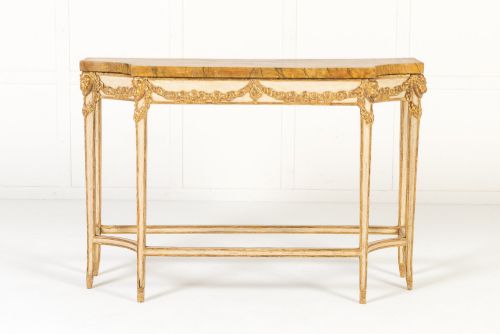
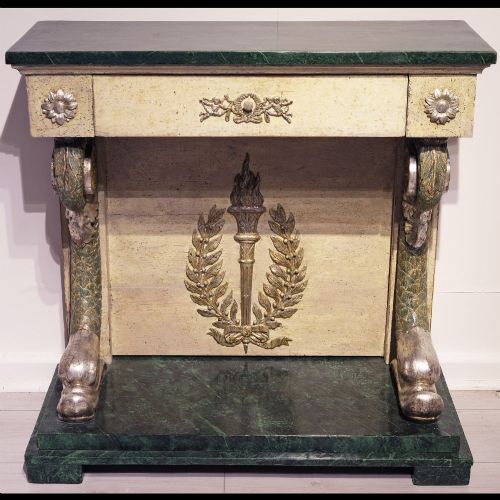
Surfaces received layers of gesso and oil paint, sometimes enriched with parcel gilding or scumble glazes to simulate finer woods or stone. Wrought iron, brass fittings, and marble inserts appear on specific continental models from the nineteenth and twentieth centuries.
Swedish country tables often arrive with delightfully stubborn box stretchers that defeated generations of enthusiastic vacuum cleaners.
Elements of quality
The integrity of the original paint surface distinguishes superior examples from later repainted pieces. Original pigment layers, whether weathered pine or refined Italian gilt, show natural craquelure and wear that machine finishes cannot replicate.
Structural refinement also dictates value, seen in the crispness of hand-carving on Neoclassical or French chateau legs, the precision of dovetail joints within drawers, and the balanced proportions of demi-lune frames against a wall.
The Painted Hall Console Table Glossary
- Demi-lune
- Having a half-moon shape with a flat back edge designed to sit flush against a wall. This profile saves floor space in narrow hallways.
- Gesso
- A plaster mixture applied to wood surfaces to create a smooth base for painting or gilding. It provides crisp relief detail under the pigment.
- Scumble
- A translucent layer of dark glaze applied over a lighter opaque paint base and manipulated with a brush or comb. This technique creates mottled, aged texture.
- Parcel gilt
- Partly gilded with thin gold leaf or powder to highlight carved details, mouldings, or motifs against a painted background.
- Dresser base
- A low wooden unit traditionally fitted with drawers and occasionally a potboard shelf below. These sturdy pieces frequently function as console tables in wider halls.
Painted Hall Console Table: Frequently Asked Questions
How do I style a narrow hallway with a console table?
Choose a shallow demi-lune or bow-front console table that leaves adequate clearance for passing through the entranceway. Pair the surface with a matching mirror or a simple table lamp to balance the vertical space.
Keep decorative objects minimal to preserve the painted finish and the clean lines of the timber frame. A single ceramic bowl or small tray works well for everyday items.
What is the difference between a console table and a side table?
A console table is specifically built to stand against a wall, frequently featuring a flat back edge and decorative front legs. Side tables are traditionally free-standing and finished on all four sides.
In modern usage, however, the terms often overlap, and many antique side tables serve effectively as hall consoles due to their compact proportions.
How do I identify original paint on an antique table?
Examine the surface under natural light for microscopic wear patterns, micro-cracking, and multiple underlying layers visible around edges and joints. Original paint ages uniformly with the wood beneath rather than sitting flatly on top.
Modern repainting often masks tool marks and hides the natural grain texture of pine or oak timbers.
Can these tables withstand daily use in a busy entrance?
Solid timber frames made from pine, oak, or mixed hardwoods offer robust support for everyday hallway traffic. Waxed or sealed paint finishes protect the underlying wood from light moisture and dust.
Avoid placing damp items directly onto antique painted surfaces to prevent permanent staining of the vintage finish.