
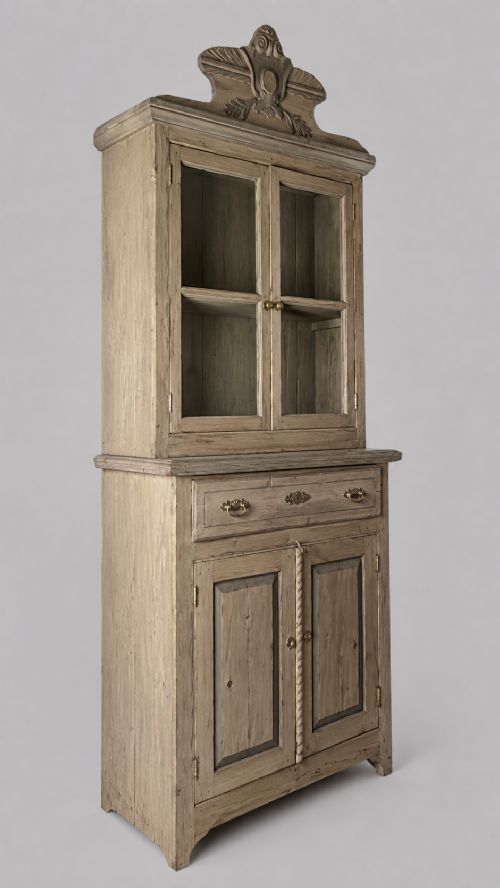
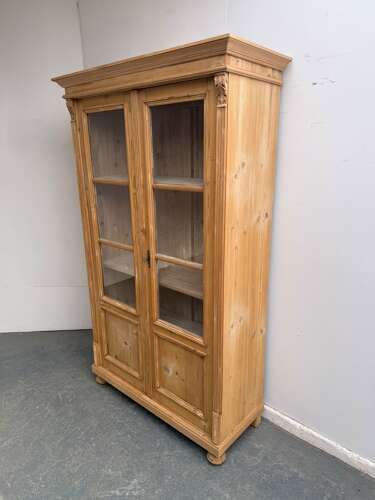
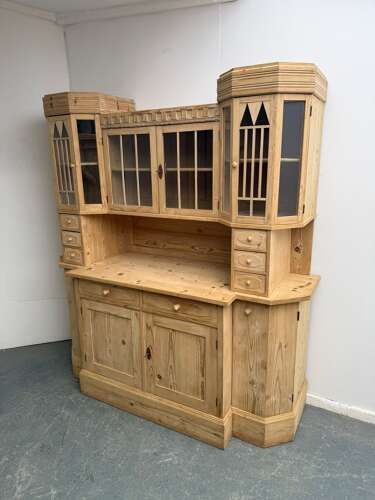
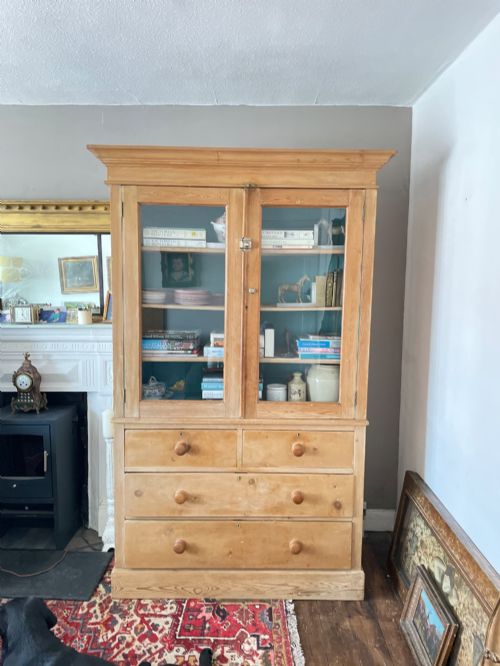
Painted Glazed Cupboard
A painted glazed cupboard brings architectural timber, glass fronts and decorative colour together to store and display domestic belongings.
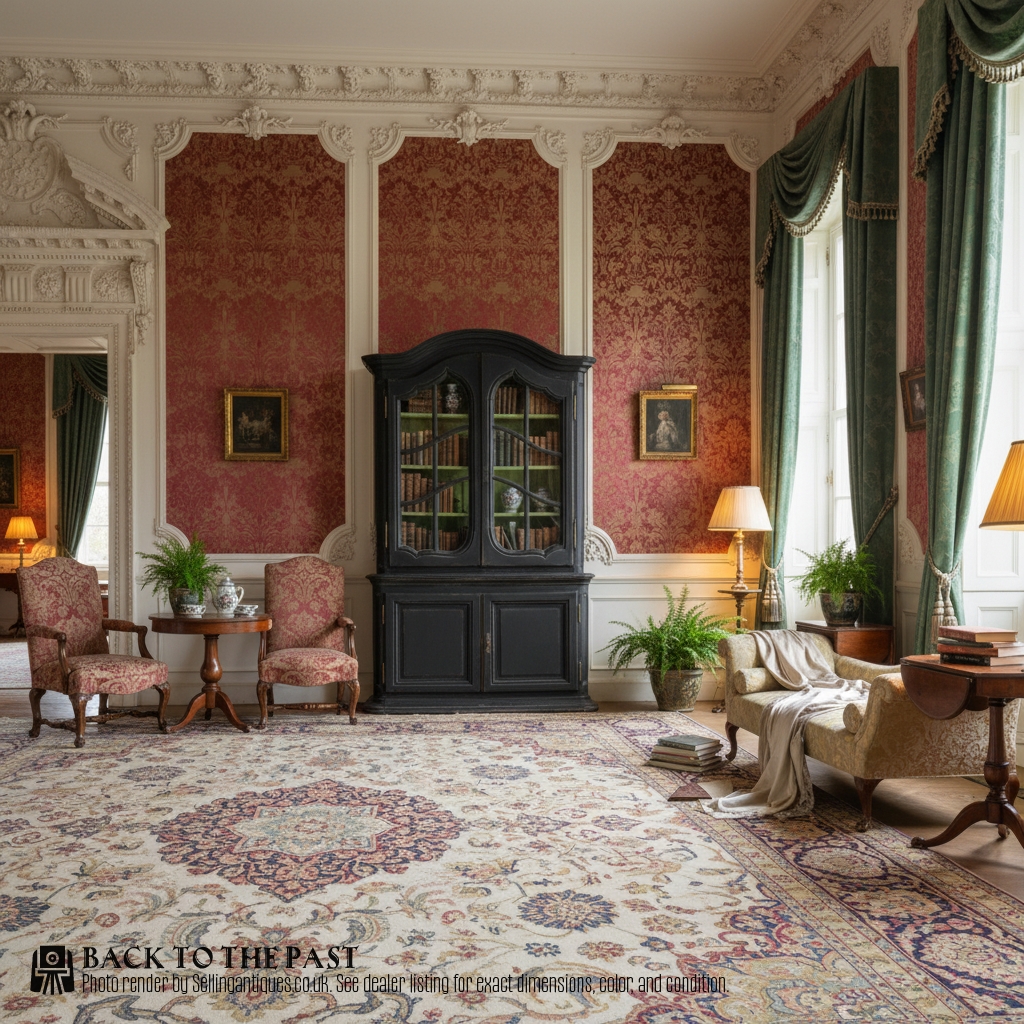
Painted Glazed Cupboard
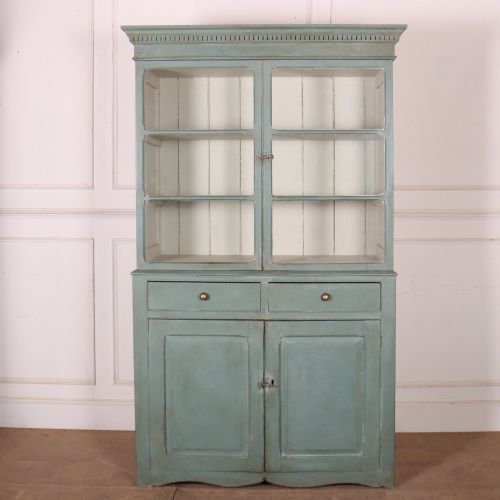
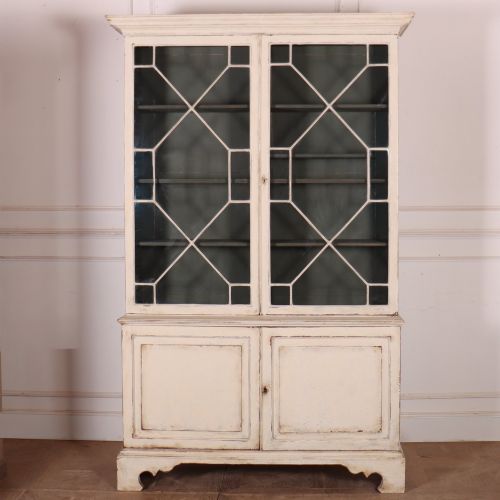
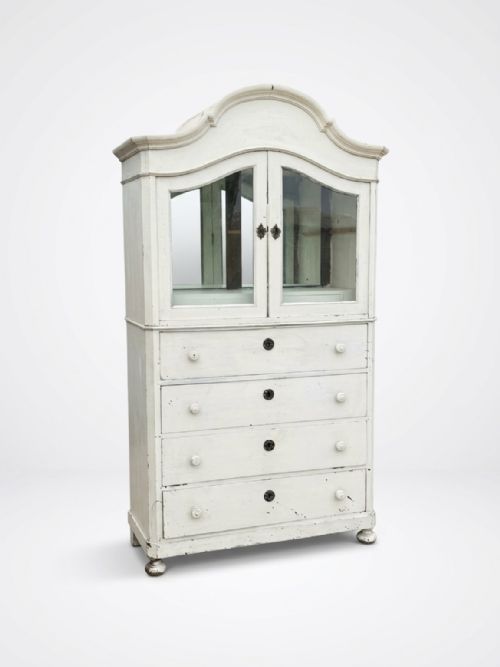
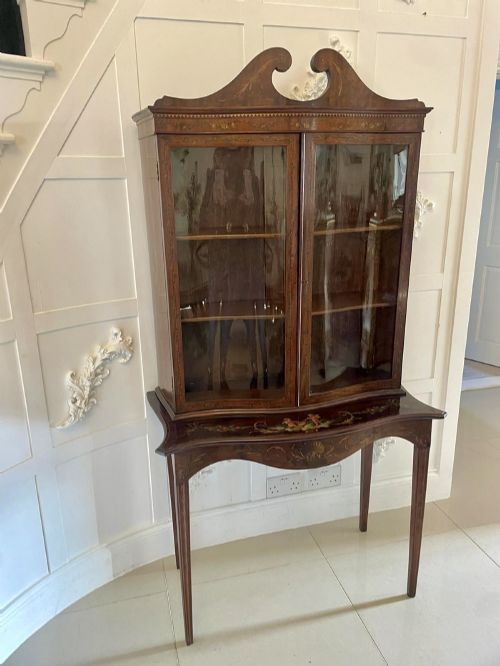
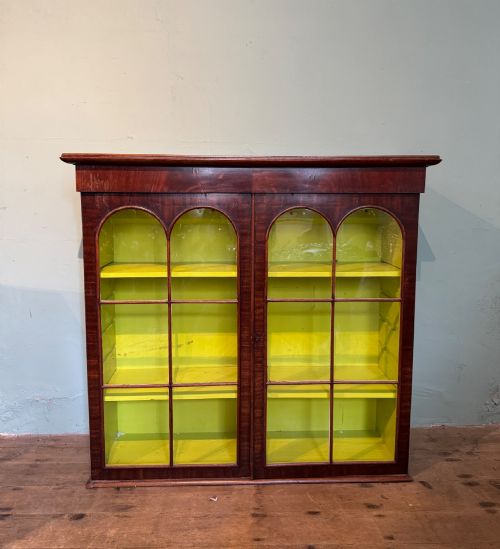
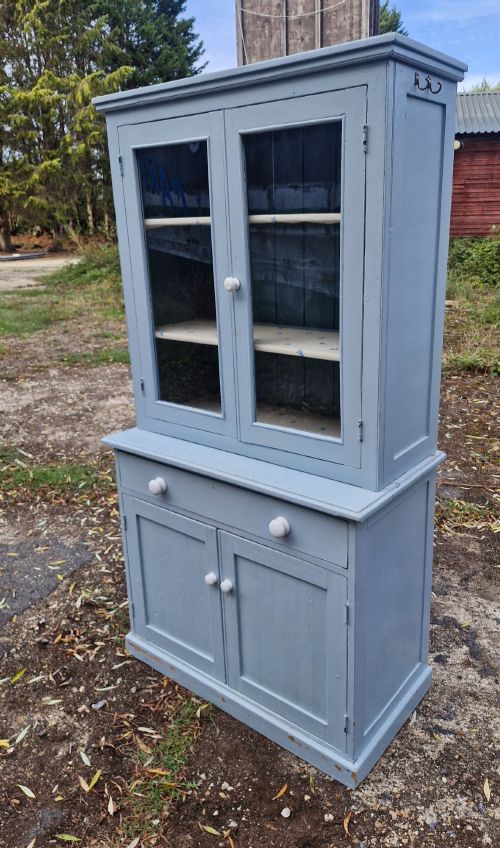
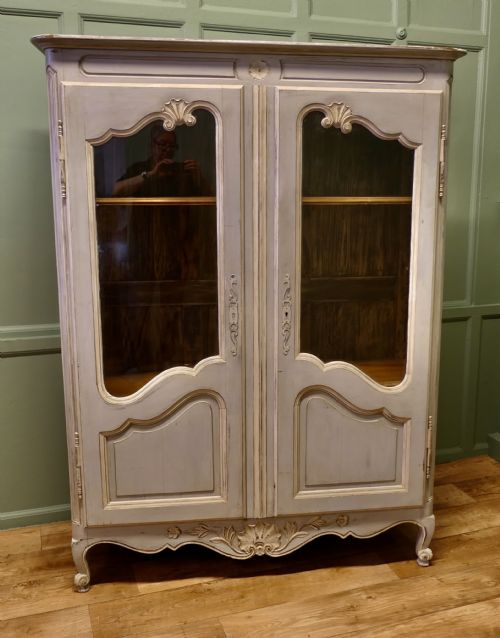
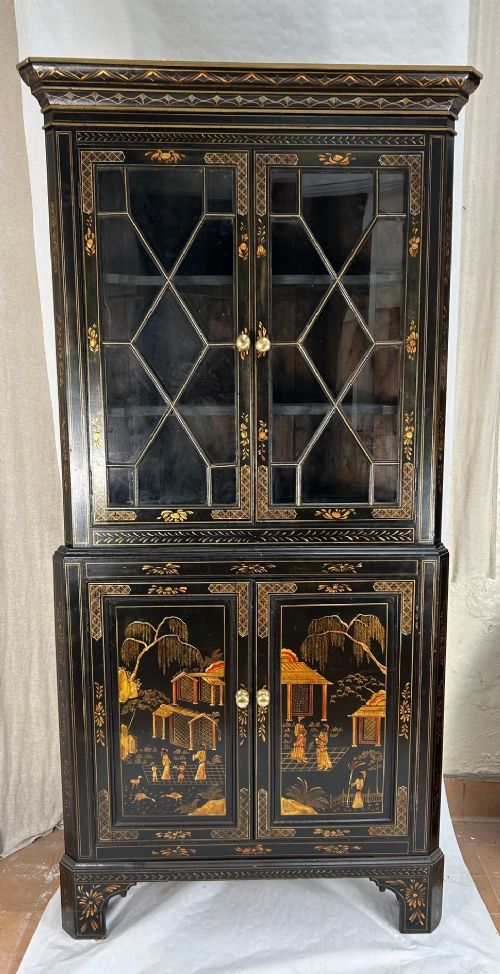
A painted glazed cupboard combines a timber frame with glass doors to reveal the contents within while protecting them from dust. These pieces appear in forms ranging from corner cupboards and wall-hung units to two-part kitchen dressers, bookcases and substantial display cabinets.
Most examples seen here belong to the nineteenth century and the Victorian era, alongside eighteenth-century works and Edwardian pieces. Origins stretch across English, Scottish, French, Swedish, Dutch and Hungarian workshops.
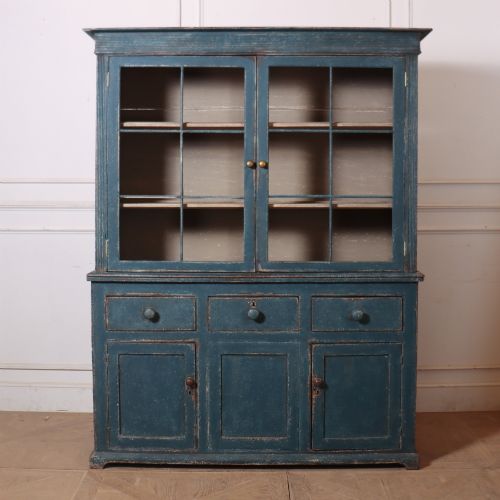
The most common version met on this page is the pine kitchen cupboard or display cabinet, often finished with painted surfaces or original decorative schemes.
Craftsmanship and Surface
Quality rests in the integrity of the timber framing, the proportion of the glazing bars and the preservation of original painted decoration rather than later overpainting. Well-made pieces retain structural stability in their doors and uprights, ensuring glass panels sit true without binding.
The sophistication of the painted finish separates standard utility pieces from finer examples, with nuanced brushwork, scumble effects or intact interior colour schemes elevating the piece.
Painted Glazed Cupboard Retail Price Guide 2026
Typical asking prices for painted glazed cupboard among the pieces listed under this phrase on Sellingantiques today, from the lower quarter to the upper quarter. They describe what is for sale here now, not the wider market.
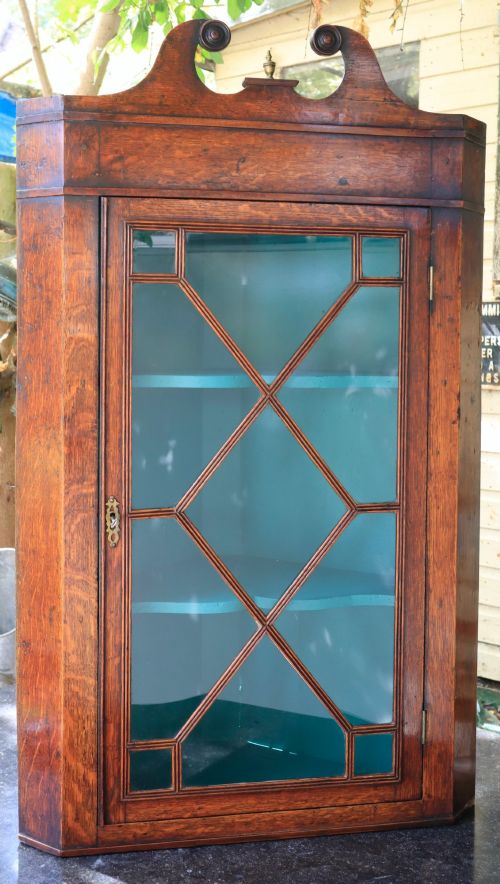
Some corner cupboards hide brightly painted teal or cream interiors behind sombre exterior paint, giving a cheerful flash of colour upon opening.
Jewell of Holborn
The Painted Glazed Cupboard Glossary
- Astragal
- A moulding profile used to divide glass panes within a glazed door. These narrow timber strips form geometric patterns across the front of the cabinet.
- Vitrine
- A glass-fronted display cabinet designed for showing porcelain, books or decorative objects. The term often denotes a finer urban piece rather than a utilitarian kitchen cupboard.
- Scumble
- A decorative painting technique where a translucent glaze is manipulated over a lighter base coat to imitate grain or texture. It appears frequently on nineteenth-century country furniture.
- Two-part
- A piece constructed in separate upper and lower sections that stack together. This form facilitates transport for large dressers and bookcases.
- Bonnet top
- An arched or hooded upper cornice profile found on certain tall cabinets. This architectural shape adds height and visual presence to the piece.
Painted Glazed Cupboard: Frequently Asked Questions
Where should I place a painted glazed cupboard?
These cabinets suit kitchens, dining rooms and living spaces where glass doors allow books, ceramics or glassware to remain visible while protected.
Ensure placement avoids direct heat sources and strong sunlight to preserve the timber and painted surfaces over time.
How do I clean the painted finish?
Dust gently with a dry or slightly damp soft cloth, avoiding harsh chemical cleaners that can strip or dull historic paint.
Wax finishes benefit from occasional appropriate wax application, while modern emulsion or oil paints require simple wiping without heavy scrubbing.
Are the shelves adjustable?
Many bookcases and display cabinets feature adjustable shelving supported by wooden racks or metal pins, allowing flexibility for different object heights.
Simpler kitchen cupboards often feature fixed interior shelves dictated by the original construction of the piece.
How do I distinguish eighteenth-century pieces from Victorian ones?
Eighteenth-century examples often display finer joinery details, hand-blown glass with natural imperfections, and specific moulding profiles typical of the period.
Victorian and later pieces frequently utilise machine-sawn timber, heavier proportions and different hardware styles reflective of nineteenth-century industrial production.