


Painted Giltwood Mirror
A painted giltwood mirror brings the warmth of historic carved woodwork and metallic leaf into a room, offering both reflection and decorative presence.
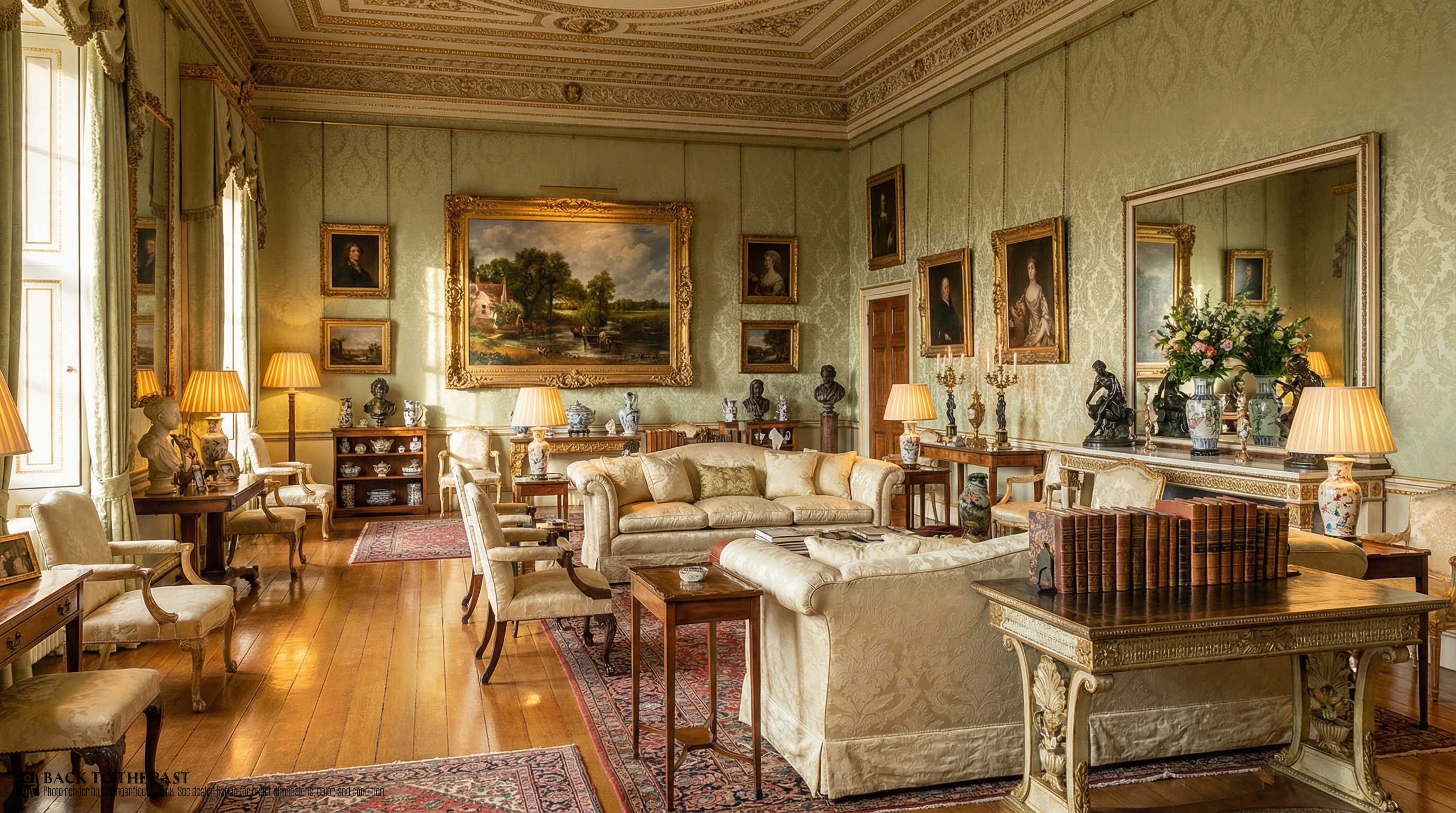
Painted Giltwood Mirror
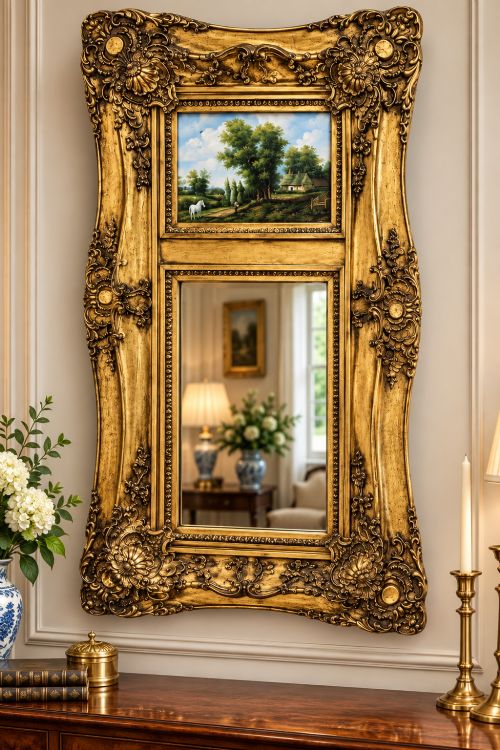
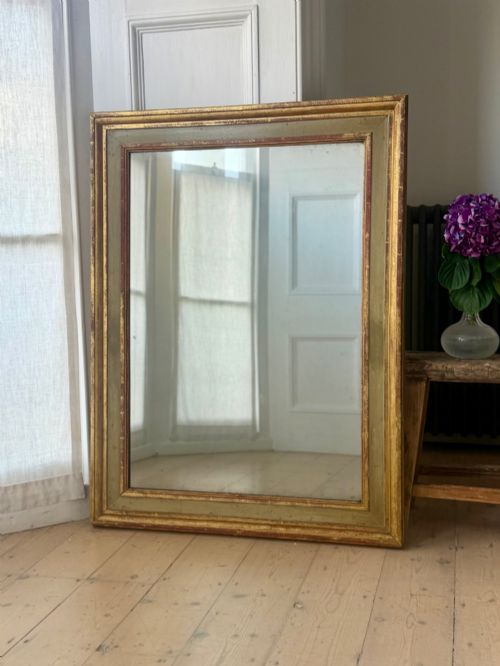
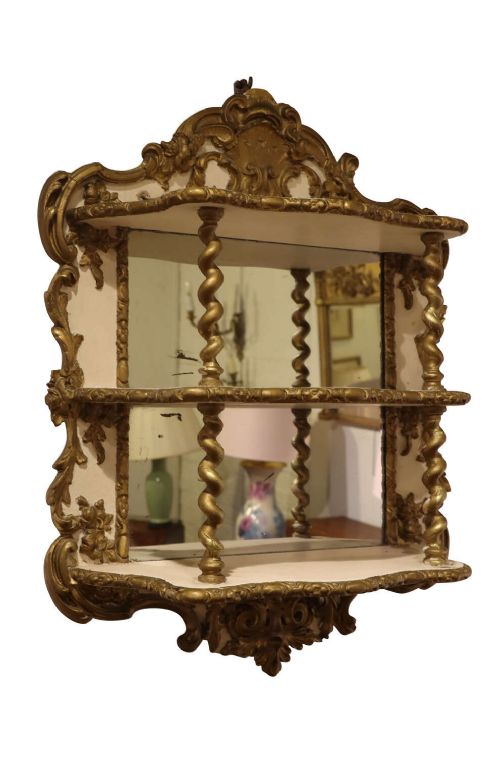
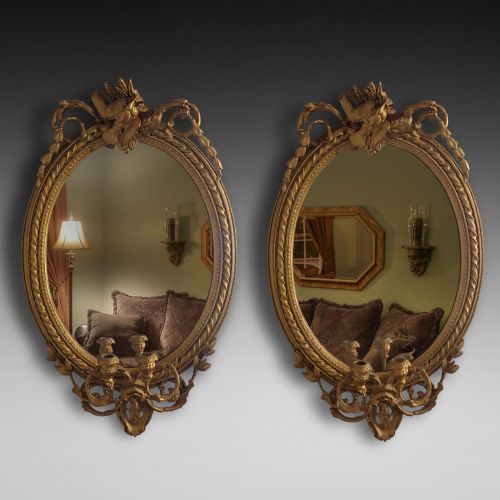
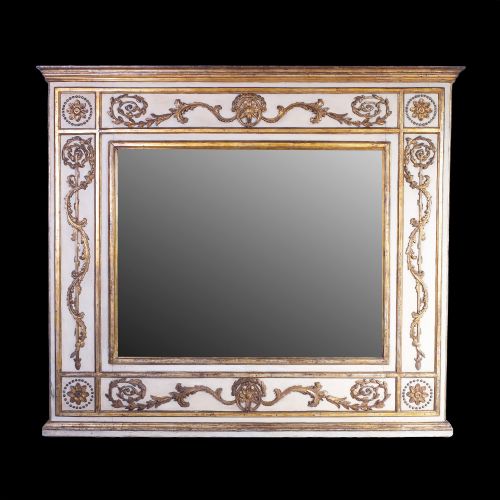
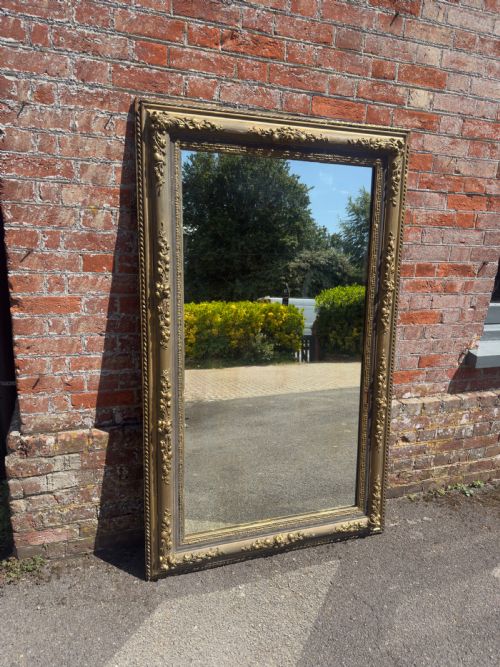
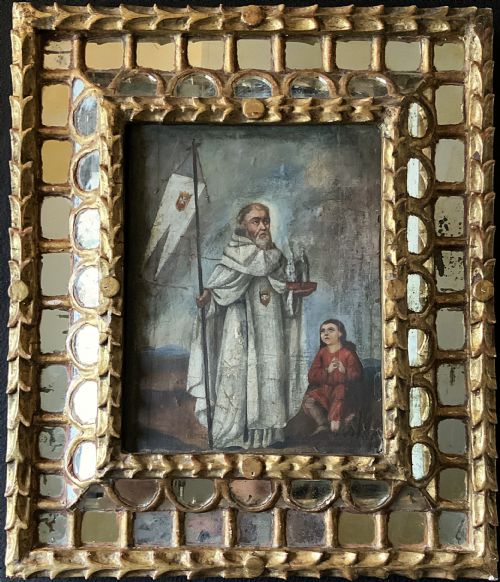
When searching for a painted giltwood mirror, collectors encounter an array of wall-hanging, pier, and overmantel forms primarily originating from nineteenth-century France and England. These pieces combine painted wooden surfaces with highlighted sections of gold leaf, often integrating oil paintings or glass panels directly into the design.
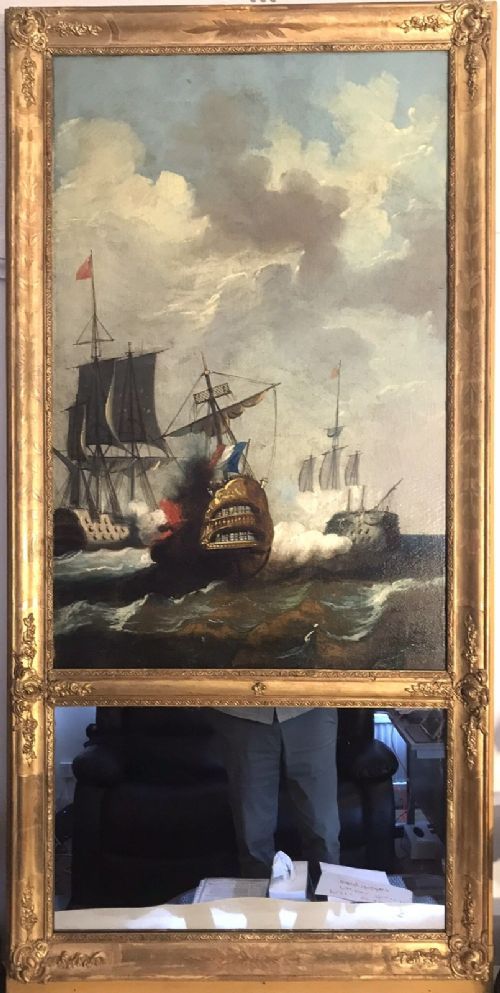
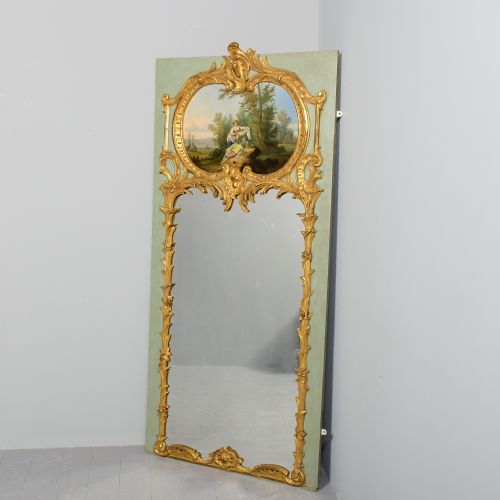
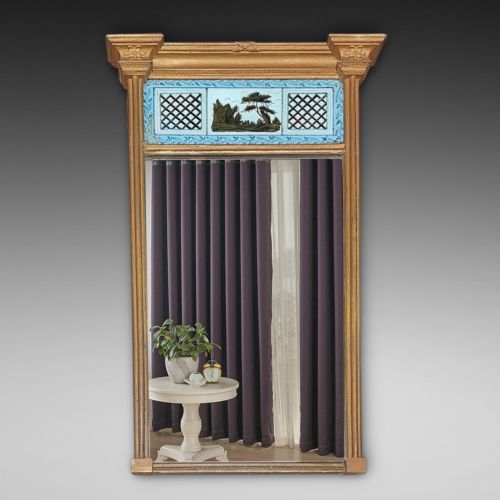
The version most frequently met on this page is the French trumeau mirror, which frequently pairs a vertical glass plate with an upper oil painting or decorated panel. Alongside these, substantial nineteenth-century overmantel mirrors and architectural pier glasses appear regularly, reflecting Regency, Victorian, and Rococo Revival design vocabularies.
Makers and artisans of the eighteenth and nineteenth centuries constructed these frames to anchor formal rooms, placing them above mantelpieces or between windows to amplify natural light. The survival of original painted and gilded surfaces provides direct insight into historic interior decoration schemes.
How they were made
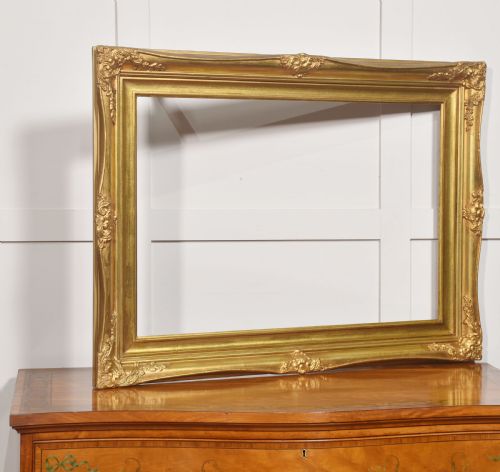
The construction of these mirrors relies on carved wooden foundations coated in layers of gesso to create a smooth, responsive ground for detail work. Artisans then applied thin sheets of gold leaf to selected areas, burnishing the metal to a high shine while leaving other sections painted.
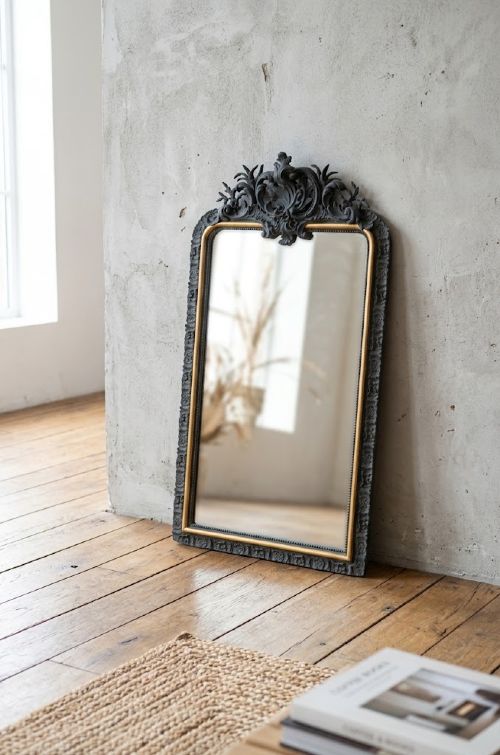
Surfaces received decorative coats of paint, frequently in white, soft grey, or muted tones, contrasting with the brilliant flash of gilt enrichment. Early examples often incorporate mercury glass plates, identifiable by their characteristic mottled backing and deep, reflective distortion.
Several mirrors capture centuries-old maritime scenes of galleons at sea frozen permanently above your mantelpiece.
What varies in quality
Quality in a painted giltwood mirror rests upon the crispness of the original wood carving and the depth of the gesso relief beneath the leaf. Finer examples display hand-modelled ornamentation where plant motifs and scrolls remain sharp and well-defined rather than rounded off by excessive overpainting.
The preservation of the original painted finish and the integrity of the gold leaf dictate the visual success of the piece. Trumeau mirrors with intact seventeenth or eighteenth-century oil panels carry greater distinction than those with later replacement artwork.
The Painted Giltwood Mirror Glossary
- Trumeau
- A decorative wall mirror featuring an integrated upper panel containing an oil painting, carving, or reverse-painted glass. These architectural fixtures were designed to sit flush against the wall between windows or above fireplaces.
- Giltwood
- Timber carved and subsequently covered with thin leaves of gold or metal alloy. The application technique creates a durable, luminous metallic finish that ages with a warm patina.
- Gesso
- A plaster-like mixture applied to wooden frames as a preparatory layer before gilding or painting. It accepts fine carving and sanding, allowing for crisp relief decoration.
- Verre Eglomise
- A cold decoration technique where designs are painted and gilded on the reverse side of glass panels. This method produces a reflective, jewel-like surface frequently seen in Regency pier mirrors.
- Pier Mirror
- A tall, narrow looking glass designed to hang on the wall space between two windows. They often sat above matching console tables to complete a cohesive room arrangement.
Painted Giltwood Mirror: Frequently Asked Questions
Where should I hang a trumeau mirror?
These mirrors work best above a fireplace mantelpiece or centered on a principal wall where their vertical proportions can draw the eye upward. Placing them opposite a window also maximises the diffusion of natural light across the room.
Ensure the wall fixings match the substantial weight of carved wood and gesso frames. Professional mirror brackets provide the necessary security for grand scale pieces.
Are painted finishes original?
Many mirrors retain their original nineteenth-century paint schemes, often applied over gesso in shades of white, cream, or pale grey to contrast with gilded highlights. Close inspection reveals natural craquelure and wear consistent with age.
Later overpainting is common on pieces that underwent nineteenth or twentieth-century redecoration, which can sometimes be identified by microscopic layer analysis or surface texture.
What is the difference between a pier mirror and an overmantel mirror?
Pier mirrors are traditionally tall and narrow, built to occupy the narrow wall space between architectural openings. Overmantel mirrors are wider in proportion, engineered specifically to span the horizontal expanse above a fireplace.
Both forms utilise painted and gilded frames, but their contrasting dimensions dictate how they interact with surrounding furniture.