



Painted Dressing Chest
A painted dressing chest brings useful bedroom storage together with a practical surface and mirror, making it a functional centrepiece for a period room.
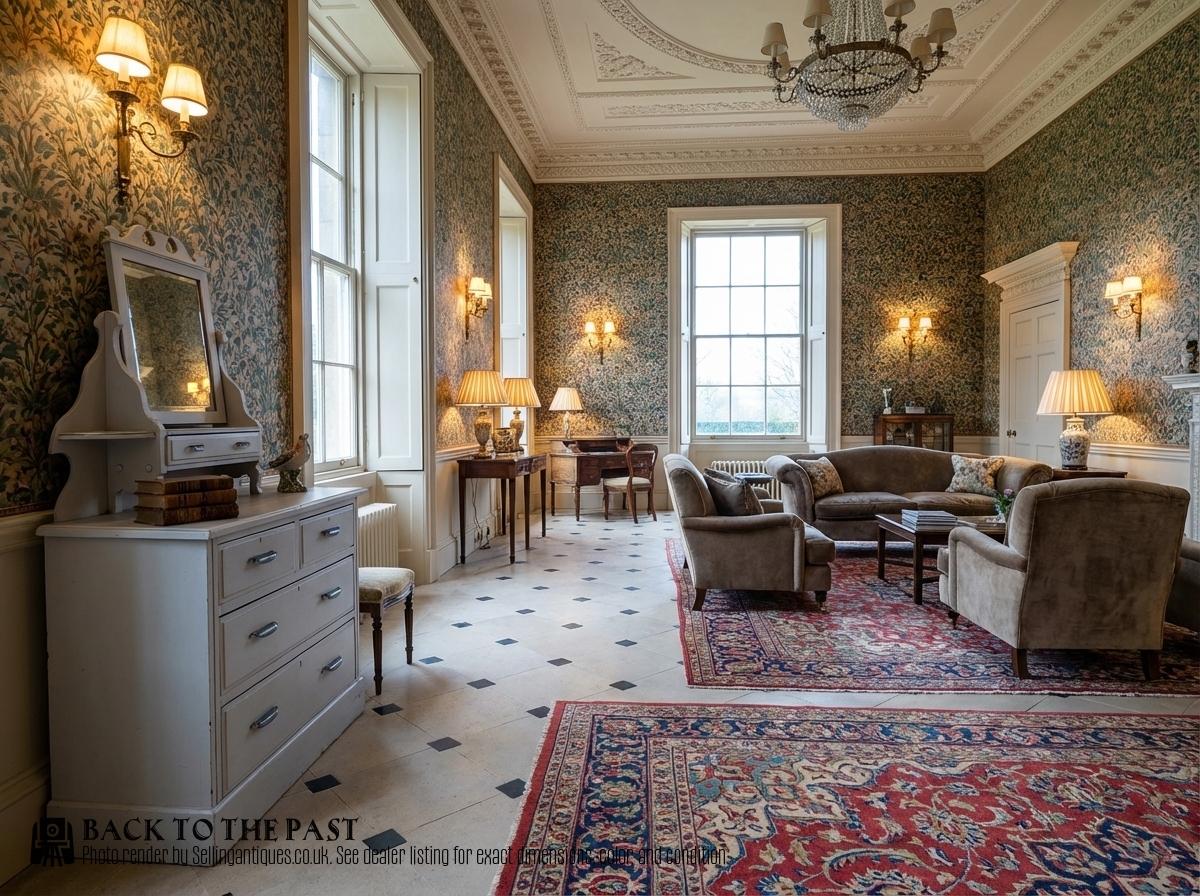
Painted Dressing Chest
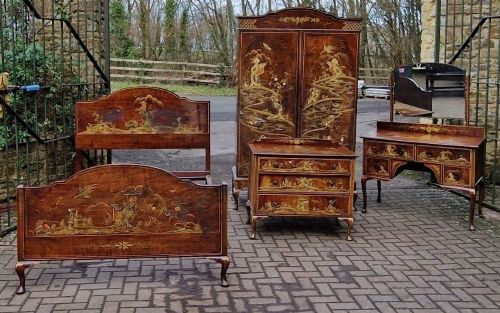
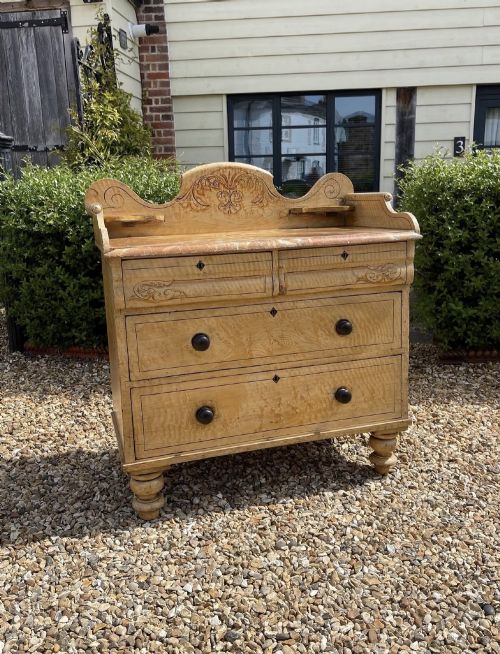
A painted dressing chest combines a set of drawers with a surface for grooming, often accompanied by a swing mirror, providing a complete bedroom furnishing. You will most frequently encounter pine examples from the Victorian period, though earlier pieces from the Regency era also appear alongside French and Edwardian variants.
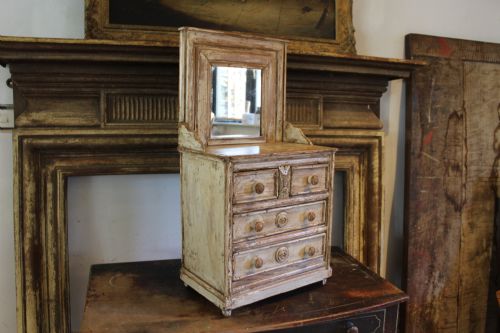
The form spans straightforward pine chests fitted with mirrors to more decorative pieces finished in scumble glaze, stencilled details, or original buff paint with contrasting lines. Alongside full-sized bedroom pieces, related forms such as miniature chests and bedside tables occasionally emerge within the wider category.
How they were made
Construction relies primarily on pine and walnut, utilising timber carcasses built to hold multiple drawers while supporting the weight of attached or matching swing mirrors. Wood and painted finishes form the core of the construction, with brass hardware frequently used for drawer pulls and handles.
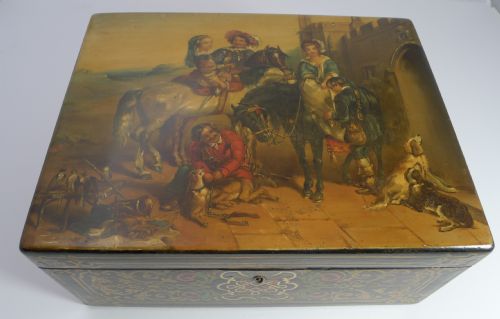
Surface decoration involves direct hand-painting, stencilling, and scumble glazing applied over wood, lacquer, or simulated grain. These decorative layers were often sealed to protect the pigments, preserving the original paint surfaces seen on many surviving nineteenth-century examples.
Painted Dressing Chest Retail Price Guide 2026
Typical asking prices for painted dressing chest among the pieces listed under this phrase on Sellingantiques today, from the lower quarter to the upper quarter. They describe what is for sale here now, not the wider market.
Listings feature periods from the 18th Century through the Regency, Victorian, and Edwardian eras, predominantly constructed from pine.
What varies in quality
Quality rests significantly on the preservation of the original surface, distinguishing pieces that retain their authentic early paintwork from those with later redecorations. The crispness of hand-painted details or stencilling and the survival of matching original glass swing mirrors further elevate an example.
Construction standards differ between utilitarian regional workshop pieces and more refined items featuring sophisticated glazing techniques, harmonious colour lines, or cabinetwork using better timbers such as walnut and satin birch.
Jennens and Bettridge
The Painted Dressing Chest Glossary
- Scumble glazed
- A decorative paint technique where a translucent top layer is manipulated with combs or brushes to simulate the grain of more expensive timber. This finish was popular on utilitarian furniture to add visual depth.
- Swing mirror
- A looking glass mounted on pivoting side supports that allow the angle of reflection to be adjusted. It is typically attached to the top of a dressing chest.
- Simulated pine
- A painted surface finish designed to imitate the appearance of a specific wood grain using layered pigments. Artisans applied this technique to transform simpler domestic timbers.
- Stencilled
- A method of applying repeated decorative patterns by sponging or brushing paint through a cut-out template. It allowed makers to achieve uniform ornamentation on bedroom furniture.
Painted Dressing Chest: Frequently Asked Questions
What is a painted dressing chest?
A painted dressing chest is a set of drawers designed for a bedroom, typically incorporating a surface and a swing mirror for grooming and personal care.
These pieces combine functional storage with decorative surface treatments, ranging from simple pine finished in original buff paint to more elaborate walnut and stencilled variants.
How do I date a dressing chest?
Dating relies on observing construction methods, timber choices, and stylistic cues such as the profile of the mirror supports and drawer framing. Pieces span the Georgian, Regency, and Victorian eras, with Edwardian examples also represented.
Paint analysis helps determine whether a finish is original to the period or a later addition. Surviving surface details often correspond directly to nineteenth-century workshop practices.
Are mirrors original to these chests?
Many dressing chests retain their original swing mirrors, mounted on the upper chest or secured to upright supports. Because mirrors are vulnerable to damage or replacement over time, collectors look for matching timber and consistent wear.
Some surviving pieces are configured simply as chests without attached mirrors, reflecting regional preferences or later modifications.
How do I care for original paint?
Preserving original paint requires keeping the furniture away from direct sunlight and fluctuating humidity to prevent flaking or fading. Gentle dusting with a dry cloth is sufficient for routine maintenance.
Avoid chemical cleaning agents or abrasive polishes that can strip fragile historical finishes or scumble glazes.