
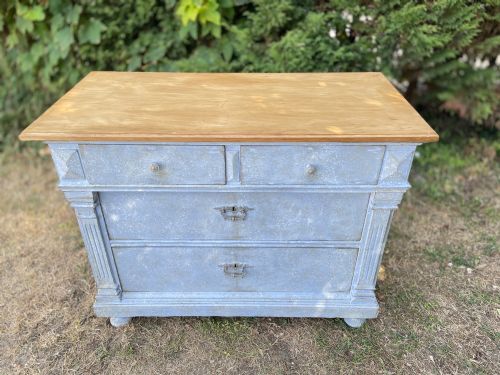
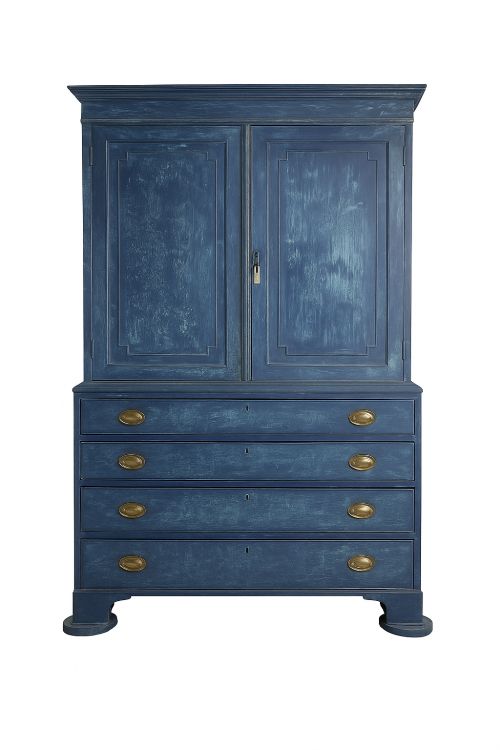
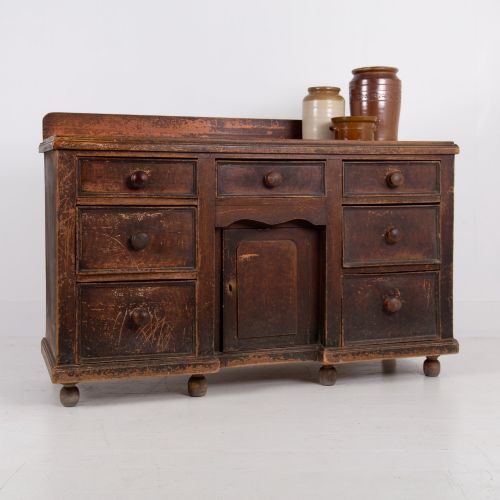
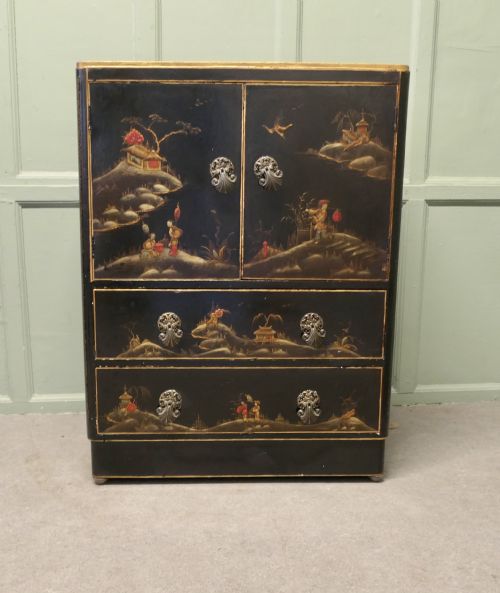
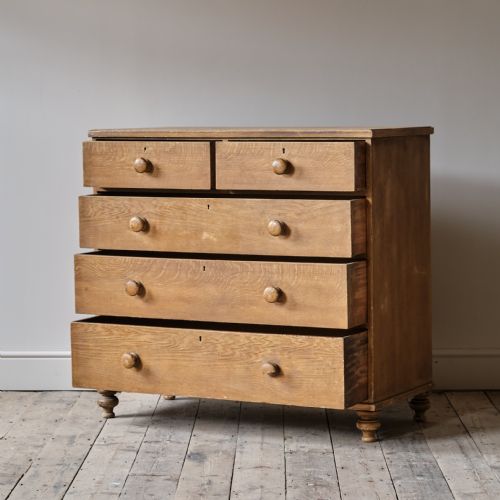
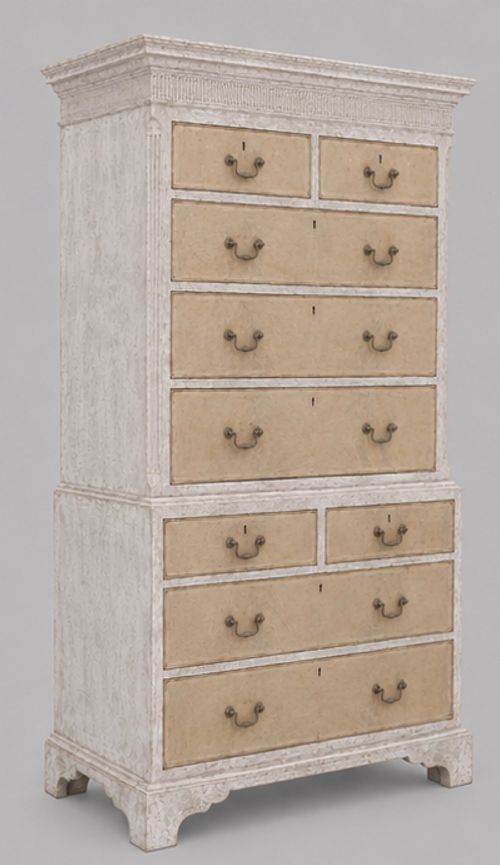
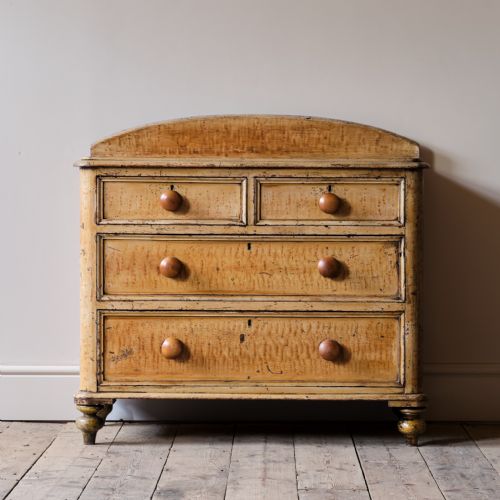
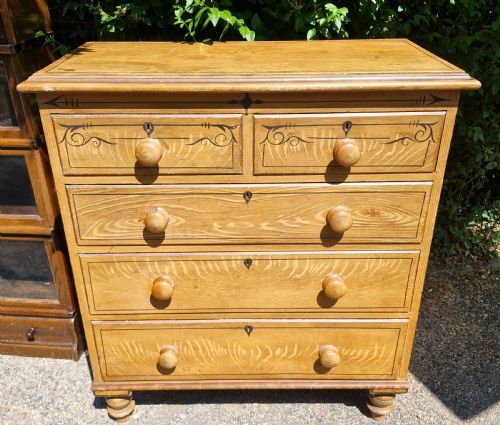
Painted Storage Chest Drawers
Painted storage chest drawers bring practical domestic storage together with decorative surface finishes across diverse historical periods.
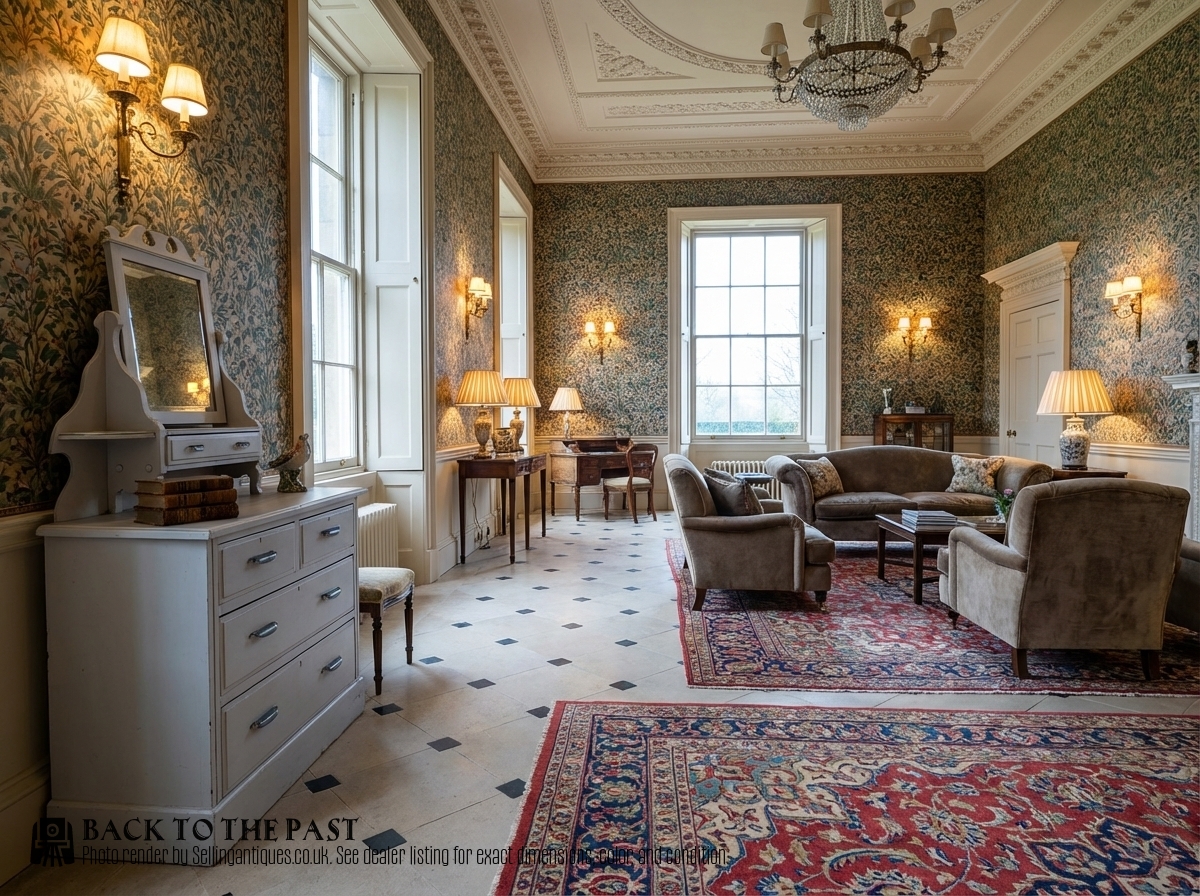
Painted Storage Chest Drawers
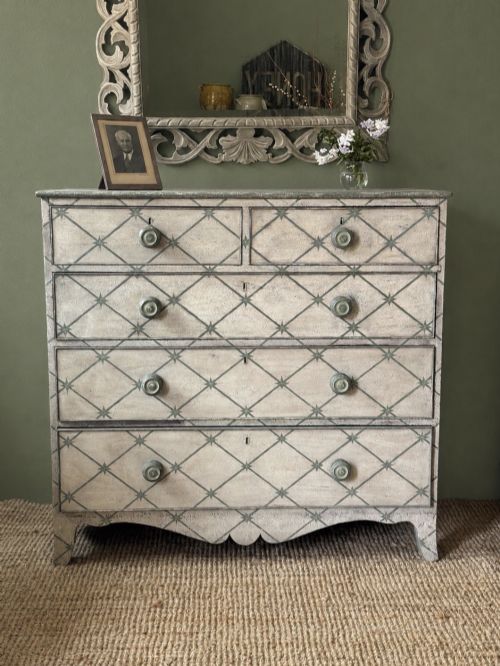
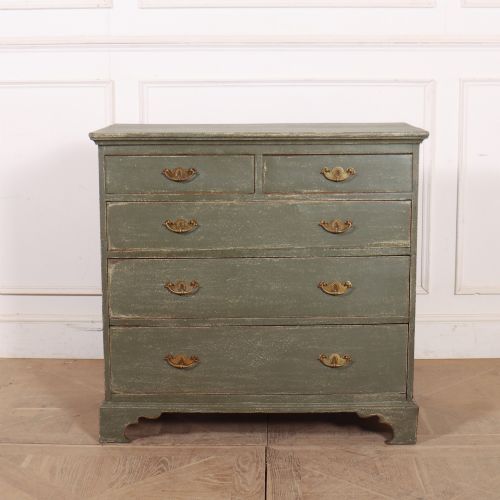
When searching for painted storage chest drawers, buyers encounter a diverse selection of utilitarian furniture adapted through decorative surface treatments. These pieces span the eighteenth century, the Regency era, the Victorian period, and into the early twentieth century.
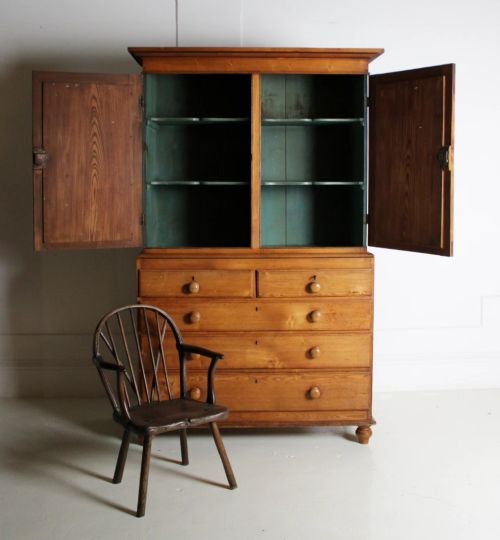
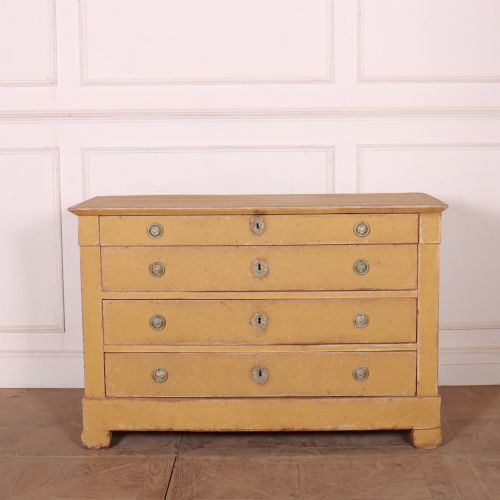
The most common forms on this page include pine and mahogany chests of drawers, commodes, linen presses, and banks of drawers. Origins range from English country workshops to French provincial makers and continental Europe.
Makers utilised various regional styles such as Victorian Country, French Chateau, and rustic country designs to create functional storage for domestic spaces.
How they were made
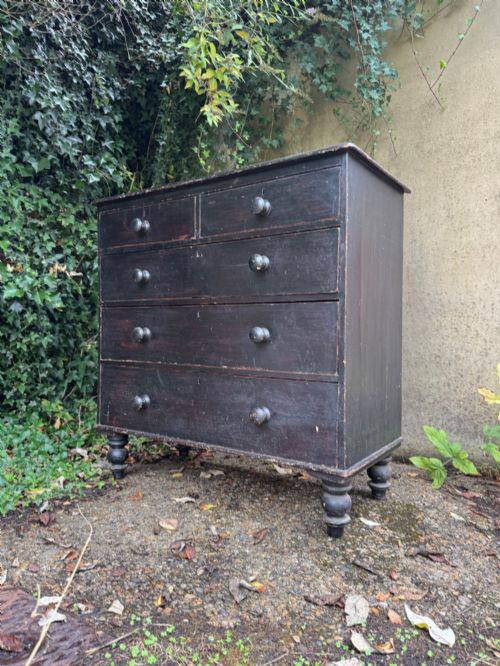
The primary construction relies on timber carcases, most frequently pine or mahogany, combined with metal, iron, and brass hardware fittings. Surfaces were then finished with specialist paint, stencilling, or scumble techniques applied directly to the wood.
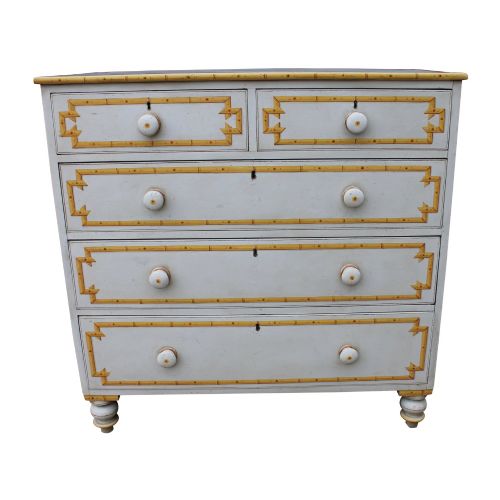
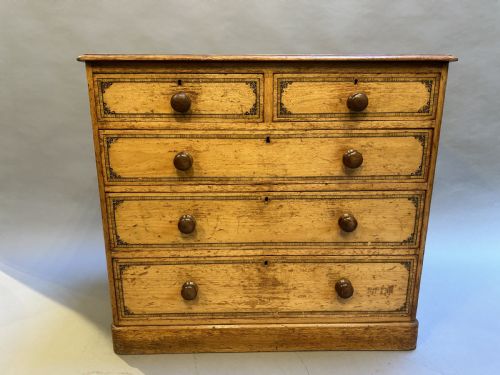
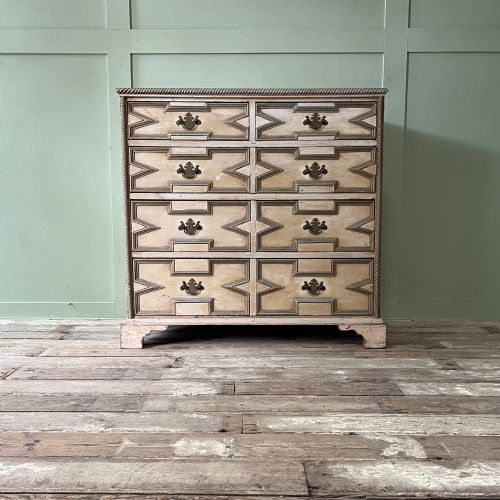
Many examples retain original paint finishes, while others display decorative details such as faux bamboo moulding, black chinoiserie lacquer, or diamond-point carving.
Structural elements reflect traditional cabinet-making methods appropriate to each period, from Georgian serpentine shaping to robust Victorian pine joinery.
Listings feature eighteenth-century, Regency, and Victorian periods utilising pine, mahogany, and painted wood.
What varies in quality
Quality rests heavily on the survival and integrity of the original paint surface relative to later embellishments. Pieces retaining their authentic period finish display a harmonious integration between the timber carcase and the decorative layer.
The sophistication of the form and the quality of the underlying cabinetry distinguish standard utility furniture from finer commissions. Proportions, drawer construction, and the retention of original brass or iron hardware determine the standing of each piece.
Sir Clough Williams-Ellis·Edwards and Roberts
The Painted Storage Chest Drawers Glossary
- Commode
- A lower chest of drawers or cabinet, often associated with French or continental styling from the eighteenth and nineteenth centuries. These items frequently feature shaped fronts and decorative painted finishes.
- Scumble
- A decorative painting technique involving a translucent layer of glaze manipulated over a pale ground to imitate grain or texture. Victorian pine chests often utilised this method for aesthetic depth.
- Linen Press
- A tall double-door cupboard enclosing sliding trays or shelves above a lower chest of drawers. They were traditionally built to store household textiles and folded garments.
- Chinoiserie
- European decorative style inspired by Chinese artistic traditions, featuring hand-painted motifs on lacquered surfaces. Black lacquer versions appeared during the early twentieth century.
- Serpentine
- A furniture front characterised by a double-curved contour, convex at the centre and concave at the sides. This shape requires advanced woodworking skill found in Georgian and later revival pieces.
Painted Storage Chest Drawers: Frequently Asked Questions
How do I date a painted chest?
Dating relies on construction methods, timber selection, and the style of the painted finish. Eighteenth-century pieces often feature serpentine fronts, while Victorian examples frequently utilise pine carcases with scumbled surfaces.
Hardware and drawer joints provide further clues to the manufacturing decade, distinguishing Regency items from later nineteenth-century pieces.
Are these painted finishes original?
Many listings specify original paint, scumble, or lacquer finishes applied during the period of manufacture. Some items record later decorative treatments applied to earlier carcases.
Examing the wear patterns and the interaction between the paint layer and the underlying wood helps determine whether a finish dates from the era of construction.
What is a scumble finish?
Scumbling is a decorative painting technique where a translucent glaze is dragged or brushed over a base coat. This method created simulated wood grain or mottled textures popular on Victorian pine furniture.
It protected the softwood beneath while adding visual interest to utilitarian domestic items.
Where were these chests used?
These pieces served practical storage functions across various domestic settings, from farmhouse bedrooms to Victorian chemist shops and grand drawing rooms. Taller linen presses and banks of drawers accommodated household linens and specialised goods.
Smaller commodes and dressing tables functioned primarily in private chambers for personal storage and grooming.