



Chest of Drawers with Mirror
A chest of drawers with mirror combines two essential bedroom pieces into a single unit, offering generous storage alongside a surface for grooming.
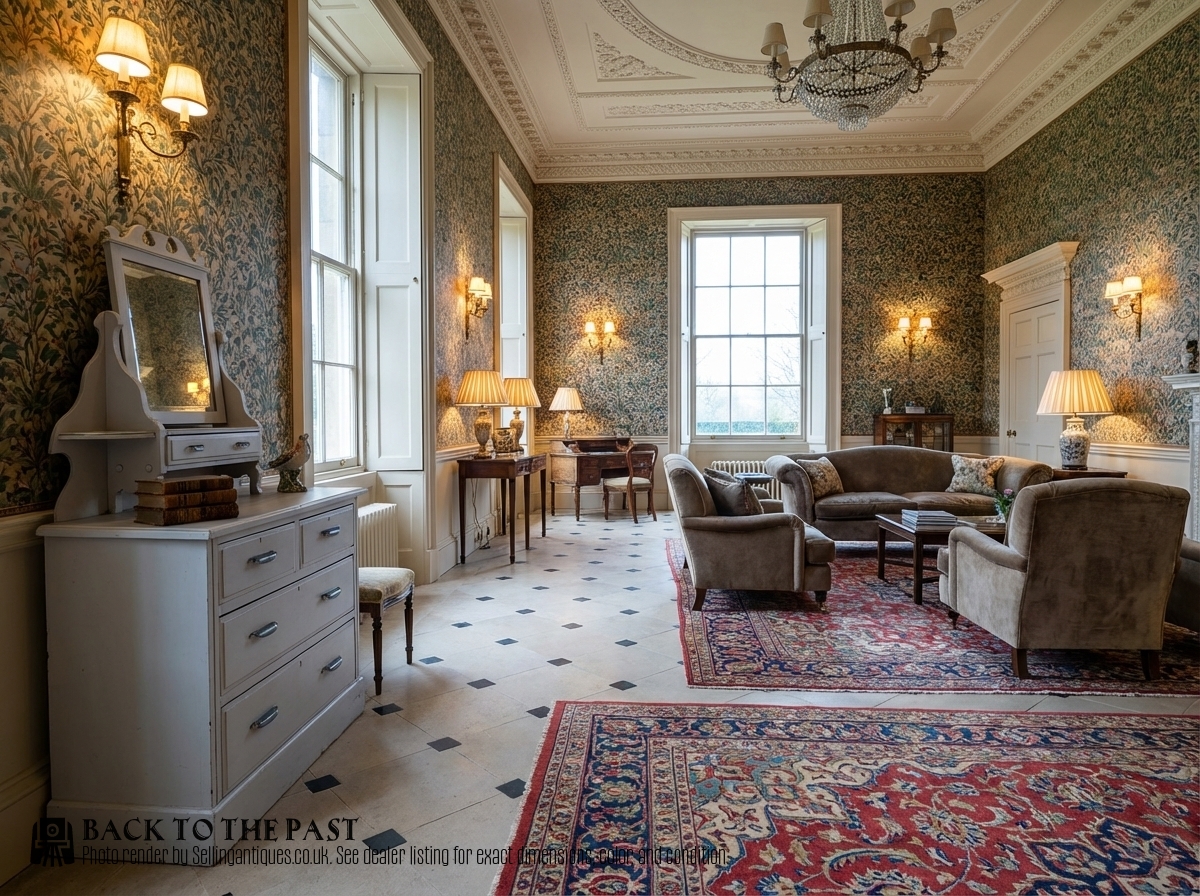
Chest of Drawers with Mirror
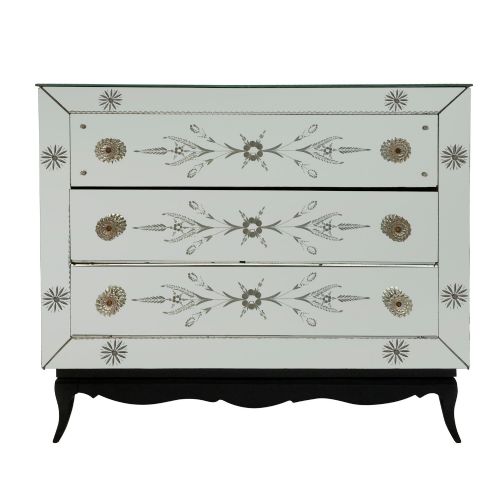
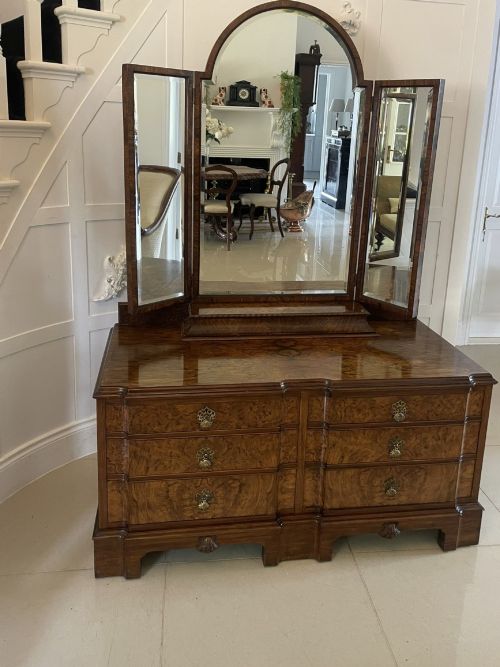
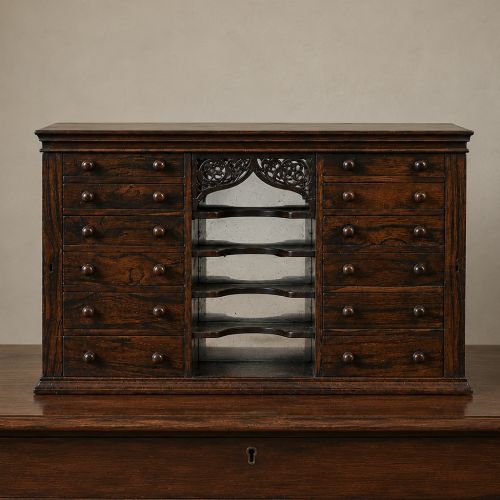
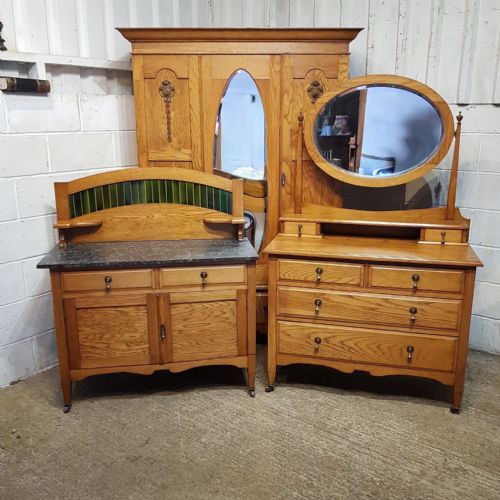
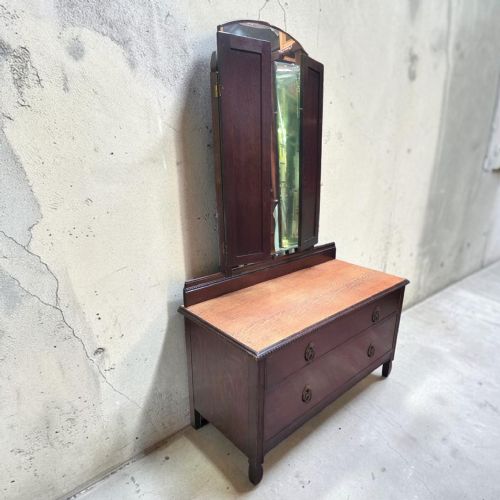
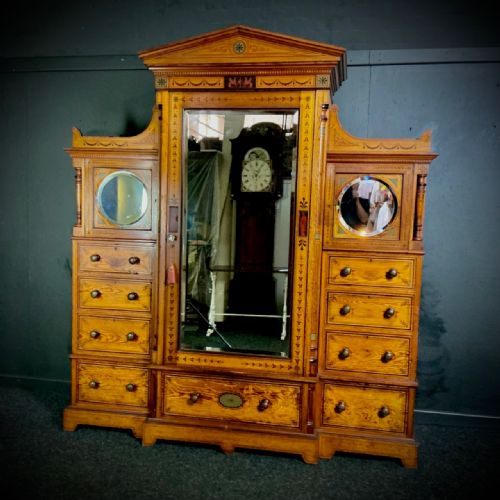
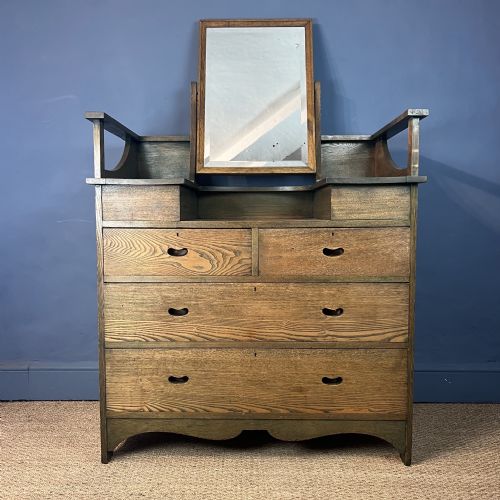
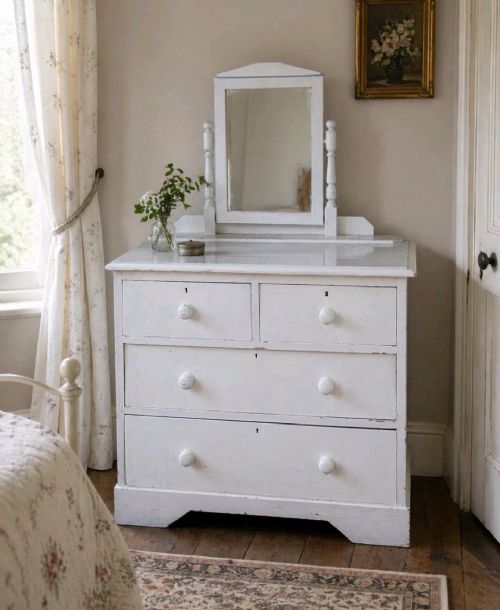
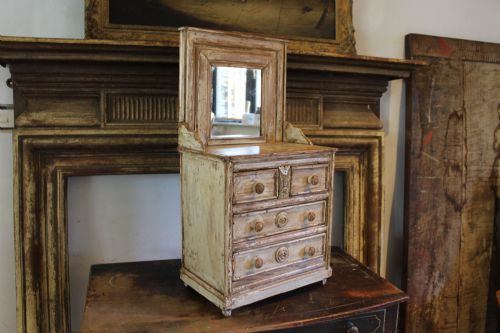
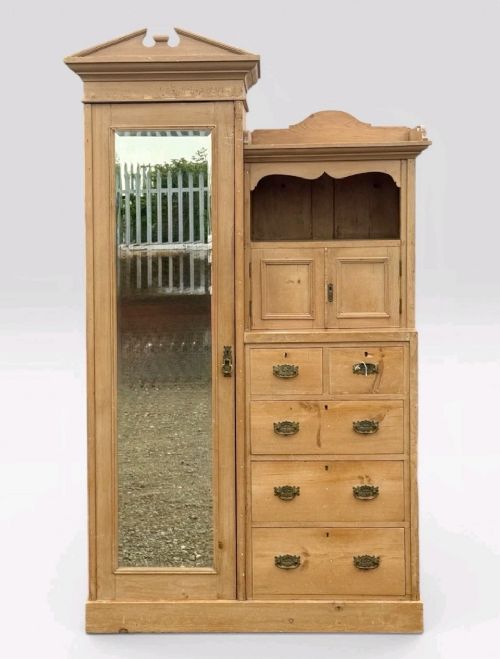
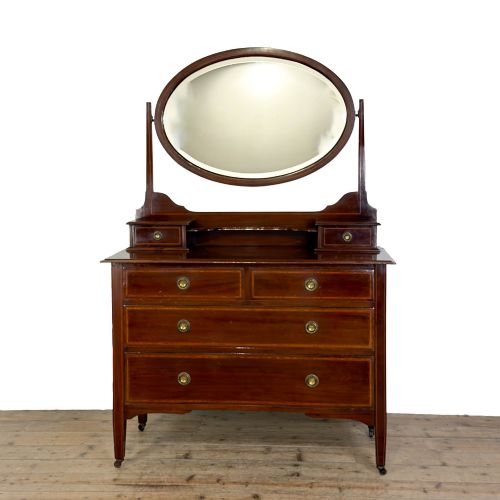
A chest of drawers with mirror bridges the gap between bedroom storage and a dressing table, bringing together deep drawers and an integrated glass plate. Pieces answering to this description take several forms across the inventory, appearing as dedicated dressing chests, washstands, and traditional chests fitted with raised mirror upstands.
Victorian and Edwardian examples dominate the selection, alongside items from the nineteenth century and the decades leading to 1920. Makers and workshops of these periods utilised forms ranging from straightforward upright chests to elaborate dressing tables with swing mirrors.
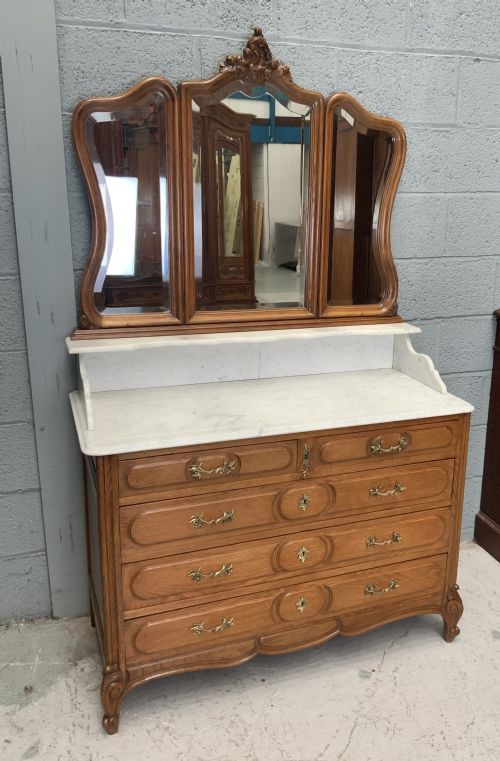
Buyers encounter variations that include triple mirrors, oval plates, and candle scones attached to the frame. The supporting cabinetry ranges from compact single items to substantial pedestals with marble tops.
How they were made
Cabinetmakers constructed these pieces using a variety of hardwoods and softwoods, selecting mahogany, oak, walnut, burr walnut, satin birch, and ash for their structural durability and grain. Pine appears frequently in painted or scumble glazed finishes, while brass handles and glass mirror plates complete the construction.
Surface decoration involved careful carving, inlay work, stencilling, and green staining on ash. Marble slabs topped specific French and revival designs to provide a durable, water-resistant surface on washstands and dressing tables.
Listings feature woods such as mahogany, oak, pine, ash, burr walnut, and satin birch, alongside marble tops and brass fittings.
What varies in quality
The distinction between standard examples and exceptional items rests upon timber selection and the ambition of the design. Dense burr walnut, figured mahogany, and intricate Arts and Crafts inlay elevate a piece far above utilitarian pine or basic oak construction.
Joinery execution and the preservation of original mirror glass and brass hardware define the structural integrity. Pieces bearing attribution to known workshops display superior carving definition and hand-finished detailing that lesser workshop output omits.
George Walton·Harris Lebus·Wright & Hunter of Belfast
The Chest of Drawers with Mirror Glossary
- Swing mirror
- A looking glass mounted on pivots within a frame, allowing the angle of reflection to alter. This mechanism sits atop the chest or dressing table surface.
- Dressing chest
- A lower form of chest of drawers specifically adapted for grooming, typically incorporating a fixed or adjustable mirror.
- Scumble glazed
- A painted finish applied to a softer wood to imitate the richer grain of oak or walnut. Craftsmen dragged combs or brushes through wet glaze to achieve the effect.
- Satin birch
- A timber derived from American birch trees, prized for its pale golden colour and shimmering chatoyant grain. It appeared frequently in late nineteenth-century bedroom furniture.
- Triple mirror
- An arrangement of three looking glasses where the two outer hinged wings angle inward. This allows the user to view profile reflections.
Chest of Drawers with Mirror: Frequently Asked Questions
How do I date a chest of drawers with mirror?
Dating relies upon observing the timber, the style of the hardware, and the construction of the mirror frame. Victorian and Edwardian examples show distinct shifts from heavy mahogany to lighter satin walnut and inlaid oak.
Changes in mirror fixings and the bevel of the glass plate provide additional clues. Earlier nineteenth-century pieces feature hand-beveled glass held in simpler frames than later Edwardian triple mirror designs.
Can the mirror be detached from the chest?
Many mirrors are separate units secured to the backboards with screws or mounted on upright arms that slot into brackets. This allows the top section to be removed for easier transport.
In other instances, the mirror frame forms an integral part of the upper superstructure and cannot be separated without dismantling structural joints.
Where should I place a dressing chest in a room?
These pieces require placement near a natural light source to make effective use of the mirror during grooming. Positioning them perpendicular to a window captures optimal daylight across the glass.
Sufficient floor space must be allowed in front of the drawers to permit full extension and comfortable access to the lower compartments.
How do I care for the mirror plate?
Maintenance requires gentle cleaning of the glass using standard non-abrasive solutions applied to a cloth rather than sprayed directly onto the surface. This prevents moisture seeping behind the silvered backing.
Wooden frames and surrounds benefit from occasional treatment with appropriate wax to nourish the grain and protect the finish from drying out.