





Padded Wooden Bench
A padded wooden bench brings practical seating and period character to hallways, bedrooms and living spaces.
Padded Wooden Bench
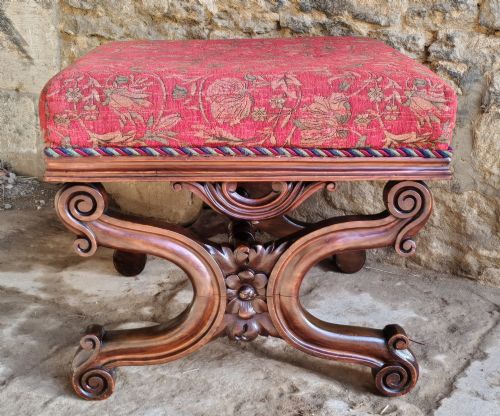
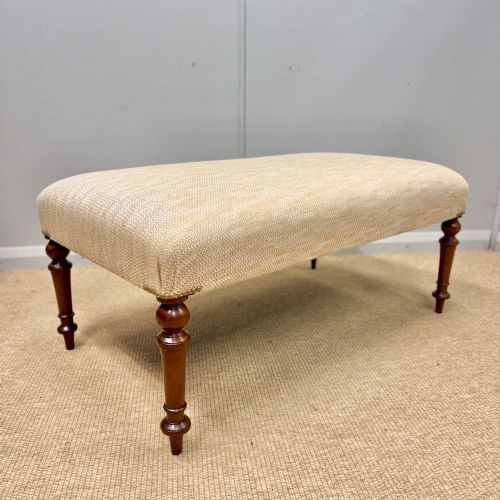
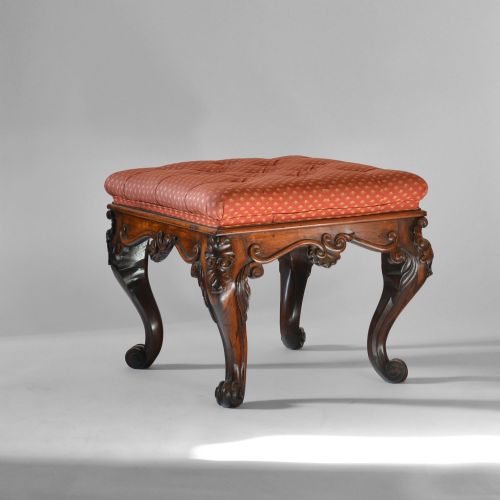
A padded wooden bench sits within a wide tradition of seating that spans footstools, window seats, long benches and small settees. When exploring a padded wooden bench on this page, expect forms ranging from compact 19th-century dressing table stools to extended Edwardian window seats and larger walnut or mahogany settees.
The selection draws on diverse stylistic revivals, including Jacobean, Queen Anne and Gothic tastes alongside Aesthetic Movement and Arts and Crafts designs. These pieces often serve dual purposes as footrests, piano seats or low hallway resting places.
Materials and construction methods
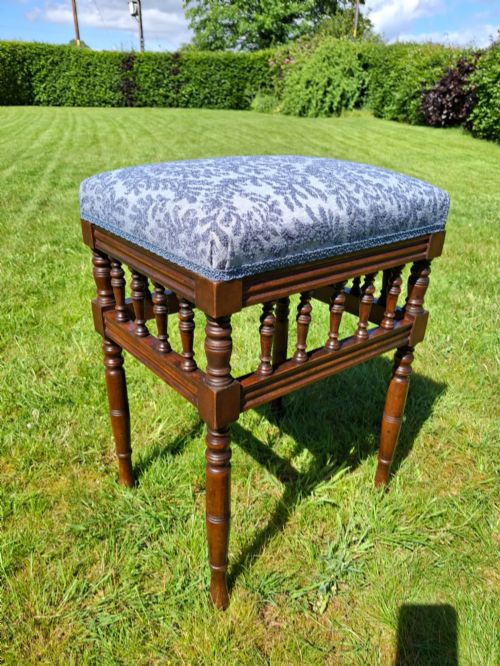
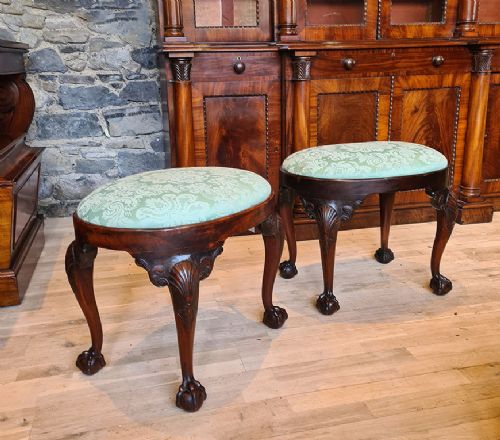
Makers built the structural frames of these seats using dense timbers such as mahogany, walnut, oak and ebonised hardwoods, occasionally incorporating exotic woods like rosewood or teak. Carved details, turned legs and inlaid veneers define the woodwork, while joinery techniques range from traditional mortise and tenon joints to sturdy frame construction.
Upholstery forms the padded element, utilising supportive textiles, leather, velvet, linen and woven rattan. Many pieces retain or have been updated with fresh fabric coverings secured over traditional webbing and stuffing.
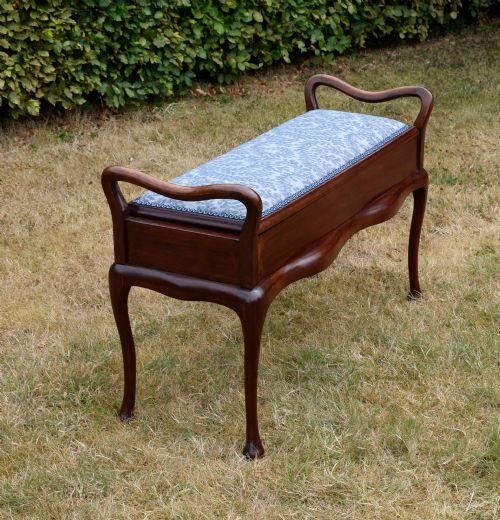
Some Victorian piano stools hide sheet music compartments beneath their padded lids.
Assessing craftsmanship and condition
Superior examples distinguish themselves through crisp timber carving, elegant proportions and robust frame integrity that resists wobbling under weight. Finely turned legs, subtle wood figure such as burr elm, and precise inlay work elevate an item above simpler utilitarian seating.
The standard of upholstery and the retention of original surface patination also influence the standing of a piece. Well-executed traditional reupholstery complements an antique wooden frame without compromising its architectural lines.
The Padded Wooden Bench Glossary
- Fender stool
- A low, long seat designed to sit in front of a fireplace hearth. These pieces are typically narrow and upholstered on top.
- Joint stool
- An early form of wooden stool constructed with mortise and tenon joints rather than turned legs. They offer notable structural rigidity.
- Duet stool
- An elongated piano seat designed to accommodate two players side by side. They frequently feature hinged lids opening to internal music storage.
- Giltwood
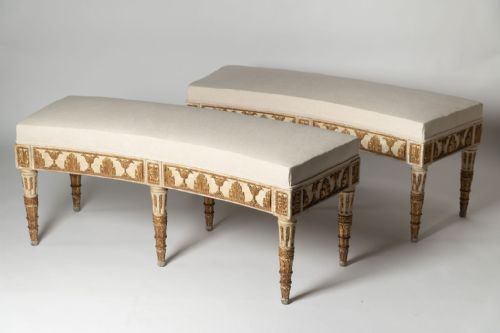
- Timber that has been coated with a thin layer of gold leaf or gesso paint. It appears on decorative frames and formal seating.
- Cabriole leg
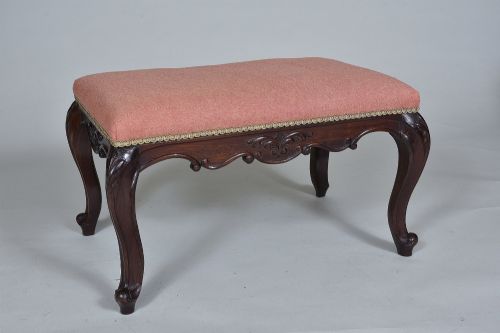
- A furniture leg featuring a double curve, flowing outward at the knee and inward at the ankle. This design is common in revival styles.
Padded Wooden Bench: Frequently Asked Questions
Where should I place a padded wooden bench?
These versatile seats fit well at the foot of a bed, beneath a window, or in a hallway for putting on shoes. Their compact footprint allows them to occupy awkward transitional spaces.
Larger variations like settees function effectively as secondary seating in living rooms or studies. Matching the timber tone to surrounding furniture helps integrate the piece into the room.
How do I identify the period of a wooden bench?
Dating relies on examining the timber species, joinery methods and decorative motifs present on the frame. Victorian and Edwardian pieces often display machine-assisted turning or specific revival styling.
Earlier 18th-century and Regency examples exhibit hand-carved details and specific patination associated with age. Comparing the leg profile and hardware provides further clues to the manufacturing era.
Are these benches suitable for daily use?
Most antique wooden benches remain sturdy enough for regular sitting when the frame is structurally sound. Checking the joints and underframe ensures they withstand daily weight.
Replacing worn internal webbing or padding can restore comfort for frequent use. Delicate giltwood or heavily inlaid items demand gentler placement.
What is the difference between a stool and a window seat?
A stool is typically a compact, standalone seat designed for one person or placed as a footrest. Window seats are generally longer and proportioned specifically to sit beneath low window frames.
Window seats often feature armrests or upholstered back supports tailored for resting while looking outside. Both forms share sturdy wooden frames and padded upper surfaces.