




Oval Upholstered Stool
An oval upholstered stool offers a compact, elegant seat that fits neatly beside firesides or dressing tables.
Oval Upholstered Stool
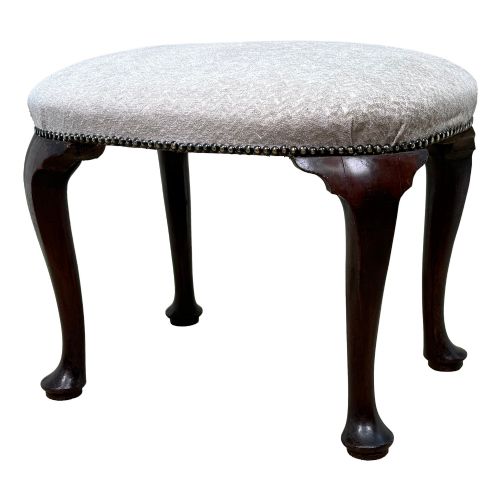
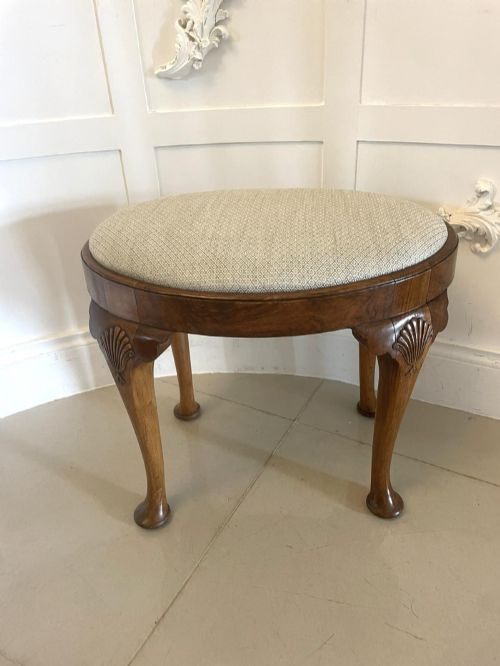
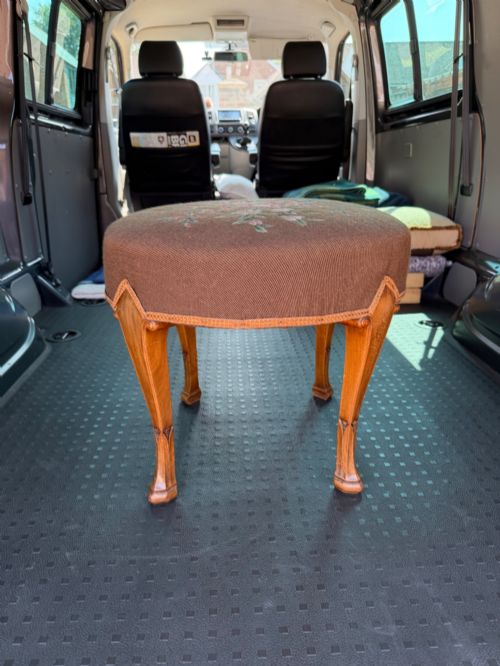
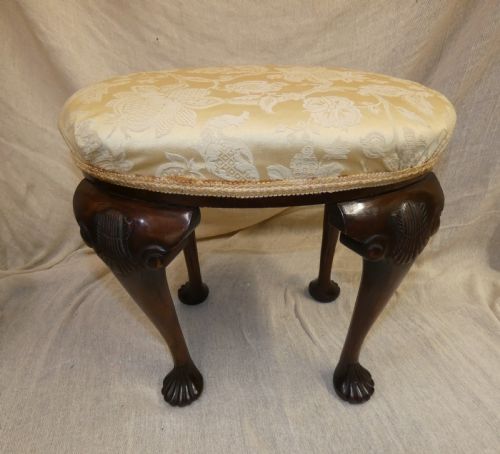
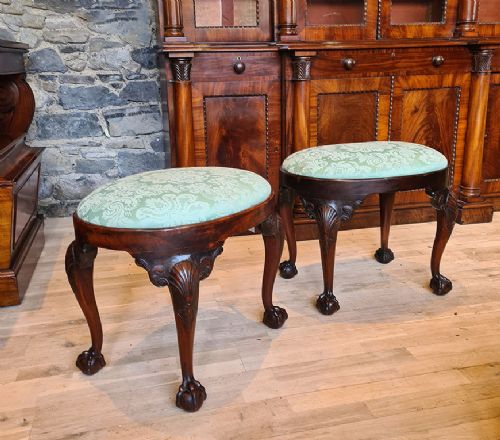
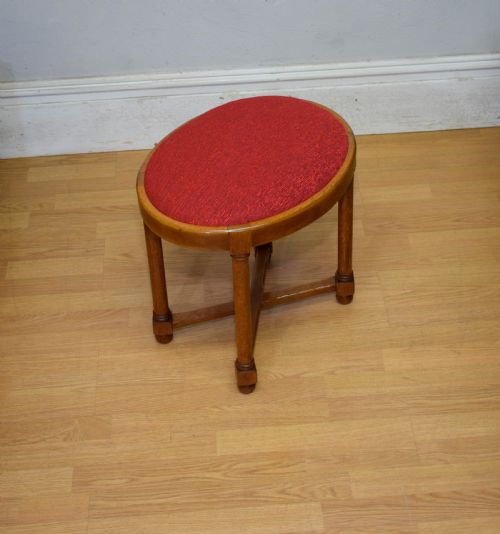
An oval upholstered stool combines a curved wooden frame with a cushioned top covered in fabric, tapestry, or needlework. These pieces serve as footstools, dressing stools, and duet stools across various historical periods.
The versions most commonly met on this page span the eighteenth and nineteenth centuries, alongside early twentieth-century revivals. Walnut and mahogany frame designs appear frequently alongside Victorian rosewood and oak examples.
Makers historically produced these stools in distinct regional and revivalist aesthetics, including Queen Anne style, George I, and Louis XV or XVI influences. Such pieces bring refined seating options to traditional interiors.
How oval upholstered stools were made
Cabinetmakers constructed the foundational frames from dense hardwoods such as walnut, mahogany, oak, and rosewood. These timbers were shaped into curved rails and supported by cabriole or turned legs, sometimes featuring brass accents or gilt finishes.
The upper sections relied on traditional textile coverings, including damask, tapestry, and needlework upholstery. Makers secured these materials over padded foundations to create a firm yet comfortable resting surface.
What varies in quality in oval upholstered stools
The sophistication of the timber carving and the elegance of the curved frame define the upper tier of these pieces. Subtly shaped cabriole legs and finely figured walnut or mahogany distinguish better examples from simpler workshop output.
The integrity and authenticity of the textile upholstery also influence the overall standard. Hand-worked needlework or period-appropriate damask fabrics that complement the age of the wooden frame represent finer craftsmanship.
The Oval Upholstered Stool Glossary
- Cabriole leg
- A furniture leg that bends outward and then tapers inward, mimicking an animal's limb. This form characterises many eighteenth-century and revivalist designs.
- Duet stool
- An elongated seating form designed for two people to sit side by side, often positioned at a keyboard or dressing table. These pieces provide a wider upholstered surface than standard single stools.
- Tapisserie
- A heavy textile featuring woven pictorial or geometric designs used historically for upholstery. Such coverings add rich texture and colour to the top of a stool.
- Needlework
- Hand-stitched decorative fabric created using yarn on a canvas mesh backing. This technique appears frequently on nineteenth-century footstool tops.
- Damask
- A reversible figured fabric woven with intricate patterns on a loom. It provides a formal, lustrous finish suited to period seating.
Oval Upholstered Stool: Frequently Asked Questions
Where were oval upholstered stools used?
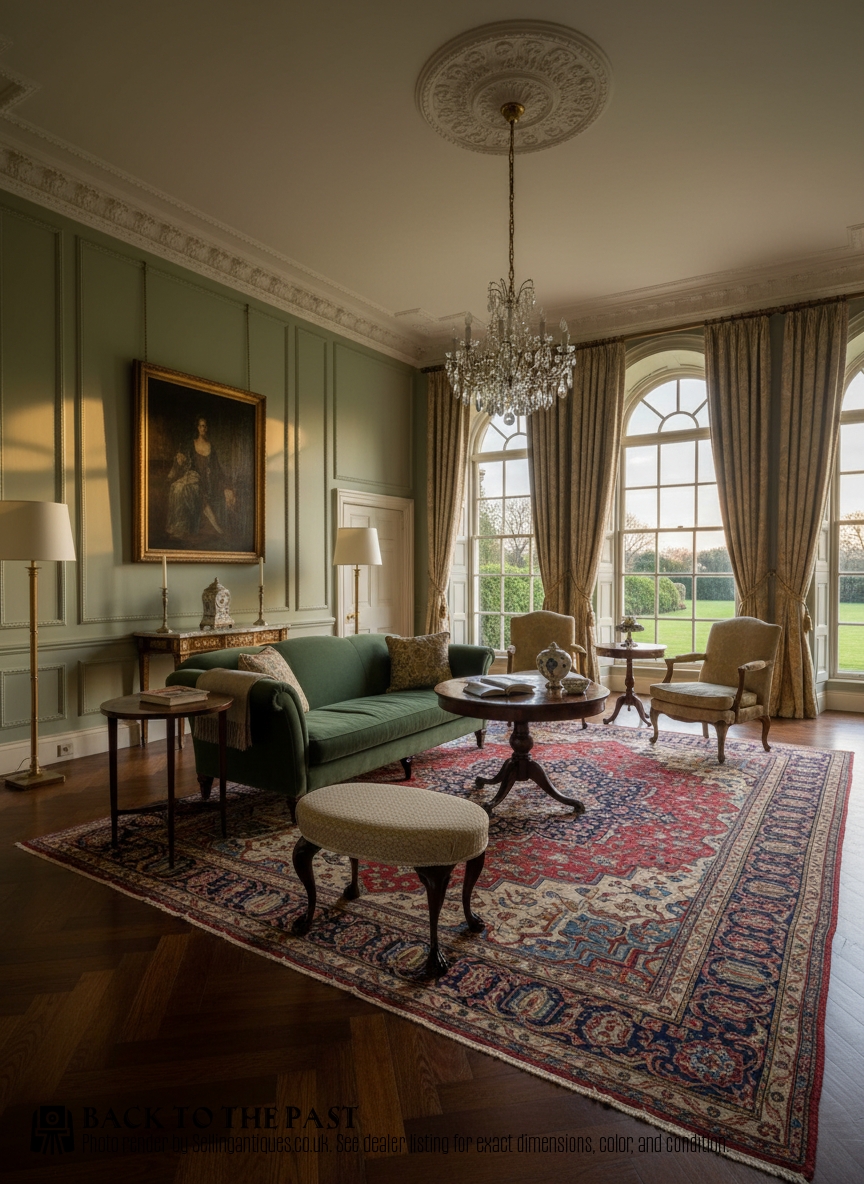
These stools typically stood in formal drawing rooms, dressing rooms, and parlours. They provided flexible seating or served as footrests near armchairs and hearths.
Their compact footprint allowed them to be tucked away easily when not in use, making them practical additions to period interiors.
How do I care for antique upholstery?
Protect antique fabric and needlework from direct sunlight to prevent fading and textile degradation over time. Gentle, regular vacuuming with a soft brush attachment helps remove dust without damaging fragile fibres.
Avoid using harsh liquid cleaners on historical textiles. Professional restoration is recommended for significant stains or worn areas.
How can I tell the period of a stool?
Examine the timber species, joinery methods, and leg profiles to determine the likely era of manufacture. Eighteenth-century pieces frequently feature walnut or mahogany with hand-cut joints, whereas later revivals often adopt heavier proportions.
Stylistic cues such as Queen Anne curves or Victorian rosewood framing offer further clues to the date of origin.
Can these stools support everyday sitting?
Most antique stools remain structurally sound for regular use, provided the wooden frame and joints are stable. Heavier frames constructed from hardwoods like walnut or mahogany generally offer robust daily support.
It remains wise to check the internal webbing and padding condition if the piece is intended for frequent seating rather than display.