


Oval Toilet Mirror
When you search for an oval toilet mirror, you seek a tabletop glass that sits on a chest or dressing table to reflect the face.
Oval Toilet Mirror
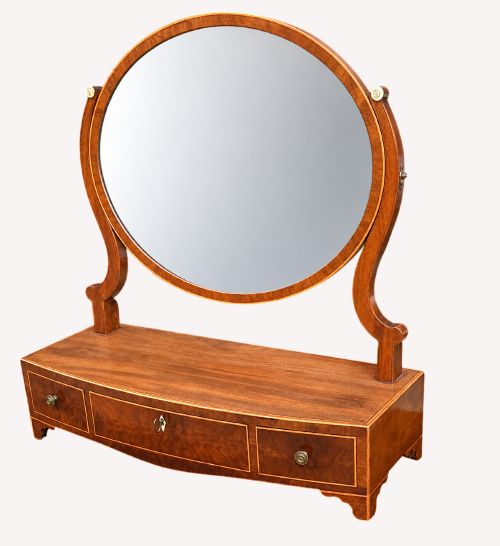
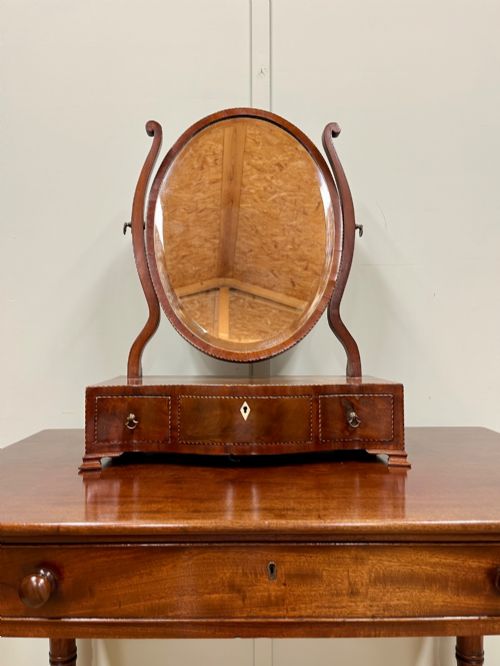
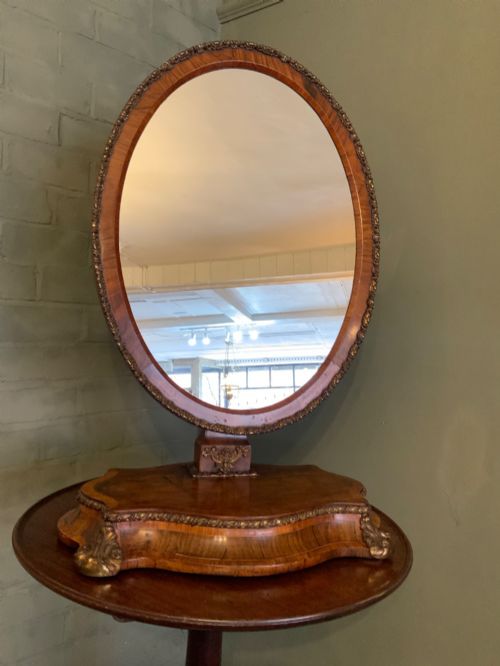
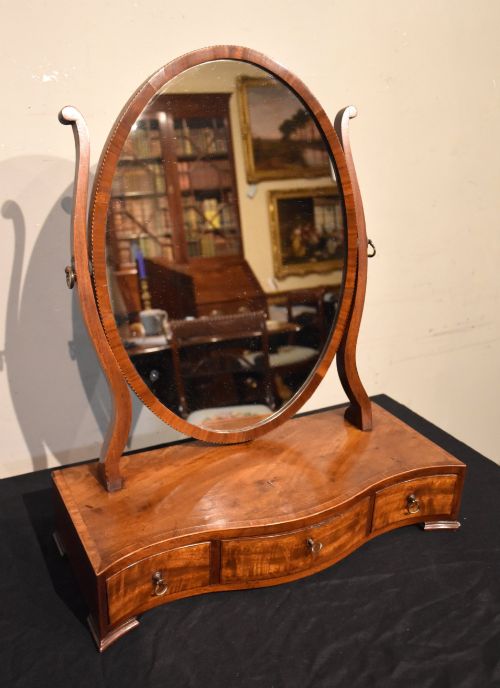
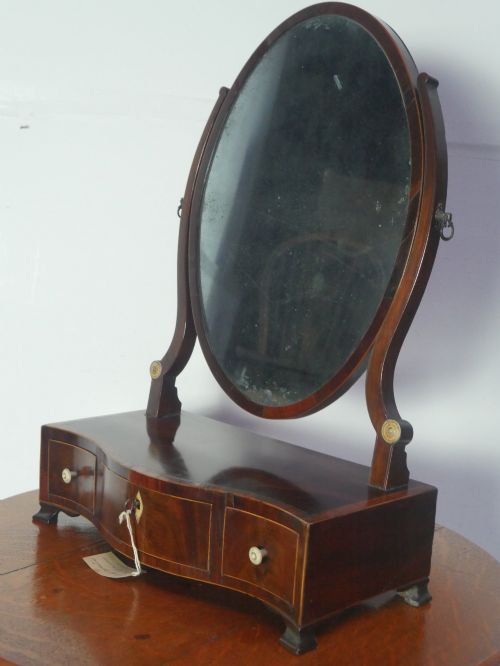
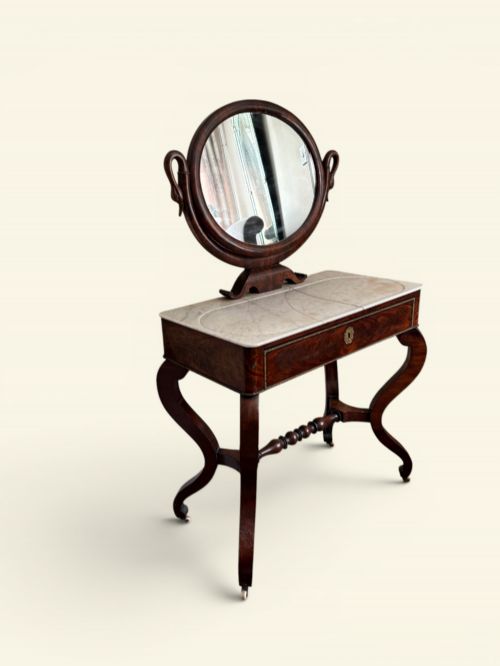
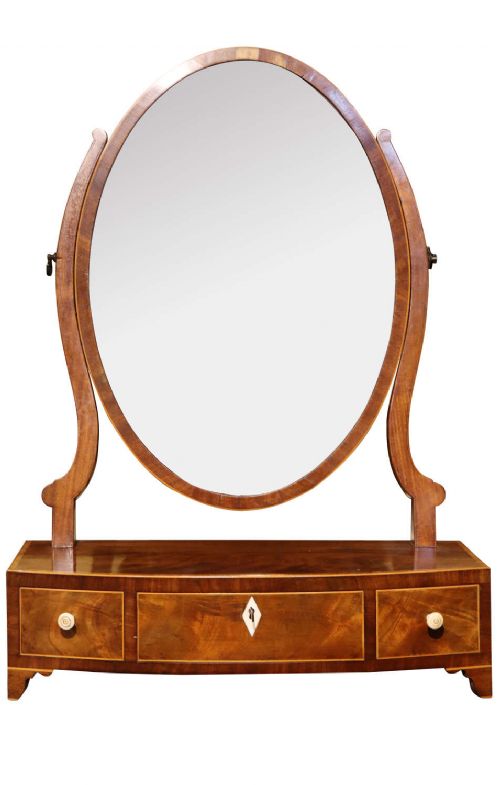
An oval toilet mirror is a tabletop or swing glass designed to sit upon a chest of drawers or dressing table. You will most frequently meet mahogany examples from the Georgian and Victorian periods, often set on serpentine or box bases with small drawers.
The form developed to assist with grooming and dressing, offering a pivoting glass held between upright arms. Makers shaped these mirrors to sit securely on furniture surfaces, ranging from simple swing frames to elaborate designs with multiple small compartments.
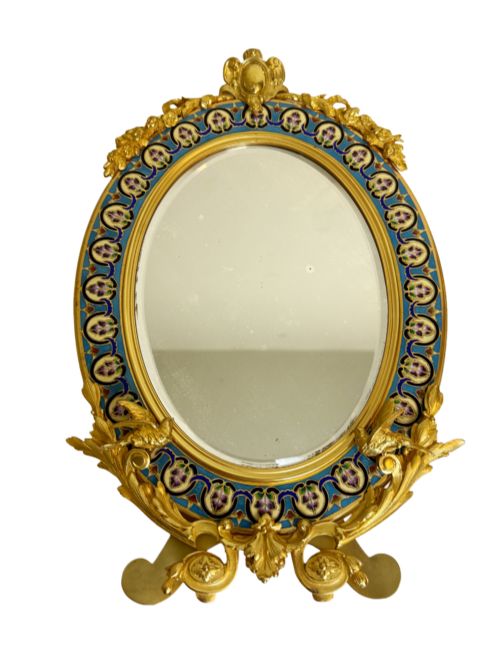
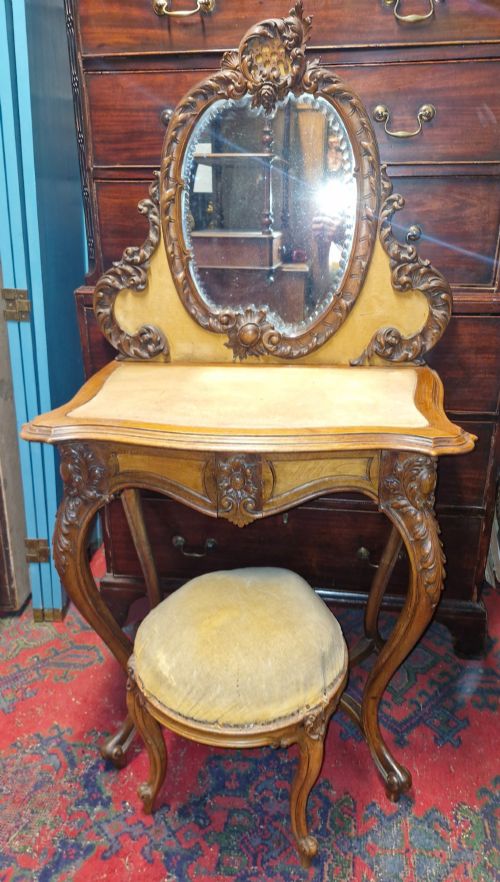
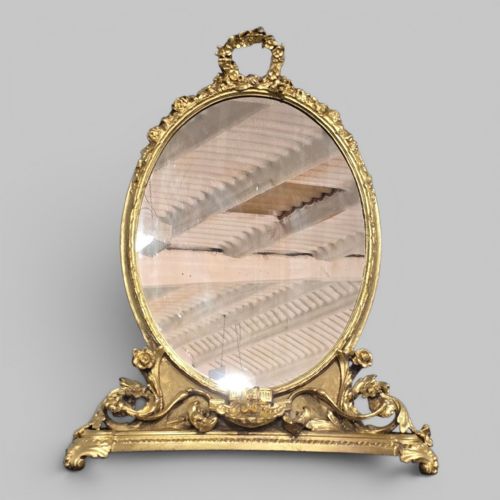
Pieces span the eighteenth, nineteenth, and early twentieth centuries, drawing on Georgian, Victorian, and Edwardian styles. The evidence shows variations including boxwood inlay, satinwood, brass fittings, and giltwood finishes alongside the standard timber frames.
Materials and Construction
Cabinet makers constructed these mirrors predominantly using solid and veneered timbers such as mahogany, walnut, and satinwood. Frames often feature boxwood or string inlay, while bases incorporate brass handles, bone escutcheons, and cast bronze or gilt details.
The listings feature mahogany, walnut, satinwood, and giltwood pieces spanning the eighteenth, nineteenth, and early twentieth centuries.
Assessing Quality and Craftsmanship
Quality rests in the choice of timber figure, such as flame mahogany or decorative satinwood, and the precision of the inlay work. Finer pieces demonstrate careful proportion between the oval glass plate and the supporting base.
The joinery of the drawer boxes and the crispness of carved details on the upright supports distinguish superior workshops from standard production. Original glass plates and intact brass or bone hardware elevate the integrity of the piece.
The Oval Toilet Mirror Glossary
- Serpentine
- A curved shape curving inward centrally and outward at the ends, often seen on the drawer fronts of Georgian bases.
- Swing mirror
- A glass plate mounted on pivots between two upright arms, allowing the user to tilt the angle of reflection.
- Crossbanding
- A strip of veneer applied perpendicularly to the grain of the main surface, frequently edging table and mirror tops.
- Box base
- The enclosed rectangular or shaped compartment beneath the mirror supports, often fitted with one or more small drawers.
- Escutcheon
- A small protective plate surrounding the keyhole of a drawer, commonly made from bone or brass.
Oval Toilet Mirror: Frequently Asked Questions
Where should I place an oval toilet mirror?
These mirrors suit dressing tables, chests of drawers, or sideboards where they provide a functional surface for grooming.
Ensure the furniture top is deep enough to support the weight and span of the base safely.
How do I date a Georgian mirror?
Examine the timber species, construction joints in the drawers, and the profile of the base mouldings.
Georgian examples often utilise flame mahogany, hand-cut dovetails, and subtle boxwood stringing rather than machine-made elements.
What is the purpose of the drawers?
The small drawers in the base held jewellery, cosmetics, and personal items used during daily dressing routines.
Serpentine and bow-front bases frequently house two or three compact compartments beneath the pivoting glass.
Are the glass plates usually original?
Mirrors sustained heavy use and accidental breakage over the centuries, meaning many glass plates have been replaced.
Original glass often shows light foxing, slight distortion, or minor age spots that reflect its manufacturing period.