
Mahogany Tabletop Dressing Glass
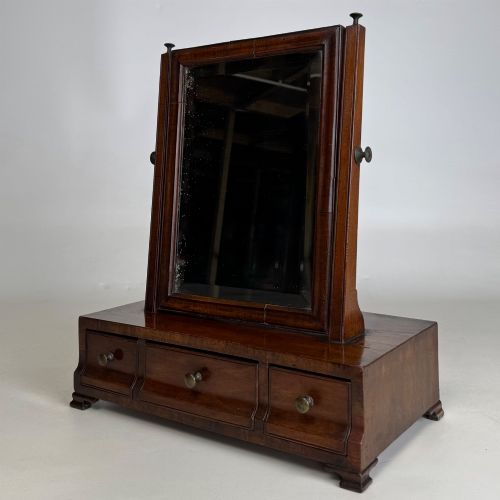
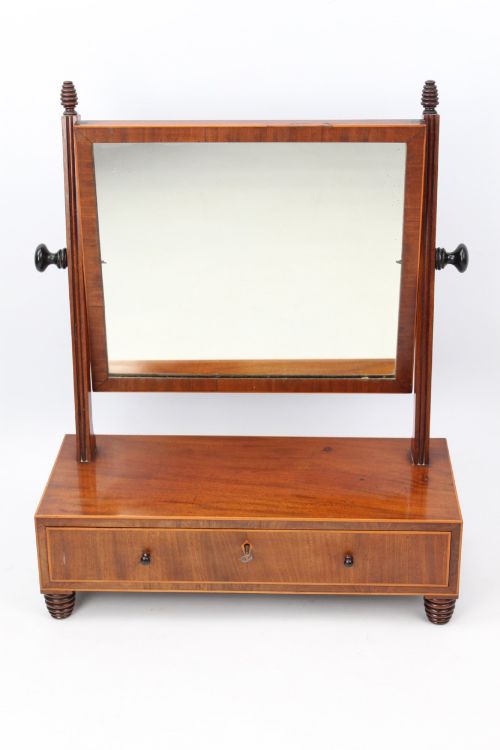
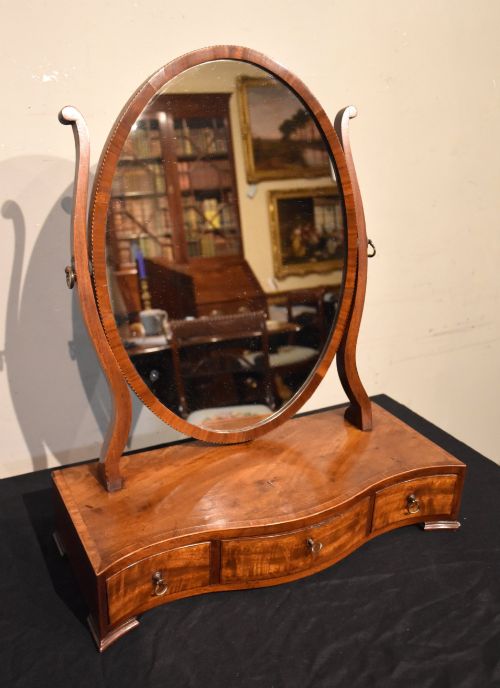
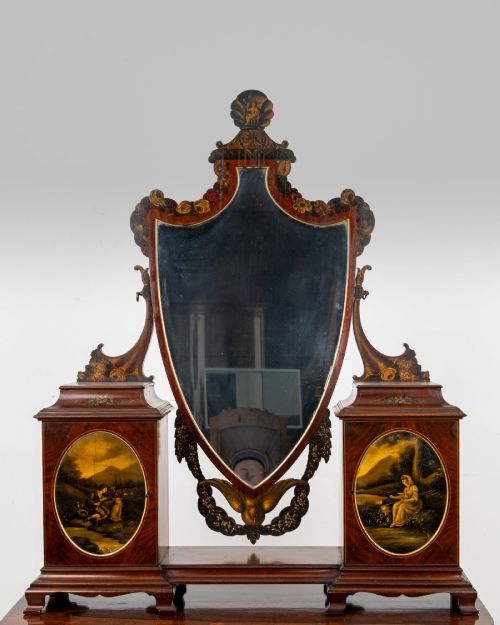
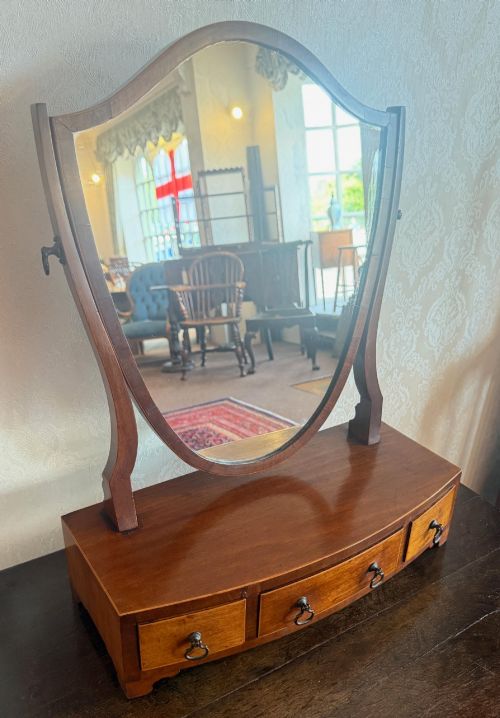
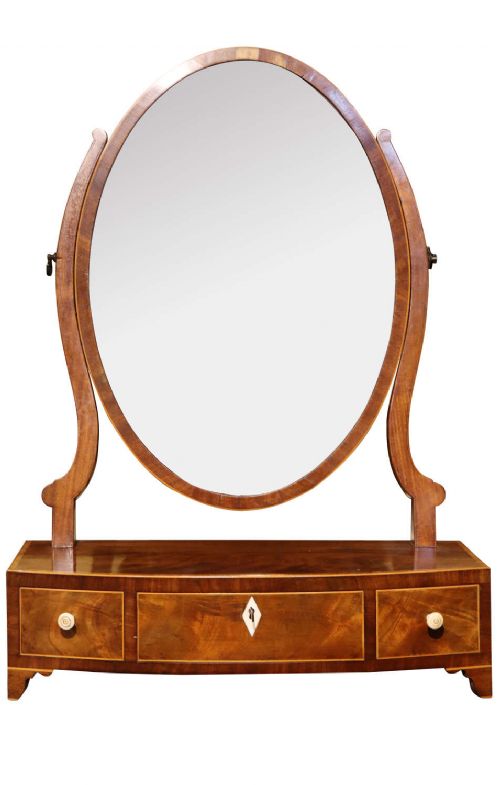
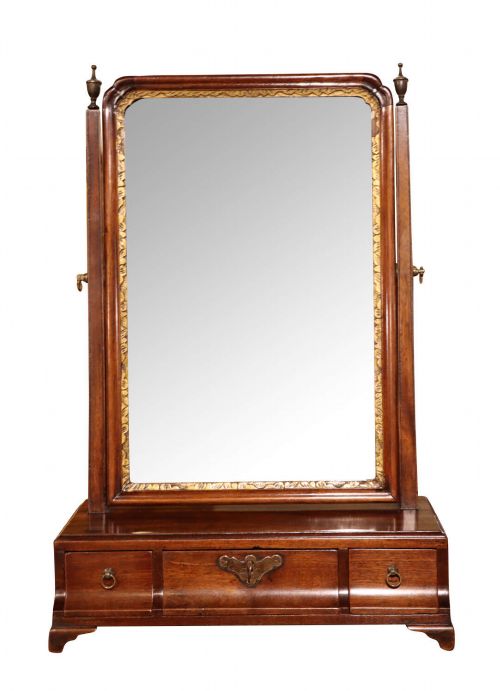
A mahogany tabletop dressing glass sits neatly on a chest or bureau, offering a clear reflection and small storage drawers for daily use.
Mahogany Tabletop Dressing Glass
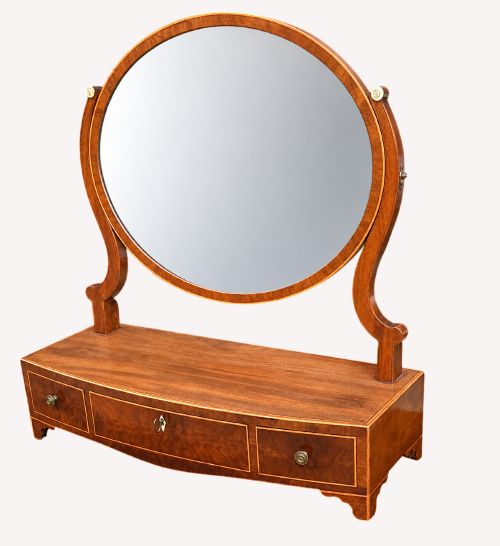
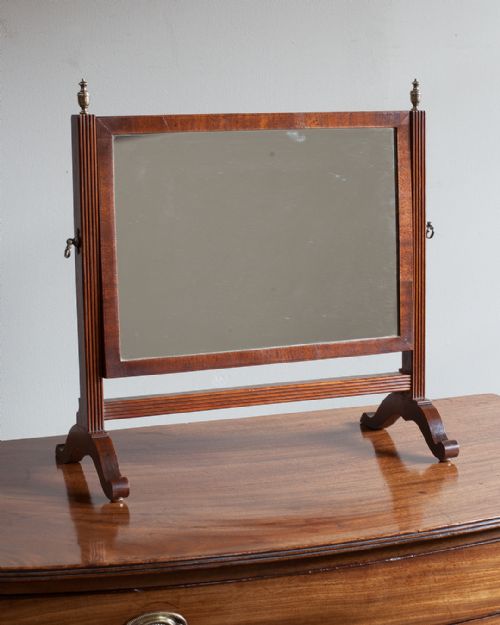
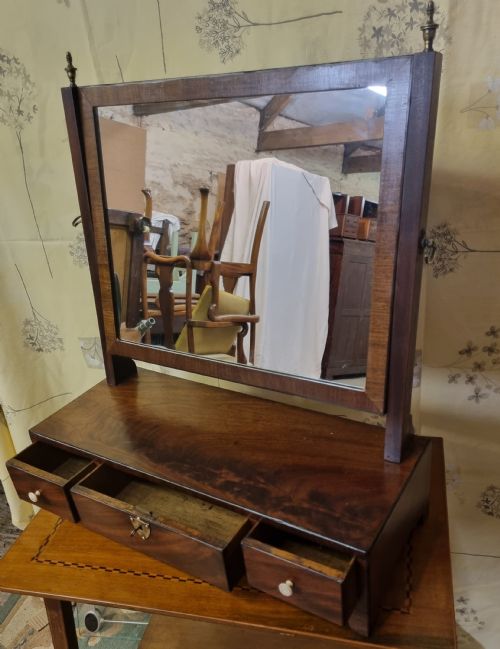
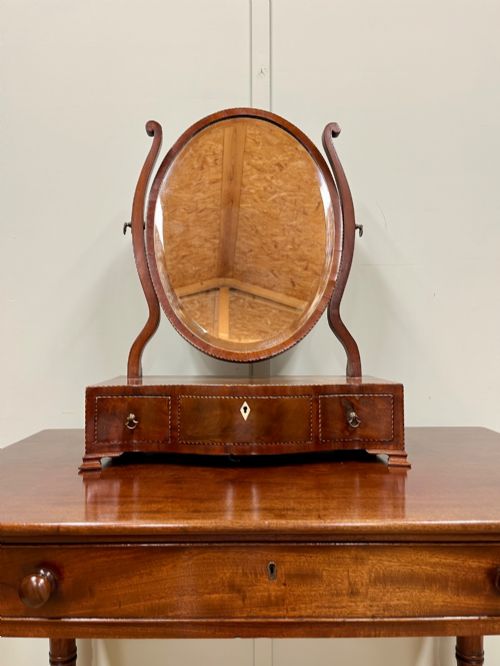
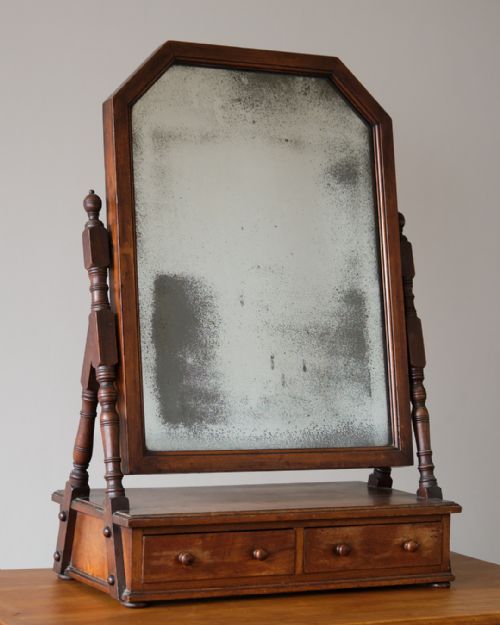
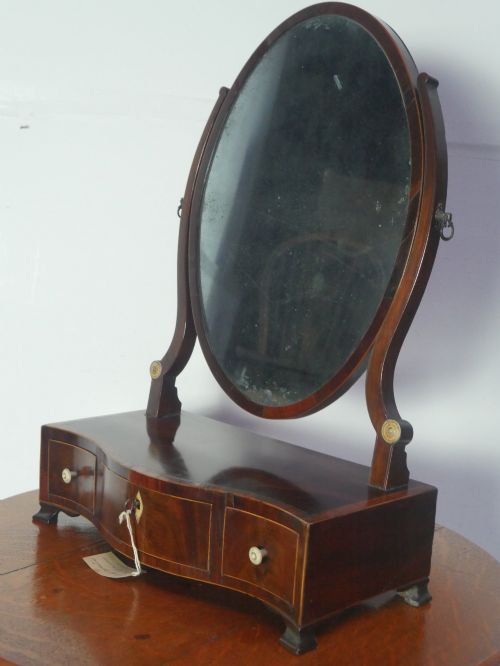
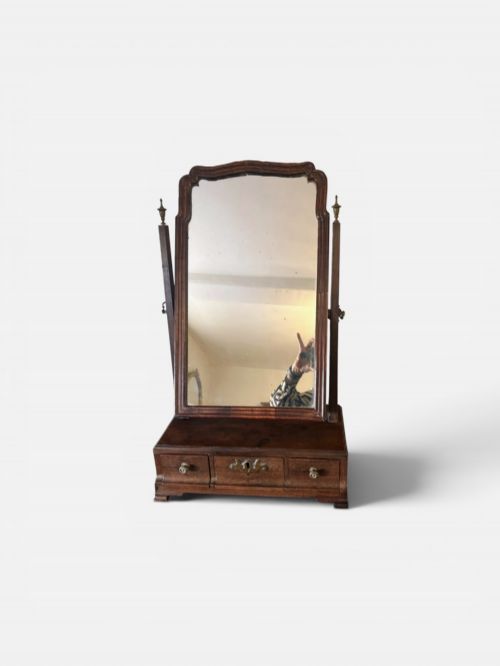
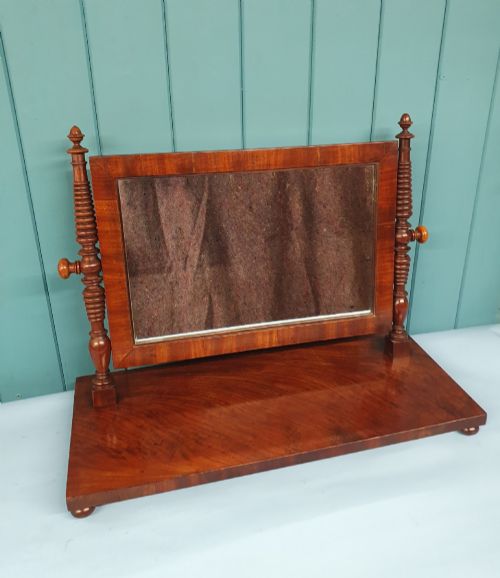
A mahogany tabletop dressing glass provides a movable mirror plate supported by upright arms on a small base. You will frequently encounter Georgian and Regency examples, alongside Victorian pieces.
The base typically incorporates one, two, or three small drawers beneath the swing frame. These compact mirrors serve as functional toilet or dressing accessories for bedrooms and living spaces.
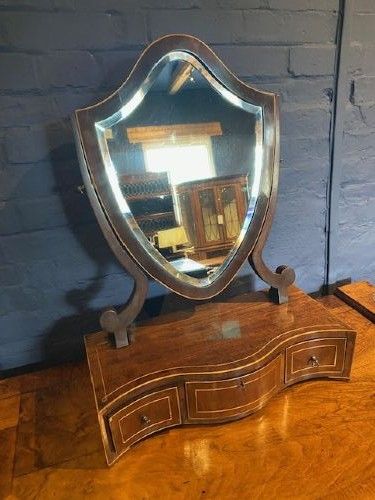
Makers shaped the plates into rectangular, oval, or serpentine forms. The search phrase covers toilet mirrors and dressing table mirrors produced across the eighteenth and nineteenth centuries.
Materials and construction
Cabinet makers utilised solid mahogany and mahogany veneers over secondary timbers for the frames and box bases. Brass fittings secure the pivoting mirror plate, whilst bone often forms small escutcheons or drawer pulls.
Fine examples incorporate decorative boxwood inlay, satinwood stringing, or parcel-gilt details. Mirror glass sits within frames supported by turned or shaped upright arms.
Distinctions in quality
Superior pieces display thoughtful timber selection, such as figured mahogany or burr maple panels, matched across the drawer fronts and base. Crossbanding and delicate inlay work distinguish finer workshops from simpler commercial production.
The structural integration of the drawer boxes and the proportion of the upright swing arms dictate stability. Original mirror glass and well-joined corner mitres elevate the merit of a piece.
Heal & Sons
The Mahogany Tabletop Dressing Glass Glossary
- Swing mirror
- A mirror plate hung on pivot screws between two upright posts, allowing the glass to tilt. This mechanism forms the core function of the dressing glass.
- Toilet mirror
- A traditional term for a small tabletop mirror used during grooming and dressing. These objects often include small drawers in the base.
- Serpentine front
- A furniture front curving outward at the centre and inward at the sides. This shape appears on several finer dressing mirror bases.
- Crossbanding
- A narrow strip of veneer laid across the grain of the primary surface to form a border. It adds decorative contrast to drawer fronts and tabletops.
Mahogany Tabletop Dressing Glass: Frequently Asked Questions
What is a mahogany tabletop dressing glass?
A mahogany tabletop dressing glass is a movable mirror mounted on a small wooden stand designed to sit on a chest of drawers or a dressing table.
Most examples include a set of small drawers built into the base for holding jewellery and small personal items.
Where were dressing glasses placed?
These mirrors stood upon dressing tables, chests of drawers, or washstands in bedrooms and dressing rooms.
Because they were portable, owners moved them around the house to follow the best natural light for grooming.
How do I date a dressing glass?
Dating relies on stylistic clues such as the bracket feet, drawer configurations, and the profile of the mirror frame.
Georgian and Regency pieces tend to show lighter proportions and finer inlay, whereas Victorian examples are often heavier and more robust.
What is the difference between a toilet mirror and a dressing mirror?
The terms are largely interchangeable in antique listings, both referring to movable tabletop mirrors used for personal grooming.
Historical makers and merchants used both labels to describe mirrors equipped with small drawer bases.