





Bowfront Dressing Table Mirror
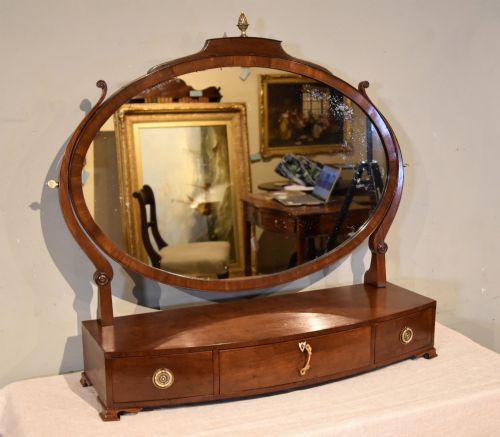
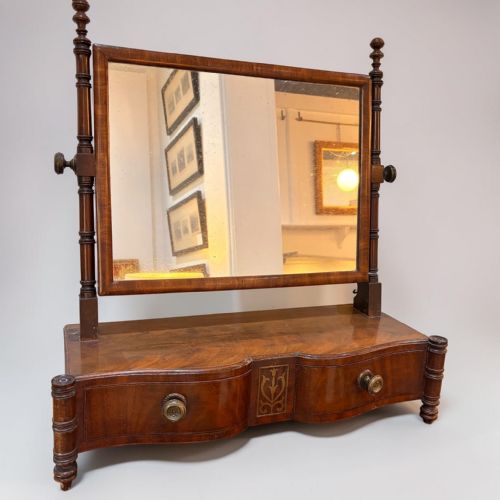
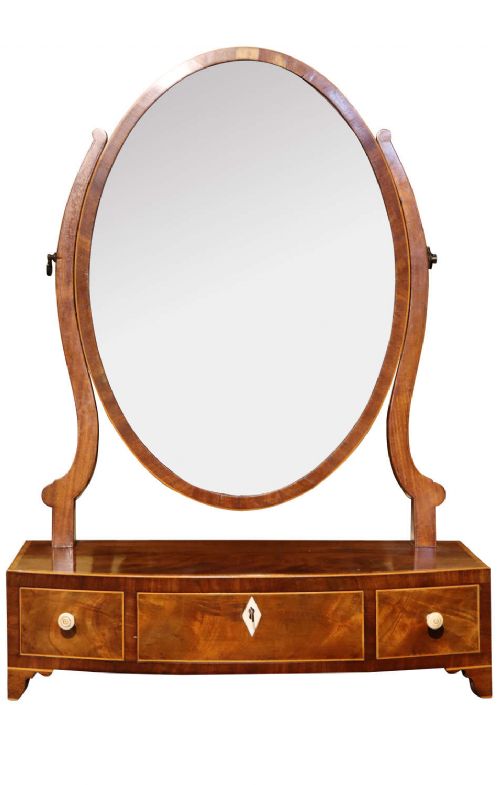
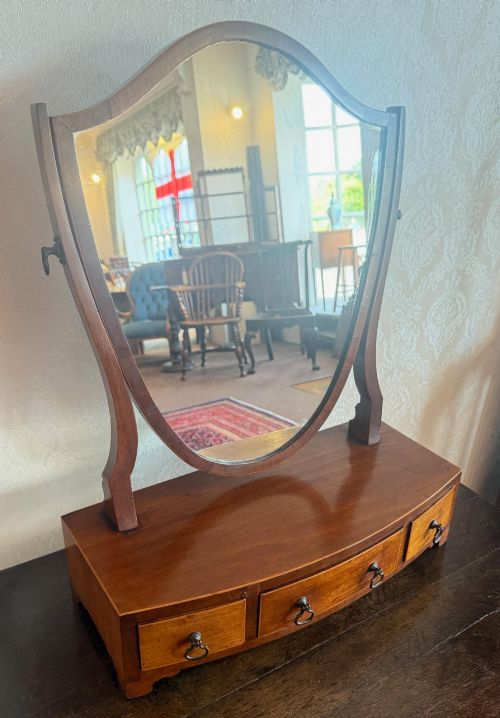
These bowfront dressing table mirrors are period mahogany pieces designed to sit on top of a chest or table, offering a curved base and adjustable glass.
Bowfront Dressing Table Mirror
A bowfront dressing table mirror sits on a small chest or tabletop base featuring a gently curved front, often fitted with small drawers for keeping trinkets. When you search for a bowfront dressing table mirror, you encounter pieces primarily from the Georgian, Regency, and early nineteenth-century periods.
The dominant material across these examples is mahogany, sometimes enhanced by flame figuring or boxwood inlay. Most survive as dressing mirrors or toilet mirrors designed to adjust on side pivots.
Makers of the late eighteenth and early nineteenth centuries favoured this curved outline to soften the proportions of a bedroom or dressing room. The surviving examples on this page span styles from George III through to Regency.
Materials and construction
Cabinetmakers constructed these frames using solid and veneered mahogany, often selecting timber with high figure like flame mahogany or burr maple to catch the light. Boxwood inlay and bone details provide crisp linear contrast along the drawer edges and frame borders.
The upright arms holding the mirror plate attach securely to the bowed box base using traditional joinery. Original brass screw knobs and bone escutcheons complete the moving parts that allow the glass to tilt.
Bowfront Dressing Table Mirror Retail Price Guide 2026
Typical asking prices for bowfront dressing table mirror among the pieces listed under this phrase on Sellingantiques today, from the lower quarter to the upper quarter. They describe what is for sale here now, not the wider market.
One past piece managed to sneak in a spot of bone inlay alongside its mahogany bowfront, just to keep things interesting.
Judging quality and proportion
Quality rests in the balance between the curve of the bowfront base and the proportion of the mirror frame above it. Finer examples display carefully chosen wood grain, such as flame mahogany or burr maple, matched symmetrically across the small drawers.
The crispness of the boxwood inlay and the retention of original brass hardware elevate a piece. Better workshops achieved a lighter, more elegant framework without losing the structural stability needed to support heavy glass.
The Bowfront Dressing Table Mirror Glossary
- Bowfront
- A furniture front that curves outwards in the centre, creating a convex shape. This profile adds gentle movement to small dressing table pieces.
- Crossbanded
- A border technique where veneer strips run transversely across the grain of the main surface. It frames the drawer fronts and edges of the mirror base.
- Toilet mirror
- The period term for a smaller mirror designed to stand on a dressing table or chest of drawers. These pieces often incorporate small storage drawers beneath.
- Flame mahogany
- Timber veneer cut from the branch junction of a mahogany tree, showing a distinctive flickering flame pattern. Cabinetmakers reserved this timber for principal display surfaces.
Bowfront Dressing Table Mirror: Frequently Asked Questions
What is a bowfront dressing table mirror?
A bowfront dressing table mirror is a small tabletop mirror featuring a curved front base, typically containing small drawers. These pieces date primarily from the Georgian and Regency eras.
They sat upon larger chests or dressing tables, providing a functional glass surface for grooming while adding decorative warmth through mahogany and inlay.
How do I date a dressing mirror?
Dating relies on timber choice, construction methods, and stylistic details such as inlay or leg form. Georgian and Regency examples often feature mahogany, boxwood stringing, and bone escutcheons.
Examining the backboards, secondary timbers, and the fixings of the mirror plate helps confirm whether a piece belongs to the eighteenth or early nineteenth century.
Where should I place it?
These mirrors suit dressing tables, low chests of drawers, or sideboards in a bedroom or hallway. Their compact footprints allow them to sit comfortably on standard furniture depths.
Ensure the surface is stable and level so the weight of the frame rests evenly without straining the supporting pivots.
Are the mirror plates original?
Mirror glass is fragile and frequently replaced over centuries of use. Many surviving pieces retain older glass with light foxing or silvering wear, while others carry later replacements.
Checking the backing boards and the way the glass is secured in the frame provides clues about its age and history.