


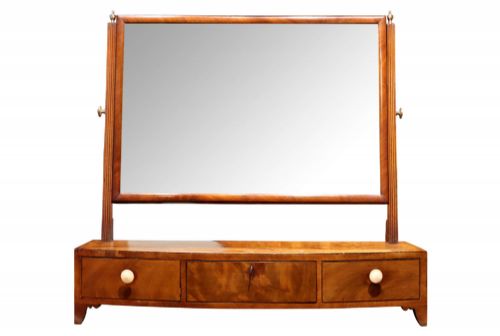

Regency Table Mirror
A regency table mirror offers a neat combination of adjustable glass and compact wooden framing, designed to sit neatly on a chest or dressing surface.
Regency Table Mirror
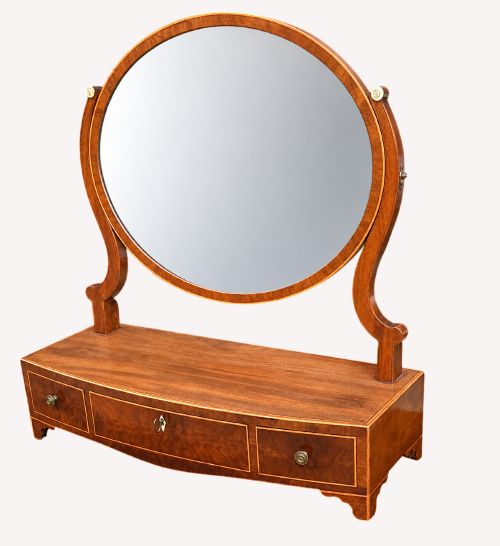
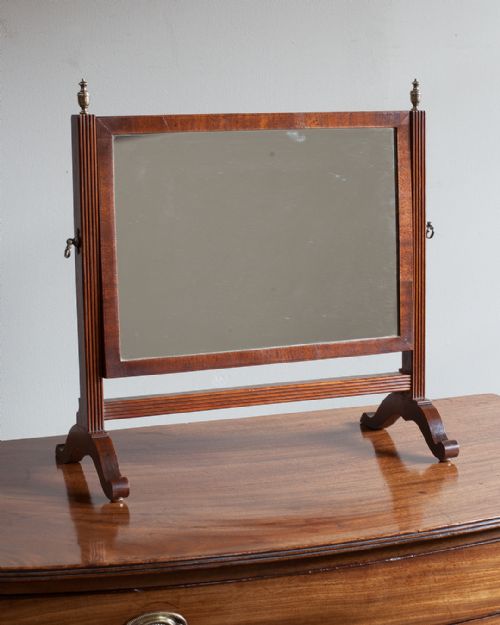
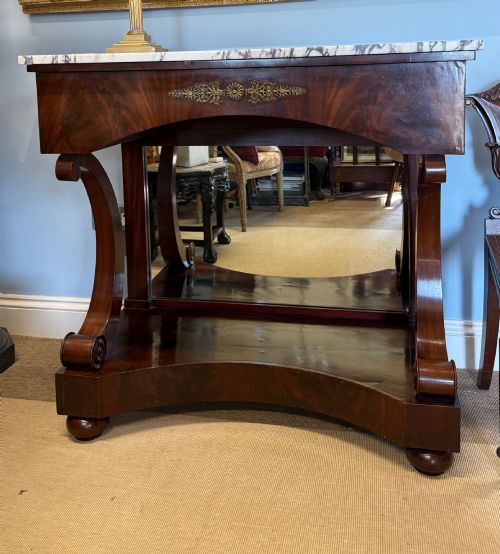
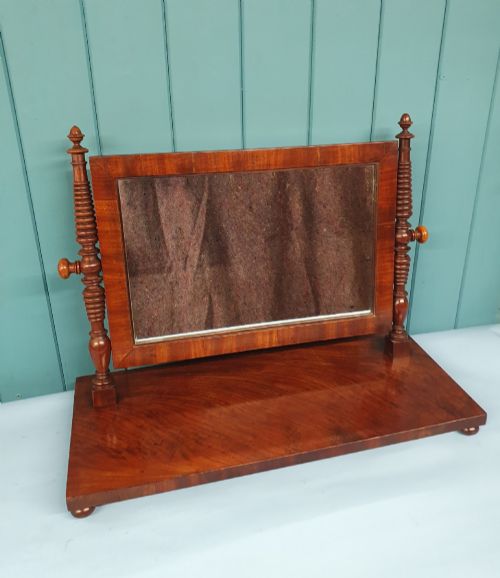
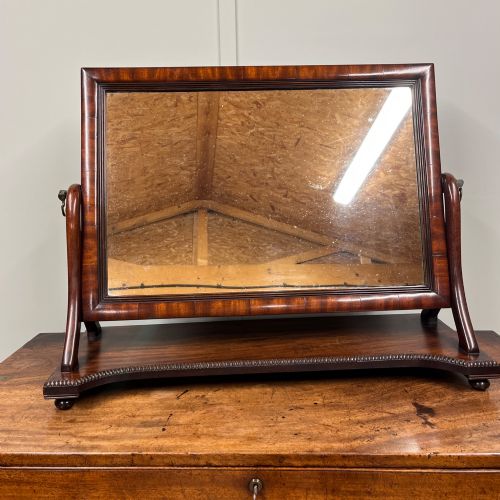
When searching for a regency table mirror, buyers encounter a range of compact swing glasses designed to sit upon furniture rather than hang upon walls. The examples on this page primarily date from the nineteenth century and the broader Georgian era, taking forms such as dressing table mirrors, toilet mirrors, and small vanity stands.
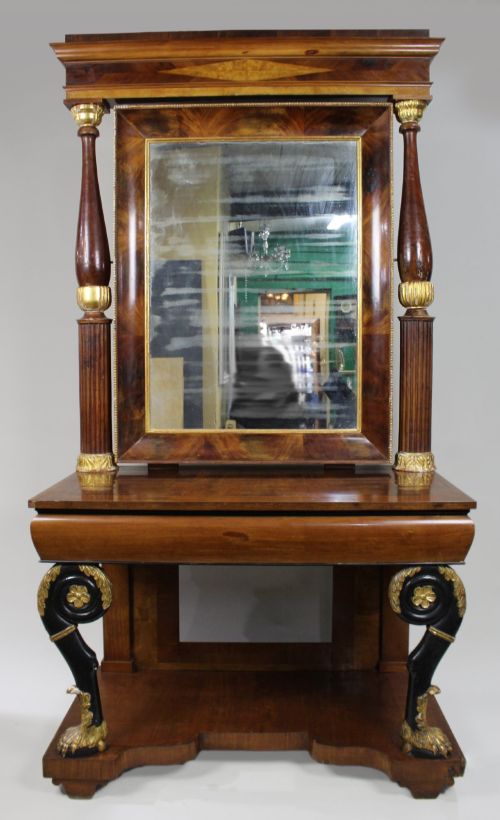
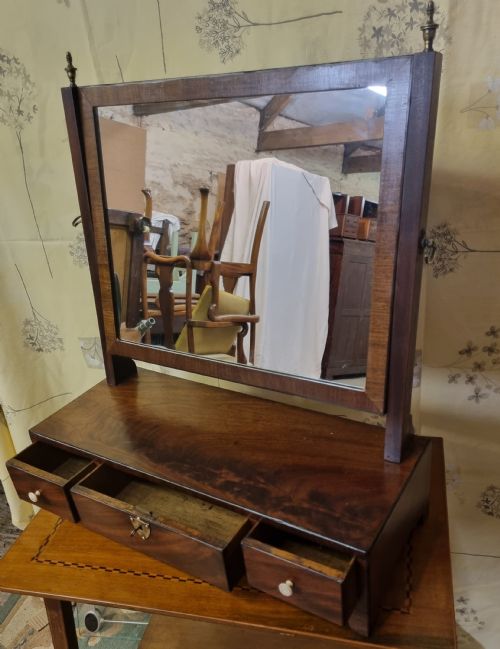
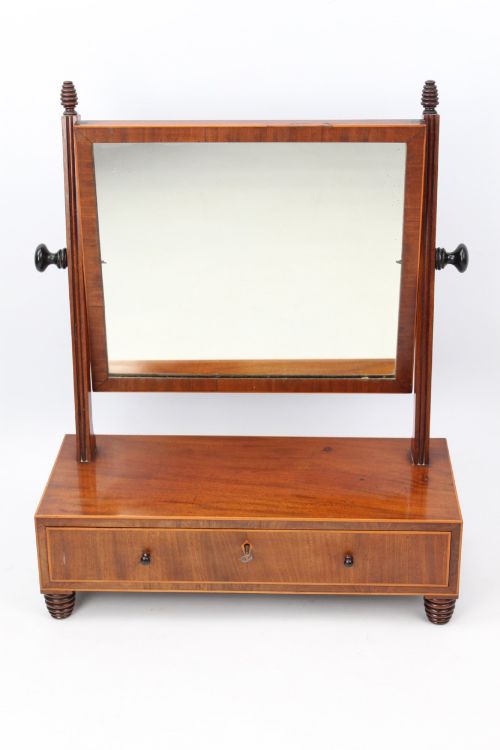
Most pieces feature a pivoting glass plate held within upright arms attached to a fitted base, which frequently incorporates small drawers for storage. While the majority of listings showcase mahogany construction, variations include rosewood, boxwood stringing, and occasional parcel-gilding.
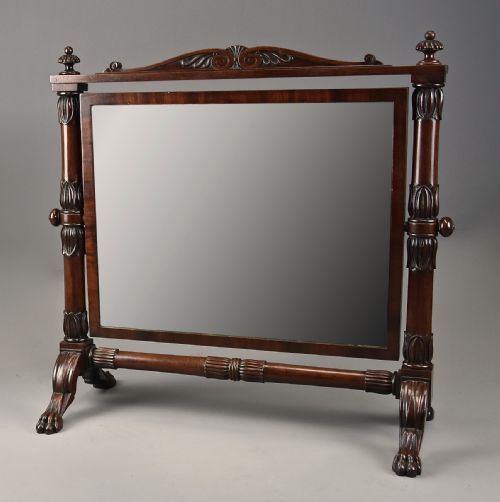
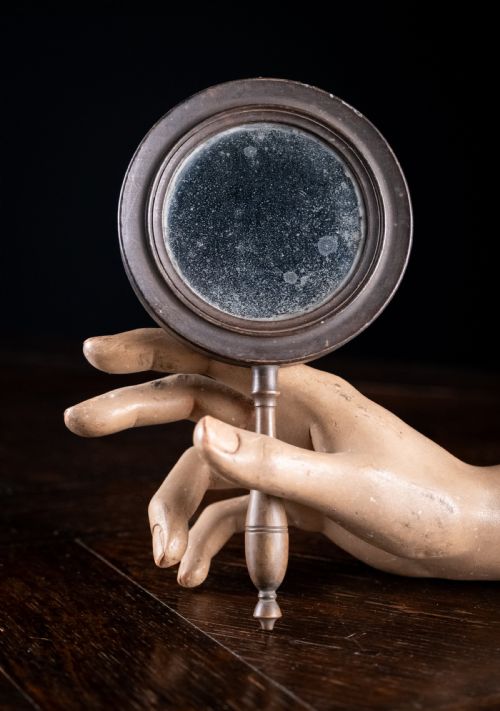
Beyond standard tabletop versions, the selection encompasses related forms like cheval mirrors and hand mirrors, reflecting the diverse output of nineteenth-century cabinet makers. The overarching focus remains on domestic utility combined with the refined proportions characteristic of the period.
Materials and construction
Cabinet makers relied heavily on dense timbers like mahogany and rosewood to construct the frames and supportive bases, often enhancing the surfaces with contrasting boxwood stringing or bone inlay. Timber selection dictated the structural integrity of the upright arms, which had to support the weight of the pivoting glass plate without sagging.
The glass itself was set into rebated frames and suspended on brass pivot screws, allowing the user to tilt the reflecting surface to various angles. Bases were frequently constructed as miniature chest forms, featuring small fitted drawers assembled with traditional dovetail joints to house personal items.
Gentlemen once relied on specialised pivoting shaving stands to catch the morning light just right.
Distinctions in craftsmanship
Quality in these pieces is dictated by the selection of figured timber, such as flame mahogany or richly grained rosewood, and the crispness of any inlaid boxwood stringing. Superior examples display refined proportions in the upright supports and subtle architectural mouldings on the base drawers.
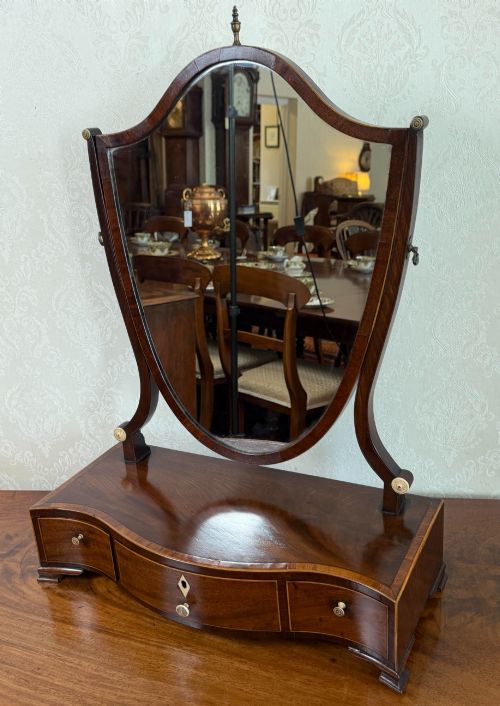
The sophistication of the brass pivoting hardware and the presence of original mirrored glass plates further separate standard workshop output from exceptional examples. Finer pieces often feature well-executed serpentine fronts and meticulously fitted interior compartments within the base.
Gillows of Lancaster·P and MA Nicholson·Gillingtons of Dublin
The Regency Table Mirror Glossary
- Swing mirror
- A glass plate suspended on horizontal pivots between two upright posts, allowing the angle of reflection to be adjusted freely. This mechanism is central to the design of most dressing table mirrors.
- Toilet mirror
- A compact tabletop glass designed specifically for grooming and ablutions, typically resting upon a miniature pedestal base containing small drawers. These pieces were standard fixtures in nineteenth-century bedchambers.
- Cheval mirror
- A full-length dressing glass supported by a sturdy frame and four legs, allowing the user to view their entire outfit. Unlike smaller table mirrors, these freestanding pieces stand directly on the floor.
- Serpentine
- A curved shape featuring a convex centre flanked by concave ends, commonly seen along the front edge of the mirror base. This undulating line adds visual movement to the piece.
- Stringing
- A narrow strip of contrasting wood, such as boxwood, inlaid flush into the surface of the timber to create decorative borders. It requires precise woodworking skill to execute neatly.
Regency Table Mirror: Frequently Asked Questions
What is a regency table mirror?
A regency table mirror is a small, adjustable glass set into a wooden frame designed to sit on top of a dressing chest, table, or sideboard. These pieces allow users to alter the angle of reflection for personal grooming.
Most surviving examples date from the early nineteenth century and utilise timbers such as mahogany or rosewood. Their compact proportions made them essential furnishings in bedrooms and dressing rooms of the era.
How were these mirrors used originally?
Originally placed on dressing surfaces or dedicated washstands, they provided a reliable reflection for shaving, arranging hair, and fastening garments. The small drawers built into the bases held cosmetics, pins, and personal valuables.
Because they were portable, owners could move them around the house to follow natural light sources before the advent of electricity.
How do I date a table mirror?
Dating relies on examining the timber species, construction techniques, and decorative motifs like boxwood stringing or brass mounts. Earlier pieces from the Georgian and Regency periods tend to feature finer joinery and distinct cabinet proportions.
Secondary woods used inside the drawers and the composition of the mirror plate itself also offer reliable clues to the exact decade of manufacture.
Can I place one on a modern chest?
Yes, these mirrors adapt easily to contemporary interior schemes and sit comfortably on modern chests of drawers or console tables. Their neutral wood tones and clean lines complement a variety of decorating styles.
When placing them, ensure the surface is stable and capable of supporting the weight of the wooden frame and base.