


18th Century Tabletop Mirror
An 18th century tabletop mirror is a dressing glass for the bedroom or vanity, prized for period timber and refined proportions.
18th Century Tabletop Mirror
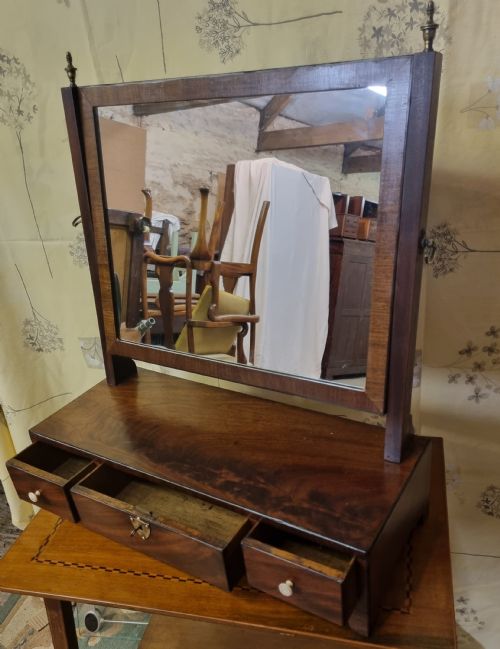
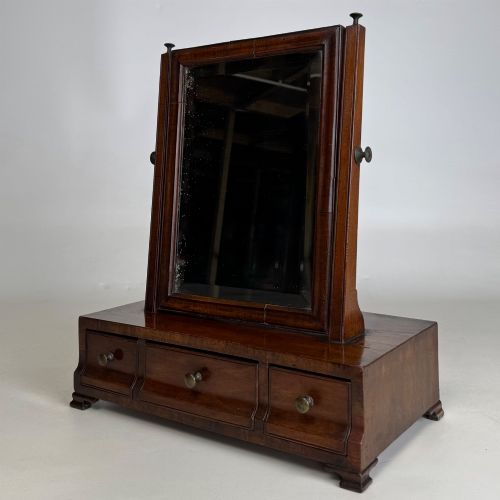
An 18th century tabletop mirror is a compact glass designed to sit upon a chest of drawers or a dressing table. You will frequently encounter mahogany and walnut examples, often constructed with small drawer bases beneath the tilting mirror plate.
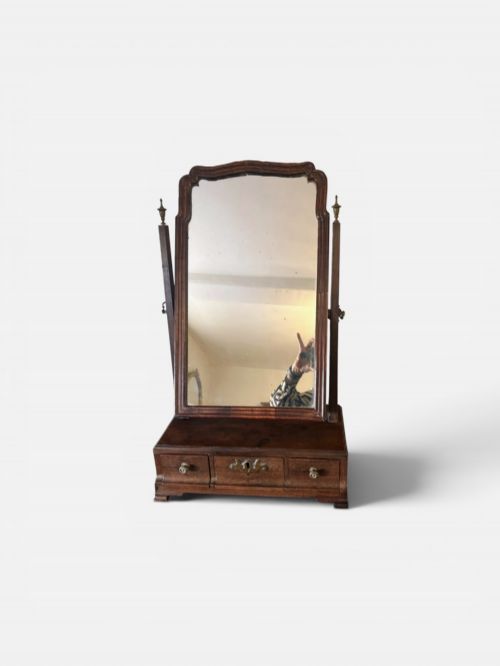
The form spans several distinct reigns and decades, including Queen Anne, George II, and George III periods. Makers produced these pieces to assist with personal grooming, employing box bases that frequently contain tiny compartments for small valuables.
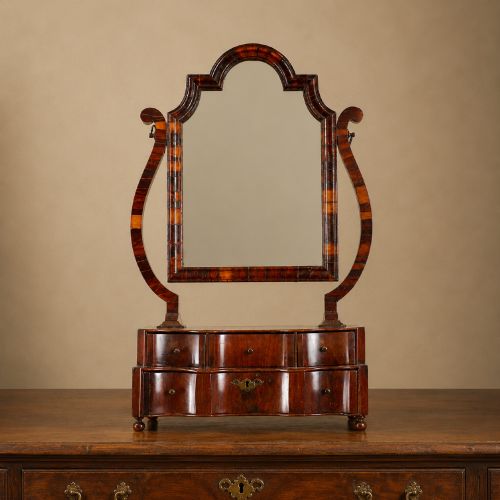
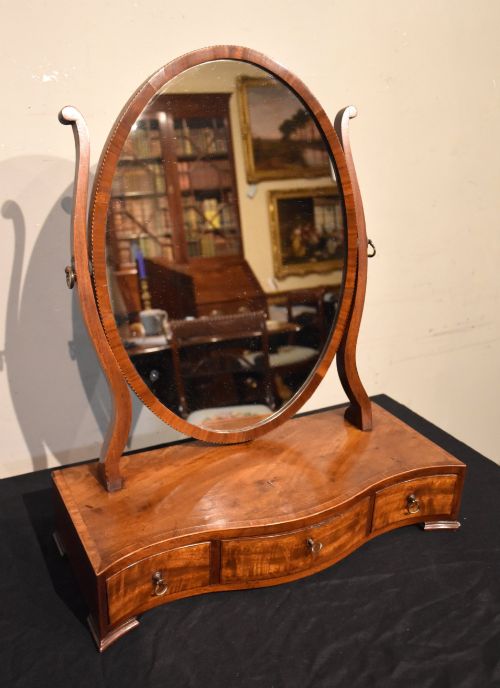
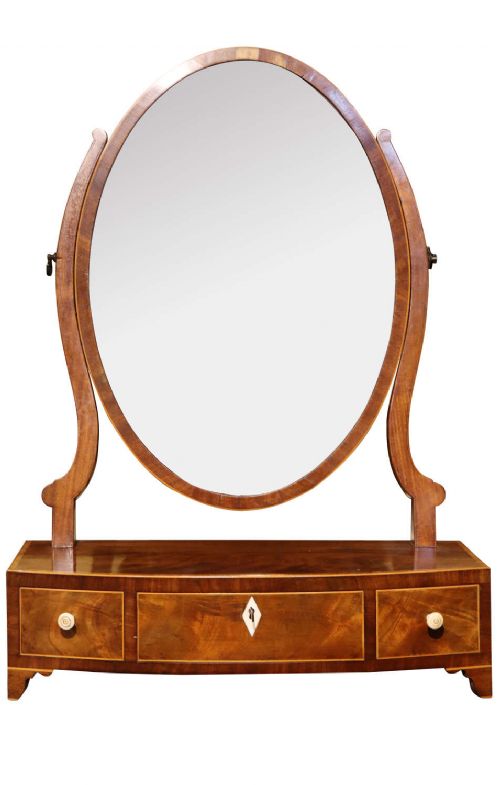
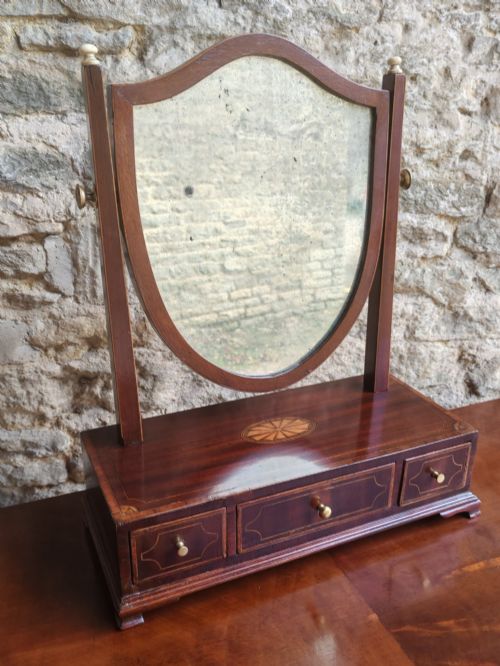
Most items on this page fall into the general category of toilet mirrors or dressing glasses. They range from plain rectangular plates in simple frames to serpentine and bow-fronted designs with intricate crossbanding.
How they were made
Cabinet makers utilised dense hardwoods such as mahogany and walnut, frequently selecting figured veneers like flame mahogany or burr maple for the drawer fronts. They joined the miniature carcases with traditional dovetails, building sturdy little drawer boxes to support the upright arms.
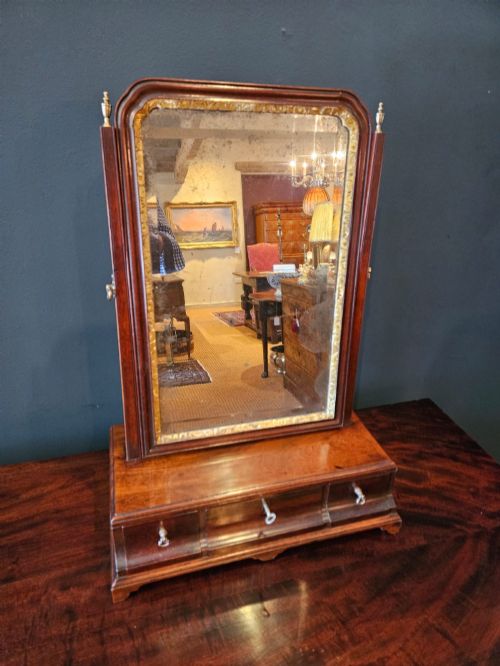
Mirror plates were set into pivoting wooden frames held by brass screw pins or side knobs, allowing the user to adjust the angle of reflection. Artisans also applied giltwood, gesso, and parcel-gilt highlights to elevate the decorative scheme of more formal pieces.
The inventory records various forms including bow-fronted, serpentine, and shield-shaped dressing glasses.
What varies in quality
The grade of timber and the sophistication of the base set the finest examples apart from standard chamber pieces. Superior items display carefully matched veneers, such as crossbanding and burr walnut, alongside well-proportioned ogee bracket feet.
Hardware and secondary timbers also signal the standard of manufacture. Original brass fittings, hand-cut dovetailing in the miniature drawers, and secondary woods like oak or pine determine whether a piece retains its original integrity.
The 18th Century Tabletop Mirror Glossary
- Toilet mirror
- A small mirror designed for a dressing table, typically featuring a base fitted with small drawers. These pieces became essential bedroom furnishings during the eighteenth century.
- Crossbanding
- A narrow strip of veneer laid around the border of a drawer front or panel with the grain running perpendicular to the main surface. This technique creates a neat framing effect on mahogany and walnut furniture.
- Serpentine
- A front contour that curves inward centrally and outward at the sides in an undulating shape. Cabinet makers applied this graceful line to the drawer bases of high-end dressing mirrors.
- Parcel-gilt
- Partially gilded woodwork where gold leaf highlights specific carved details against a dark wood ground. It appears on finer George II period mirrors.
- Dressing glass
- An alternative period term for a tabletop mirror used during personal grooming. The glass plate tilts within upright arms mounted on a small plinth.
18th Century Tabletop Mirror: Frequently Asked Questions
What is an 18th century tabletop mirror used for?
These mirrors sat atop chests of drawers or dressing tables to provide a reflecting surface for shaving and personal grooming. The small drawers in the base held cosmetics, pins, and small valuables.
Today, they function well on modern dressing tables or sideboards, offering both practical reflection and period character to a bedroom or hallway.
How do I identify a George III mirror?
George III pieces often feature mahogany, satinwood, or burr maple timbers, sometimes with shaped oval or shield-shaped plates. Serpentine and bow-fronted drawer bases also become prominent during this later eighteenth-century phase.
Look at the construction details of the miniature drawers and the style of the bracket feet to help confirm the period alongside the timber choice.
Are the mirror plates original?
Mirror glass from the eighteenth century often degraded over time, meaning many surviving pieces have replacement glass plates. Older plates typically show light foxing, speckling, or slight distortion.
A replacement plate does not diminish the value of the wooden frame provided the cabinet work and brass hardware remain intact and period-correct.
What is the difference between walnut and mahogany models?
Walnut models generally point toward the earlier part of the century, spanning the Queen Anne and early Georgian eras. They frequently incorporate feather-banding and rich, warm brown tones.
Mahogany examples become more common as the century progresses into the reign of George III, often displaying deeper red hues, crossbanding, and more complex serpentine shapes.