

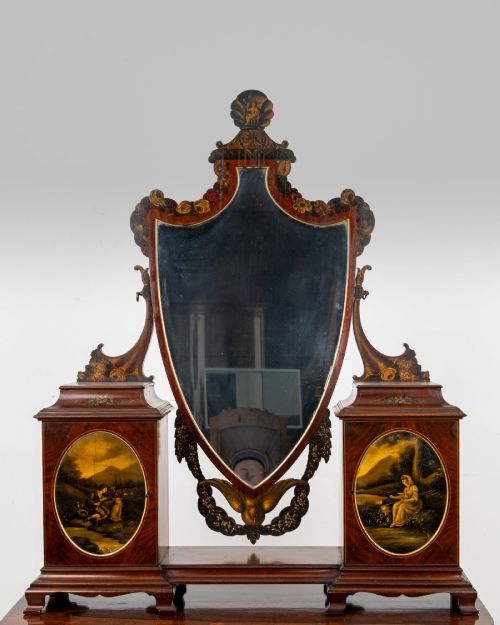


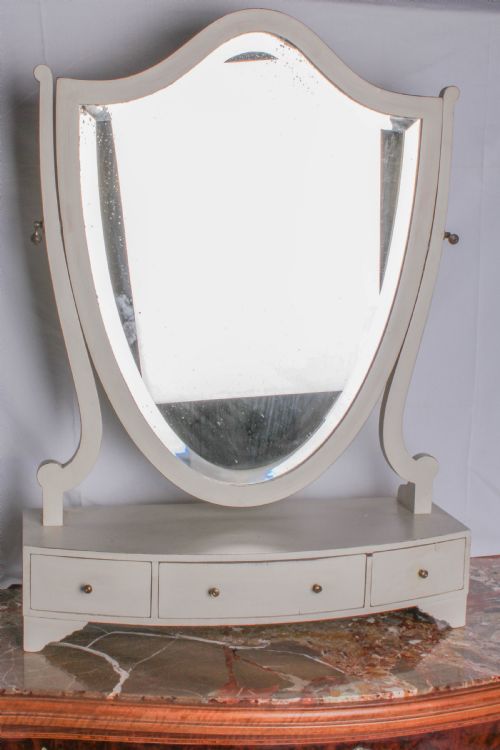

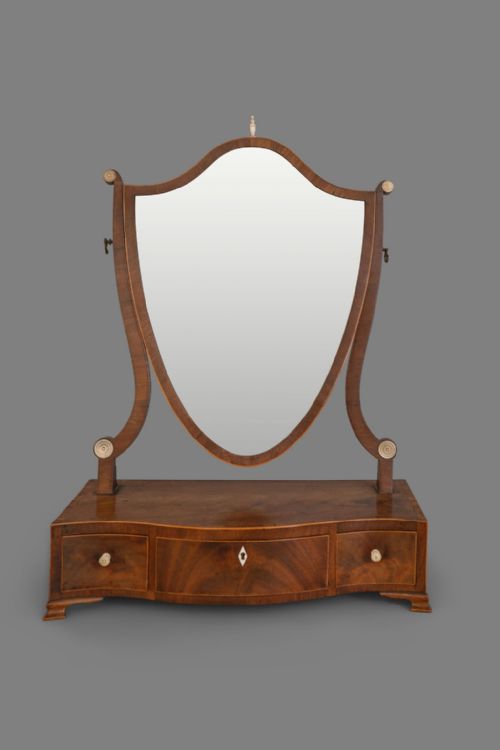


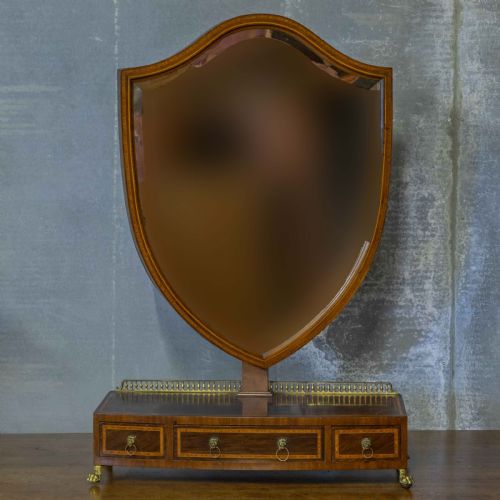
Shield Shape Swing Mirror
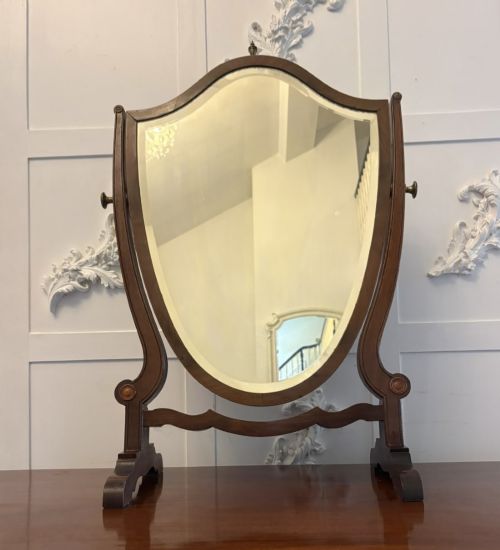
These shield shape swing mirror examples bring adjustable reflection and traditional table presence to a room, valued for their graceful frames.
Shield Shape Swing Mirror
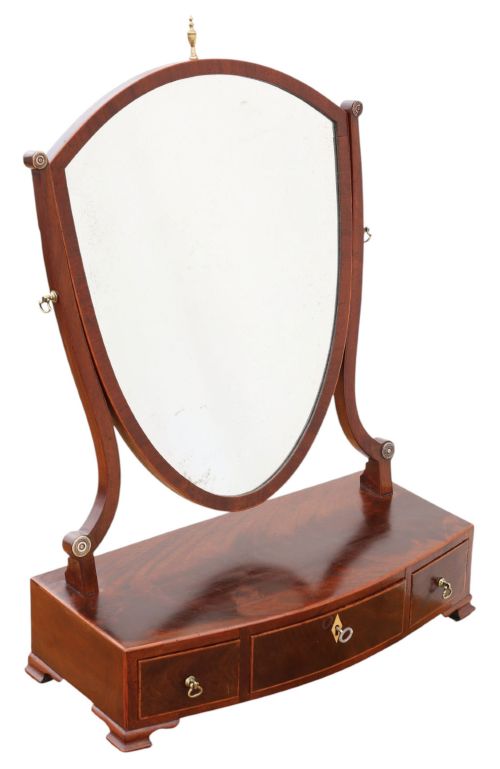
When you search for a shield shape swing mirror, you are looking at tabletop and dressing furniture designed to pivot between upright supports. These pieces appear most frequently from the Georgian, Edwardian, and nineteenth-century periods, spanning dressing table mirrors, toilet mirrors, and table top cheval mirrors.
How they were made
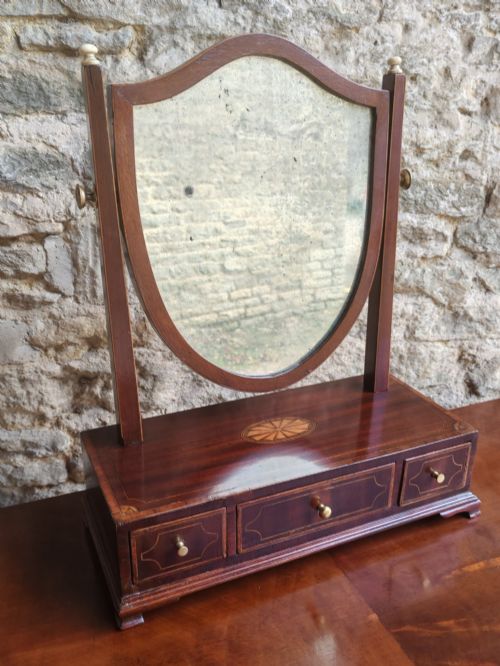
Cabinet makers constructed these frames predominantly using solid and veneered mahogany, sometimes enriched with satinwood and boxwood inlay work. The glass plate rests within a dedicated wooden surround, connected by metal pivot screws to vertical arms that rise from the base.
Fittings such as copper and brass brackets support the swinging mechanism, while bone escutcheons or small knobs frequently accent the accompanying drawer sections. Surface decoration relies on fine timber grain, painted details, and precise edge moulding rather than heavy carving.
Shield Shape Swing Mirror Retail Price Guide 2026
Typical asking prices for shield shape swing mirror among the pieces listed under this phrase on Sellingantiques today, from the lower quarter to the upper quarter. They describe what is for sale here now, not the wider market.
Some Edwardian variants included hidden jewellery cabinets tucked right into the base of the swing frame.
What varies in quality
Distinctions in quality rest largely upon the choice of timber figure, the subtlety of the serpentine or shield contour, and the integration of the base structure. Finer pieces demonstrate careful timber selection, such as rich mahogany grain and crisp stringing or inlay work.
Proportion and stability dictate the upper tier of these items, where the weight of the mirror glass balances smoothly against the pivot hardware and the base remains firmly seated without wobble.
The Shield Shape Swing Mirror Glossary
- Shield shape
- A plate or panel contour tapering towards the base with a rounded or arched top, mimicking a traditional coat of arms. This silhouette defines the visual character of the glass.
- Swing mirror
- A looking glass hung on lateral pivots so it can tilt back and forth. This mechanism allows the user to adjust the viewing angle on a table or dressing chest.
- Toilet mirror
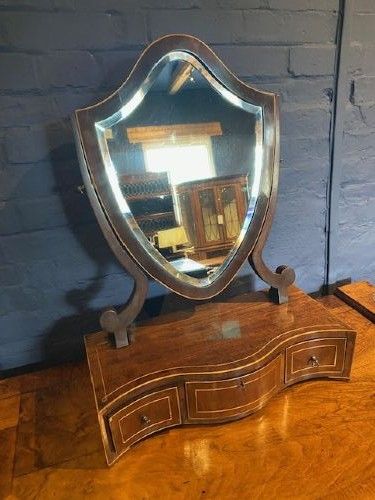
- A small mirror designed to stand on a dressing table or chest of drawers during the eighteenth and nineteenth centuries. These pieces often incorporated small trinket drawers beneath.
- Serpentine
- A curved line or edge featuring a convex centre flanked by concave curves. This profile frequently shapes the front of the mirror base.
- Cheval mirror
- A full-length or large-scale mirror supported on four vertical feet with side uprights. Table top variants adapt this pivoting large-scale design for domestic dressing use.
Shield Shape Swing Mirror: Frequently Asked Questions
What is a shield shape swing mirror?
A shield shape swing mirror is a tabletop looking glass featuring a frame shaped like a heraldic shield, mounted on pivots to tilt back and forth.
These pieces sit upon supportive bases, frequently incorporating small drawers for jewellery and dressing items.
Where were these mirrors placed?
They were designed for placement on top of dressing tables, chests of drawers, or washstands in bedrooms and dressing rooms.
Their elevated tabletop position allowed users to adjust the glass angle for grooming and dressing.
How do I date a shield shape swing mirror?
Dating relies on observing timber choices, construction methods, hardware materials, and base silhouettes across periods like the Georgian and Edwardian eras.
Earlier pieces from the eighteenth century often feature serpentine bases and fine mahogany veneers, while later examples introduce painted decoration or Edwardian inlay.
How do I maintain the swing mechanism?
The pivot screws on either side of the frame regulate the tension that holds the mirror plate at your chosen angle.
Gentle adjustment of these brass or copper fittings ensures the glass stays positioned without straining the wooden uprights.