





Wood Desktop Vanity Mirror
These wood desktop vanity mirror examples offer practical charm and period character, providing a traditional focal point for any dressing table.
Wood Desktop Vanity Mirror
A wood desktop vanity mirror is a portable looking glass mounted on a pivoting frame above a small stand or drawer base. They appear in forms such as dressing table mirrors and swing mirrors designed to sit upon furniture.
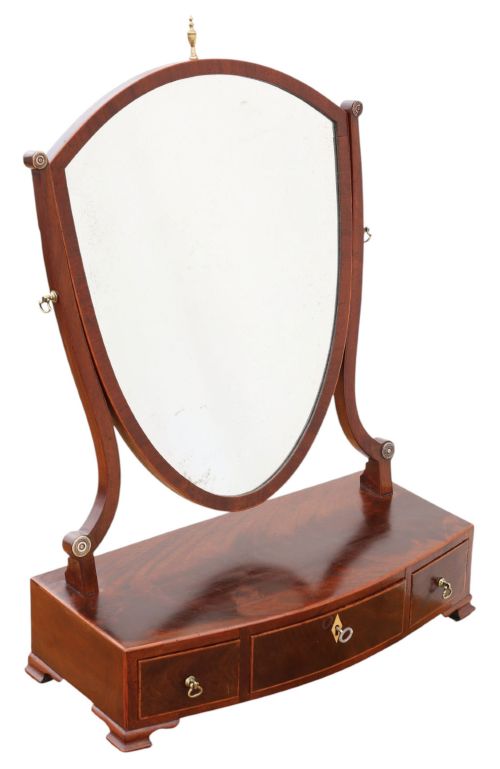
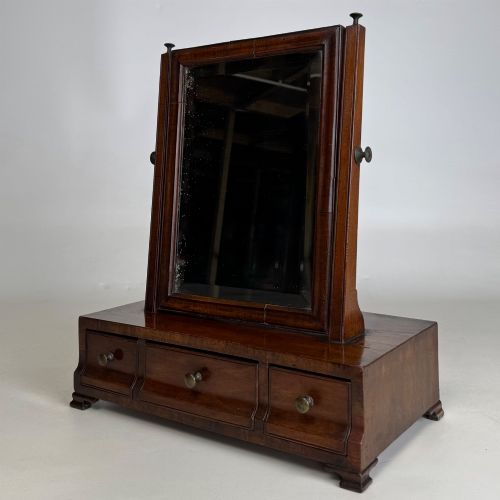
Most examples found here span the Georgian and Victorian periods, alongside early twentieth-century interpretations. You meet classic shield shapes, rectangular plates, and traditional three-drawer box bases among the current selection.
How they were made
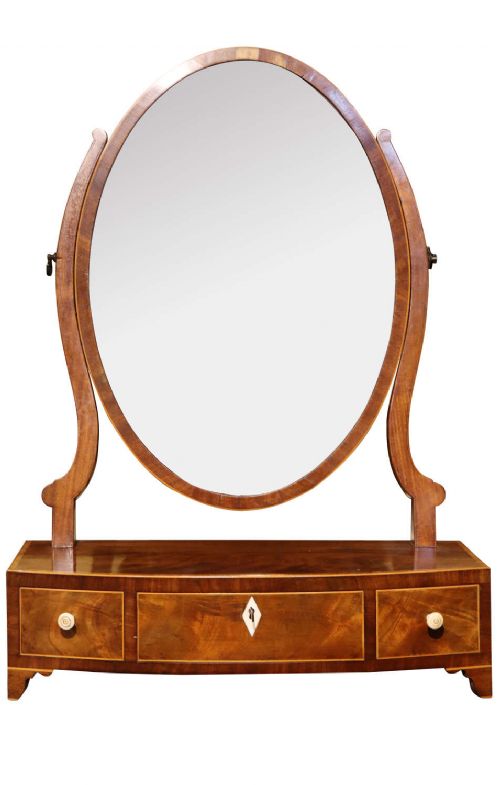
Cabinet makers constructed these frames primarily from solid mahogany and walnut, frequently selecting dense timbers capable of taking a fine polish. Crossbanding and stringing in boxwood and satinwood introduced contrasting borders and geometric highlights.
Mirror glass sits within adjustable side arms attached to upright supports, allowing the user to alter the angle of reflection. Many iterations incorporate functional lower boxes fitted with small drawers for holding trinkets.
Wood Desktop Vanity Mirror Retail Price Guide 2026
Typical asking prices for wood desktop vanity mirror among the pieces listed under this phrase on Sellingantiques today, from the lower quarter to the upper quarter. They describe what is for sale here now, not the wider market.
Secret compartments occasionally hide within the tiny drawers, left behind by owners who forgot where they put their smallest secrets.
What varies in quality
The distinction between ordinary and exceptional pieces rests in the crispness of the cabinet work and the selection of timber veneers. Superior examples display carefully matched grain patterns and restrained marquetry rather than heavy-handed decoration.
Proportion and stability dictate overall merit, as well-balanced uprights and smoothly functioning swing mechanisms demonstrate superior workshop competence.
The Wood Desktop Vanity Mirror Glossary
- Swing mirror
- A looking glass hung on pivots between two upright posts so it can tilt. This mechanism allows the user to adjust the viewing angle.
- Marquetry
- Inlaid patterns made from various woods applied to a carcase. Dutch makers utilised floral motifs in contrasting timbers.
- Crossbanding
- A strip of veneer laid across the grain of the primary wood around the border of a drawer front. It creates a neat framing effect.
Wood Desktop Vanity Mirror: Frequently Asked Questions
How do I date a wood desktop vanity mirror?
Dating relies on examining the timber, construction methods, and overall silhouette. Earlier pieces often display secondary woods like oak or pine behind mahogany veneers, alongside hand-cut joinery.
Hardware such as brass screw caps and drawer construction also offer clues, as dovetails became more refined and machine-made elements appeared in later periods.
Where should I place a wood desktop vanity mirror?
These mirrors suit dressing tables, chest of drawers, or sideboards where they provide a functional reflective surface. Placing them near a natural light source enhances their practical utility.
Ensure the supporting furniture is deep enough to hold the base securely without overhang, protecting the piece from accidental knocks.
Did these mirrors always have drawers?
Many examples feature a box base fitted with one, two, or three small drawers, though simpler frame-only versions exist. The drawer base added weight to anchor the pivoting glass and provided storage for small personal items.
Simpler architectural styles relied purely on bracket feet or plain box stands to support the upright arms.
What is the difference between Georgian and Victorian mirrors?
Georgian mirrors generally favour elegant proportions, fine crossbanding, and slender uprights with delicate bracket feet. Their design emphasises understated classical lines and rich mahogany or walnut figures.
Victorian versions tend to be heavier in construction, utilising denser timbers and sometimes incorporating bolder mouldings or scrollwork to suit changing interior tastes.