

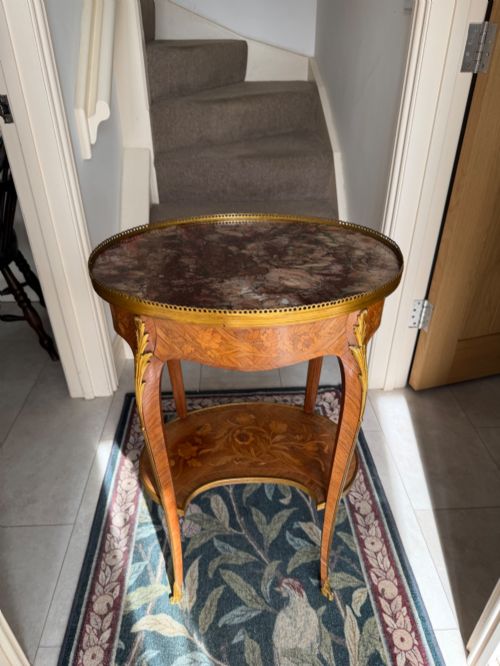
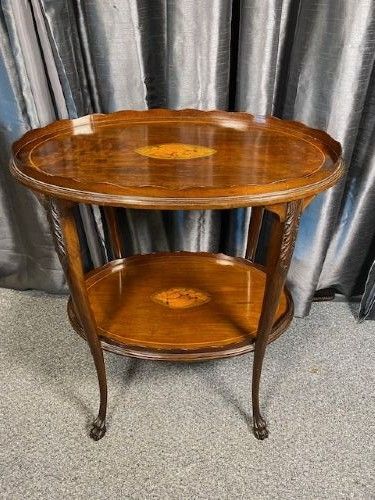

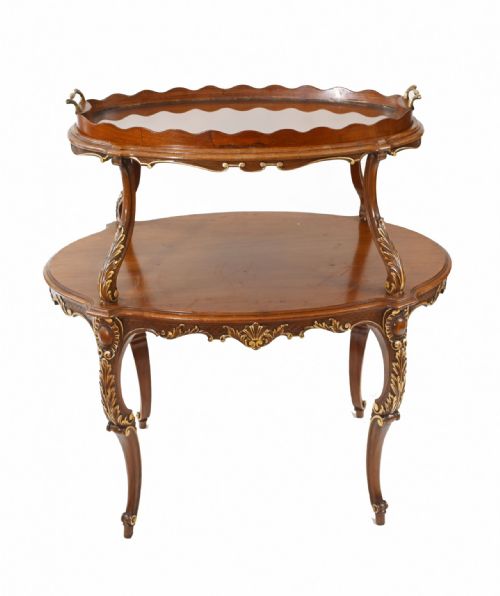
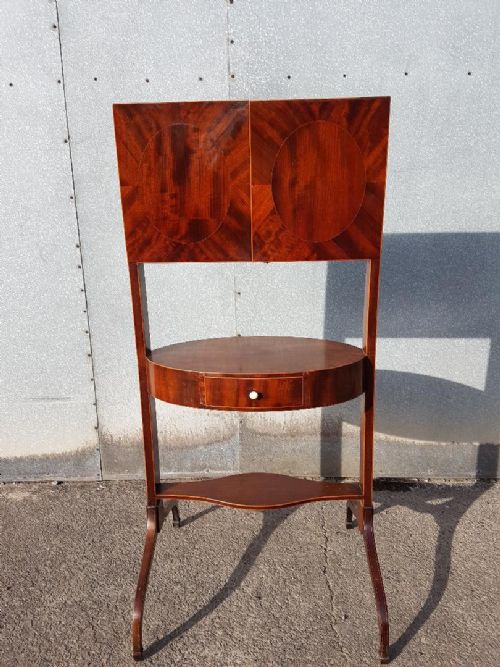
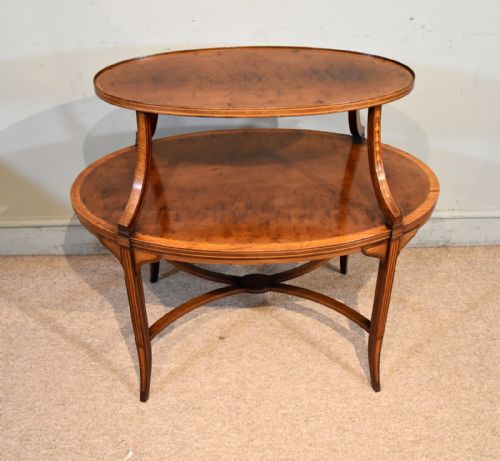


Oval Tier Table
An oval tier table provides layered surface space for lamps and display, uniting domestic utility with refined curved geometry.
Oval Tier Table
An oval tier table functions as an occasional, side, or lamp table across various historical periods, offering multiple horizontal surfaces arranged vertically. The evidence shows these pieces appearing frequently in Edwardian formats alongside Victorian, Georgian, and 1920s examples.
The form encompasses étagères, window tables, and two-tier or three-tier occasional stands designed for placement beside seating or freestanding within a room. Mahogany, walnut, and satinwood dominate the construction, often enhanced by marquetry inlay, brass mounts, or carved foliate details.
Construction and materials
Cabinet makers utilised solid timbers alongside wood veneer, combining structural woods such as mahogany, oak, and walnut with decorative surface veneers like satinwood, kingwood, amboyna, and rosewood. These timbers were shaped into curved oval tops and supported by slender uprights forming secondary or tertiary tiers.
Detailing relied upon brass mounts, ormolu, marquetry inlay, and hand-carved foliate decoration to embellish the edges and surfaces. French polishing and related traditional finishes sealed the wood while accentuating the natural grain patterns and inlaid motifs.
Oval Tier Table Retail Price Guide 2026
Typical asking prices for oval tier table among the pieces listed under this phrase on Sellingantiques today, from the lower quarter to the upper quarter. They describe what is for sale here now, not the wider market.
At least one industrious maker turned an ordinary washstand into a tiered table by adding extra platforms for afternoon tea.
Assessing craftsmanship
Quality rests upon the selection of timber and the precision of the marquetry or parquetry work integrated into the oval surface. Superior examples demonstrate finely figured wood veneers, balanced grain matching, and crisp execution of inlaid borders or brass mounts.
Structural integrity depends on the stability of the tier supports and the joinery connecting the upper and lower surfaces. Finer pieces maintain rigidity across multiple tiers without wobble, displaying careful attention to the turned or straight uprights holding the tiers together.
Haentgos Freres Paris·Shoolbred
The Oval Tier Table Glossary
- Étagère
- A piece of furniture consisting of a set of open shelves or tiers for displaying small objects. This form appears frequently among the records for tiered tables.
- Marquetry
- Decorative veneer work in which thin pieces of wood, shell, or ivory are fitted into a wooden panel to form geometric or pictorial designs. It often embellishes the top surface of Edwardian and Victorian examples.
- Parquetry
- A geometric mosaic of wood pieces used for floors or furniture surfaces. This technique creates patterned tops on French-influenced tables.
- Ormolu
- Gilt-bronze mounts applied to furniture for decorative effect. These metallic additions accent the edges and legs of period pieces.
- Satinwood
- A durable, lustrous, yellow-brown timber utilised extensively for decorative banding and inlay. It provides a bright contrast against darker woods like mahogany.
Oval Tier Table: Frequently Asked Questions
What is an oval tier table used for?
These tables serve as lamp stands, side tables, or occasional pieces to hold small objects and reading material.
The multiple tiers provide extra surface area without demanding a larger footprint on the floor.
How do I distinguish Edwardian pieces from Victorian ones?
Edwardian examples tend to feature lighter satinwood banding, Sheraton Revival influences, and delicate mahogany frames.
Victorian pieces often display heavier carved details, darker timbers like burr walnut, and more robust proportions.
Are these tables sturdy enough for daily use?
Period tiers are generally stable for supporting lamps, decorative items, and everyday domestic objects.
The vertical supports and tiered joints distribute weight effectively across the lower shelf.
What styles are common among these tables?
Sheraton Revival, Louis XV style, and Neo-Classical designs appear frequently across the historical records.
These styles incorporate curved oval silhouettes, delicate inlay, and polished wood finishes.