

Oval Giltwood Wall Mirror
An oval giltwood wall mirror brings warmth and reflected light to a room through centuries of decorative tradition.
Oval Giltwood Wall Mirror
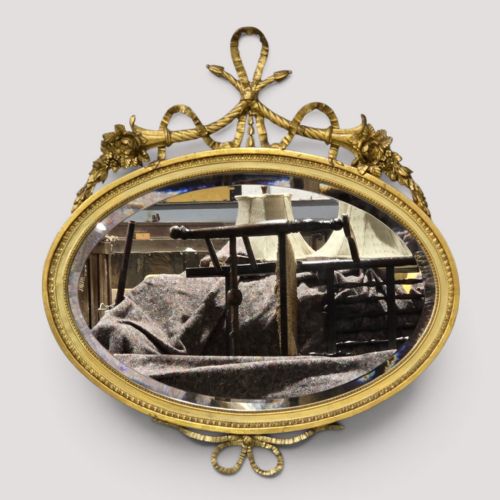
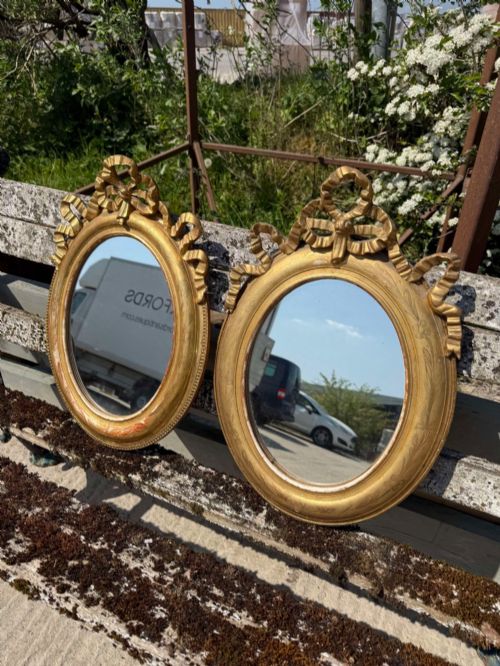
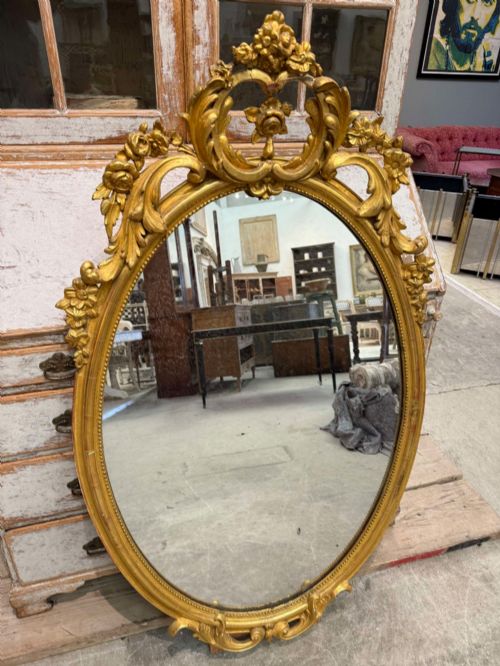
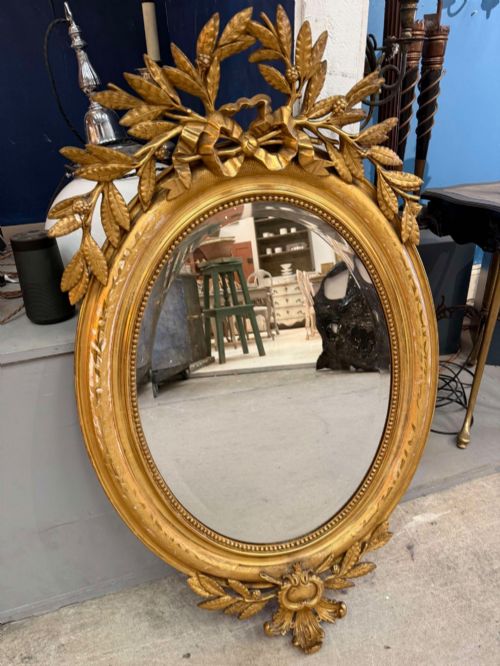
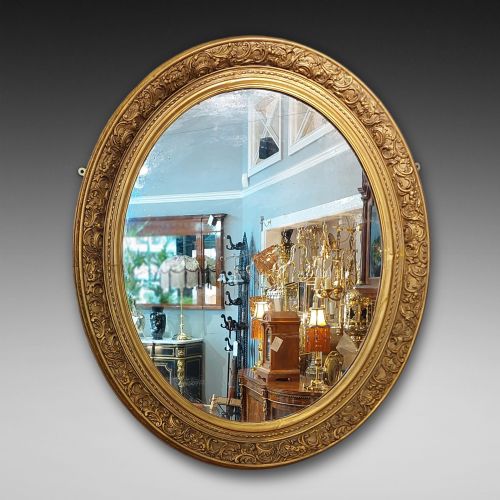
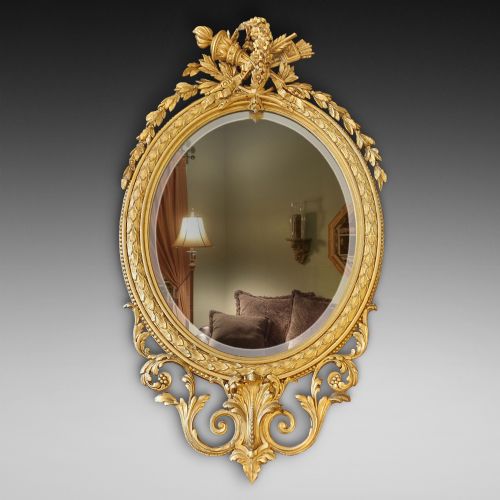
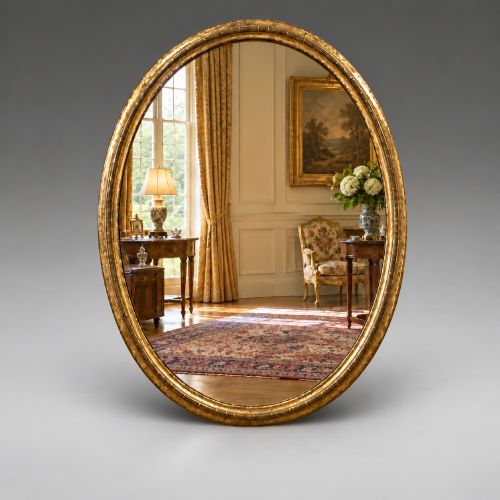
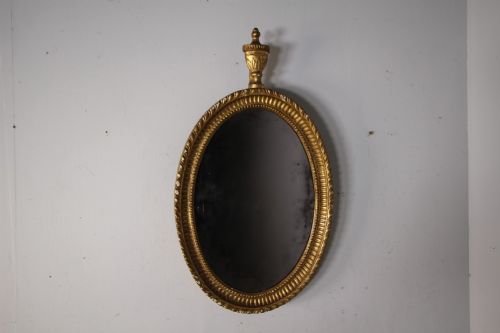
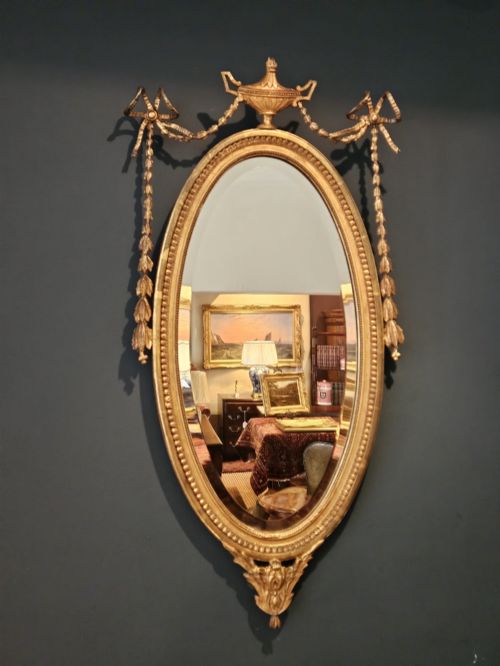
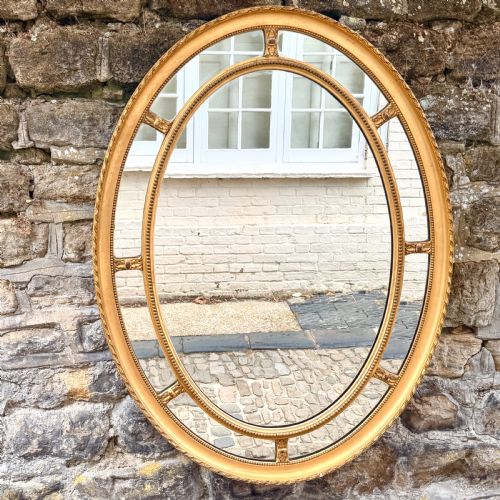
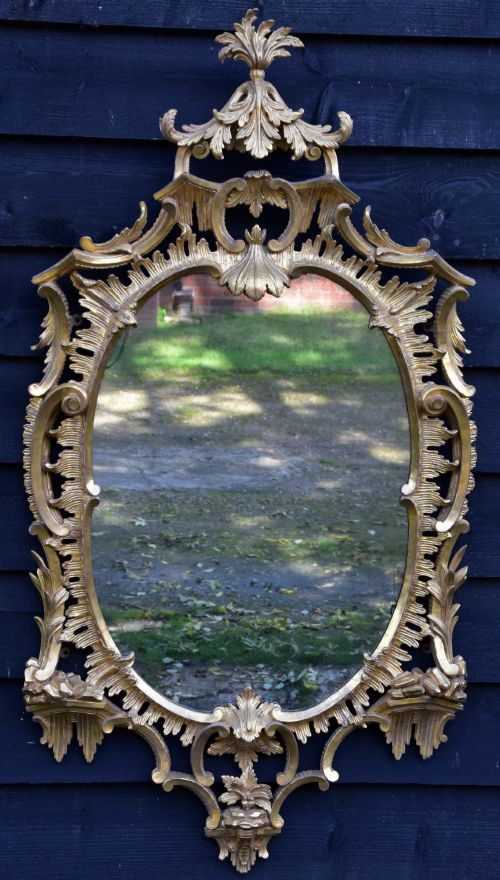
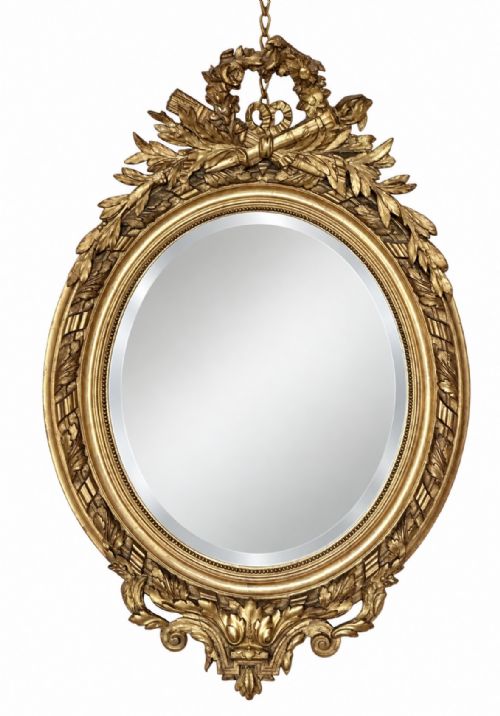
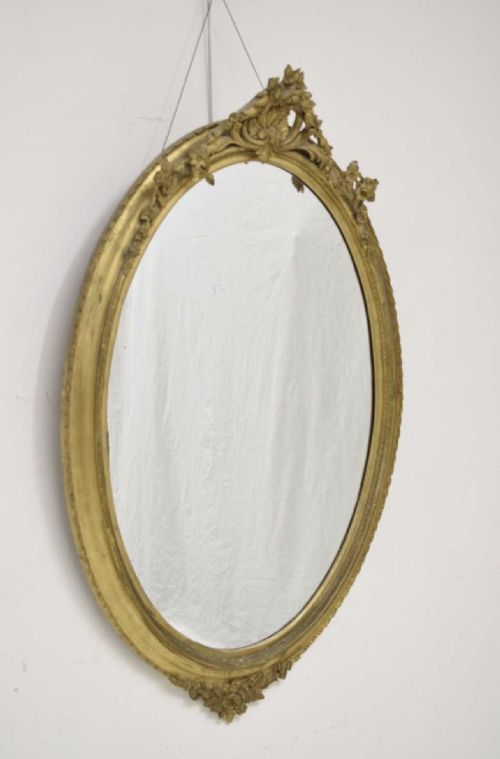
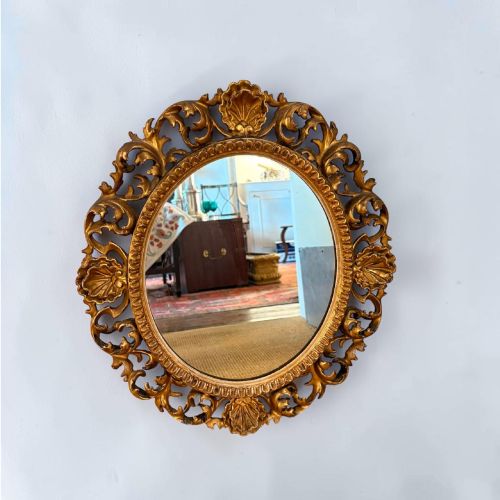
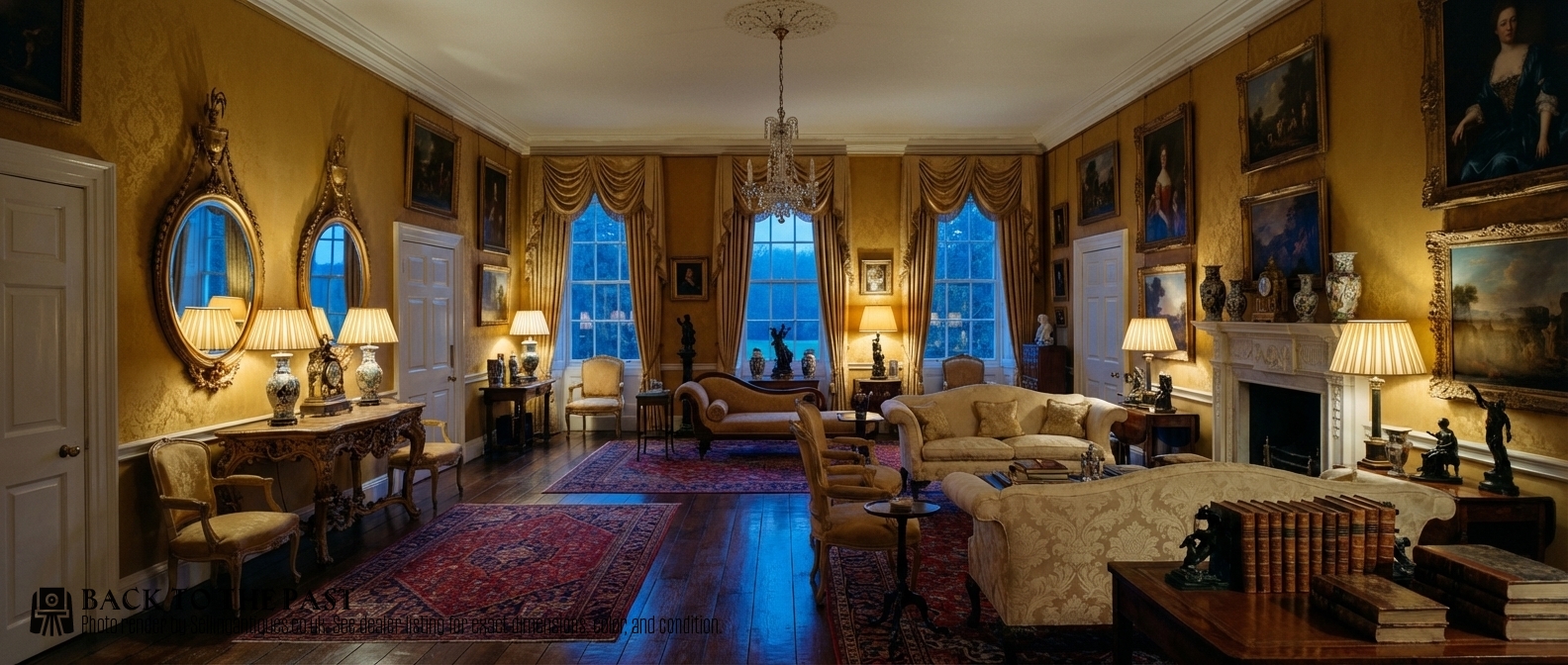
An oval giltwood wall mirror combines a vertical or horizontal curved frame with a gilded surface, designed to hang in reception rooms, halls and overmantles. The form spans Georgian craftsmanship through to Victorian revivalism, appearing in both restrained neoclassical layouts and exuberant rococo flourishes.
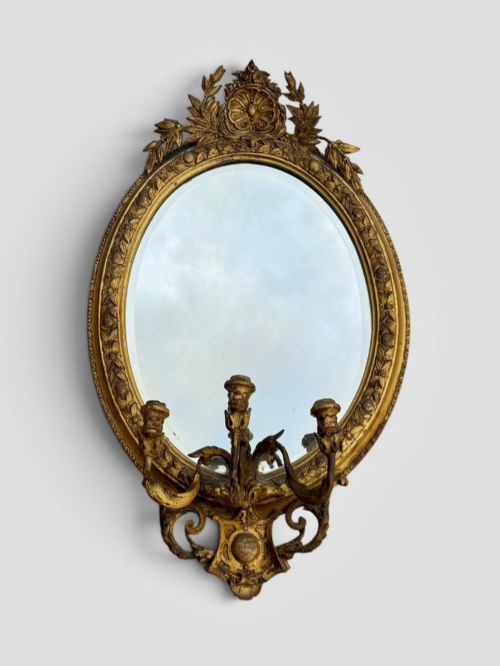
Most examples on this page date from the nineteenth century, though eighteenth-century and early twentieth-century pieces also appear regularly. These mirrors take various forms, from simple timber frames to elaborate girandoles fitted with candle sconces.
Origin styles range from English George III and Victorian interpretations to French Louis XV, Louis XVI and Florentine designs. Buyers select them to anchor a wall scheme or to bounce natural light into darker corners of a period interior.
How They Were Made
Makers carved frames from timber such as oak or pine, then applied layers of gesso - a mixture of chalk and size - to build up relief details before gilding. Gold leaf or composition was laid over the prepared surface, sometimes burnished to create contrasting matte and bright finishes.
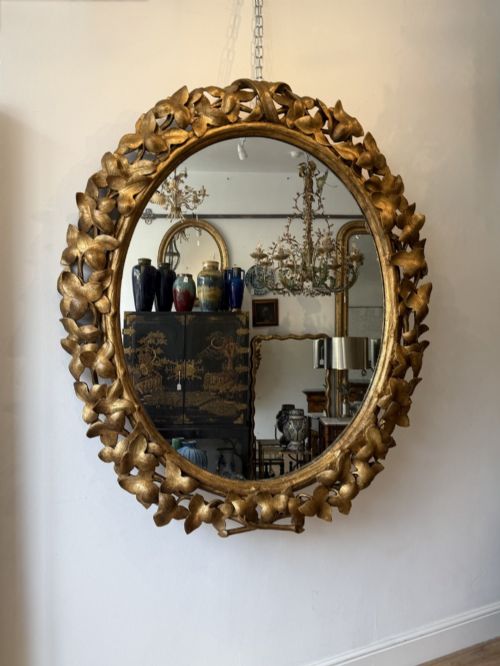
Early plates consisted of mercury glass, which yields a characteristic soft and mottled reflection, while later nineteenth-century pieces frequently utilised standard silvered mirror glass. Frames often incorporated carved natural motifs including rose vines, oak leaves and ribbon twists.
Oval Giltwood Wall Mirror Retail Price Guide 2026
Typical asking prices for oval giltwood wall mirror among the pieces listed under this phrase on Sellingantiques today, from the lower quarter to the upper quarter. They describe what is for sale here now, not the wider market.
Listings feature periods spanning from the eighteenth century through to the Edwardian era, incorporating both English and French design influences.
What Varies in Quality
The depth and crispness of the hand-carved gesso ornamentation separate exceptional work from standard production. Superior frames display undercut foliage and sharp scrolling details that retain their definition beneath layers of historical gilding.
The integrity of the original mirror plate influences the character of the piece, with undisturbed mercury plates holding higher visual weight than later replacements. Construction solidity at the joints and the preservation of early backing boards also dictate the standing of an individual mirror.
The Oval Giltwood Wall Mirror Glossary
- Giltwood
- Timber that has been covered with gold leaf or gold paint. This finish defines the reflective warmth characteristic of traditional frames.
- Gesso
- A plaster-like preparation spread over wood to form a smooth surface for carving and gilding. It allows artisans to shape intricate relief ornamentation.
- Girandole
- A decorative wall mirror featuring attached candle sconces or arms. These branching holders project light from candles into the room.
- Mercury Plate
- An early mirror glass produced using a tin and mercury amalgam. It produces a distinctive shimmering reflection with gentle foxing.
- Rococo Revival
- A nineteenth-century design style emulating the asymmetric scrolls and organic curves of the mid-eighteenth century. It dominates many Victorian decorative frames.
Oval Giltwood Wall Mirror: Frequently Asked Questions
How do I hang a heavy giltwood mirror safely?
These frames require secure wall fixings suited to the weight of the timber and glass. Using appropriate masonry or stud wall anchors ensures the piece remains stable.
Professional mirror hangers often employ dual bracket systems to distribute the load evenly across the structure.
Are original mercury plates easy to identify?
Original mercury plates display a characteristic misty depth and dark spots known as foxing. These natural ageing marks develop in the backing over many decades.
Later replacement glass appears much clearer and lacks the soft distortion typical of eighteenth and early nineteenth-century plates.
What is the difference between gesso and composition ornament?
Gesso is applied in liquid form and carved directly once dry, allowing for fluid and organic relief work. Composition, often called compo, uses a moulded paste of resin, glue and whiting pressed into shape.
Finer period mirrors rely predominantly on hand-carved gesso over timber rather than moulded substitutes.
How should I clean a antique giltwood frame?
Dusting the frame gently with a dry, soft-bristled brush prevents particle buildup without disturbing fragile gold leaf. Moisture and modern chemical sprays damage historical gilding.
Glass surfaces can be wiped with a minimal amount of window cleaner applied to a cloth rather than sprayed directly onto the plate.