

Oval Gilt Frame Mirror
An oval gilt frame mirror brings architectural grace and reflected light to a room, offering the refined curves characteristic of centuries of decorative design.
Oval Gilt Frame Mirror
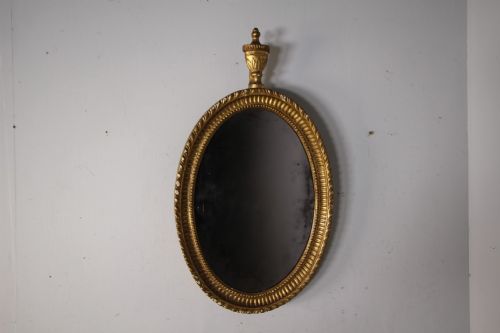
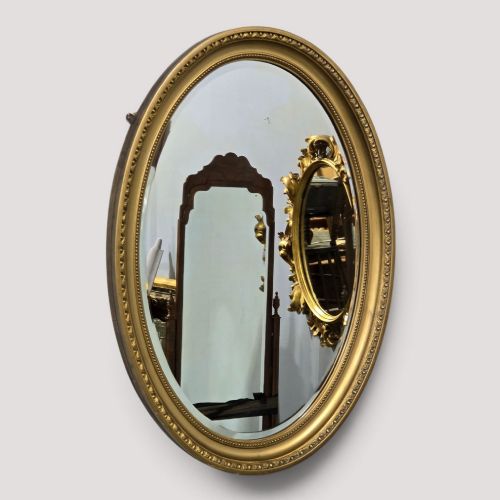
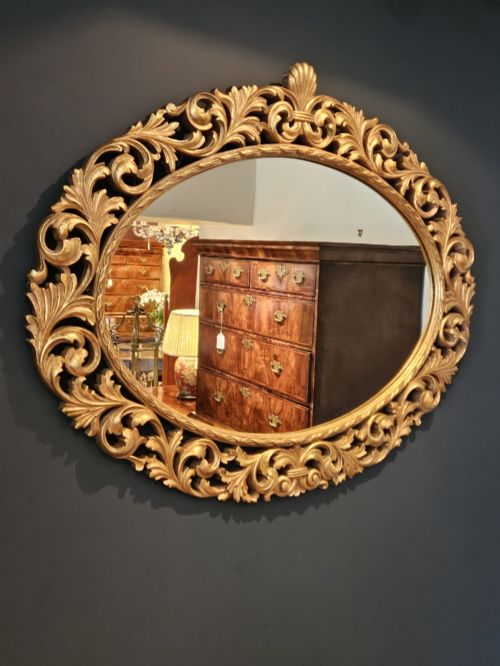
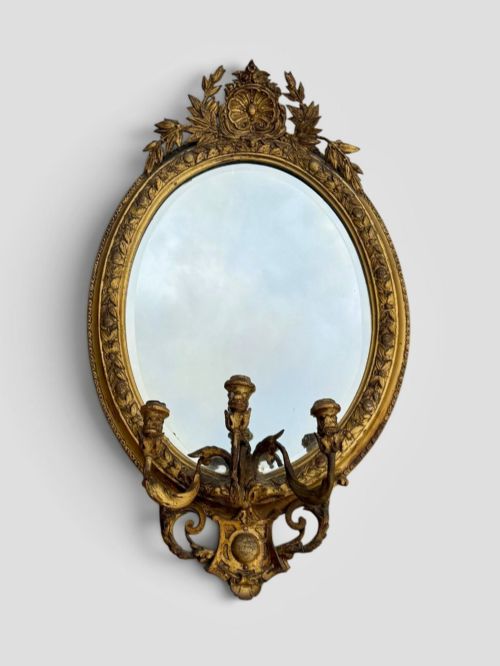
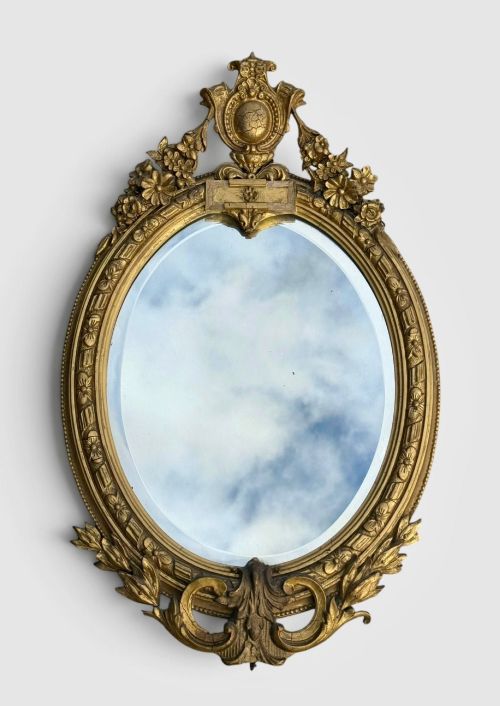
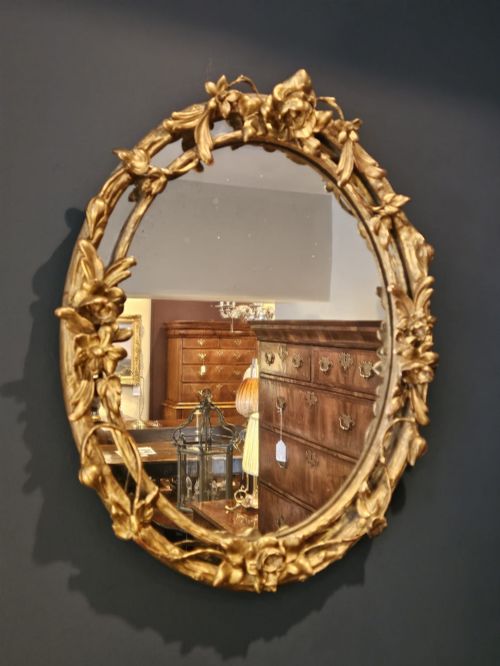
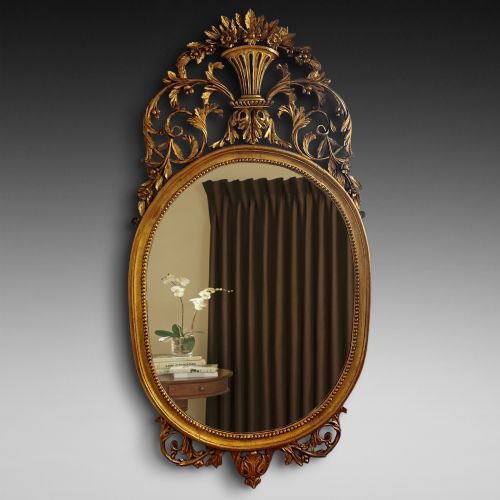
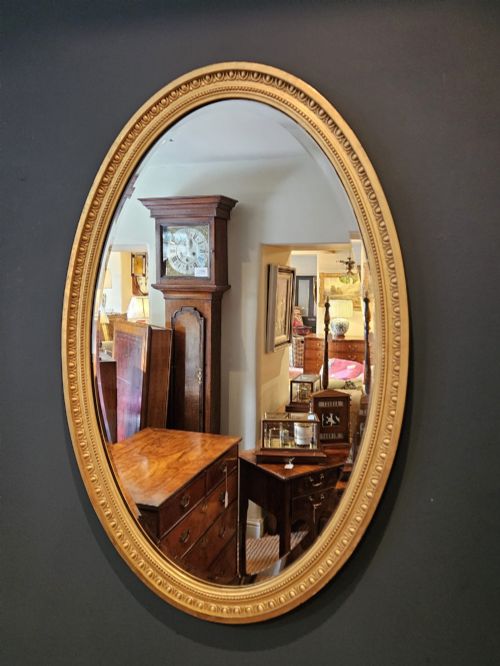
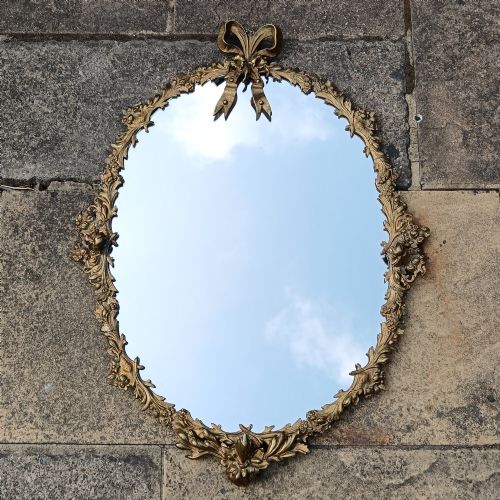
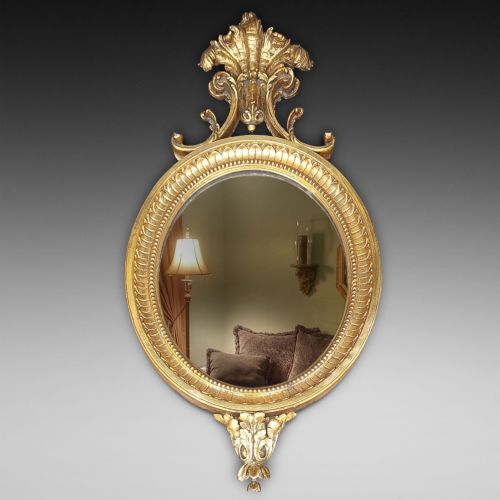
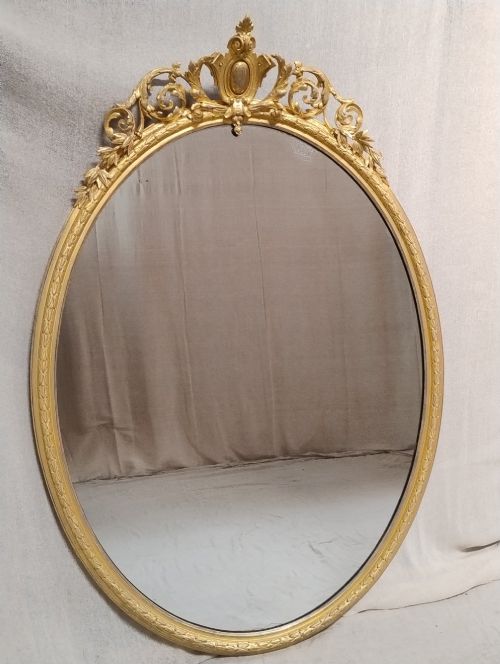
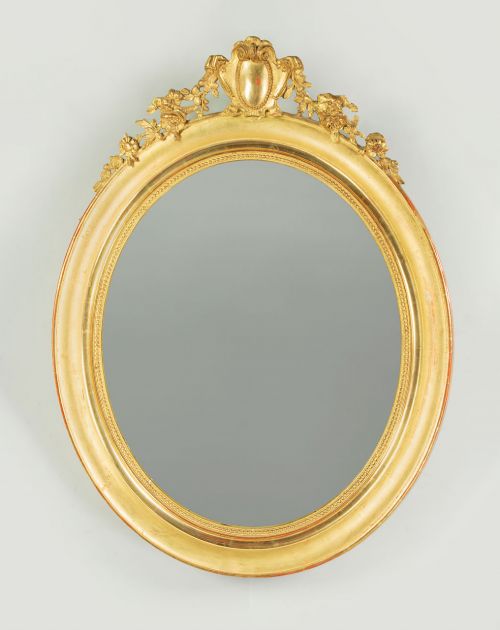
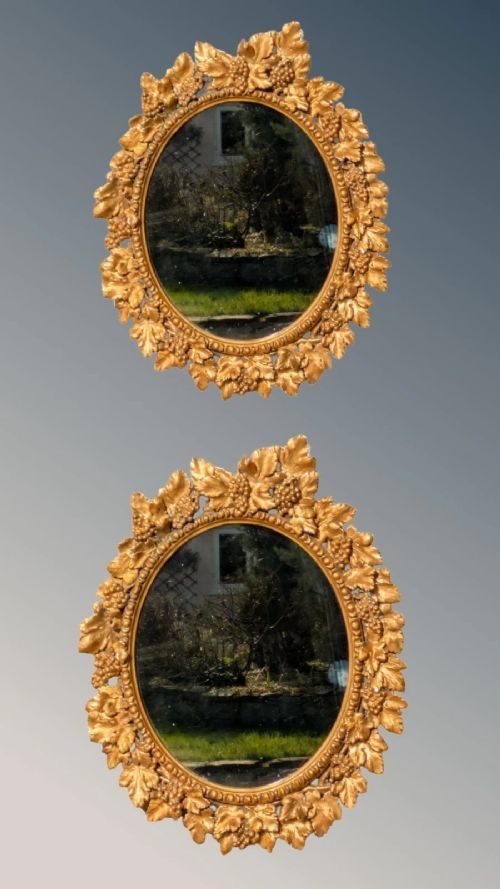
Most examples originate from the Victorian period or the Edwardian era, alongside Georgian and Regency works. Forms range from simple moulded profiles to deeply carved frames adorned with vine leaves, floral rosettes, and ribbons.
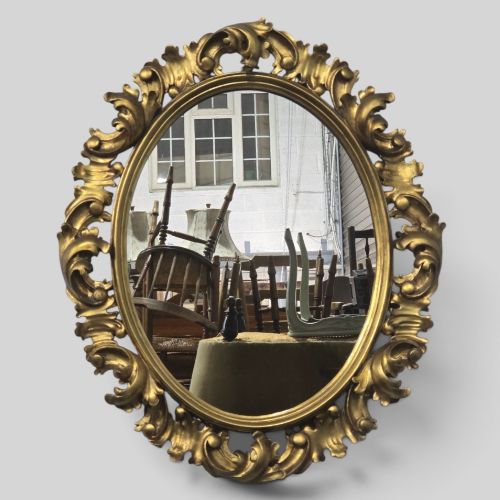
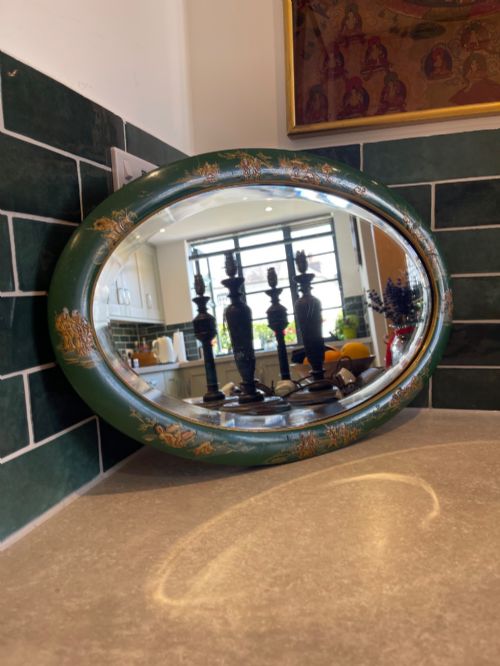
Stylistic variations draw on Rococo Revival, Louis XVI Revival, and Chinoiserie traditions. Buyers find both single statement pieces and matched pairs intended for symmetrical interior schemes.
How they were made
Carved timber provides the foundational structure for many frames, utilising woods such as pine or hardwood shaped by hand. Craftsmen applied layers of gesso - a mixture of plaster and size - onto the wooden base to create smooth surfaces for detailed ornamentation.
Gilding involved applying thin sheets of gold leaf or metal leaf over the prepared gesso, sometimes combined with composition mouldings for intricate floral or beaded details. Early examples frequently retain original mercury glass plates, showing the characteristic shimmer and minor foxing of age.
Several mirrors incorporate hidden maiden heads and whimsical vine leaves carved directly into the wooden frames.
What varies in quality
The depth and crispness of the carving distinguish finer examples from mass-produced or later pieces, particularly where hand-carved wood and gesso show sharp relief in floral and vine motifs. The integrity of the original gilding surface, whether gold leaf or parcel-gilt, dictates the visual richness of the frame.
The retention of original mirror plates, such as mercury glass, adds authenticity and character to older pieces. Structural joinery at the frame corners and the weight of the timber carcass further separate standard decorative mirrors from exceptional works of craftsmanship.
The Oval Gilt Frame Mirror Glossary
- Gesso
- A plaster-like material applied to wood frames to create a smooth base for carving and gilding. It allows for crisp relief work in floral and scroll motifs.
- Giltwood
- Timber that has been coated with gold leaf or metallic powder. This technique provides a luminous finish that catches and reflects ambient light.
- Mercury plate
- An early mirror glass manufacturing method using a tin and mercury amalgam. This creates a deep, slightly distorted reflection with characteristic dark spots.
- Parcel-gilt
- A treatment where only specific portions of a frame are gilded, leaving other areas painted, ebonised, or exposed as natural wood. This creates contrast in decorative schemes.
- Composition
- A moulded material made from whiting, resin, and glue pressed onto frames to replicate complex carvings efficiently. It was widely used in Victorian and Edwardian manufacturing.
Oval Gilt Frame Mirror: Frequently Asked Questions
How do I hang a heavy antique oval mirror?
Heavy antique mirrors require secure wall fixings anchored directly into masonry studs or load-bearing timber behind plaster. Professional mirror hangers utilise heavy-duty D-rings and steel wire rated well above the weight of the timber and glass.
Position the mirror at eye level to ensure correct balance within the room. Avoid hanging mirrors in areas subject to excessive dampness or direct thermal fluctuations that could affect the gilt surface.
What is the difference between Georgian and Victorian frames?
Georgian frames typically exhibit restrained neoclassical symmetry, fine hand-carved wooden detail, and classical motifs such as paterae or beadwork. They reflect the architectural proportions popular during the eighteenth century.
Victorian frames often utilise composition mouldings alongside gesso to achieve heavier, more exuberant ornamentation like rococo scrolls and fruit garlands. These nineteenth-century pieces tend to be bulkier and designed for grand domestic settings.
Are mercury glass plates original to the frame?
Mercury plates feature a distinct dark speckling, soft reflectivity, and uneven thickness associated with historical manufacturing techniques. These plates are generally found in eighteenth and early nineteenth-century pieces.
Later Victorian and Edwardian mirrors usually contain modern silvered glass plates with a uniform, clear reflection. Replacing a plate alters the historical integrity of the object.