


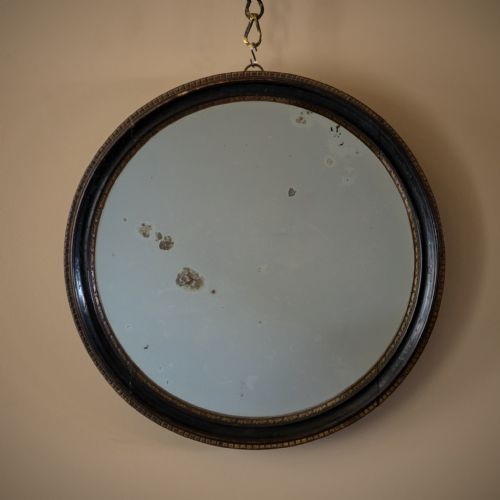
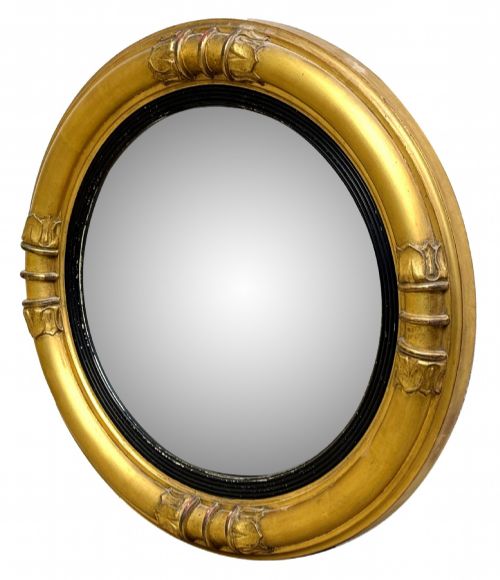
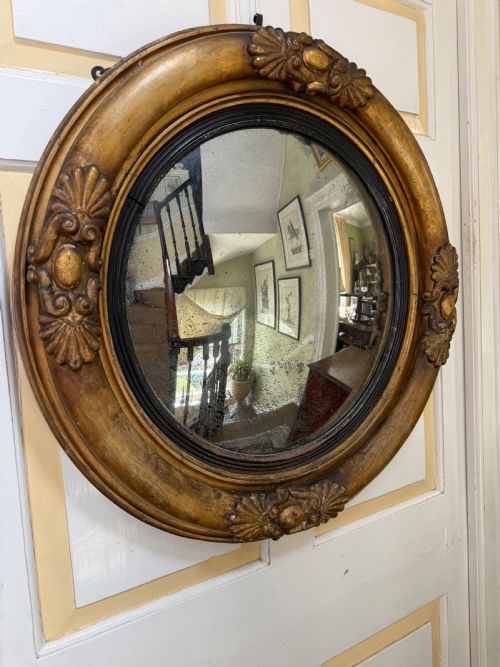


Regency Ebonised Wall Mirror
Regency ebonised wall mirror selections deliver the dramatic dark framing and reflective depth that collectors prize for period interiors.
Regency Ebonised Wall Mirror
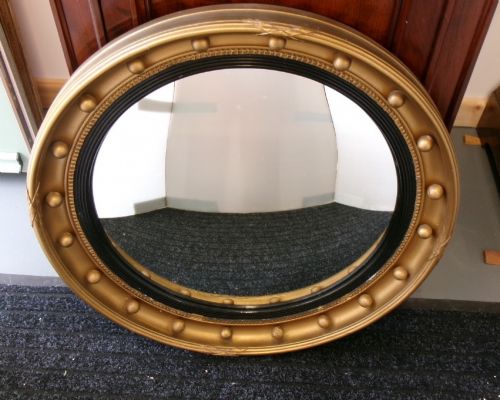
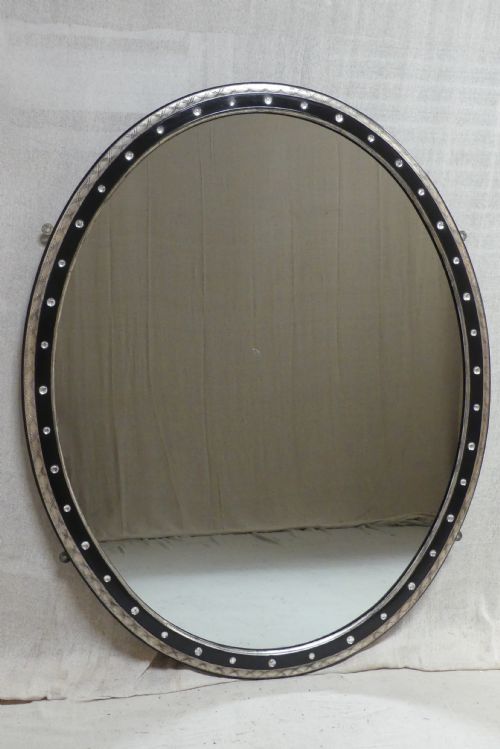
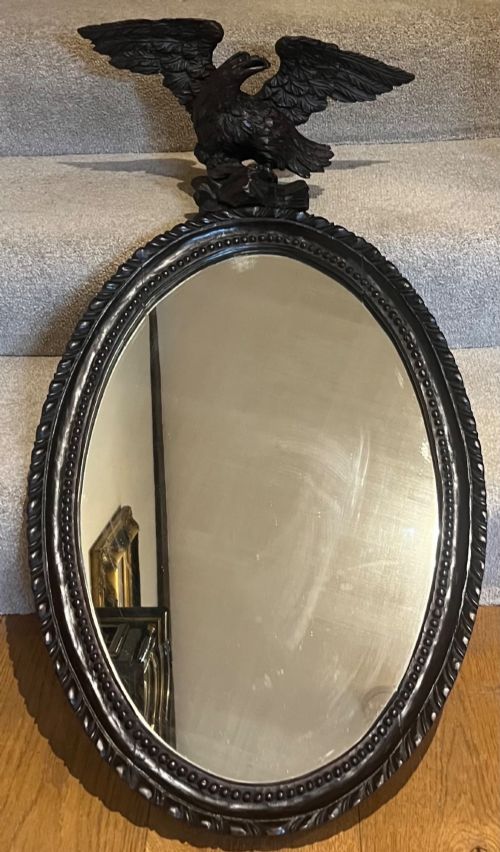
A regency ebonised wall mirror brings dark, contrasting tones to a room through frames finished in black alongside gilt details. The pieces listed span genuine nineteenth-century origins as well as later revival periods.
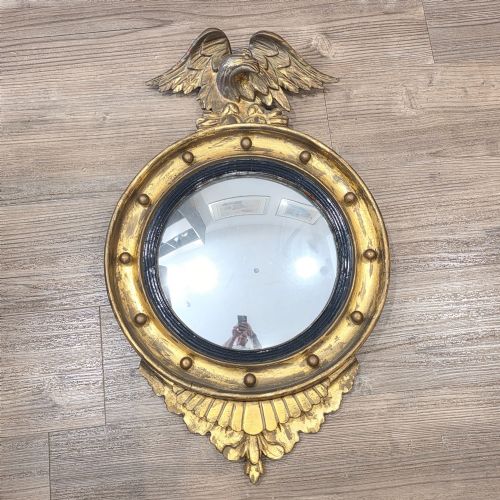
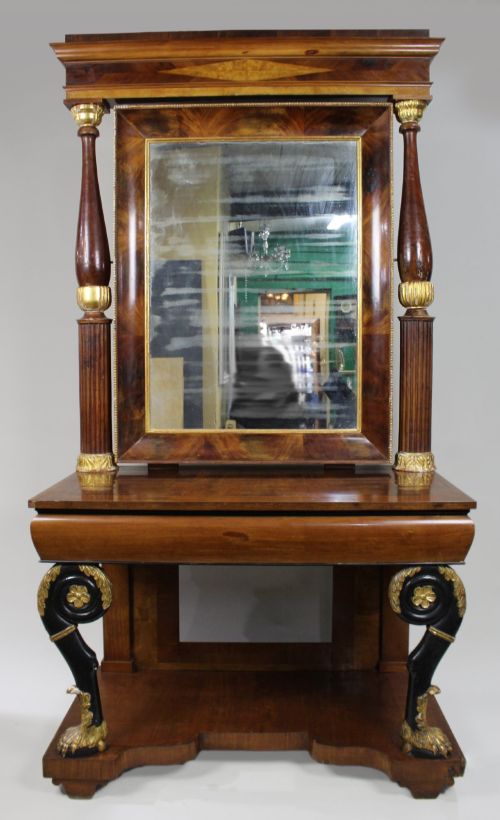
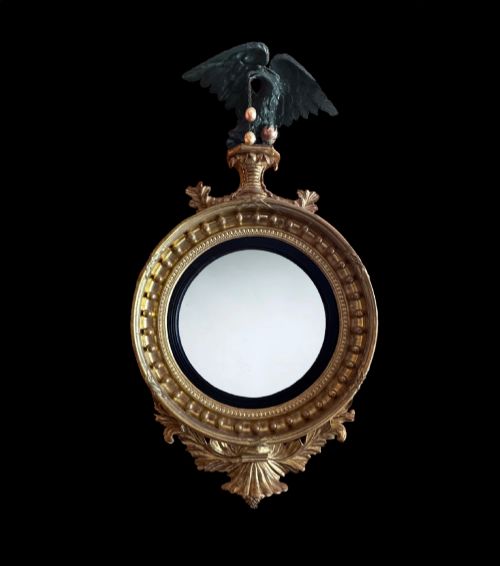
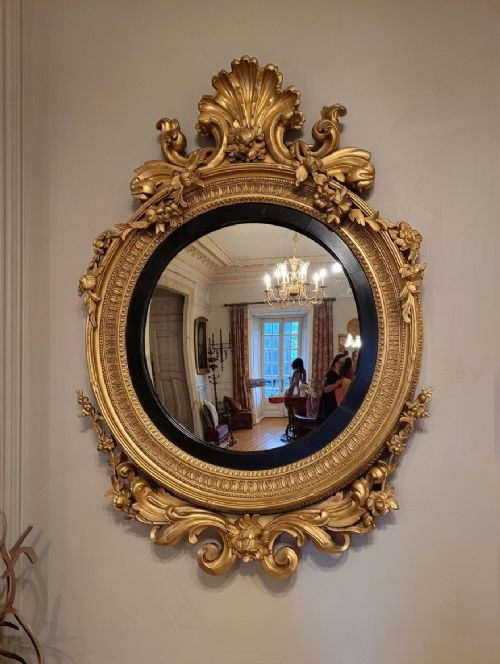
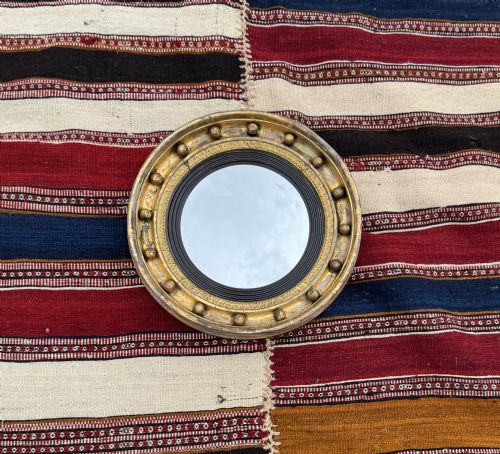
Most examples take circular convex forms or stretch into rectangular overmantel formats. Makers from the regency era onwards combined ebonised wood with gilt slips, gesso, and brass accents.
Buyers encounter both compact circular porthole glasses and larger scaled rectangular plates intended for chimneypieces. Styles range from classical regency proportions to later Victorian interpretations.
How they were made
Carved timber foundations receive coats of dark ebonised finish paired with giltwood highlights or composition ornament. Frames utilise gesso to build up crisp moulded details around the glass plates.
Curved convex mirror glass provides panoramic reflections across the room, held securely within rebated wooden frames and inner ebonised slips. Brass components occasionally appear as candle arms or decorative mounts.
Listings feature pieces spanning the nineteenth century, including Victorian interpretations and later revivals utilising ebonised wood, giltwood, and gesso.
What varies in quality
The crispness of the carved ornamentation and the depth of the ebonised finish dictate the standard of the piece. Superior examples retain original convex glass plates with authentic distortion and minimal silvering loss.
The integration of the gilt slip against the ebonised wood shows the maker's hand, while heavy gesso mouldings should remain sharp rather than softened by repeated overpainting.
The Regency Ebonised Wall Mirror Glossary
- Ebonised wood
- Timber stained or painted black to imitate costly ebony wood. This dark finish creates a sharp contrast against gilt highlights.
- Convex mirror
- Circular glass curved outward to reflect a wide, distorted field of vision. Also historically termed a sorcerer's mirror.
- Gesso
- A plaster-like mixture applied to wooden frames to receive moulding and gilding. It allows for intricate decorative relief work.
- Giltwood
- Wood covered with a thin layer of gold leaf or gold paint. It brightens the dark framing typical of ebonised pieces.
- Overmantel mirror
- Large rectangular wall glass designed to hang above a fireplace mantel. These pieces often feature multi-plate configurations.
Regency Ebonised Wall Mirror: Frequently Asked Questions
Where should I hang a convex mirror?
Convex mirrors work best opposite a window or light source to capture and distribute illumination across the space. Their curved glass creates a wide-angle view of the room.
Position the glass at eye level in hallways, living rooms, or above side tables where the reflection can be appreciated fully from a distance.
How do I identify a true regency piece?
Examine the construction methods, backboards, and the type of glass used within the frame. Nineteenth-century examples often show hand-cut timber joints and older silvering on the mirror plate.
Style indicators such as ebonised slips paired with giltwood and classical proportions also point towards the original period of manufacture.
What is an ebonised slip?
An ebonised slip is the narrow inner moulding finished in black that sits immediately adjacent to the mirror glass. It creates a dark border that separates the reflection from the outer gilt frame.
This decorative feature adds depth to the overall framing and remains common on convex and overmantel mirrors from the nineteenth century.
How do I clean an antique mirror?
Dust the frame gently with a soft, dry brush to protect fragile gesso and gilt surfaces from damage. Avoid applying liquid cleaners directly onto the wood or composition ornament.
Use a minimal amount of mild cleaner on a cloth for the glass plate, taking care to keep moisture away from the edges where the silvering meets the frame.