


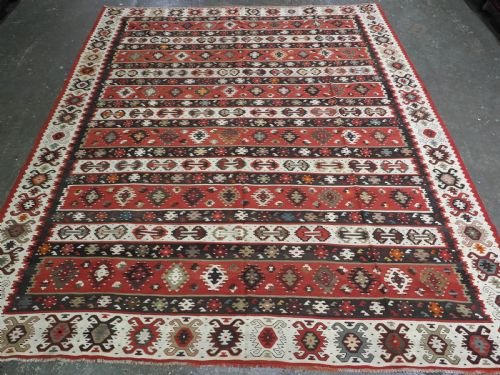


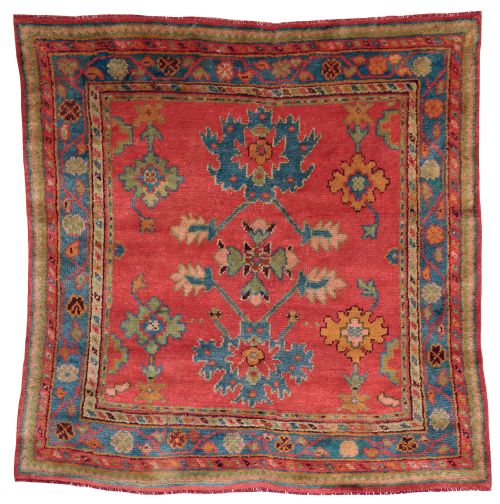


Ottoman Woven Carpet
An ottoman woven carpet brings historic warmth and pattern to a floor, grounding a room with centuries of Anatolian and Balkan tradition.
Ottoman Woven Carpet
An ottoman woven carpet represents a rich textile tradition spanning village workshops and urban looms across Anatolia, the Balkans, and wider Turkish regions. When searching for an ottoman woven carpet, collectors encounter formats ranging from large palace-style carpets to intimate prayer rugs and kilims.
The pieces available on this page stretch from the early nineteenth century through to the early twentieth century, capturing diverse regional expressions like Ushak, Ghiordes, Konya, and Sarkoy. Village and tribal pieces sit alongside refined city weaving, showing distinct local palettes and symbolic motifs.
Prayer rugs dominate many regional groupings, featuring architectural mihrabs designed to guide daily devotion, while larger carpets employ classic medallion layouts or banded designs. Each specimen serves as a tangible link to nomadic and settled weaving communities of the past.
How they were made
Weavers constructed these textiles using natural wool, cotton foundations, and occasionally hand-spun wool or angora wool to achieve varied surface textures and pile densities. Hand-knotting predominated in pile carpets, whereas flat-weaving techniques defined regional kilims such as those from Sarkoy and Pirot.
Dyers utilised natural organic sources to impart deep reds, blues, greens, and golden yellows that soften gracefully over decades of light exposure. Foundation warps and wefts of sturdy cotton or wool provided the structural integrity necessary for daily domestic use.
Listings feature pieces spanning the nineteenth and early twentieth centuries, constructed from wool, cotton, and angora wool.
What varies in quality
The fineness of the weave and the complexity of the knotting dictate the structural calibre of an individual rug, separating simple village utility pieces from master-woven workshop creations. Tighter knot counts allow for sharper delineation of intricate medallion and floral geometry.
The purity and saturation of the natural dye palette profoundly influence the visual impact, as rich, harmonious colour fading elevates a textile's aesthetic standing. Preserved original edge finishes and balanced proportions further distinguish superior examples from heavily altered counterparts.
The Ottoman Woven Carpet Glossary
- Mihrab
- The arched niche depicted on prayer rugs that symbolises the direction of prayer towards Mecca. It forms the focal point of designs found in Ghiordes, Ladik, and Kirsehir pieces.
- Kilim
- A flat-woven textile produced without a pile, common in Balkan and Anatolian traditions such as Sarkoy and Pirot. These pieces rely on slit-weave techniques to create sharp geometric patterns.
- Yastic
- A small domestic cushion cover or rug originating from Anatolian regions like Konya. They were traditionally used on low seating platforms within traditional homes.
- Medallion
- A central ornamental motif dominating the field of larger carpets, seen in classic Sivas and Ushak designs. It anchors the symmetrical layout of the surrounding field.
- Warp
- The stationary lengthwise threads stretched on a loom that form the structural skeleton of a woven carpet. Foundation materials typically consist of tightly spun cotton or wool.
Ottoman Woven Carpet: Frequently Asked Questions
What is an ottoman woven carpet?
An ottoman woven carpet is a hand-knotted or flat-woven textile originating from Turkish and Balkan regions under Ottoman influence. These pieces showcase traditional geometric and floral designs created using wool and cotton.
They reflect centuries of regional weaving heritage, encompassing everything from utilitarian village kilims to finely knotted court carpets designed for ceremonial spaces.
How do I identify a prayer rug?
A prayer rug is readily identified by the presence of a mihrab, an architectural arch motif that points toward Mecca during ritual worship. These rugs are typically smaller in format to accommodate individual use.
Regional types such as Ghiordes, Ladik, and Kirsehir often feature distinctive prayer arches flanked by stylised columns or floral lamps.
How should I care for antique wool rugs?
Antique wool rugs require gentle maintenance, beginning with regular, light vacuuming without a rotating power brush to protect the delicate pile. Keeping them out of direct, harsh sunlight prevents the natural dyes from fading prematurely.
Professional cleaning tailored to antique textiles ensures that hand-spun wool and cotton foundations remain stable for future generations.