

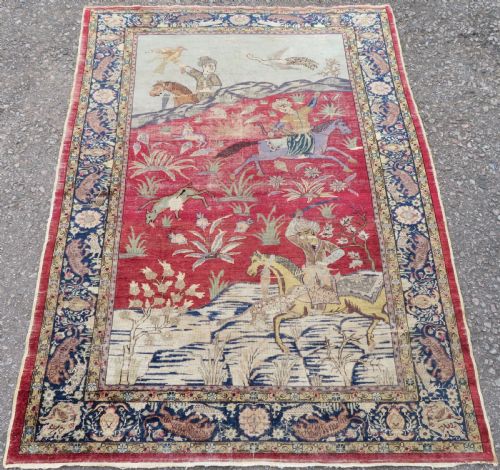


Ottoman Area Rug
When you search for an ottoman area rug, you are looking at centuries of Anatolian floor coverings crafted in wool, silk, and cotton.
Ottoman Area Rug
An ottoman area rug encompasses various woven floor coverings originating from Turkey and the wider region, spanning periods from the eighteenth century to the early twentieth century. Buyers encounter forms such as large decorative carpets, village prayer rugs, and flat-woven kilims.
The selections on this page feature distinct regional groups including Ushak, Ghiordes, Ladik, and Kayseri. These textiles range from grand room-size carpets to intimate prayer rugs designed for specific ritual use.
How they were made
Weavers utilised natural materials such as wool, cotton, silk, and hand-spun wool to construct these textiles. Certain pieces employ specific variations like angora wool or floss silk to alter the texture and sheen of the pile.
Construction techniques involve knotting pile fibres onto a foundation or weaving flat structures, resulting in durable floor coverings and intricate prayer rugs.
Listings span periods from 1750 to 1920, incorporating wool, silk, and cotton materials across multiple regional styles.
What varies in quality
Quality in these textiles depends heavily on the fineness of the weave and the precision of the design execution. Pieces with denser knots and more deliberate detailing separate standard examples from finer works.
The depth and preservation of the palette also dictate quality, as well-maintained vegetable dyes or harmonious pastel colours elevate the visual presence of the rug.
Tuduc
The Ottoman Area Rug Glossary
- Prayer rug
- A small textile featuring a mihrab or niche design, historically used for individual daily prayers. These rugs often display architectural motifs such as columns or lamps.
- Medallion
- A central ornamental motif dominating the field of the rug. Classic medallion designs structure the symmetrical balance of the entire composition.
- Kilim
- A flat-woven textile produced without a pile. These pieces rely on interlocking weft threads to form geometric patterns.
- Mihrab
- The arched niche depicted on prayer rugs that indicates the direction of prayer. Its orientation guides the user during ritual placement.
- Field
- The central background area of the rug enclosed by the border. This space frequently contains medallions, pictorial scenes, or repeating floral motifs.
Ottoman Area Rug: Frequently Asked Questions
How do I identify a prayer rug?
Prayer rugs feature a distinct pointed arch or mihrab design at one end, which directs the user during daily devotions. They are typically smaller in scale than standard carpets to allow for individual placement.
These pieces often incorporate specific regional motifs like columns, ewers, or floral borders unique to weaving centres such as Ghiordes or Ladik.
Where were these rugs made?
The pieces originate primarily from Anatolia and major weaving centres within the historical Ottoman Empire, including Ushak, Kayseri, Sivas, and Milas. Each town developed distinct colour palettes and structural characteristics.
Rural village workshops produced geometric tribal designs, while urban manufactories favoured grand medallion carpets and fine silk prayer rugs.
What materials are used?
Weavers utilised sheep wool, cotton foundations, and silk piles, occasionally incorporating hand-spun wool or angora wool for added texture. Floss silk appears in select urban workshop pieces to create a reflective surface.
Foundation warps and wefts are predominantly cotton or wool, supporting the dense pile knotted by hand over centuries of production.
How do I care for an antique rug?
Protect the textile by placing it in areas with low direct sunlight to prevent natural dye fading. Regular gentle vacuuming without a rotating beater bar removes trapped dust without damaging the wool or silk fibres.
Consult a specialist in antique textile conservation for professional cleaning rather than attempting wet washing at home.