


Ornate Hall Table
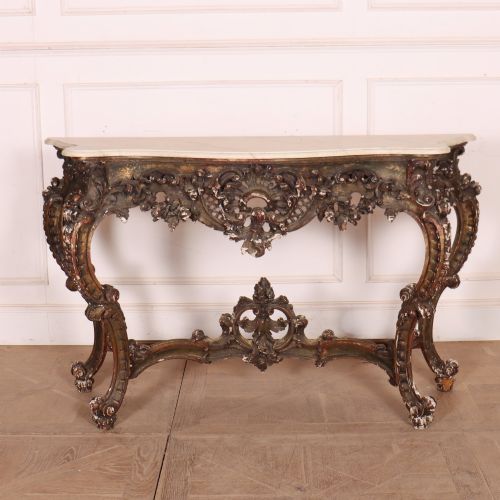
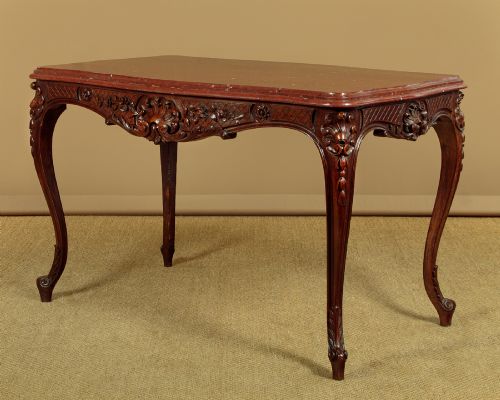
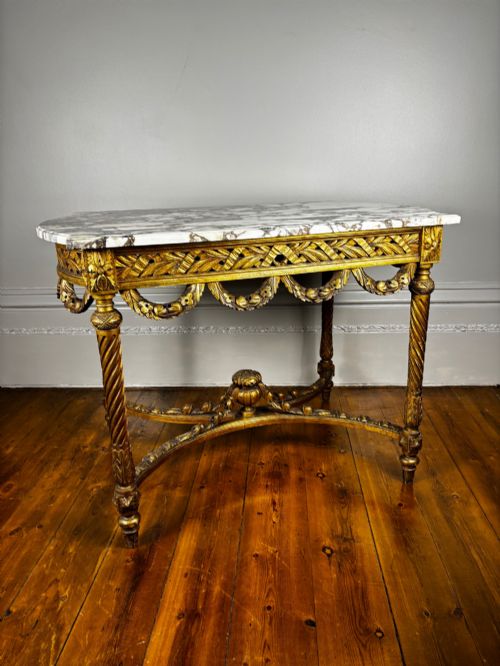
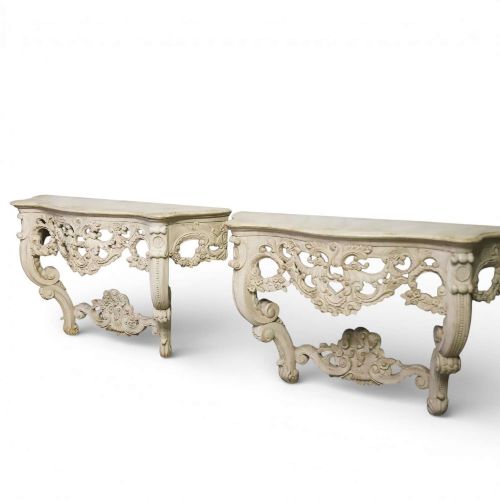
An ornate hall table brings carved walnut, marble tops and giltwood into an entranceway, offering a grand statement piece for narrow spaces.
How they were made
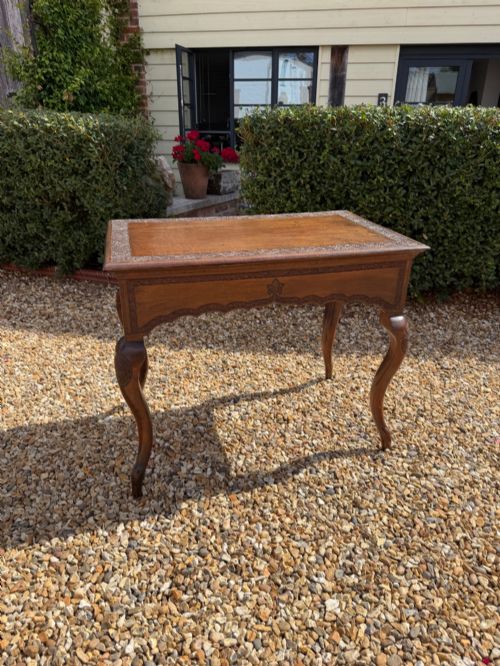
Carved wood provides the structural framework for these pieces, utilising materials such as walnut, rosewood, oak and mahogany.
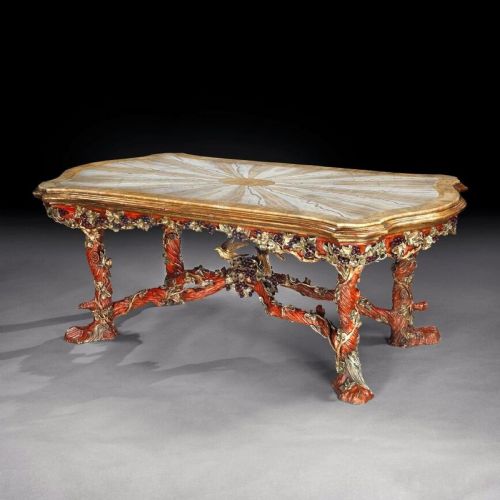
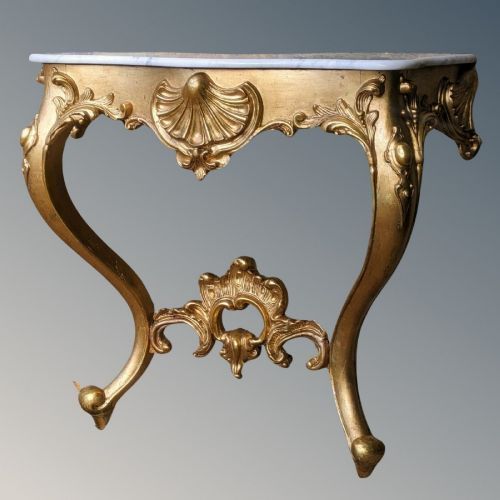
Giltwood and gesso finishes often cover the wooden frames, complemented by applied gold leaf, paint and parcel gilt details.
Heavy marble, onyx, glass and rouge or white Carrara stone slabs form the fitted table tops.
What varies in quality
The depth and definition of the hand-carving separate standard production from finer work, particularly where intricate foliage, putto or figural elements meet the wood.
The selection and fit of the stone top, whether heavy marble or onyx, dictate the physical weight and visual balance of the piece.
The application of surface finishes, from layered gold leaf to parcel gilt and polychrome paint, determines how the piece ages over centuries.
Listings include items spanning from the late seventeenth century through the Victorian era to the 1930s, utilising walnut, rosewood, oak, mahogany and marble.
Amleto Bertoni
The Ornate Hall Table Glossary
- Console table
- A table designed to stand against a wall, frequently secured to it with brackets rather than standing wholly on its own four legs.
- Giltwood
- Timber coated with a thin layer of gold leaf or gold paint. This technique creates a bright metallic sheen across carved wooden mouldings.
- Marble top
- A polished limestone slab fitted to the surface of a table. It provides a cool, hard-wearing counter that resists moisture and heat.
- Rococo revival
- A nineteenth-century design movement mimicking the curved lines, asymmetrical scrolls and natural ornamentation of the mid-eighteenth century.
- Serpentine front
- A table edge or drawer front shaped with a central convex curve flanked by two concave curves. This contour adds movement to the silhouette.
Ornate Hall Table: Frequently Asked Questions
Where should an ornate hall table go?
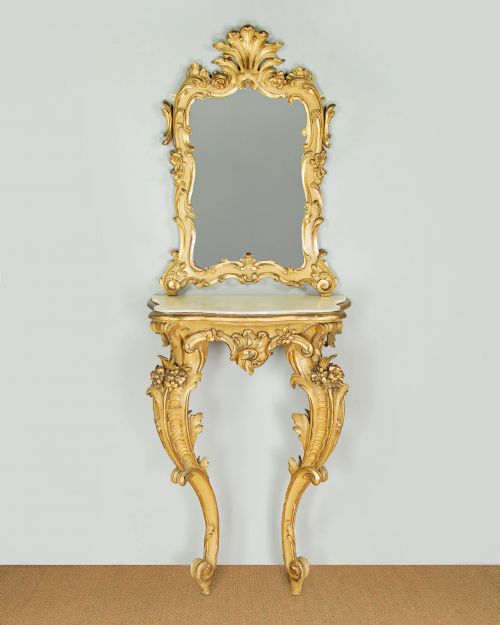
These tables fit naturally against entrance walls, corridors and reception rooms where a narrow profile preserves floor space. Many examples pair with matching wall mirrors hung directly above them to create a unified focal point.
Positioning them away from direct heat sources protects the underlying timber and the finish of the gilded or painted wooden frames.
How do I care for a marble top?
Marble and onyx surfaces require simple cleaning with a soft, damp cloth and neutral soap. Avoid acidic liquids, vinegar and harsh chemical cleaners which etch the polished stone.
Placing felt pads beneath objects set upon the stone prevents scratching and preserves the finish over decades of daily use.
Are these tables freestanding?
Console tables often require attachment to the wall for stability because their design prioritises slim profiles and heavy stone tops. Centre tables and side tables stand independently on four legs without wall support.
Checking the leg construction and frame fixings helps determine whether a particular console piece needs wall anchoring.
How do I identify French Rococo revival?
French Rococo revival pieces feature C-scrolls, asymmetrical floral carvings, serpentine fronts and cabriole legs. These design characteristics echo the decorative arts of the reign of Louis XV.
Giltwood frames, carved putto figures and marble tops frequently accompany these stylistic markers in nineteenth-century interpretations.