



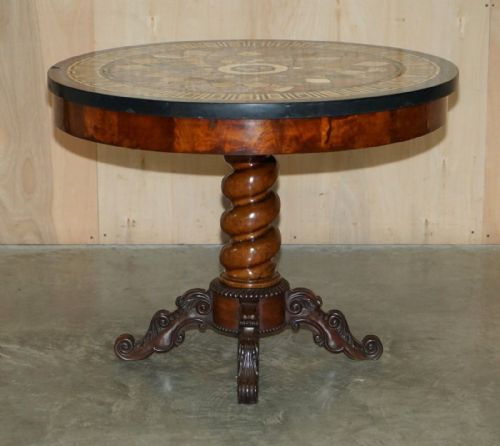

Italian Foyer Table
An italian foyer table is a grand statement piece of antique furniture designed to anchor an entrance hall with traditional regional craftsmanship.
Italian Foyer Table
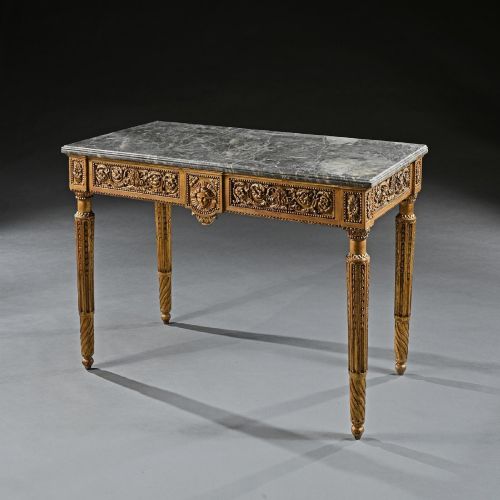
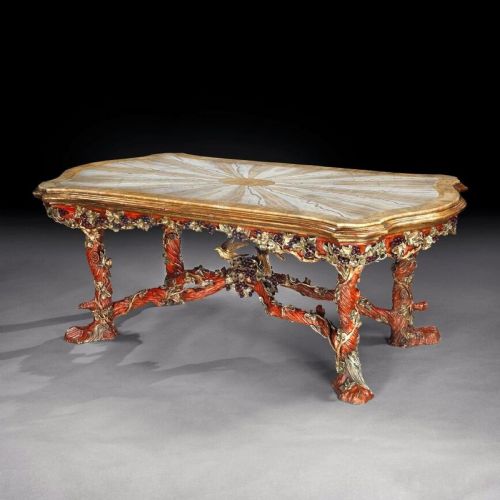
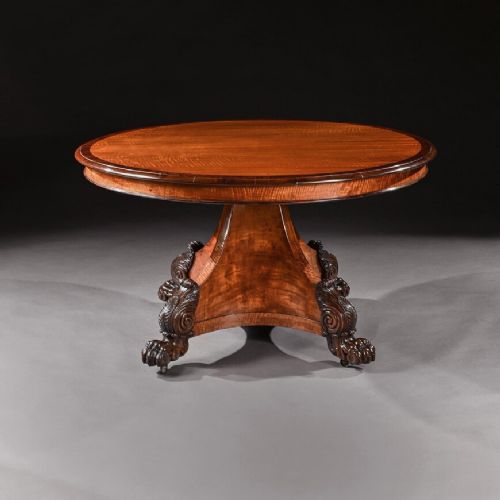
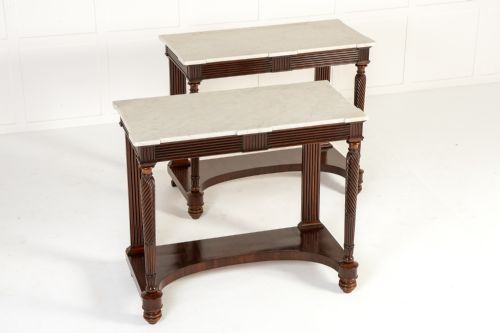
When you search for an italian foyer table, you encounter substantial console tables and centre tables originating from the eighteenth and nineteenth centuries. These pieces encompass regional styles such as Italian Baroque Revival, Italian Neoclassical, and Italian Rococo, alongside Grand Regency and William IV periods.
The form typically divides between wall-mounted console tables designed with demi-lune or serpentine shapes and freestanding centre tables with circular or rectangular tops. You are most likely to meet heavily carved giltwood or walnut console tables fitted with marble tops when browsing this page.
How they were made
Master artisans constructed these tables using solid hardwoods such as walnut, mahogany, fruitwood, and satinwood, often applying intricate marquetry and inlay work. Giltwood frames required meticulous carving of softwood or hardwood before the application of gold leaf.
Tops were frequently fashioned from heavy stones including marble, onyx, and pietra dura specimen marble, demanding advanced masonry skills to achieve precise fits within carved wooden rims.
Object forms include console tables, centre tables, and occasional tables executed in Italian Baroque and Neoclassical styles.
What varies in quality
Proportion and structural integrity also dictate distinction, as larger monumental pairs and tables retaining their original stone tops demonstrate superior original workshop design compared to altered or assembled pieces.
Amleto Bertoni·Peters of Genoa
The Italian Foyer Table Glossary
- Console table
- A table supported by wall brackets or console legs, designed to stand against a wall in a hallway or drawing room.
- Centre table
- A freestanding table intended to be viewed from all sides, traditionally placed in the middle of a room or grand foyer.
- Pietra dura
- An artistic technique using cut and fitted polished coloured stones to create inlaid pictorial designs on marble surfaces.
- Giltwood
- Wood that has been coated with a thin layer of gold leaf or gold paint to simulate solid gold enrichment.
- Serpentine
- A furniture shape characterised by a line of alternating convex and concave curves, often seen on table fronts.
Italian Foyer Table: Frequently Asked Questions
Where should I place an italian foyer table?
These tables suit entrance halls, grand hallways, or principal reception rooms where a statement piece creates an immediate visual impact.
Console variants require placement directly against a wall, while centre tables demand sufficient surrounding space to be appreciated from all angles.
How do I care for a marble top?
Marble and onyx surfaces require gentle cleaning with soft cloths and neutral cleaners to preserve the polish and prevent scratching.
Avoid placing acidic liquids directly on the stone to protect the natural material from etching.
What is the difference between a console and a centre table?
Console tables feature flat backs designed to sit flush against a wall, frequently accompanied by wall brackets or legs at the front.
Centre tables are finished on all four sides to stand independently in open floor spaces.
How do I identify the period of an italian table?
Dating relies on stylistic indicators such as the ornate symmetry of Baroque Revival, the classical restraint of Neoclassical design, or the flowing asymmetry of Rococo work.
Material choices, construction methods, and timber ageing further assist in determining whether a piece dates to the eighteenth or nineteenth century.