

Rococo Style Table
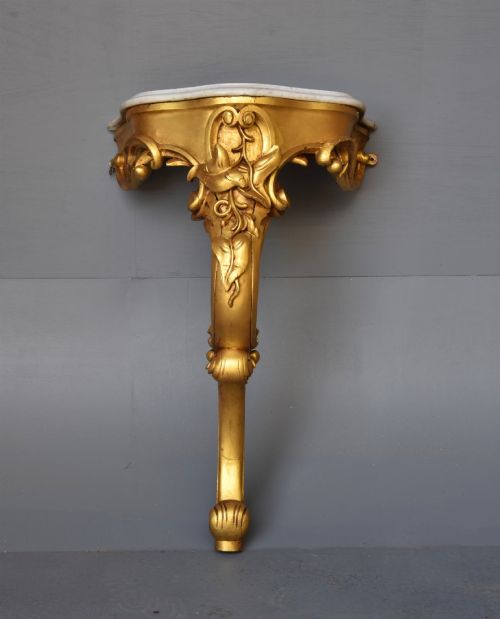
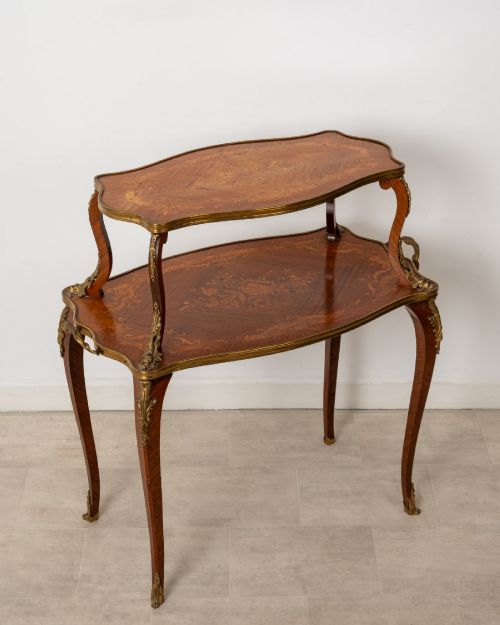
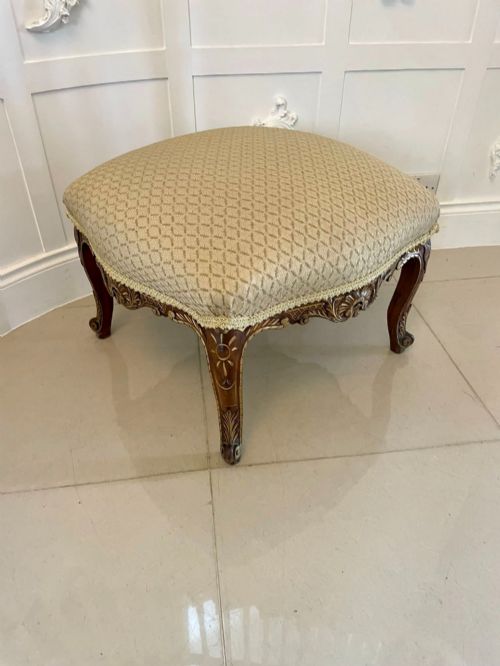
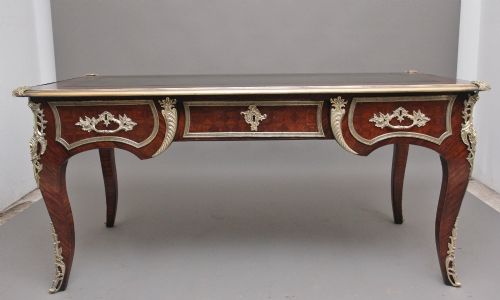
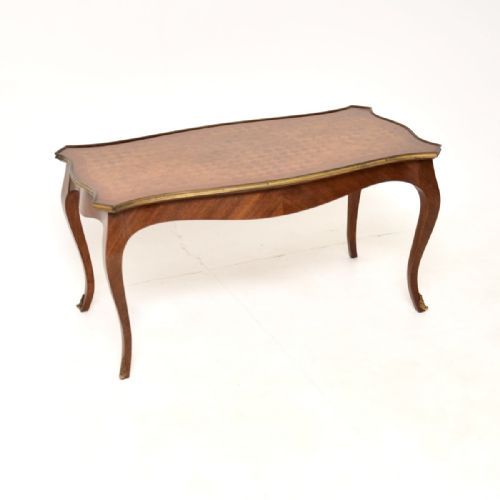
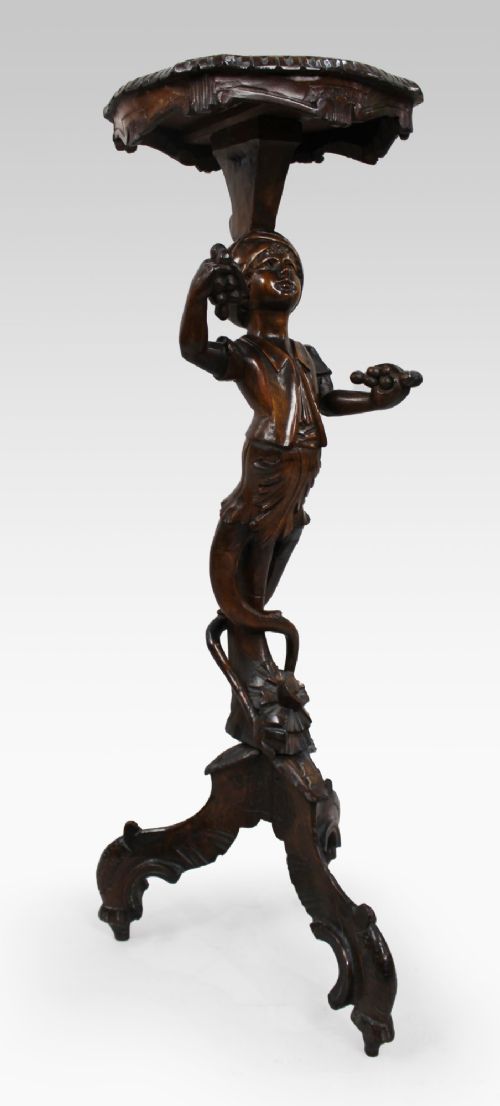
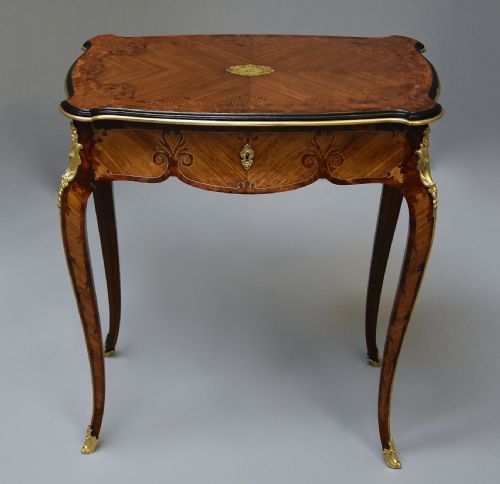
These pieces bring sculptural curves and gilt ornamentation into a room, capturing the lively spirit of the rococo style table.
Rococo Style Table
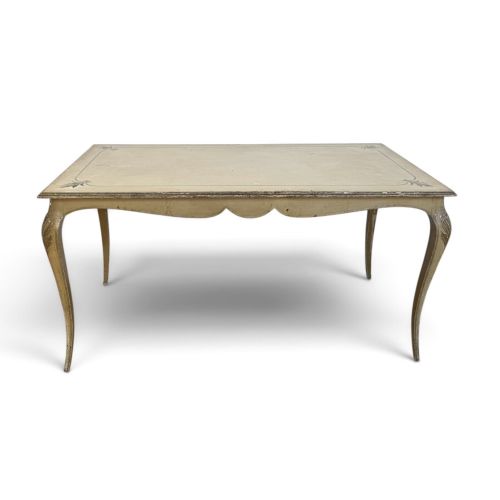
A rococo style table encompasses various forms designed for display, writing, and support, spanning console tables, side tables, desks, and coffee tables. Most examples seen here date from the nineteenth and early twentieth centuries, drawing heavily on French revival designs.
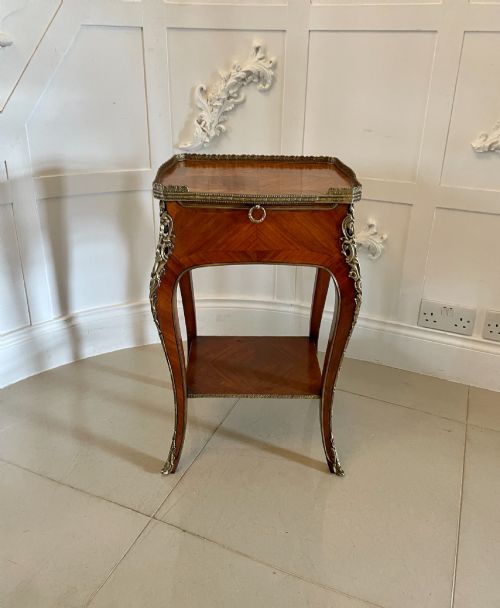
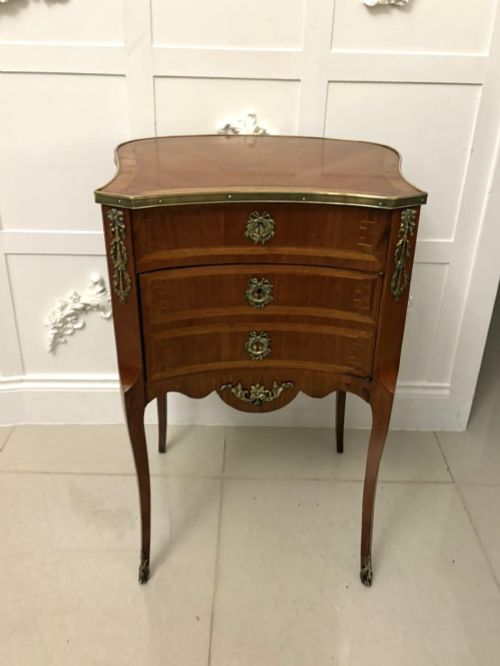
Makers often drew inspiration from earlier French royal aesthetics, producing pieces with serpentine outlines, cabriole legs, and asymmetrical ornamentation. Alongside console and side tables, the selection includes occasional pieces, étagères, and bureau plats.
Originating largely from French and Italian workshops, these items reflect both grand salon furnishings and lighter provincial interpretations. The surviving pieces demonstrate the enduring appeal of carved wood, applied metalwork, and shaped stone tops.
What Varies in Quality
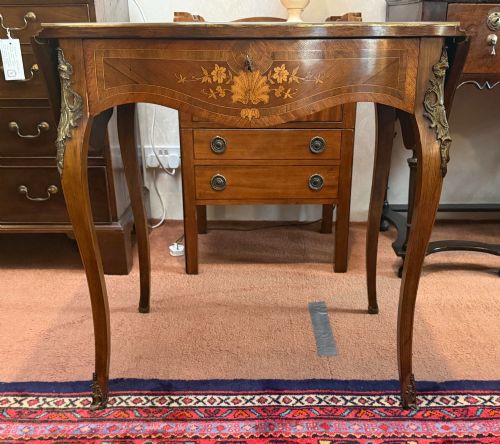
The refinement of the carving and the execution of the gilt mounts distinguish the upper tier of production from simpler workshop output. Hand-chased ormolu details and precise marquetry indicate skilled labour rather than mass-produced casting.
Selection of fine veneers, such as figured kingwood and contrasting satinwood inlays, elevates the visual depth of a piece. Structural integrity in the joinery of serpentine aprons and cabriole legs ensures longevity.
Several items boast secret compartments and sophisticated mechanical drawers designed to surprise guests in nineteenth-century salons.
Achille Brocot·François Linke·Edwards and Roberts·Henry Marc·CH Jeanselme and Co·Amleto Bertoni
The Rococo Style Table Glossary
- Ormolu
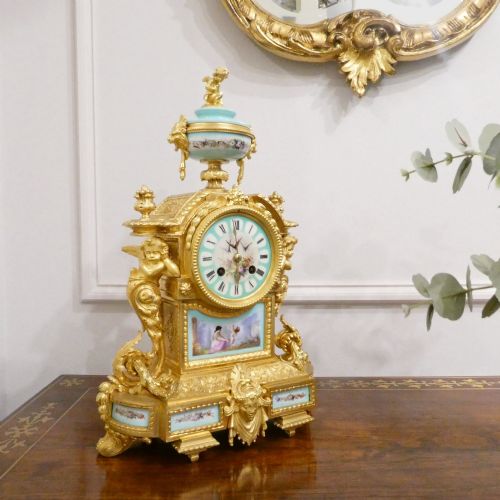
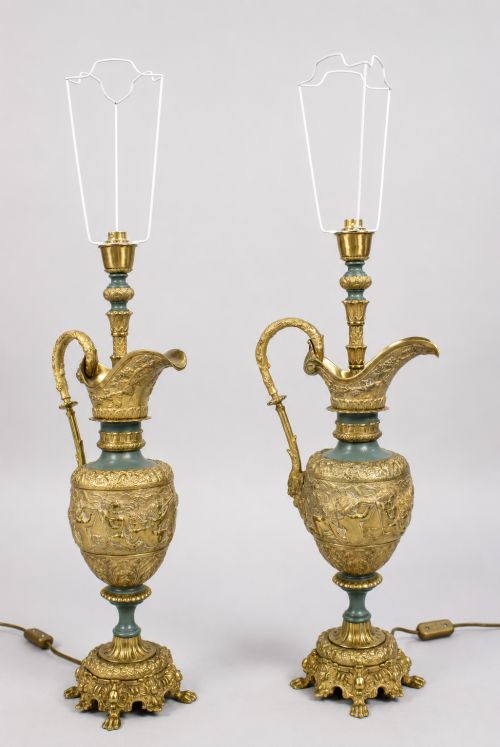
- Gilt bronze mounted onto furniture or clocks, created by applying a gold amalgam to bronze and firing it. This technique gives metalwork a rich, enduring golden lustre.
- Kingwood
- A dense, heavily figured Brazilian timber with dark violet-brown and golden stripes, frequently utilised for veneers on nineteenth-century French furniture. It provides striking contrast in marquetry designs.
- Marquetry
- The art of applying small pieces of veneer to a structure to form decorative patterns or pictorial scenes. Craftsmen utilise diverse woods to achieve tonal variation without paint.
- Cabriole leg
- A furniture leg that curves out and then in, resembling the leg of an animal. This form is central to the movement of the design.
- Étagère
- An open tiered piece of furniture designed for displaying small objects or ornaments. Multiple levels maximise display space while maintaining a light visual footprint.
Rococo Style Table: Frequently Asked Questions
What defines a rococo style table?
These tables are defined by curved lines, asymmetrical scrollwork, and naturalistic motifs like foliage and shells. They draw on eighteenth-century French aesthetics adapted by later makers.
Makers incorporated cabriole legs, shaped aprons, and ornamental mounts to create a fluid, sculptural silhouette.
Where were these tables placed originally?
Console tables were traditionally positioned against walls beneath mirrors in reception rooms, often serving a purely decorative function. Smaller side tables and desks were utilised in private sitting rooms and studies.
Freestanding centre tables occupied the middle of grand rooms to display decorative objects or lamps.
How do I care for marble tops?
Marble surfaces require gentle cleaning with a soft cloth and neutral soap to preserve the polish and prevent staining. Avoid acidic substances that can etch the polished stone.
Regular dusting keeps the surface clear without abrasive polishes.
How can I tell the period?
Dating relies on examining construction methods, timber types, and the composition of metal mounts. Nineteenth-century revival pieces often employ machine-cut elements alongside hand-finishing.
Comparing the style of the ormolu and the cut of the veneers helps distinguish mid-nineteenth-century work from later twentieth-century interpretations.