
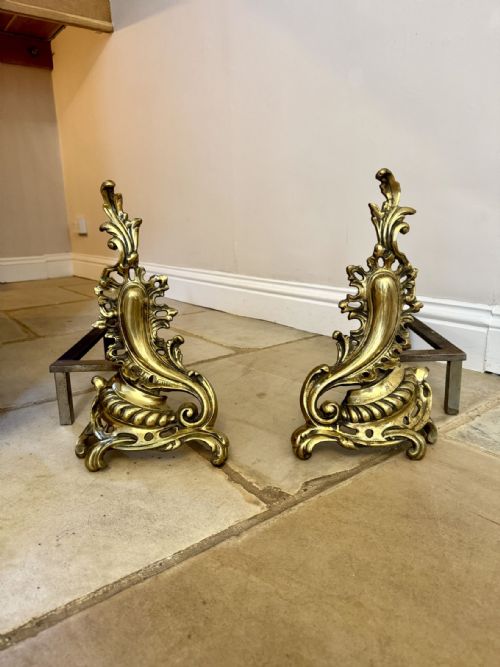

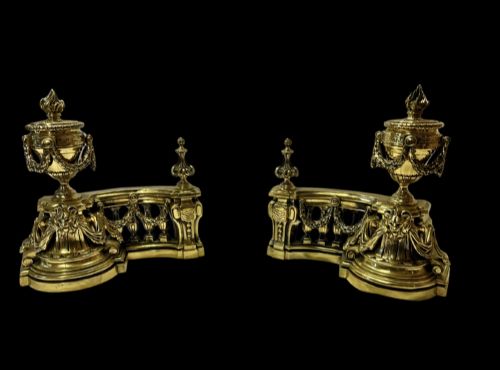


Ornate Fireplace Irons
Ornate fireplace irons bring heavy metalwork into a room, offering functional hearth support shaped by Victorian and Revival hands.
Ornate Fireplace Irons
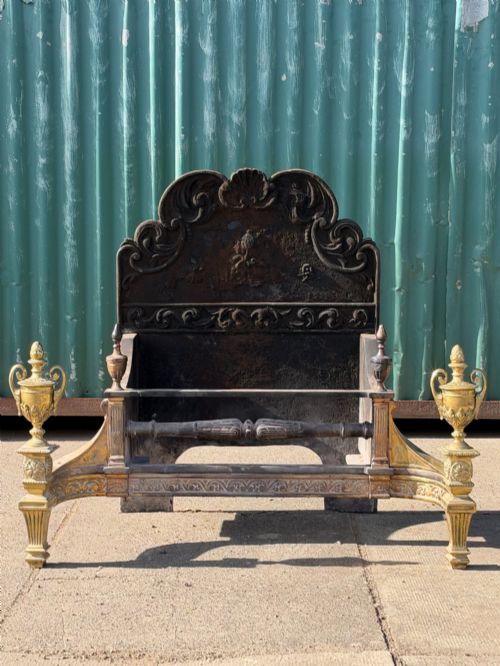
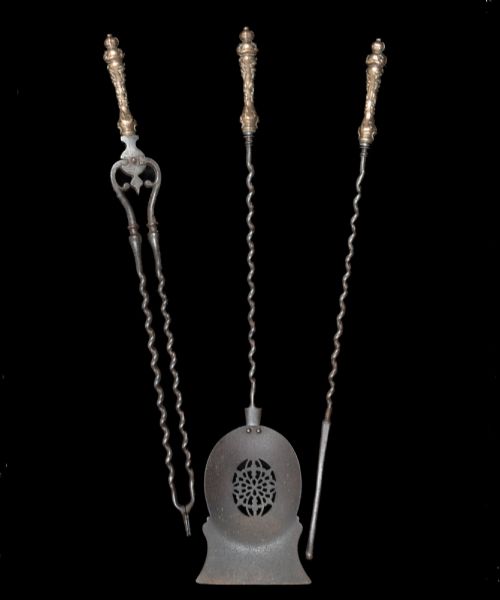
Ornate fireplace irons encompass fire dogs, companion sets, fenders, and grates designed to manage fuel and protect the hearth. When searching this phrase, buyers encounter heavy metal items shaped for practical duty around an open fire.
The pieces on this page span the nineteenth century through the early twentieth century, showing periods like Victorian, Georgian, and Regency alongside styles such as French Rococo, Gothic Revival, and Neoclassical Revival.
Most examples rely on brass and cast iron, often paired with steel, wrought iron, or firebrick. Common forms include large pairs of chenets and companion sets complete with tools.
Materials and construction
Items are cast or forged using metals such as brass, cast iron, steel, and wrought iron. Heavy iron provides structural strength for supporting logs, while brass and gilt-brass offer polished decorative surfaces.
Design details rely on moulding, casting, and hand-finishing techniques typical of nineteenth-century metalworking. Styles incorporate decorative elements like ormolu and enamel to accent the functional iron framework.
Listings feature brass, cast iron, and wrought iron shaped across the nineteenth and early twentieth centuries.
Indicators of quality
Quality rests in the weight of the metal and the crispness of the cast ornamentation. Heavier ironwork and solid brass components indicate superior durability and substance at the hearth.
Artisanal execution separates standard production items from finer decorative pieces, visible in the depth of rococo scrolls or neoclassical motifs. Well-preserved finishes on gilt-brass and steel elevate the overall presentation.
James Cartland & Sons
The Ornate Fireplace Irons Glossary
- Andiron
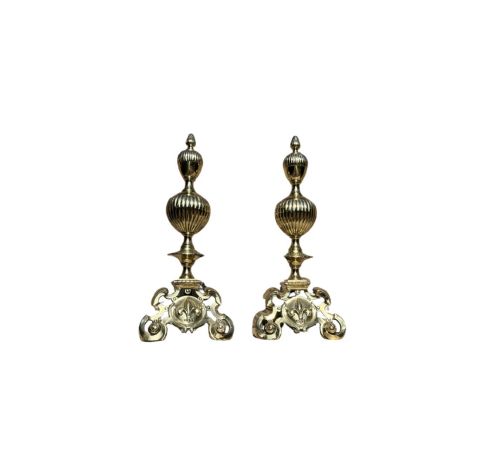
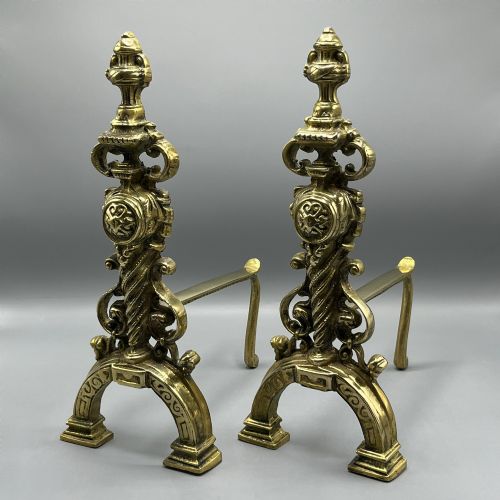
- A metal support placed in a hearth to hold burning logs aloft. Also known as a fire dog, a pair stands at either side of the fire basket.
- Chenet
- The French term for an andiron or fire dog. These often feature ornate rococo or gilt-brass decorative mounts.
- Fender
- A low metal guard placed around the hearth to keep embers contained. Versions range from adjustable brass rails to heavy cast iron borders.
- Fire basket
- An open metal container designed to hold coal or wood within a fireplace. These often incorporate neoclassical or Adams style grates.
- Companion set
- A matching collection of fire tools usually comprising a poker, tongs, shovel, and stand. They provide functional utility alongside the hearth.
Ornate Fireplace Irons: Frequently Asked Questions
What are ornate fireplace irons used for?
These items serve both practical and decorative purposes around an open hearth. They hold logs, manage coal, and protect the surrounding floor from stray embers.
At the same time, decorative metals like brass and gilt-brass provide a distinct visual anchor for the fireplace during warmer months when no fire burns.
How do I identify a Victorian piece?
Victorian metalwork often relies on heavy cast iron and polished brass, frequently drawing on revival styles like Gothic and Rococo. Look for robust construction and period-typical casting marks.
Proportions tend to be substantial, reflecting the domestic heating requirements of nineteenth-century homes.
Can these tools be used with a modern fire?
Many nineteenth-century iron and steel tools remain robust enough for regular hearth use. Solid construction in cast iron and steel allows them to handle wood and coal effectively.
Checking the weight and structural stability of a poker or pair of andirons will confirm their readiness for active duty.
What is the difference between fire dogs and fenders?
Fire dogs stand inside the hearth to elevate logs and promote airflow beneath the fire. Fenders sit entirely on the floor around the hearth perimeter to stop rolling embers.
While fire dogs manage the fuel directly, fenders act as a physical barrier for the room.