



Brass Hearth Chenets
Brass hearth chenets are the decorative firedogs and andirons that support logs on the hearth, bringing warmth and continental flair to a room.
Brass Hearth Chenets
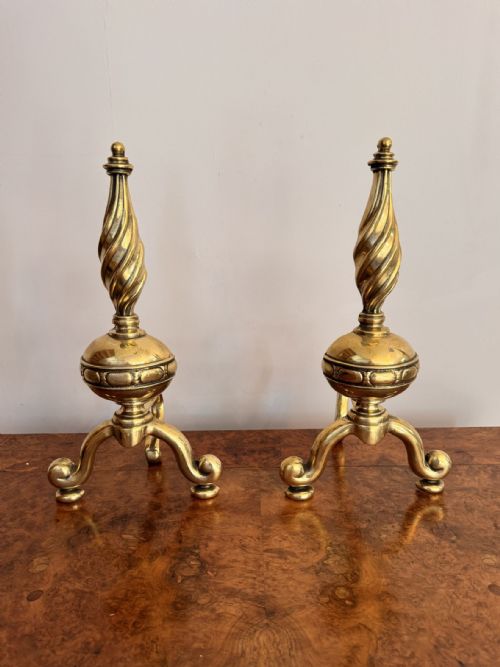
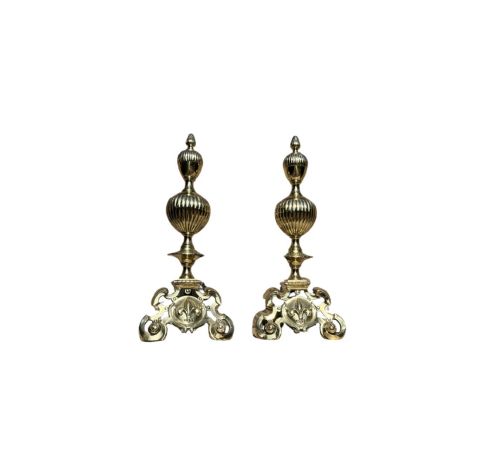
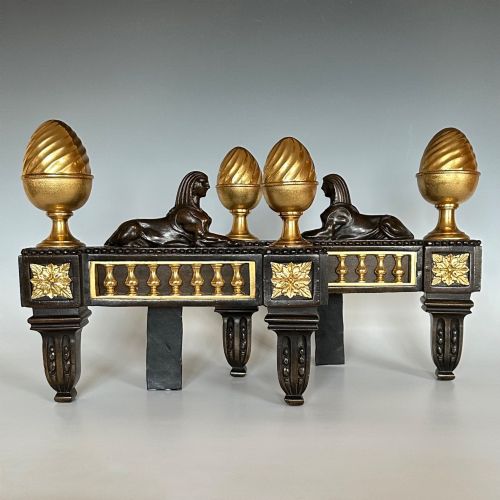
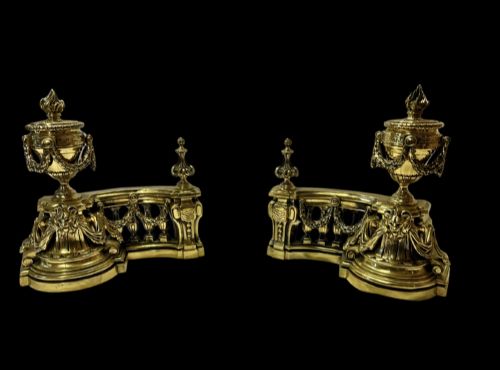
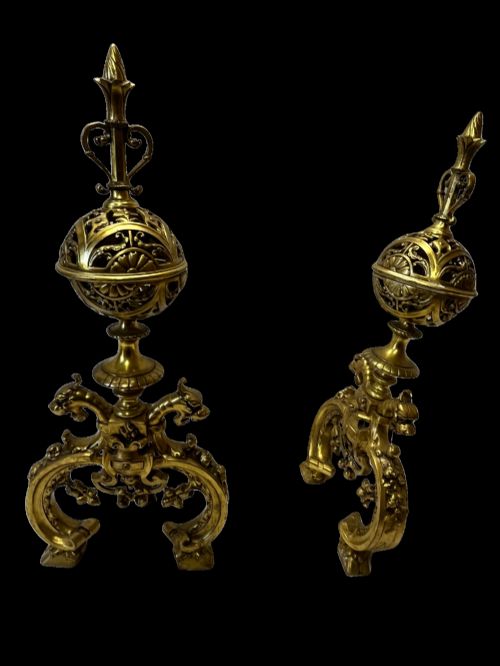
Brass hearth chenets are functional and decorative firedogs designed to hold firewood aloft within an open fireplace. They appear frequently in pairs across this selection, ranging from simple nineteenth-century English forms to elaborate continental designs.
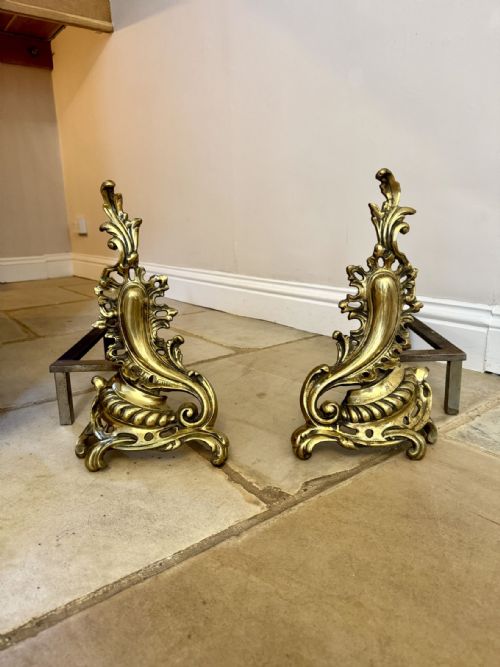
The objects span periods from the eighteenth century through the Victorian era and the nineteen-hundreds. Styles draw heavily on French Rococo, Regency, and Louis Seize aesthetics, reflecting both domestic manufacture and imported taste.
Most examples function alongside associated hearth furniture such as fire irons and fenders. Buyers encounter matching pairs primarily, often constructed to sit forward on the hearth floor.
How they were made
The construction relies heavily on cast brass, bronze, and ormolu, combined with iron internal bars to support heavy timber. Metalworkers utilised traditional casting techniques to achieve the substantial scrollwork and figural mounts seen on nineteenth-century pieces.
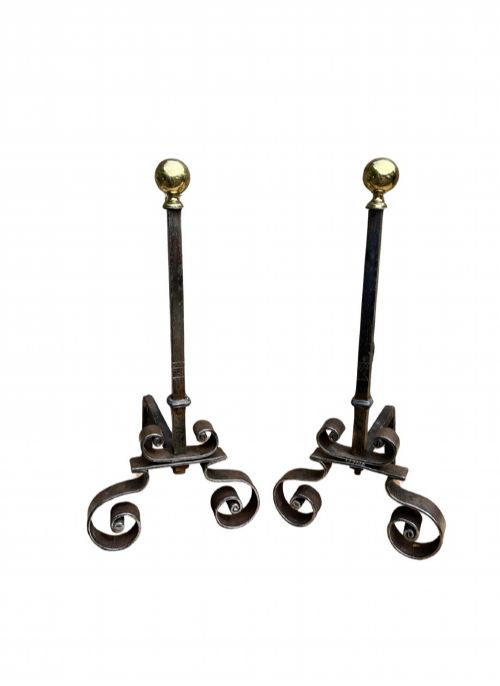
Gilding, parcel gilt finishes, and fire gilding add surface brilliance to bronze and brass bases. Iron appears frequently in structural components and utilitarian fire dogs, while ormolu provides decorative highlights.
Listings feature brass, bronze, and wrought iron pieces spanning the Regency period through the late nineteenth century.
What varies in quality
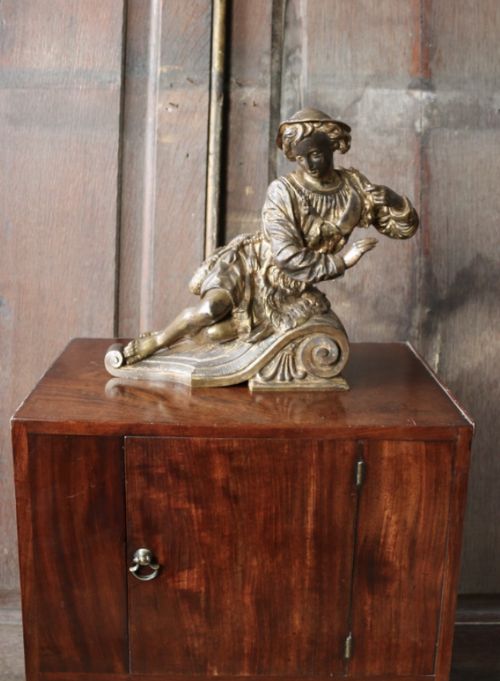
Quality rests in the crispness of the casting and the depth of the chased detail across the brass or ormolu surfaces. Finer pairs exhibit sharply defined scrollwork, rococo asymmetry, and figural statuary without softening in the metal.
Weight and structural substantiality distinguish exceptional examples from lighter production pieces. The integration of bronze components and the precision of adjustable width mechanisms further elevate an individual pair.
James Cartland & Son
The Brass Hearth Chenets Glossary
- Chenet
- A French term for an andiron or firedog placed on the hearth to support logs. These decorative supports often feature elaborate front mounts of cast brass or ormolu.
- Andiron
- A horizontal iron bar supported on legs with an upright pillar at the front, used to raise burning wood. English and continental makers produced these in heavy cast brass and iron.
- Ormolu
- Finely ground high-carat gold applied in a mercury amalgam to bronze. This technique creates a rich, durable golden surface seen on finer nineteenth-century chenets.
- Rococo
- An eighteenth-century design style marked by asymmetry, C-scrolls, and naturalistic shell motifs. Victorian makers revived this ornate aesthetic for hearth furniture.
- Fender
- A low metal guard placed around the hearth to contain ash and embers. Many listings pair chenets directly with matching adjustable fenders.
Brass Hearth Chenets: Frequently Asked Questions
What is the difference between chenets and andirons?
Chenets are the continental European equivalent of English and andirons, though the terms are often used interchangeably in the antiques trade. Both support logs above the hearth floor.
French chenets traditionally place greater emphasis on decorative bronze and ormolu mounts at the front, while English fire dogs frequently lean towards sturdy brass and iron utility.
How do I style brass chenets in a modern fireplace?
Place them towards the front of the hearth floor to frame the opening, whether you burn wood or leave the grate empty. They add immediate architectural weight and period character to a chimney breast.
Many nineteenth-century examples work well when paired with a matching brass fender or simple iron fire tools to complete the fireside arrangement.
How do I identify the period of a pair of fire dogs?
Examine the casting quality, the fastening screws, and the stylistic vocabulary of the metalwork. Regency pieces often incorporate bronze and ormolu with classical restraint, whereas Victorian revivals lean heavily into ornate Rococo asymmetry.
Nineteenth-century copies of earlier styles frequently bear the manufacturing marks or heavier brass casting techniques characteristic of that era.
Are these suitable for a working fireplace?
Most antique brass chenets include iron bars or robust bronze frames designed to bear the weight of burning logs. However, buyers should check the structural integrity of the internal iron supports before lighting an open fire.
Fine ormolu surfaces require care to prevent heat damage, so many collectors utilise heavy brass pairs for display purposes only.