

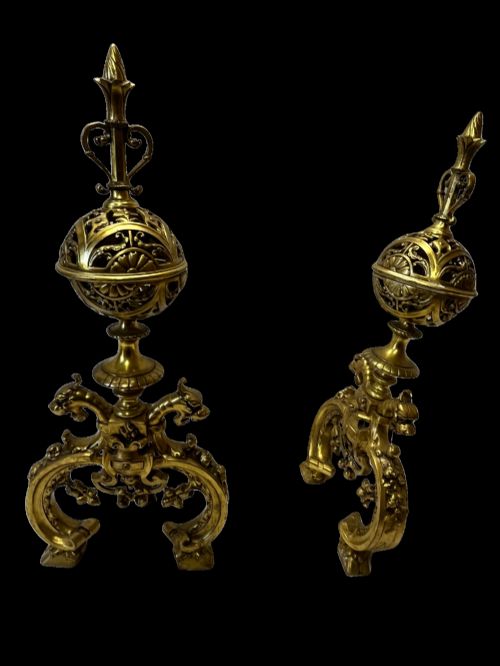


Ornate Brass Andirons
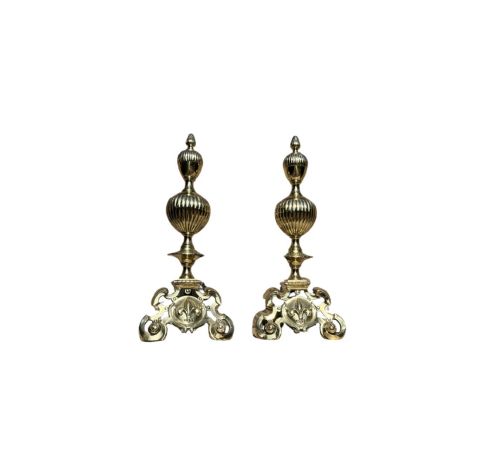
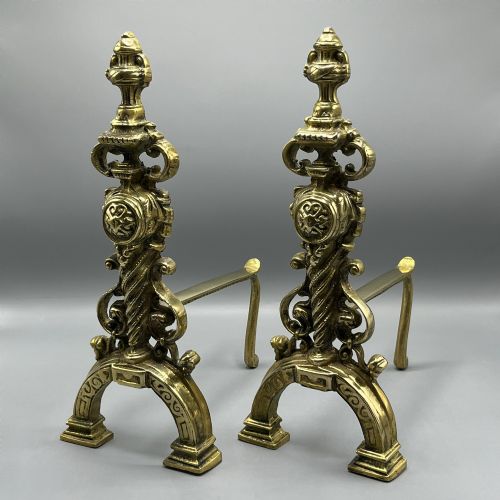
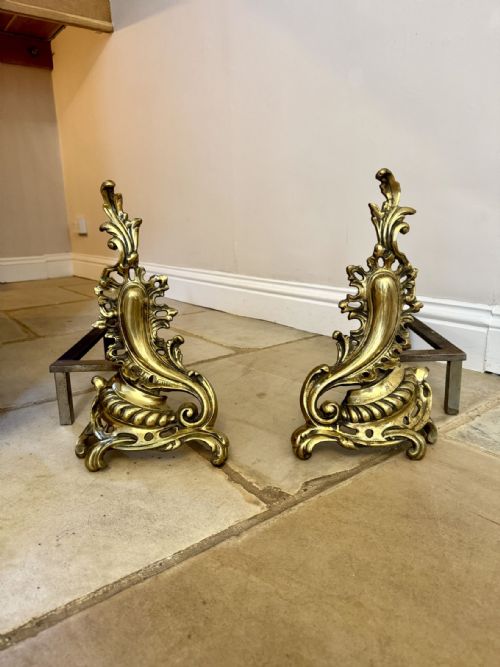
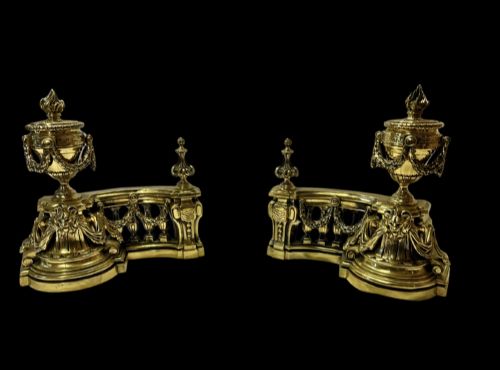
These ornate brass andirons hold fuel logs off the hearth floor to draw air beneath the fire, bringing warmth and decorative polish to an open fireplace.
Ornate Brass Andirons
When you search for ornate brass andirons, you look at functional fireplace accessories designed to support logs above the hearth. These pieces serve both a practical purpose in wood-burning fires and a decorative function in period rooms.
Most examples combine upright decorative brass fronts with sturdy iron or cast iron billet bars that extend back into the hearth. They originate from English and French workshops, ranging from plain utility pairs to monumental gilt brass creations.
How they were made
Makers utilised solid brass, cast brass, and gilt brass alongside heavy iron and wrought iron for structural strength on the hearth. Metalworkers cast the decorative front standards in moulds before finishing the surfaces by hand.
Finer pairs incorporate ormolu and gilt bronze accents, adding deep surface lustre to the cast foliage, scrolls, and figural mounts. The iron billet bars are joined securely to the brass fronts to bear the weight of heavy fuel logs.
The selection includes signed Victorian tool dogs alongside monumental French gilt brass fire dogs.
What varies in quality
The crispness of the casting separates standard examples from exceptional pairs, as finer pieces retain sharp relief in scrollwork and acanthus leaves. Heavy gauge brass and substantial weight indicate superior metal content and robust construction.
Surface finishing defines the upper tier, where original gilding, fire gilding, or polished ormolu remains intact without excessive wear. Maker attribution, such as signed components from established foundries, elevates the standing of an individual pair.
James Cartland and Sons
The Ornate Brass Andirons Glossary
- Andiron
- A metal support used in pairs inside a fireplace to hold burning logs above the hearth floor. They feature a decorative front standard and a horizontal bar running back into the grate.
- Chenet
- The French term for an andiron, frequently used to describe decorative fireplace furniture in Rococo or Baroque styles. These pieces often display elaborate scrolling and cast mounts.
- Ormolu
- Finely ground high-carat gold applied to a bronze or brass base object using a mercury amalgamation technique. It produces a rich golden finish seen on high-status nineteenth-century fireplace accessories.
- Billet bar
- The horizontal iron or steel bar attached to the rear of an andiron to support the firewood. This structural component bears the direct heat and weight of the logs.
- Firedog
- An alternative name for an andiron, combining the functions of supporting fuel and ornamenting the hearth. They often appear in matched pairs flanking the hearth opening.
Ornate Brass Andirons: Frequently Asked Questions
How do I use andirons?
Andirons stand inside the hearth to cradle logs, allowing air to circulate freely beneath the fire for better combustion. They protect the back wall of the fireplace while framing the hearth as a decorative centrepiece.
Place the decorative uprights facing into the room with the iron billet bars pointing backward into the fireplace. Rest your fuel wood across the horizontal bars rather than piling logs directly onto the brick floor.
Can I burn wood on them?
Solid brass and cast iron pairs are built to handle real wood fires when paired with a suitable fireplace grate or basket. The iron billet bars take the weight and direct heat of the burning logs.
Inspect the metal thickness before burning heavy timber to ensure the piece is sturdy enough for daily use. Lighter decorative pairs from later periods work best for display or with lighter fuel loads.
How do I clean brass andirons?
Dust the surfaces regularly with a soft dry cloth to prevent soot and ash accumulation from dulling the metal. Avoid harsh commercial dips that strip away historical patination and age character.
Use a mild soapy solution on a damp cloth for routine cleaning, drying thoroughly afterwards. Preserve gilt brass and ormolu finishes with minimal intervention, as aggressive polishing removes the gold layer.
How do I date an andiron?
Examine the casting quality, fastening methods, and stylistic cues to determine the period of manufacture. Nineteenth-century examples often display heavy cast construction with Rococo Revival or Baroque scrollwork.
Look for maker marks, screw types, and assembly methods on the reverse of the brass standards. French pieces from eighteen-eighty often exhibit crisp ormolu casting, while later twentieth-century items show simplified production techniques.