
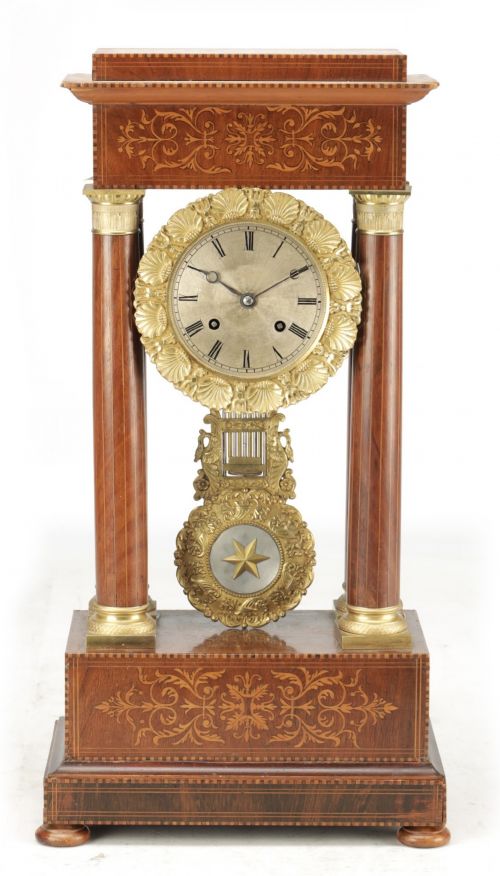
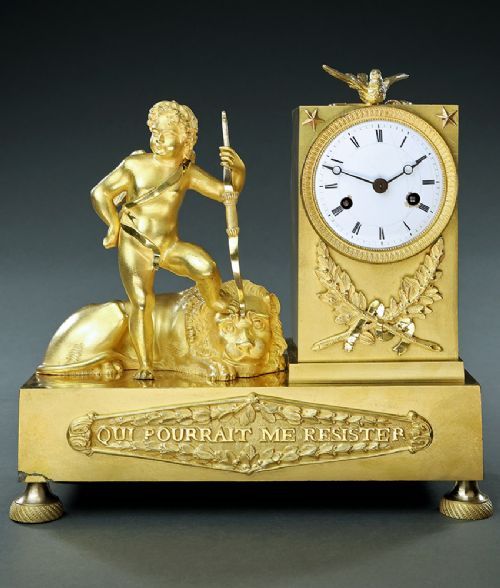
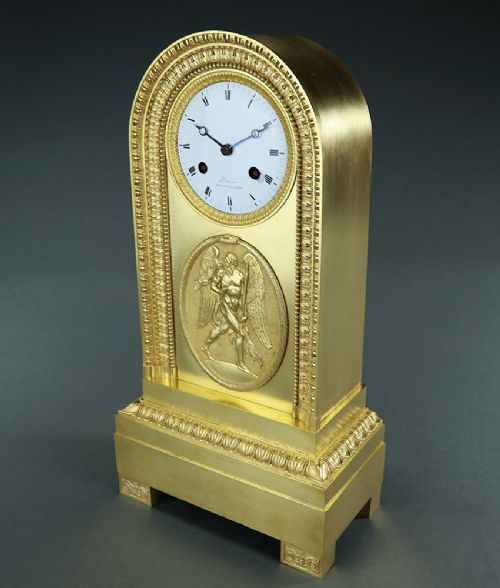
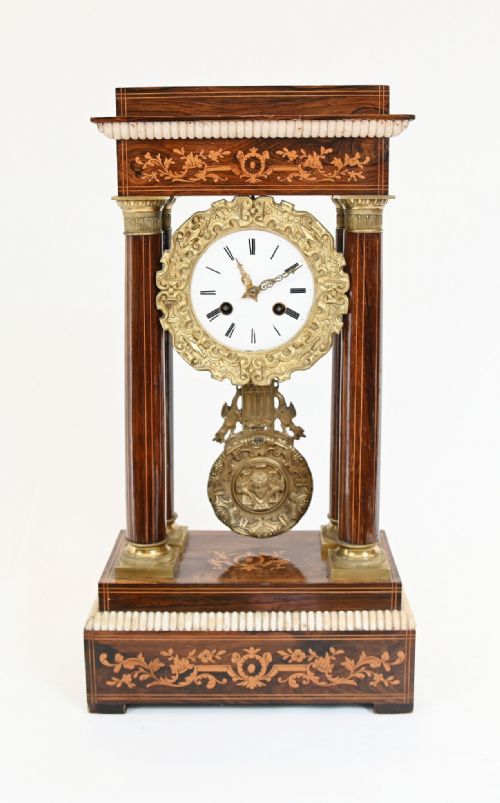

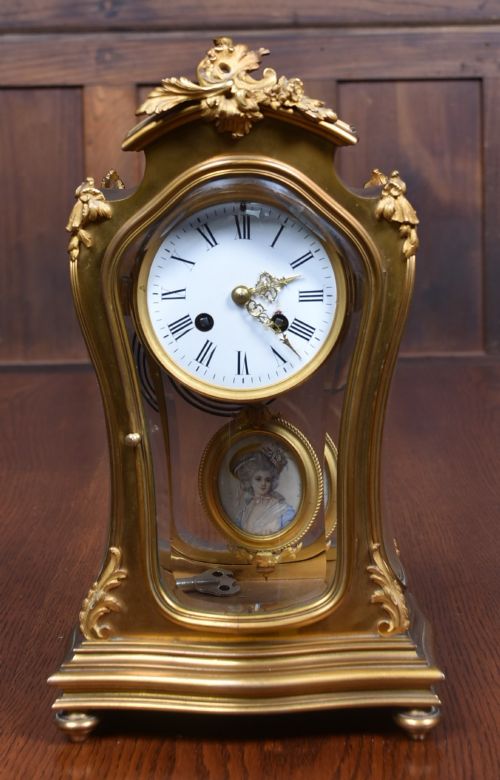


Ormolu Pendulum Mantel Clock
An ormolu pendulum mantel clock brings nineteenth-century French weight and gilt presence directly to a mantelpiece.
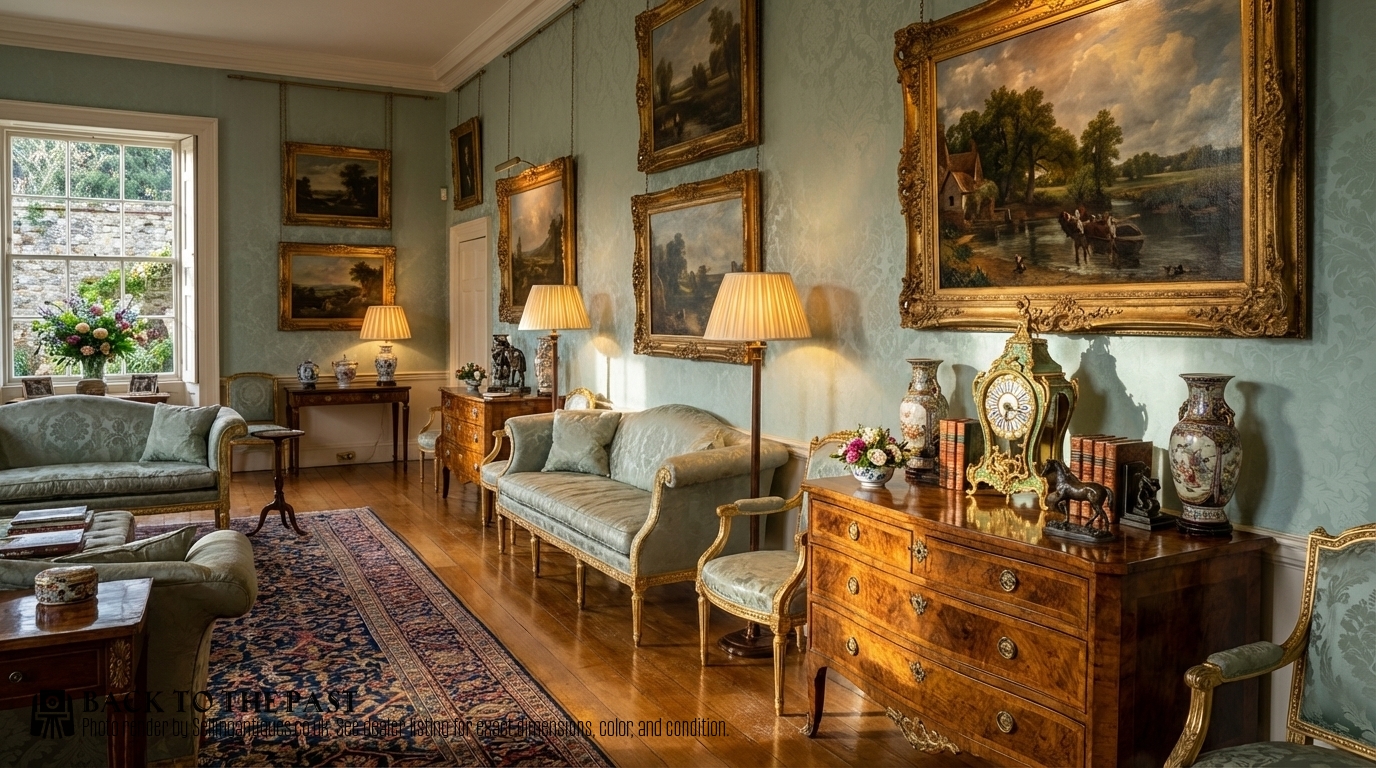
Ormolu Pendulum Mantel Clock
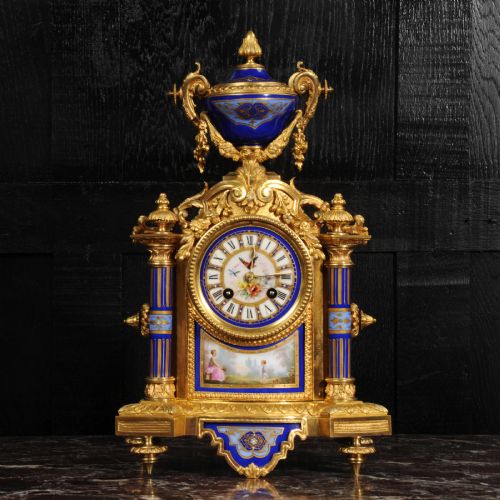
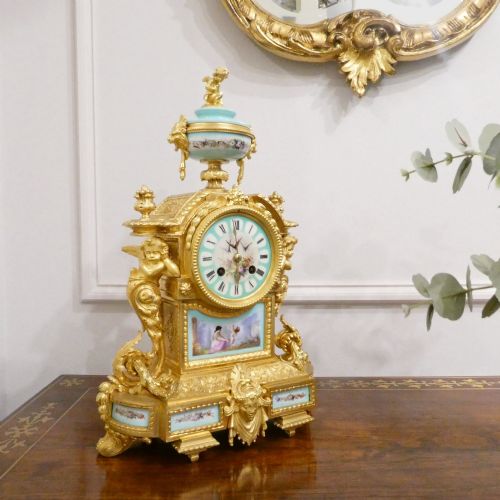
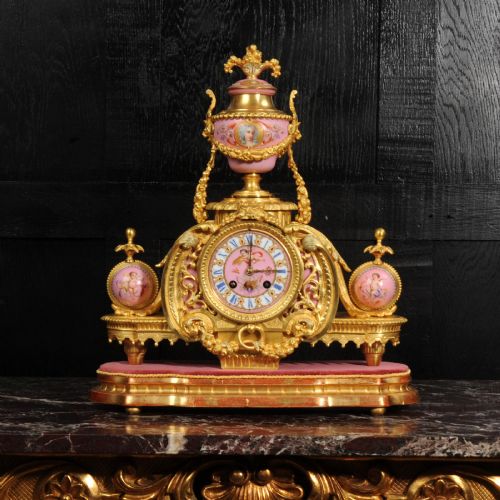
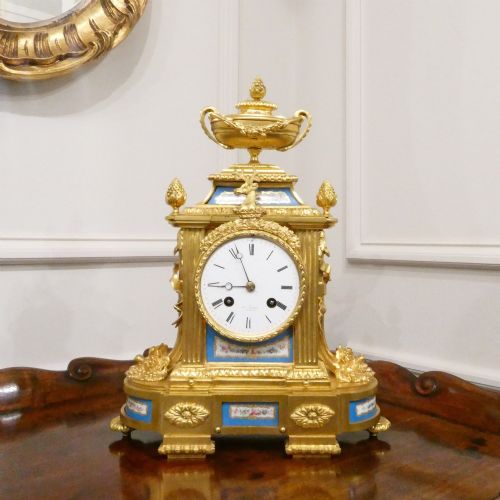
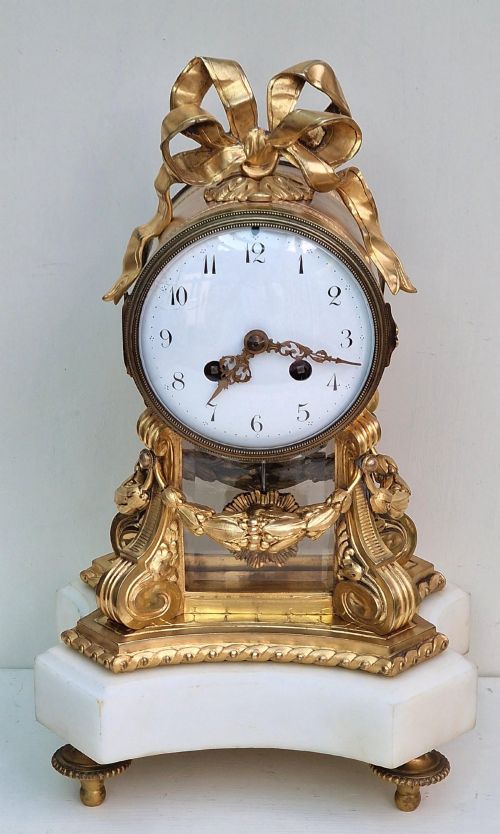
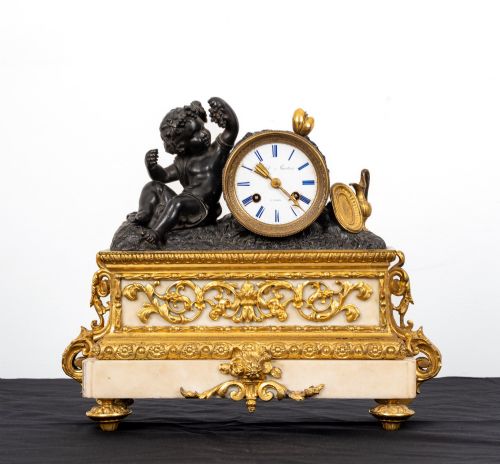
An ormolu pendulum mantel clock represents the nineteenth-century French domestic horology tradition, spanning periods from the Charles X era through the Victorian decades and into nineteen-hundred. Buyers encounter heavy gilt bronze and ormolu housings frequently paired with porcelain panels, enamel dials, and marble bases. These objects function as timekeepers while serving as sculptural centrepieces designed for prominent display in principal rooms.
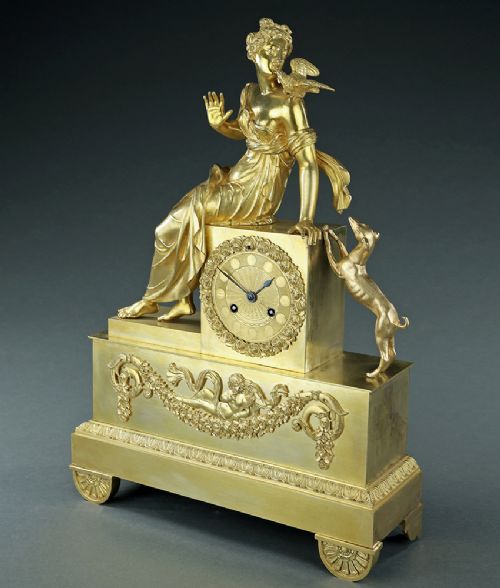
Most examples originate from French workshops adhering to revival aesthetics like Louis XVI, French Empire, and Rococo styles. Formats range from portico clocks with suspended pendulums to drum head models and elaborate figural allegories. The selection leans heavily toward nineteenth-century production where ormolu mounts meet glass, brass, and porcelain elements.
How they were made
Makers utilised cast bronze or brass finished with mercury gilding or modern ormolu techniques to create the characteristic golden surface sheen. Enamel dials and painted porcelain plaques, often associated with Sevres aesthetics, were integrated into the metal frames alongside carved marble and cut crystal components. These mixed materials required precision fitting by specialised bronzeworkers and clockmakers.
Movements supplied by firms like Japy Freres or Samuel Marti powered the pendulum mechanism behind glass doors or open bezels. Cabinetmakers and metalworkers collaborated to construct portico frames, four-glass enclosures, and intricate figural cases requiring both structural stability and decorative finesse.
Listings feature nineteenth-century periods alongside Victorian dates, utilising materials like ormolu, gilt bronze, marble, and porcelain.
What varies in quality
The degree of chiselling and crispness in the cast ormolu mounts dictates the visual depth of the metalwork. Softer, blurred surface details indicate simpler casting methods, whereas sharp acanthus leaves, figures, and scrollwork reflect higher artisan involvement. The integration of signed movements by known makers elevates the horological standing of the piece.
Material combination and weight separate standard production from ambitious commissions. Heavy marble bases, genuine porcelain painted panels, and complex cut crystal portico columns demonstrate superior resource allocation during assembly.
Japy Freres·Achille Brocot·Henry Marc·Siffel and Cartier·Delettrez·Samuel Marti·Breguet
The Ormolu Pendulum Mantel Clock Glossary
- Ormolu
- A surface finish or gilded bronze technique common on nineteenth-century French clock cases. It provides a bright golden appearance resembling solid gold.
- Portico clock
- A architectural clock style featuring a flat top supported by four columns enclosing the pendulum. Charles X examples often utilise cut crystal for these pillars.
- Garniture
- A matching set consisting of a central clock flanked by ornamental matching pieces like vases or candelabra. These sets unify mantelpiece decoration.
- Four glass clock
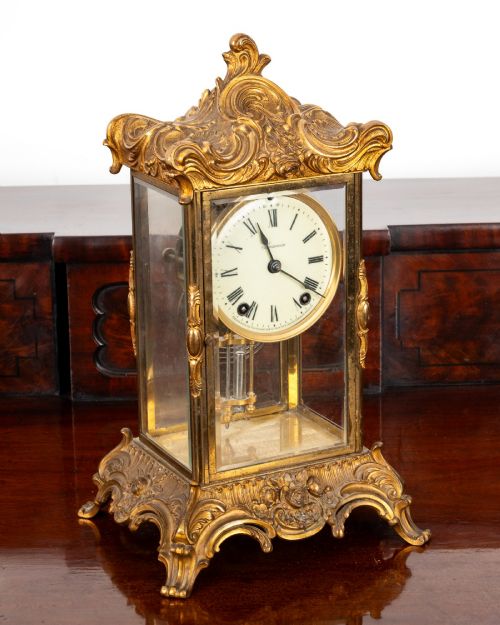
- A mantel clock housed in a brass or gilt bronze frame with glass panels on all four sides. This design exposes the movement and swinging pendulum to view from multiple angles.
- Drum head clock
- A clock design where the dial and movement are housed within a circular metal drum resting on a base. This form frequently combines ormolu mounts with porcelain details.
Ormolu Pendulum Mantel Clock: Frequently Asked Questions
How do I wind an ormolu pendulum mantel clock?
Wind the clock using the matching key inserted into the winding holes on the enamel dial. Turn carefully until resistance is felt, avoiding overwinding the mainspring.
Ensure the pendulum is secured during transport and allowed to hang freely inside the case before setting the clock in motion.
Where should I place a heavy marble and bronze clock?
Place the clock on a stable, level mantelpiece or heavy sideboard capable of supporting substantial bronze and marble weight. Avoid locations subject to direct sunlight or damp conditions that affect enamel dials and internal steel components.
A secure surface ensures the pendulum swings evenly and keeps accurate time without leaning.
How do I tell nineteenth-century styles apart?
Examine the decorative motifs and architectural lines of the case to identify the prevailing revival style. Empire pieces favor classical military and laurel symbols, while Louis XVI revival incorporates refined urns and ribbons.
Rococo models display asymmetrical C-scrolls and naturalistic foliage, whereas Charles X items emphasise clean architectural portico columns.
What is a crystal regulator clock?
A crystal regulator is a nineteenth-century clock featuring glass panels on four sides and a mercury or compensated pendulum. This design lets light pass through the entire case to illuminate the movement.
Such clocks often feature exposed Brocot escapements visible directly on the porcelain or enamel dial face.