
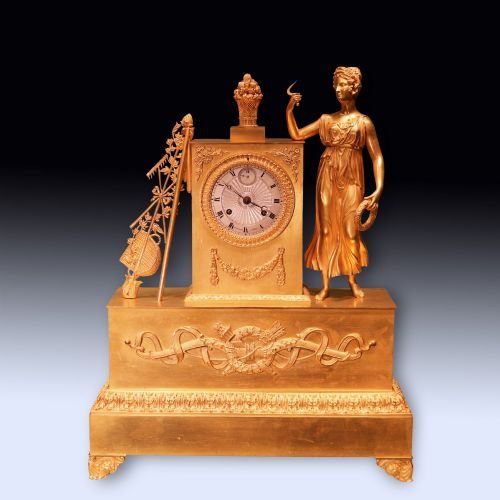
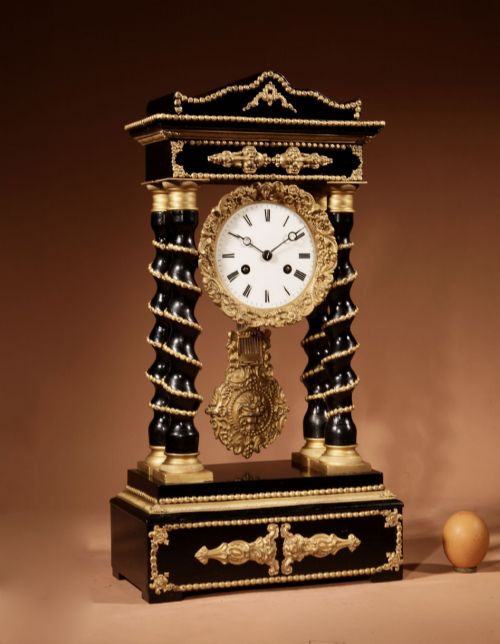

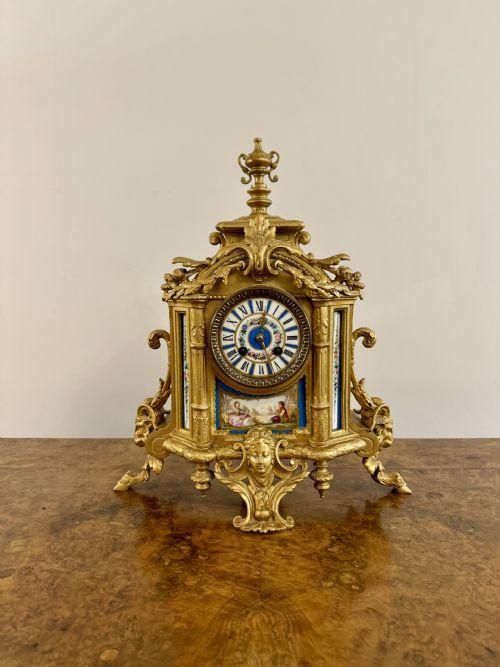
French Gilded Bronze Clock
These heavy, decorative timepieces bring nineteenth-century salon grandeur into a room through elaborate chased metalwork and visible mechanical detail.
French Gilded Bronze Clock
A french gilded bronze clock combines sculptural metal casting with precision timekeeping, serving as a striking focal point on a mantelpiece or bracket shelf. These pieces originate primarily from the nineteenth century, spanning periods from the Victorian era and Napoleon III reign through to the early twentieth century.
The assortment relies heavily on mantel clocks and clock sets housed in glass, marble, and porcelain. Stylistic influences draw directly from French Empire, Rococo Revival, Louis XVI, and Neoclassical design vocabularies.
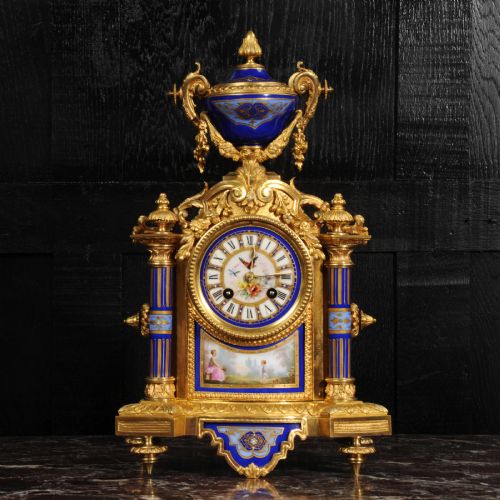
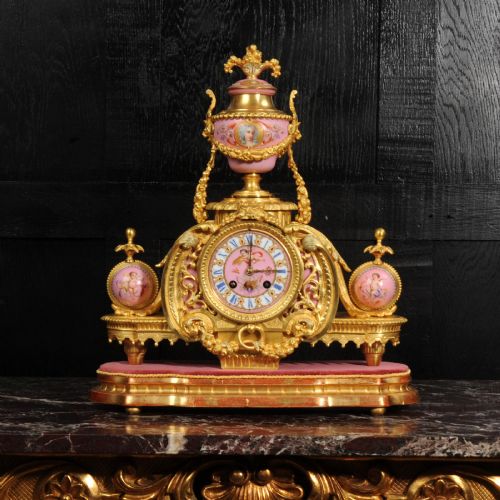
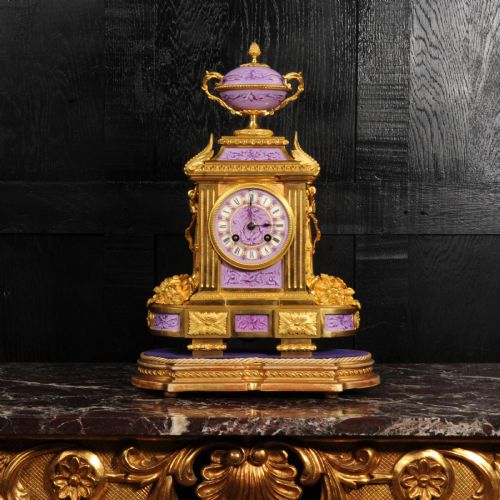
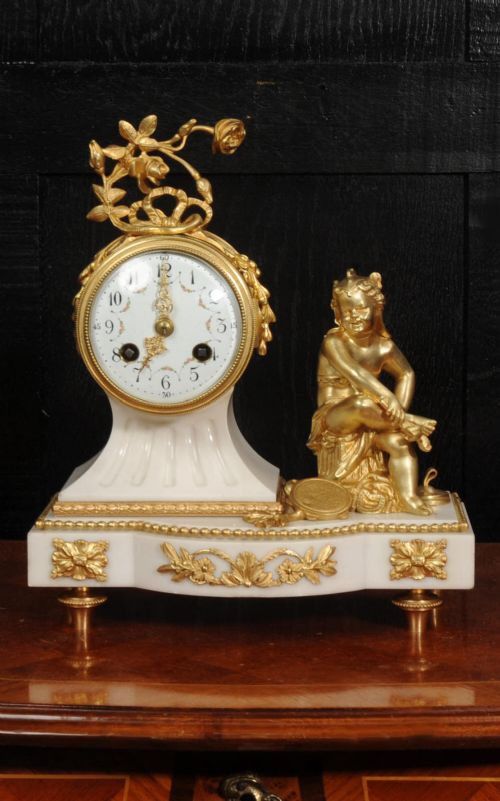
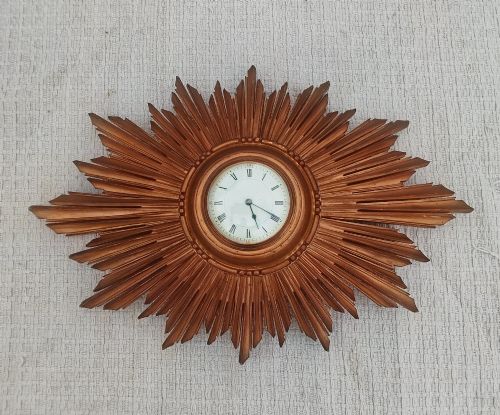
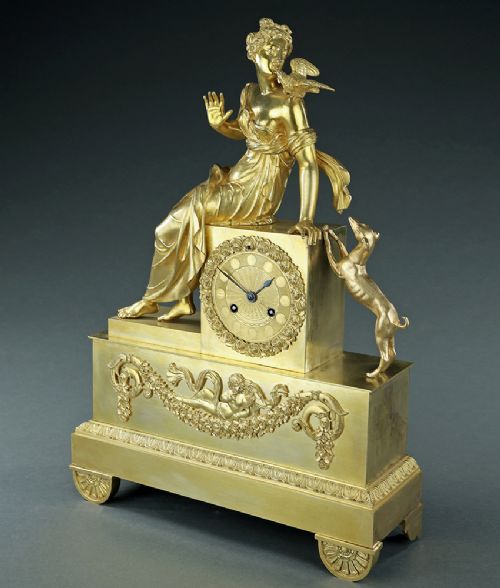
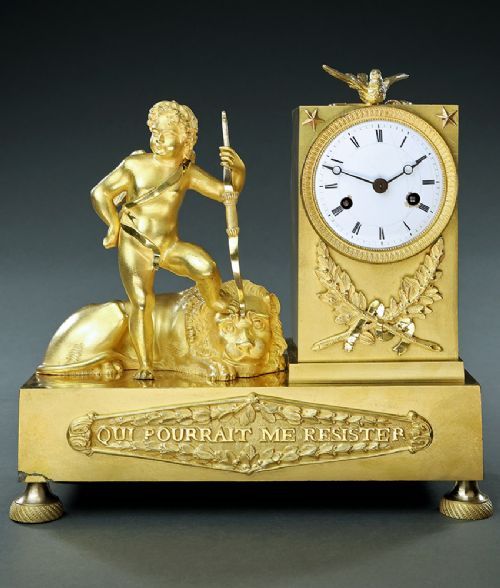
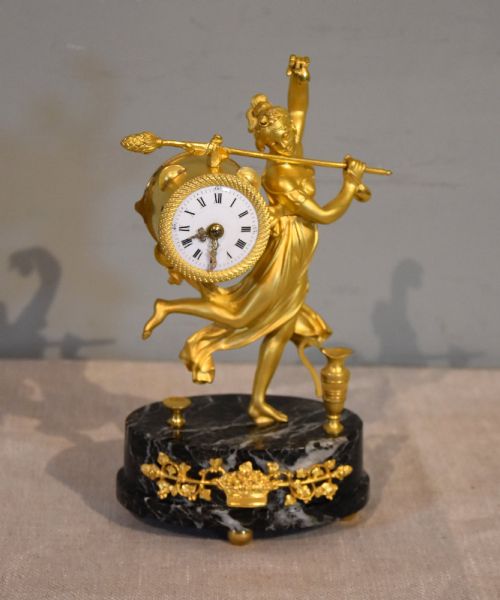
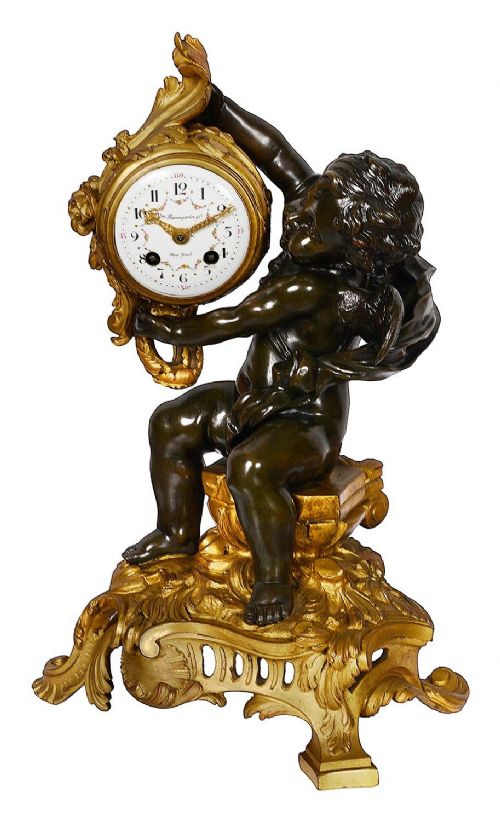
Makers often incorporate figural motifs such as cherubs, classical deities, and elaborate floral elements into the bronze case. Wall clocks and carriage clocks also appear alongside heavier portico and four-glass models.
Materials and Construction
Foundries cast these pieces in bronze, brass, or gilt metal, applying fire-gilding or ormolu techniques to create a rich surface sheen. Ormolu work requires mercurial gilding on a bronze base, producing the distinctive warm golden lustre seen across these items.
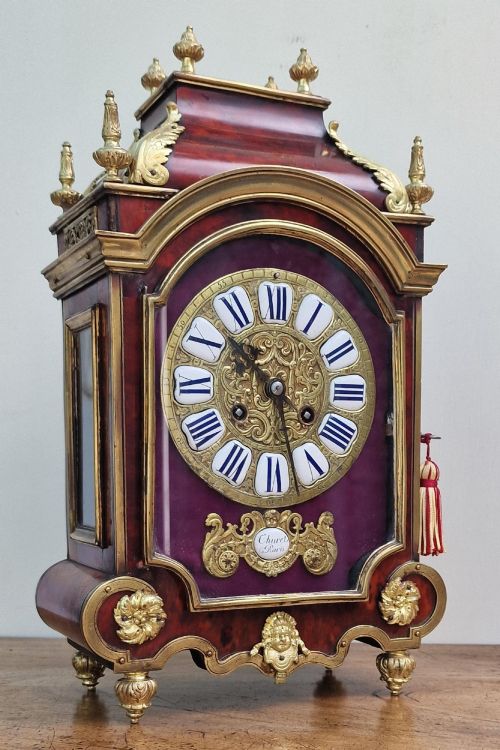
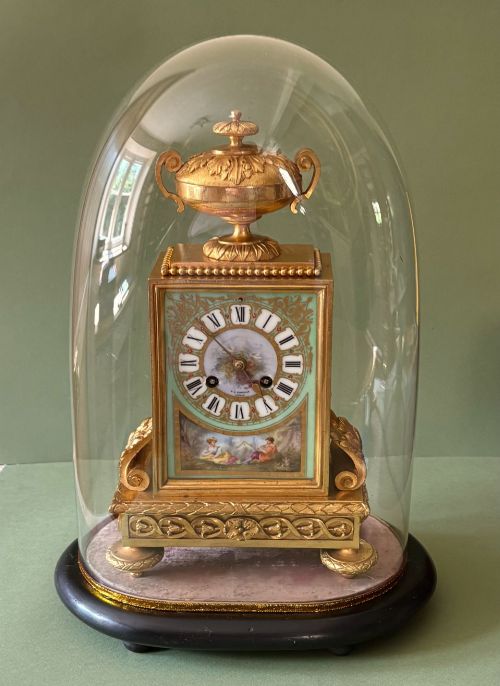
Cases integrate contrasting natural materials including white, green, and red marble, cut crystal, tortoiseshell, and ebonised wood. Dial faces frequently feature hand-painted Sèvres porcelain panels or white enamel chapter rings with delicate numerals.
Clockmakers house eight-day movements behind glass panels or heavy bronze bezels, sometimes incorporating strike and repeat mechanisms. Skilled artisans assemble these complex brass gear trains to work in tandem with the decorative cast metal housings.
Distinctions in Quality
Depth and crispness of the bronze chasing separate finer pieces from standard production. Master bronze-workers achieved subtle texture shifts between matte and polished surfaces on the cast figures and foliate scrolls.
Integration of the dial materials dictates overall refinement, particularly where hand-painted porcelain plaques or champlevé enamelling meet the surrounding metal mount. Heavy marble bases and thick bevelled glass panes also signal superior original specification.
Signatures from notable clockmakers or bronze founders stamped onto the movement or dial elevate a piece's standing. Complete, matching clock garniture sets with original mercury gilding represent the upper echelon of surviving examples.
Achille Brocot·Japy Freres·Thuret Paris·Canaillor of Paris·Le Roy Paris·Philippes Paris·Berger Paris·PH Mourey
The French Gilded Bronze Clock Glossary
- Ormolu
- Gilt bronze created by applying a mercury and gold amalgam to a bronze base and heating it. This historic technique produces a durable, deep golden finish found on many nineteenth-century French timepieces.
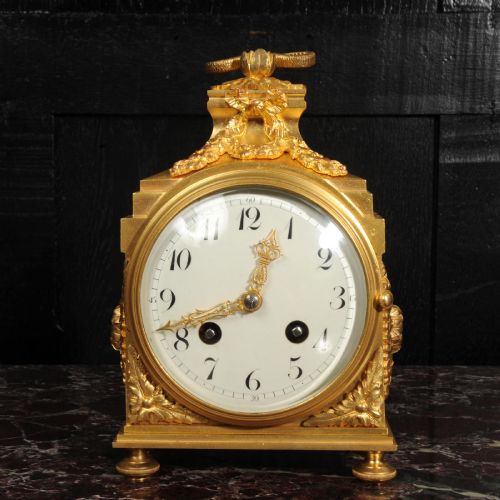
- Pendule d'Officier
- A portable officer's clock featuring a striking mechanism and a carrying handle on top. These compact clocks combine travel utility with ornate gilt bronze casing.
- Garniture set
- A matching suite consisting of a central clock flanked by ornamental side pieces such as vases or candelabra. Sets were designed to create a balanced decorative arrangement on a mantelpiece.
- Champlevé
- An enamelling technique where troughs are dug into the metal surface and filled with coloured glass paste before firing. The resulting patterns sit flush with the surrounding gilt bronze frame.
- Portico clock
- A monumental clock design supported by four architectural columns framing a central suspended pendulum. These architectural pieces often utilise glass, marble, and gilt bronze elements.
French Gilded Bronze Clock: Frequently Asked Questions
How do I wind an antique French clock?
Most pieces utilise an eight-day mechanical movement wound via a dedicated key inserted into arbors on the enamel dial face. Care must be taken not to over-wind the mainspring.
Clock movements should be handled gently by someone familiar with pendulum beat adjustment to ensure accurate timekeeping after relocation.
What is a four glass clock?
A four glass clock is a mantel timepiece enclosed by bevelled glass panels on the front, back, and both sides. This construction showcases the intricate brass movement from every angle.
These models typically feature mercury pendulums and ornate gilt brass framing, popular during the later nineteenth century.
How do I identify a Louis XVI style clock?
Louis XVI style pieces display neoclassical restraint featuring straight architectural lines, symmetrical urn motifs, and ribbon crests. The gilt bronze mounts emphasise classical architectural geometry rather than asymmetrical curves.
Enamel dials and white marble bases frequently accompany these pieces, reflecting eighteenth-century revivals during the nineteenth century.
Where were these clocks originally placed?
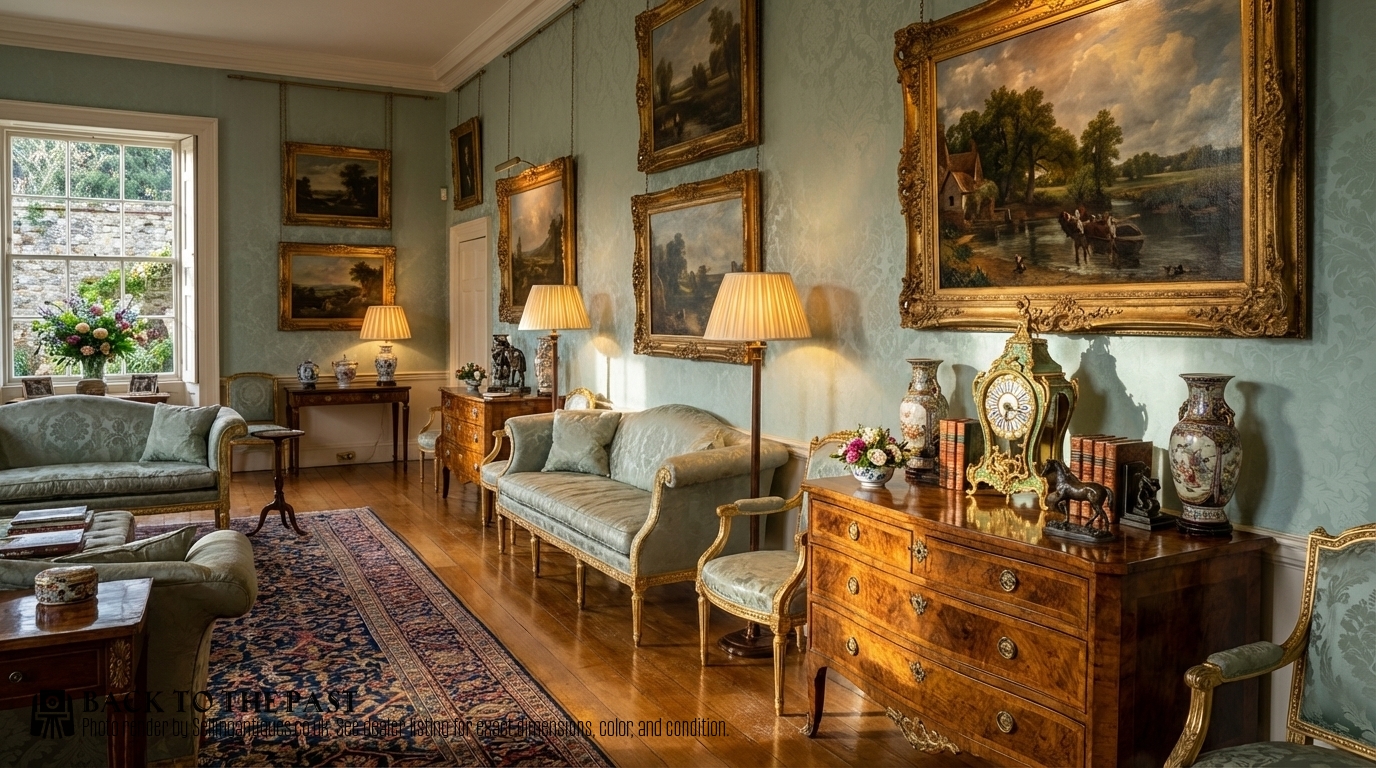
These timepieces sat prominently on drawing room mantelpieces, entrance hall consoles, and parlour side tables as both functional instruments and status symbols. Wealthy households paired them with matching candelabra to anchor formal room decor.
Their heavy marble and bronze construction required sturdy wooden furniture to support their substantial weight safely.