


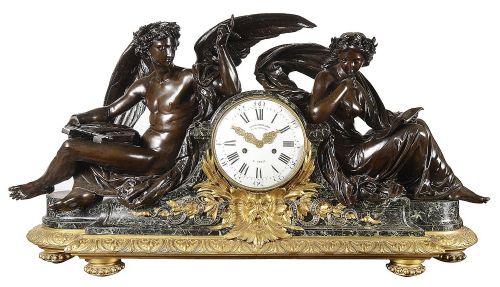

Green Ormolu Mantel Clock
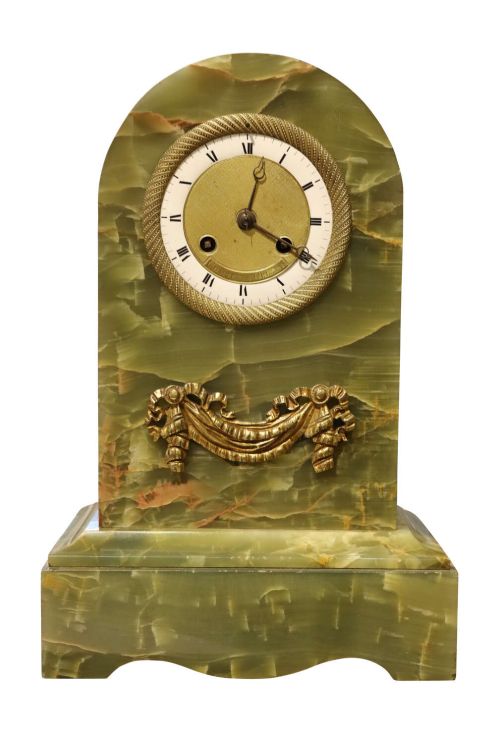
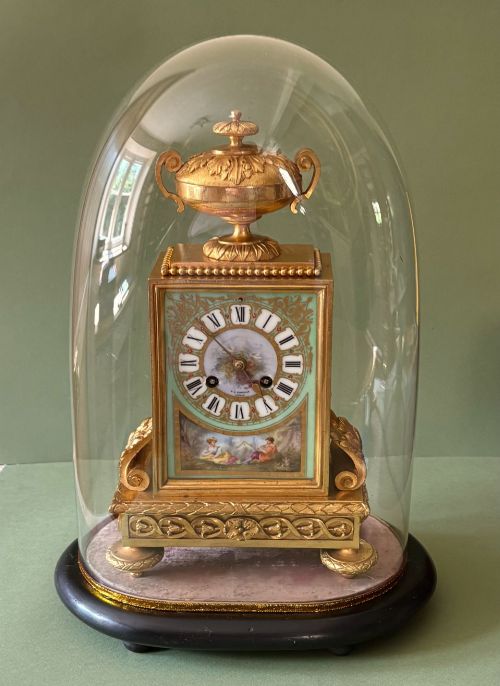
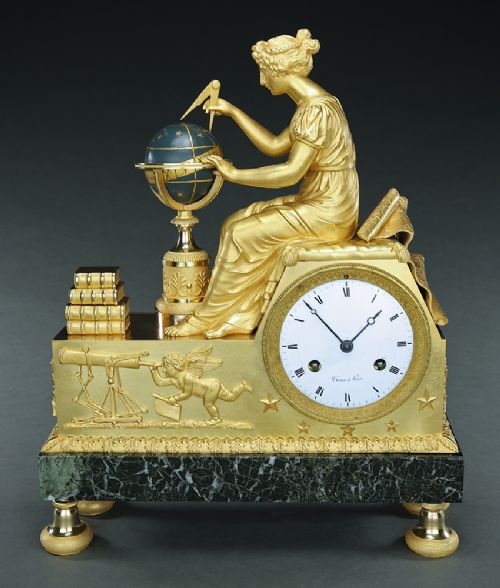
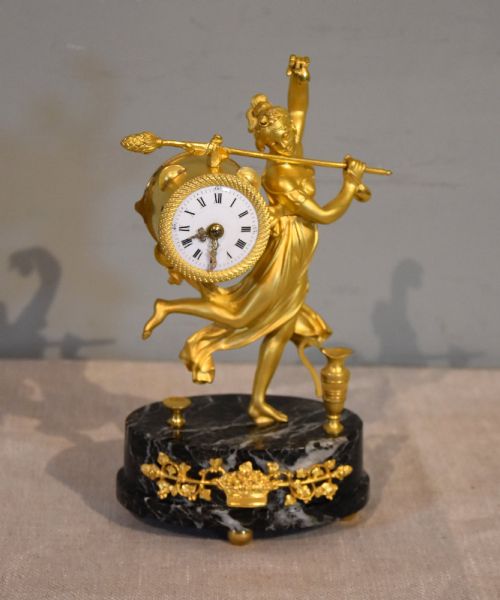
These green ormolu mantel clocks combine striking natural mineral cases with heavy gilt mounts, bringing dramatic nineteenth-century French elegance straight to your mantelpiece.
Green Ormolu Mantel Clock
A green ormolu mantel clock brings together polished mineral bodies and gilded bronze fittings across various nineteenth-century French aesthetic movements. These pieces appear as single mantel timepieces, substantial three-piece garniture sets, and grand crystal regulators.
The selections on this page span the Victorian era, the Second Empire, and the Belle Epoque, reflecting diverse tastes from Rococo Revival to Neoclassical. Most examples utilise rich green marble or green onyx bodies paired with cast ormolu mounts.
Makers and foundries of the period produced both compact timepieces and elaborate clock sets featuring decorative elements like elephants, porcelain plaques, and matching side urns. Buyers select these works for their striking colour contrast between deep green stone and brilliant gold-toned metal.
Materials and construction methods
Craftsmen shaped dense natural stones like green marble and green onyx into polished architectural cases, often combining them with glass panels for crystal regulator designs. Boulle work variants incorporate tortoiseshell and cut brass inlay across wooden carcases.
The metallic components rely on bronze or brass treated with mercury gilt or modern ormolu techniques to achieve a durable golden finish. Enamel dials, silk suspension movements, and eight-day striking mechanisms completed the interior engineering.
Listings feature nineteenth-century French pieces in styles ranging from Rococo Revival and Neoclassical to French Empire.
Evaluating quality and execution
Superior pieces display exceptional sharpness in the cast ormolu mounts, where fine chiselling brings out intricate foliage and figurative details after casting. Lower quality examples show softer definition and shallower surface work on the bronze elements.
The grade of the stone body significantly influences overall value, with flawless deep green marble or translucent onyx representing the upper tier. Furthermore, the presence of original signed movements by notable makers elevates the standing of an individual clock.
Charles à Orléans·Victor Paillard, Paris·Charpentier Foundry·Thos Agnew & Sons
The Green Ormolu Mantel Clock Glossary
- Ormolu
- Gilded bronze, where a gold-mercury amalgam is applied to a bronze base and heated. This historic technique creates a warm, deep lustre characteristic of nineteenth-century French pieces.
- Garniture
- A matching set of decorative objects for a mantelpiece, usually consisting of a central clock flanked by two matching side urns or candelabra. These sets created a balanced, symmetrical display in period salons.
- Boulle
- A style of marquetry using brass and tortoiseshell inlay developed by André-Charles Boulle. It appears on select nineteenth-century clock cases to create an ornate patterned surface.
- Silk suspension
- A clock pendulum hanging mechanism utilising a fine thread of silk. This traditional method typically indicates an earlier nineteenth-century movement before metal springs became standard.
- Crystal regulator
- A mantel clock housed in a glazed glass case that allows light to pass through to the movement. These models became popular during the later Victorian decades.
Green Ormolu Mantel Clock: Frequently Asked Questions
How do I wind a mantel clock?
Most nineteenth-century mechanical clocks use a key inserted into specific winding holes on the enamel dial. Turn the key gently until you feel firm resistance, taking care not to overwind the mainspring.
Ensure you match the correct key size to the square arbor. Regular winding keeps the movement running accurately without straining the internal gears.
Where should I place my clock?
Position the piece on a stable, level surface away from direct sunlight and damp environments. A sturdy mantelpiece or a dedicated console table provides the ideal support for heavy marble and bronze cases.
Keep the clock away from draughty windows and heat sources to protect the delicate internal oils and sensitive wooden or stone structures.
How do I tell the periods apart?
Early nineteenth-century pieces often reflect Empire or Neoclassical symmetry with severe architectural lines and restrained gilt mounts. Later Victorian and Belle Epoque examples embrace exuberant Rococo Revival curves, complex garniture sets, and expansive glass panels.
Examining the dial signature, movement type, and overall case silhouette helps narrow down the decade of manufacture.