
Ormolu Mounted Writing Bureau
An ormolu mounted writing bureau brings the refined craftsmanship of nineteenth-century French and Victorian salons into a modern study.
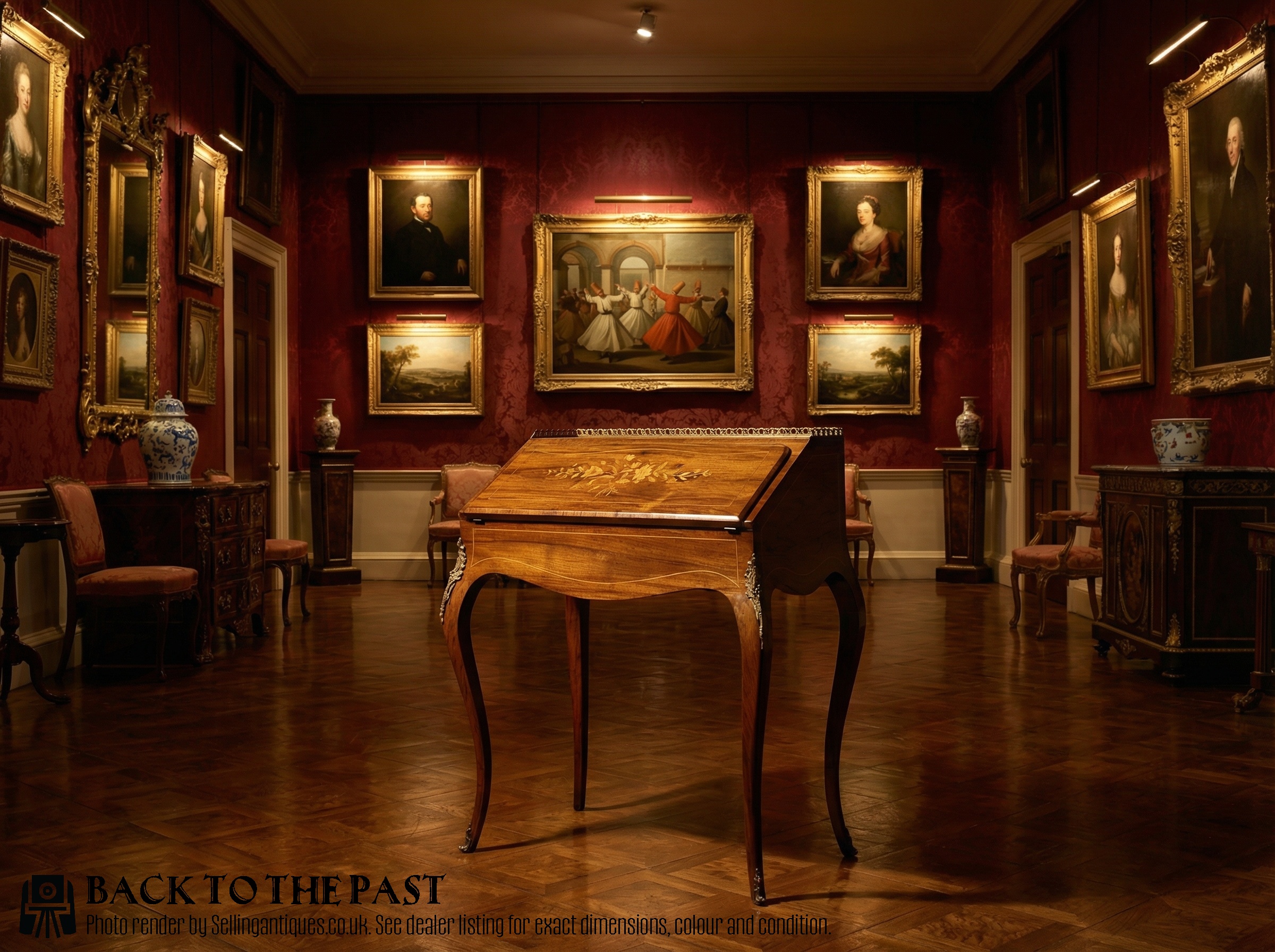
Ormolu Mounted Writing Bureau
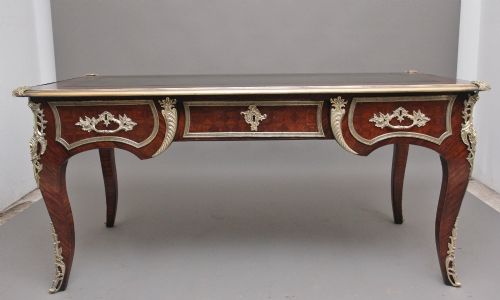
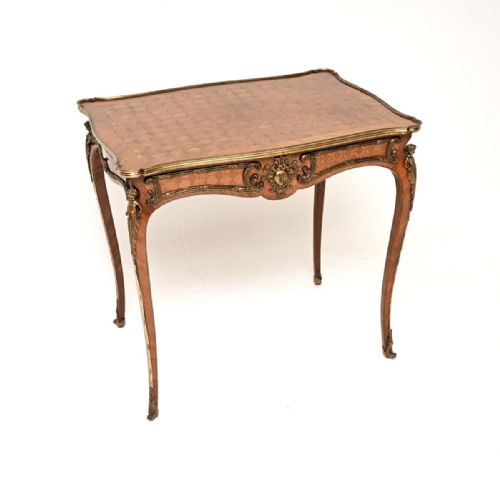
When searching for an ormolu mounted writing bureau, you encounter sophisticated writing desks and cabinets designed during the nineteenth century. These pieces predominantly reflect French revival styles such as Louis XV, Louis XVI and Napoleon III.
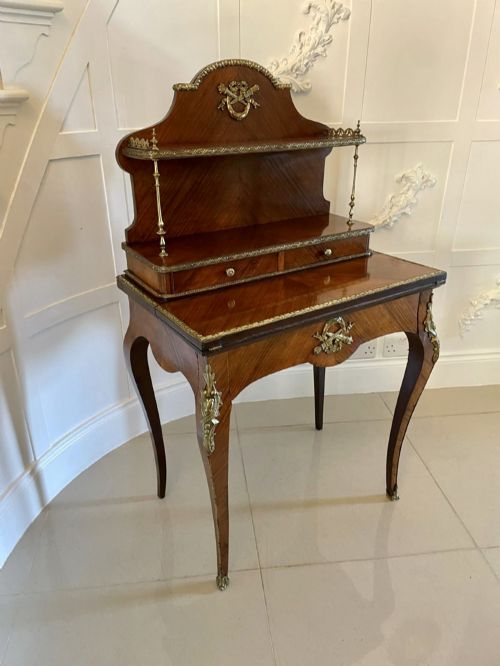
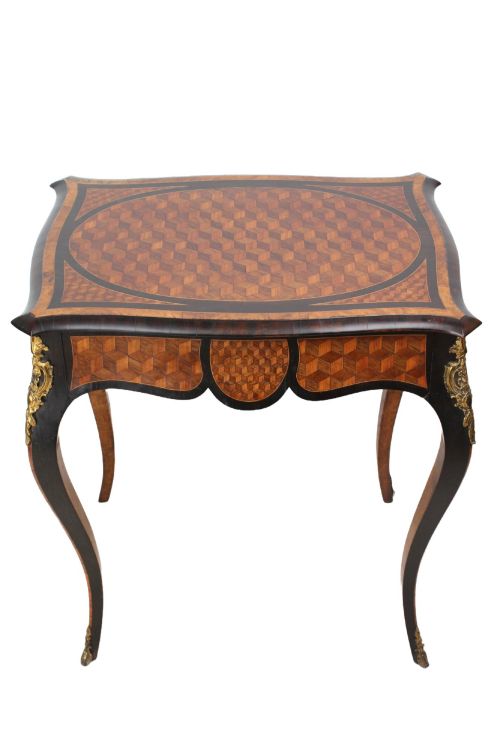
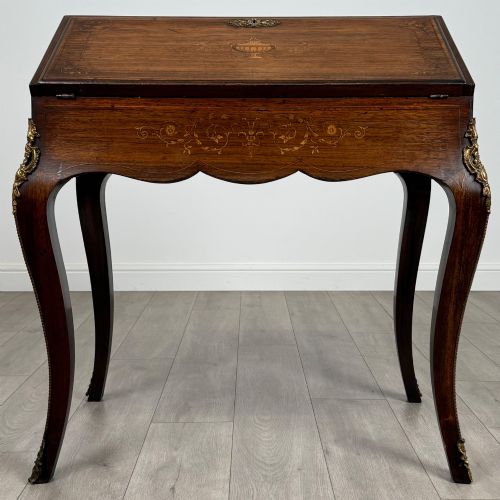
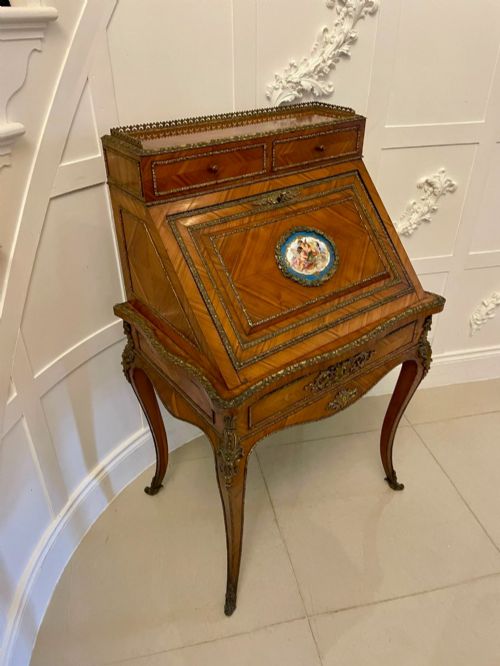
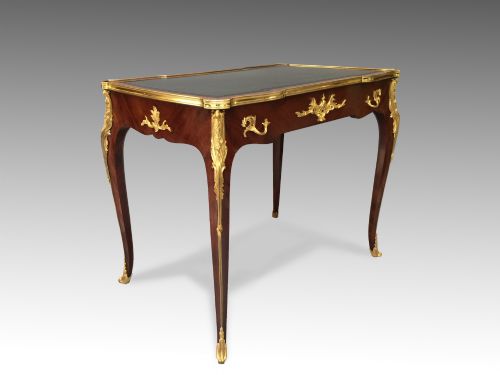
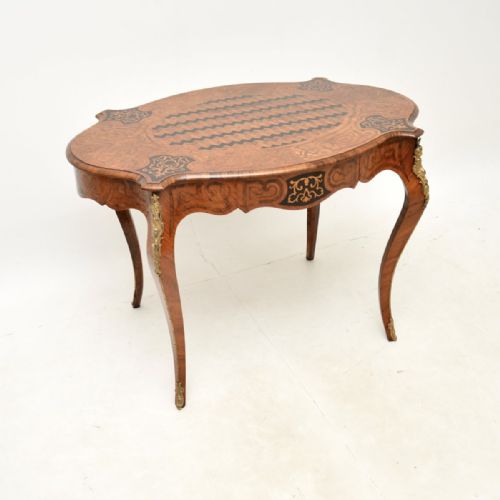
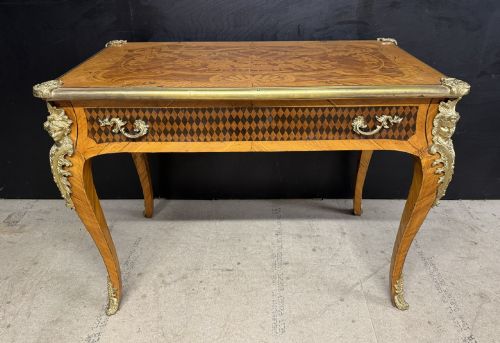
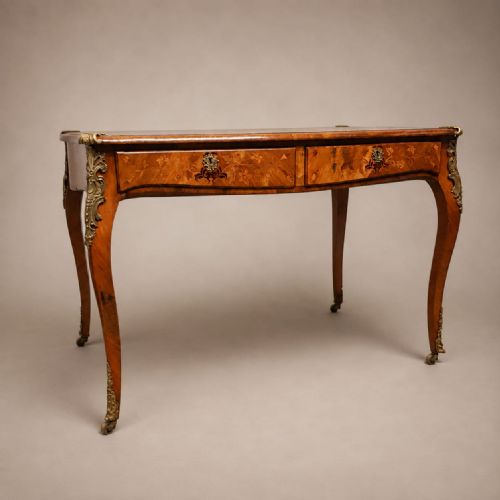
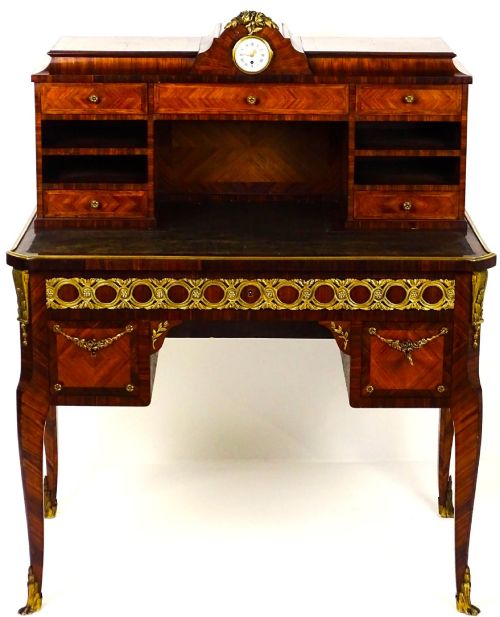
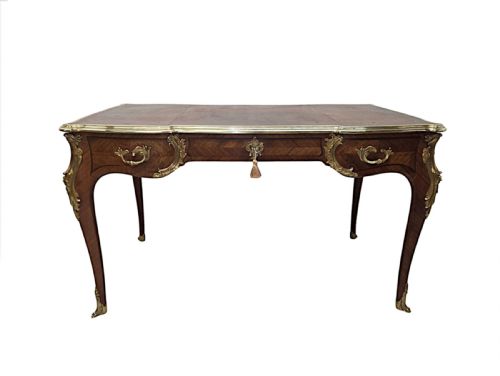
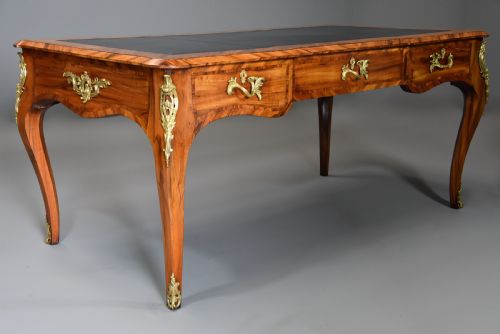
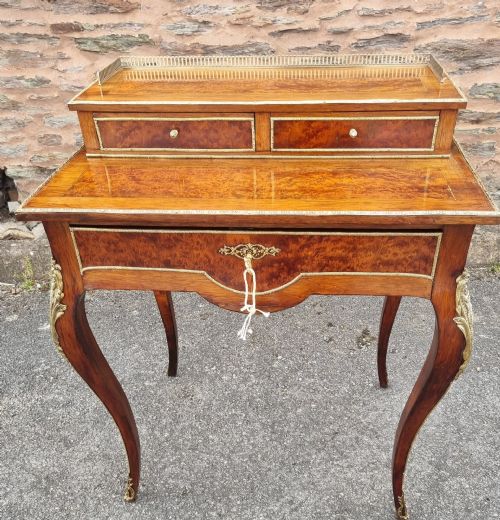
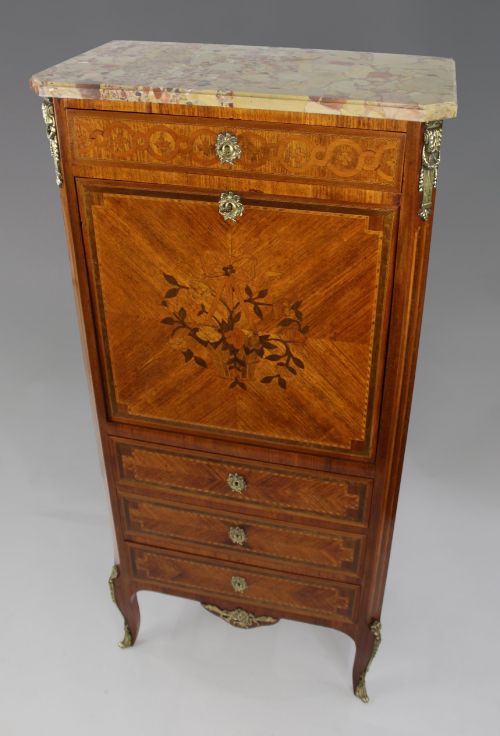
The selection on this page includes bureau plats, cylinder desks, bonheur du jours and escritoires. Most examples originate from the Victorian era and the nineteenth century, often showcasing intricate marquetry and parquetry.
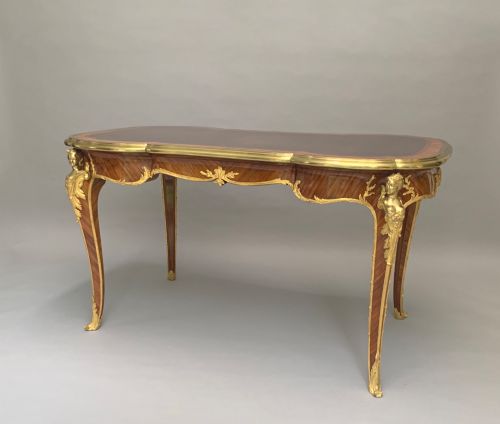
You will find forms ranging from kidney-shaped writing tables to substantial freestanding desks equipped with drawers and fitted interiors. The common thread among them is the integration of decorative metal mounts on timber surfaces.
How they were made
Cabinetmakers built these desks using foundational woods such as oak or mahogany, which were then veneered in exotic timbers like kingwood, rosewood, walnut and amboyna. Parquetry and floral marquetry patterns were meticulously cut and laid into the surfaces by hand.
Cast ormolu and gilt bronze mounts were chased, polished and applied to the corners, legs and aprons to accentuate the serpentine or bombé contours of the furniture. Leather writing inserts and marble tops frequently completed the upper surfaces.
Listings feature nineteenth-century periods including Victorian, 1850, 1860, 1870, 1880, 1890 and 1900.
What varies in quality
Quality in these desks is determined by the crispness of the bronze casting and the precision of the timber veneers. Finer pieces demonstrate superior hand-chasing in the metalwork and seamless matching of grain across the marquetry.
The structural integrity of the internal drawers, the weight of the mounts and the subtlety of the French polishing distinguish workshop execution. Maker attribution also plays a role, with documented pieces by notable cabinetmakers representing the pinnacle of the craft.
JAS Shoolbred·Francois Linke·Edwards and Roberts·Paul Sormani·Maison Krieger·CH Jeanselme and Co·Blake London
The Ormolu Mounted Writing Bureau Glossary
- Ormolu
- Gilded bronze used for decorative mounts on furniture. This technique was widely utilised by nineteenth-century Parisian cabinetmakers.
- Bureau Plat
- A freestanding double-sided writing table with drawers in the frieze. It was designed to sit in the centre of a room rather than against a wall.
- Bonheur Du Jour
- A small light ladies writing desk featuring a tiered superstructure with shelves or small drawers above the main writing surface.
- Marquetry
- The art of forming decorative patterns by fitting together small pieces of coloured wood veneer. It often depicts floral or geometric motifs on bureau tops.
- Parquetry
- A geometric mosaic of wood pieces used for covering floors or furniture surfaces. It frequently appears on nineteenth-century French writing desks in cube or chevron designs.
- Escritoire
- A writing cabinet with a fall-front panel that conceals pigeonholes and small drawers. Examples often incorporate marble tops and gilt bronze mounts.
Ormolu Mounted Writing Bureau: Frequently Asked Questions
What is an ormolu mounted writing bureau?
An ormolu mounted writing bureau is a nineteenth-century writing desk or cabinet adorned with gilded bronze or brass decorative mounts. These pieces were heavily influenced by French design and feature fine cabinet woods.
They serve as both functional writing furniture and decorative centrepieces in period and contemporary interiors alike.
Where were these writing desks made?
The majority of these desks were manufactured in France, particularly in Paris workshops, during the nineteenth century. Many were also produced in England during the Victorian period under the influence of French styling.
Prominent cabinetmakers and retailers of the era exported and retailed these elaborate writing tables internationally.
How do I style an antique bureau at home?
An antique writing bureau works well as a freestanding desk in a study or as an accent piece in a living room. Its finished back allows bureau plats to float in the middle of a space.
Pair the wood tones with traditional seating while keeping surrounding decor minimal to highlight the detailed marquetry and metalwork.
How do I tell Louis XV and Louis XVI styles apart?
Louis XV style furniture is characterised by asymmetrical curves, serpentine lines, and exuberant rococo ormolu mounts. The forms feel organic and fluid.
Louis XVI style shifts toward neoclassical symmetry, featuring straight fluted legs, rectangular proportions, and architectural mounts inspired by antiquity.