
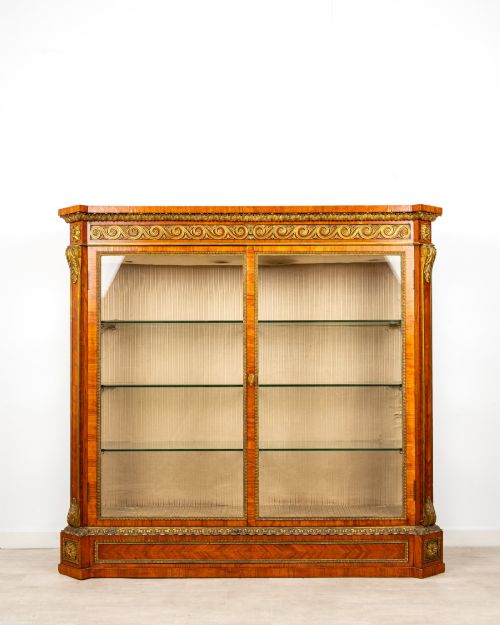
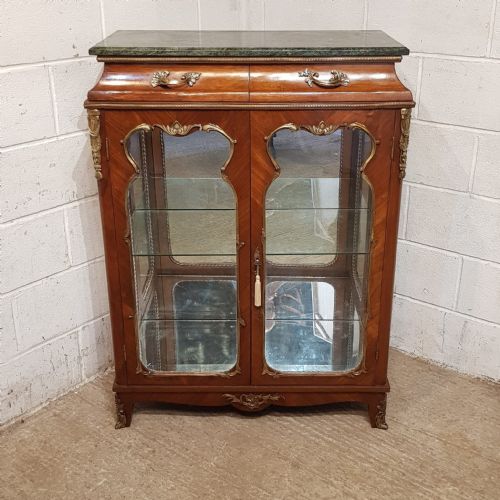
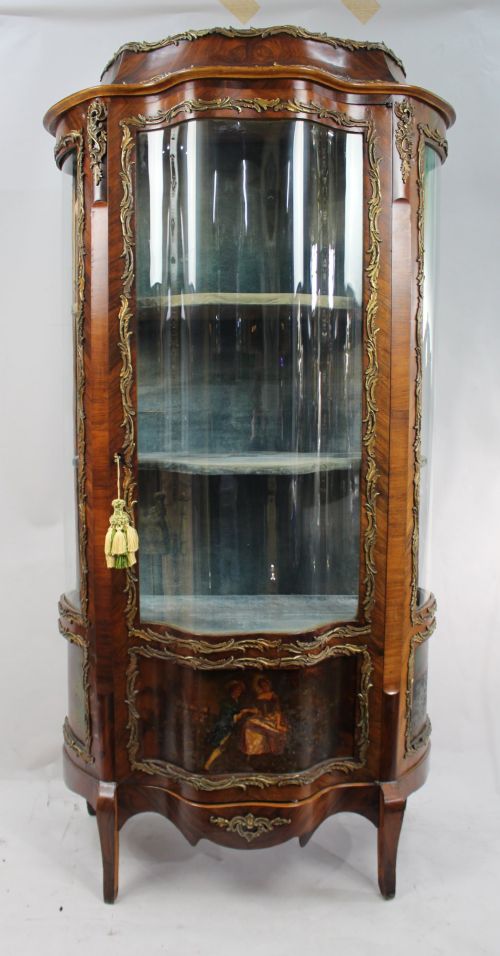
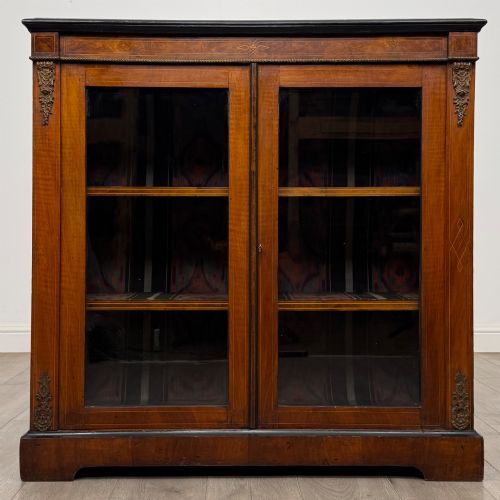

Ormolu Mounted China Display
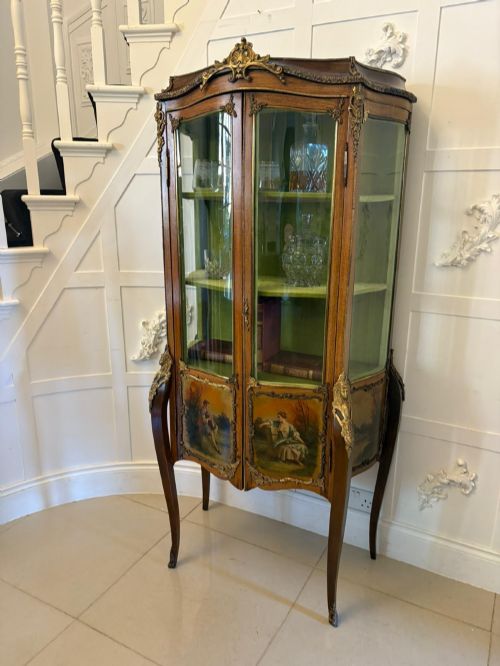
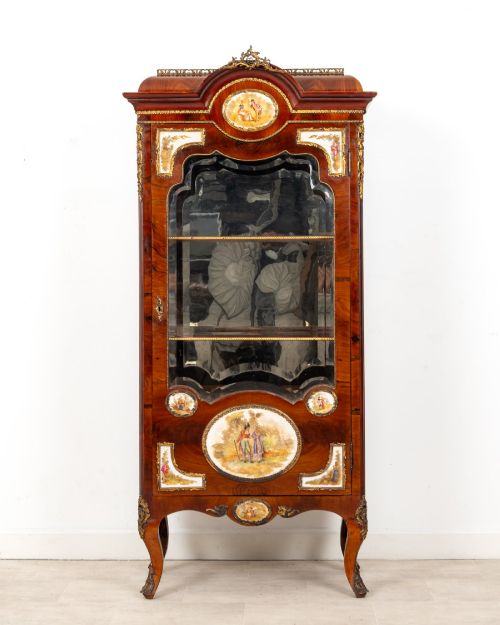
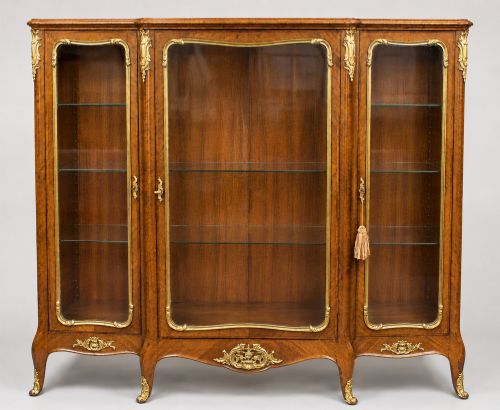
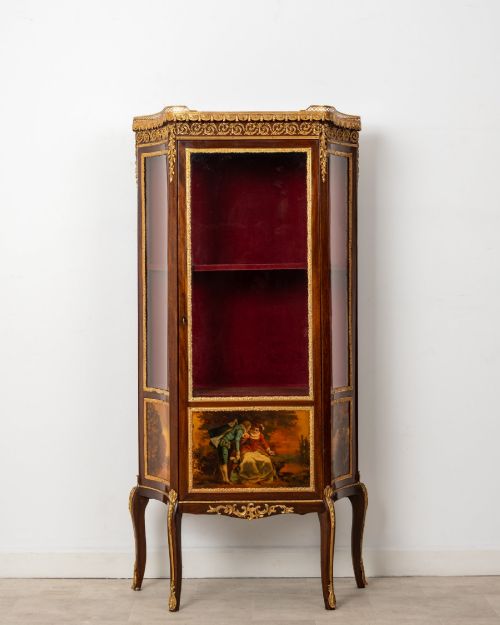
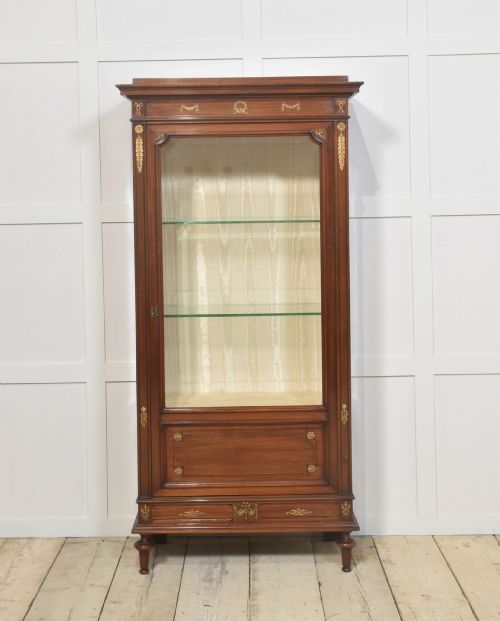
An ormolu mounted china display brings French cabinet-making traditions into the room, holding porcelain behind glass while gilt bronze catches the light.
Ormolu Mounted China Display
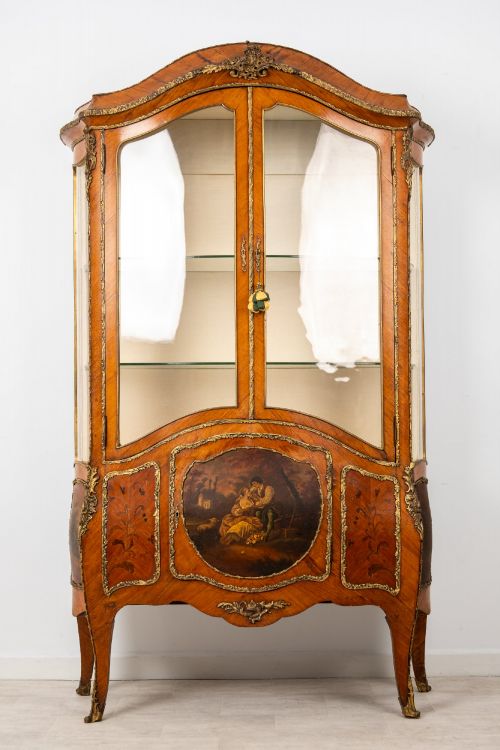
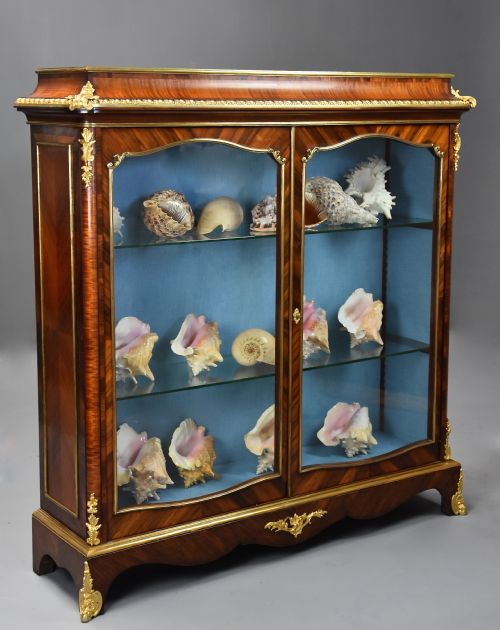
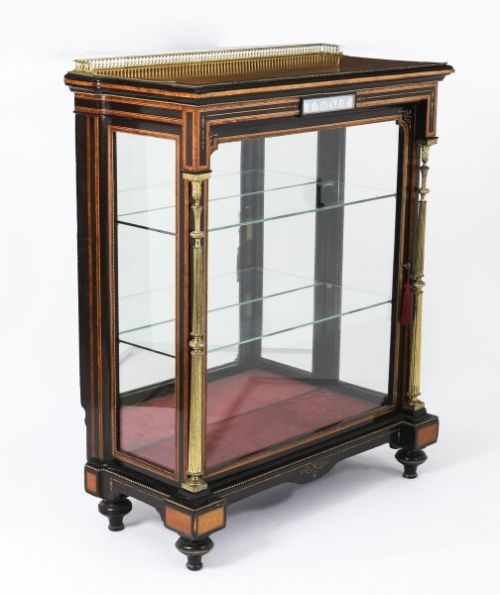
When you search for an ormolu mounted china display, you encounter vitrines, pier cabinets, and freestanding glass-fronted cases designed to showcase ceramics and precious objects. These pieces originate predominantly from the nineteenth century, spanning Victorian Britain and French workshops influenced by Louis XV and Louis XVI revivals.
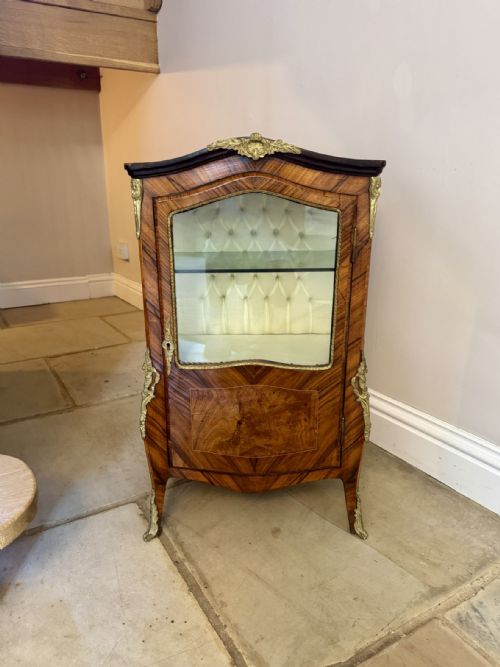
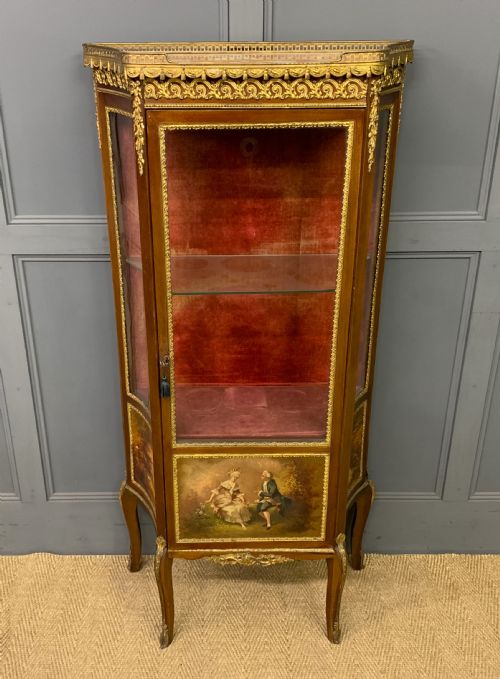
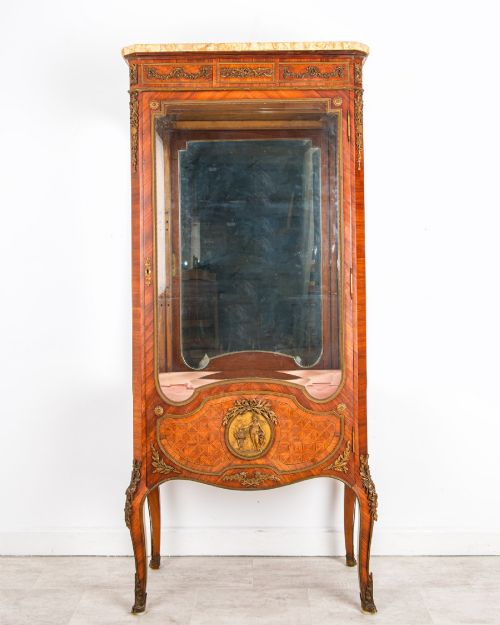
The dominant forms are tall vitrines and serpentine cabinets that combine glazed panels with fitted shelving. Walnut, kingwood, and mahogany provide the primary timber carcasses, whilst marble tops and painted lower panels appear frequently across French models.
Buyers meet variations ranging from compact English walnut pier cabinets to large French chateau vitrines. The unifying element across these objects is the application of cast gilt bronze or ormolu mounts framing the glass and corners.
Materials and construction
Cabinet makers built these pieces using dense hardwoods like kingwood, walnut, and mahogany, often laid as veneers over a stable secondary timber carcass. Marquetry inlay and painted Vernis Martin panels decorate the surfaces of finer examples.
Ormolu mounts, cast in bronze and heavily gilt, were chased by hand to create crisp foliage and scrollwork before being fixed to the cabinet corners, feet, and friezes. Glass panels were secured within rebated frames to allow clear visibility from multiple angles.
Materials recorded across the current items include amboyna, ebonised wood, marble, and fabric-lined interiors.
Judging quality
The precision of the ormolu casting and the depth of its chasing separate standard production from exceptional work. Finer mounts retain sharp relief and heavy gilding without rubbing or soft detail.
Timber selection and veneer matching dictate the baseline of a cabinet's worth. Continuous grain across serpentine fronts and finely detailed marquetry indicate a workshop of high standing.
H. J. Hatfield & Sons·Paul Sormani·G. Durand
The Ormolu Mounted China Display Glossary
- Ormolu
- Gilt bronze mounts applied to furniture. The technique involves coating cast bronze with a mercury and gold amalgam before heating.
- Vitrine
- A glass-fronted display cabinet designed for porcelain and small objects. These pieces often feature glazed sides as well as doors.
- Vernis Martin
- A type of lacquer work developed in France imitating Asian screens. It appears on the lower panels of display cabinets.
- Pier cabinet
- A low cabinet designed to fit narrow wall spaces between windows. They are common in Victorian English interiors.
- Kingwood
- A dense Brazilian timber with dark violet and golden stripes. It was favoured by nineteenth-century French cabinet makers.
Ormolu Mounted China Display: Frequently Asked Questions
How do I clean the glass and ormolu?
Dust the ormolu gently with a soft brush, avoiding metal polishes that strip the gold layer. Clean the glass panels with a mild detergent solution applied to a cloth rather than sprayed directly onto the wood.
Keep these cabinets away from direct sunlight and strong heat sources. Rapid temperature changes cause timber veneers to lift and split along the grain.
Can these cabinets support heavy porcelain?
Original glass shelves are often thin and fragile, requiring lightweight display items. Many cabinets retain their velvet-lined wooden shelves, which offer greater support for heavier china.
Check the internal supports before loading the shelves. Distribute the weight evenly across the centre to prevent warping.
How do I distinguish French from English cabinets?
French cabinets from this selection typically utilise kingwood, heavy ormolu mounts, and serpentine fronts with Vernis Martin panels. English pier cabinets tend to use walnut with marquetry inlay and simpler brass mounts.
French pieces lean towards Louis XV and Louis XVI revival styles. English Victorian examples often display more restrained geometric proportions.
What is a serpentine front?
A serpentine front curves outward in the centre and inward towards the edges in an undulating line. This shape demands precise woodworking and custom-bent glass panels.
Cabinets with this feature generally represent a higher tier of manufacture. The matching ormolu mounts must follow these complex curves precisely.