
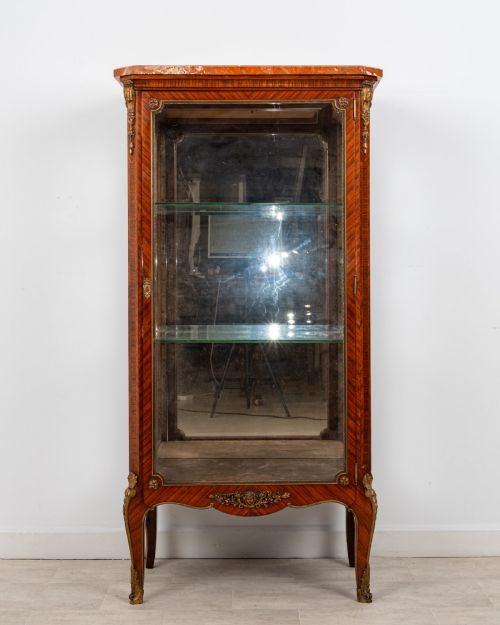
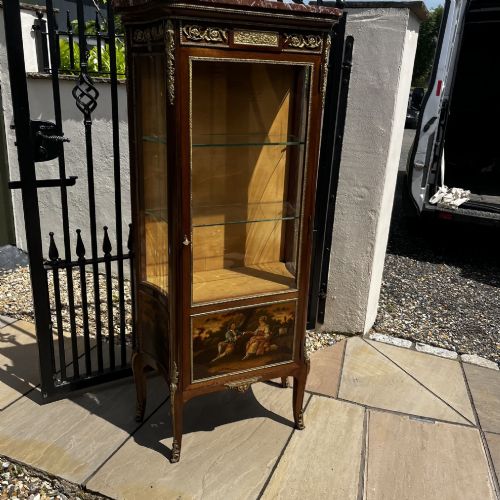

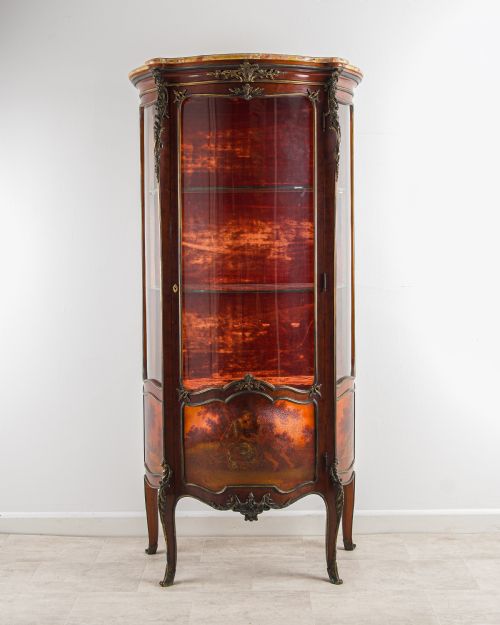


French Rococo Display Vitrine
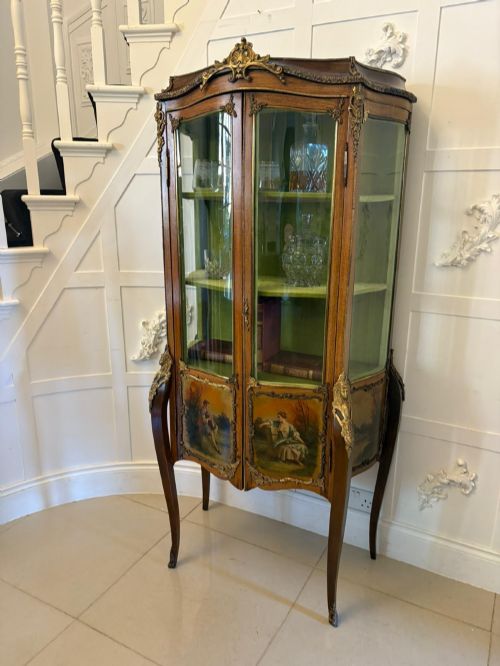
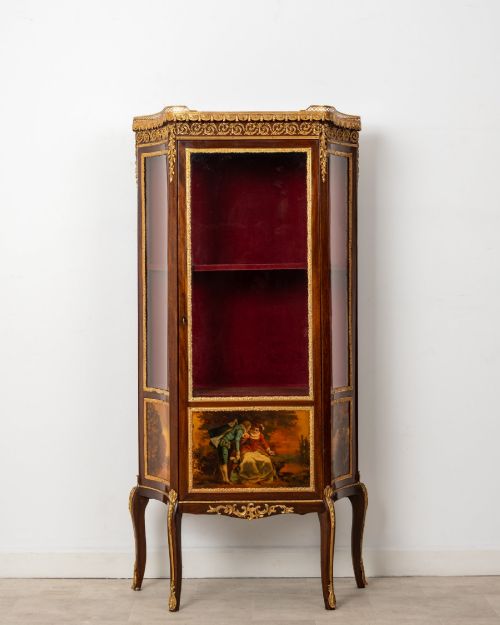
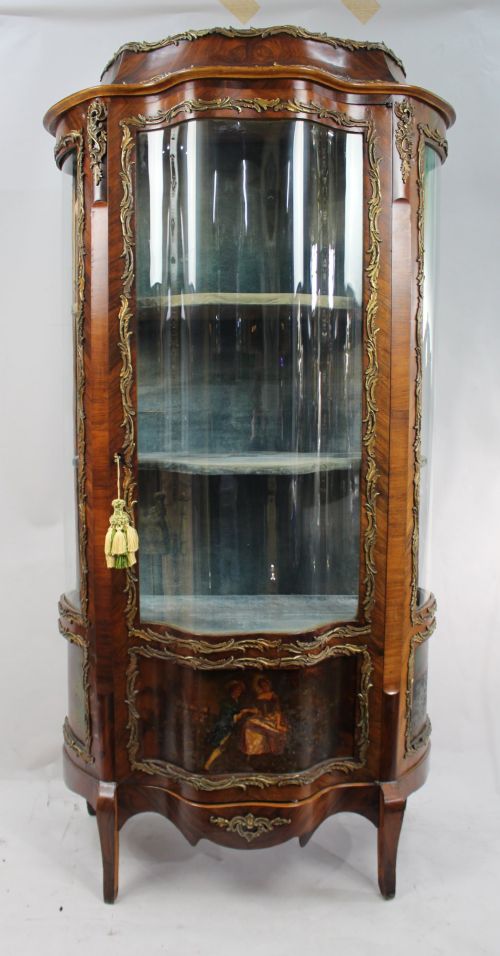
A french rococo display vitrine brings curved glass, gilt mounts, and figured wood together to showcase porcelain and small treasures inside a formal room.
French Rococo Display Vitrine
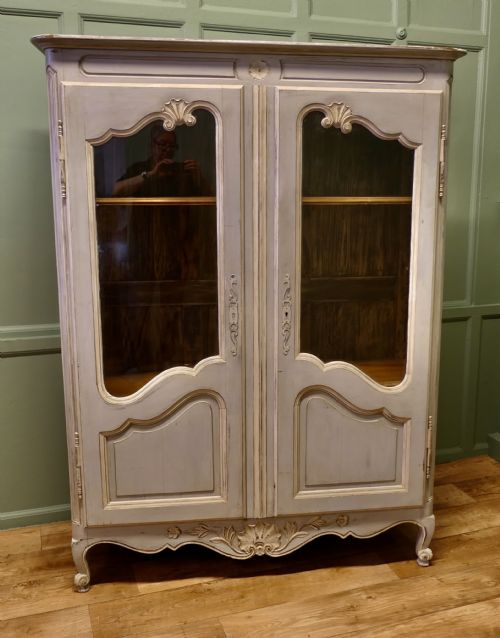
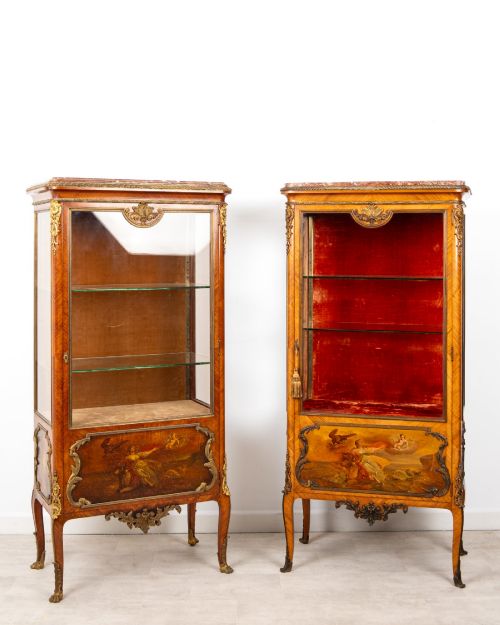
A french rococo display vitrine takes the form of a glazed cabinet or a glass-topped bijouterie table designed to exhibit prized objects. These pieces emerge primarily in nineteenth-century interpretations of earlier court styles, spanning decades from the mid-Victorian era through to the Edwardian period.
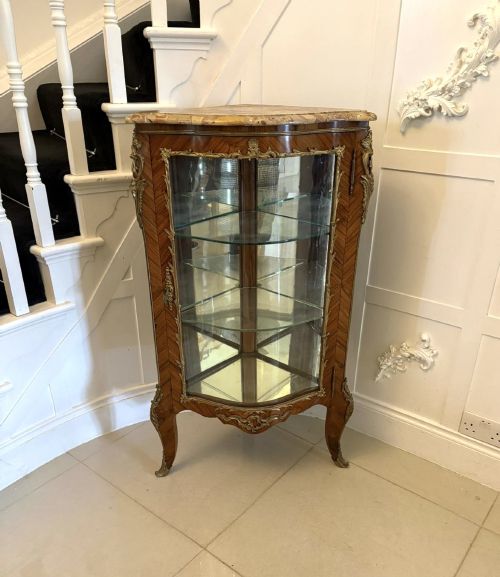
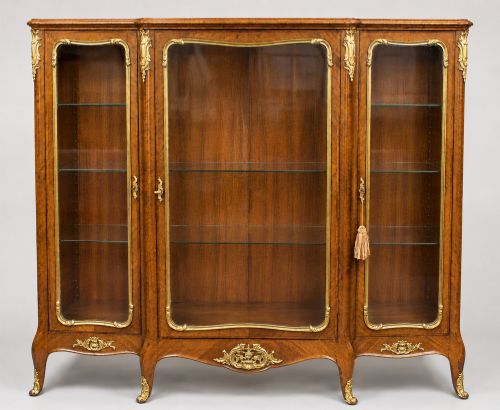
The common versions on this page adopt serpentine fronts, corner configurations, and freestanding shapes. Makers combine glass panels with polished timber carcases to let light reach objects from multiple angles.
Materials and Construction
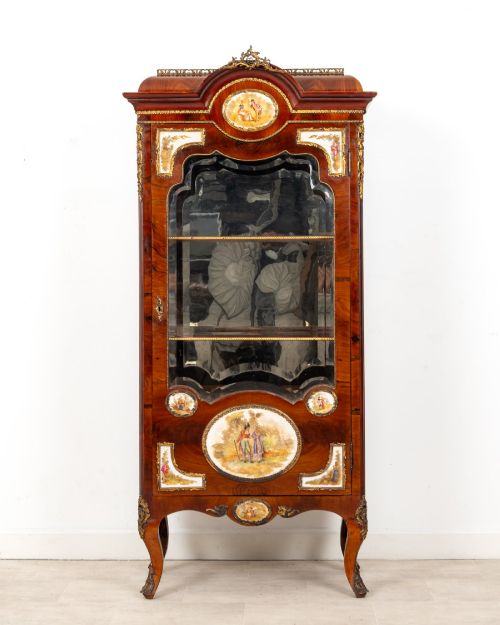
Cabinetmakers construct the carcases from timbers such as kingwood, mahogany, walnut, and rosewood, frequently applying marquetry or parquetry veneers in geometric and floral patterns. Artisans mount cast ormolu, also known as gilt bronze, along the edges, feet, and shoulders to accentuate the curved lines.
Many surfaces incorporate painted decorative panels in the Vernis Martin technique, while others feature inset porcelain plaques or marble tops. Glass is fitted to doors and sides to enclose the interior shelving.
Several cabinets come with serpentine fronts so curvy they practically dance across the floor.
Assessing Quality
Quality rests on the crispness of the ormolu mounts and the depth of the timber figuring. Finer examples display hand-chased bronze work with sharp detail rather than flat, mass-produced metal fittings.
The joinery of serpentine curves and the precision of the parquetry inlay distinguish standard production from exceptional cabinet work. Integrated painted panels and intact marble tops further elevate the standard of the piece.
François Linke·Gouffel
The French Rococo Display Vitrine Glossary
- Ormolu
- Gilded bronze used for decorative mounts and framing. It provides metallic contrast against dark or figured timber surfaces.
- Vernis Martin
- A simulated Japanese lacquer technique developed in France, using translucent varnishes over painted decorations. It appears on cabinet panels and doors.
- Serpentine
- A shape featuring a curved front with a convex centre flanked by concave ends. This contour defines many rococo revival cabinet designs.
- Bijouterie table
- A glass-topped display table intended for jewellery and small valuables. These pieces stand on slender cabriole legs.
- Parquetry
- Geometric wood inlay patterns assembled from small veneer blocks. It decorates the exterior surfaces of kingwood and mahogany carcases.
French Rococo Display Vitrine: Frequently Asked Questions
What is a french rococo display vitrine used for?
These cabinets serve to display porcelain, glass, and small decorative items behind glass doors and side panels.
They function as formal display furniture in drawing rooms and reception spaces.
How do I identify the period of a vitrine?
Nineteenth-century pieces often display revival styles referencing the reign of Louis XV, utilising kingwood veneers and ormolu mounts.
Edwardian and later iterations frequently employ lighter mahogany carcases and distinct painted panel work.
Where should I place a corner cabinet?
Corner vitrines fit directly into ninety-degree room angles to utilise vertical space efficiently.
They draw attention to otherwise empty corners while keeping interior items visible.
What is a bijouterie table?
A bijouterie table is a low display case with a glazed top designed for tabletop viewing of small collectibles.
These tables stand on slender legs and feature ormolu mounts around the glass frame.