
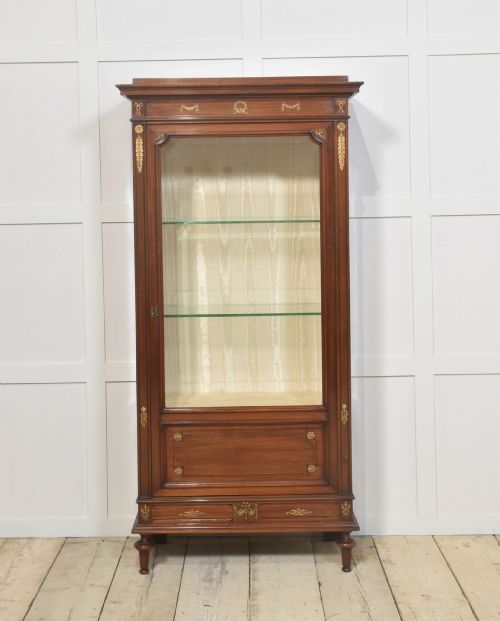


French Style Curio Cabinet
A French style curio cabinet brings continental elegance to any room, offering glazed panels to display treasured objects.
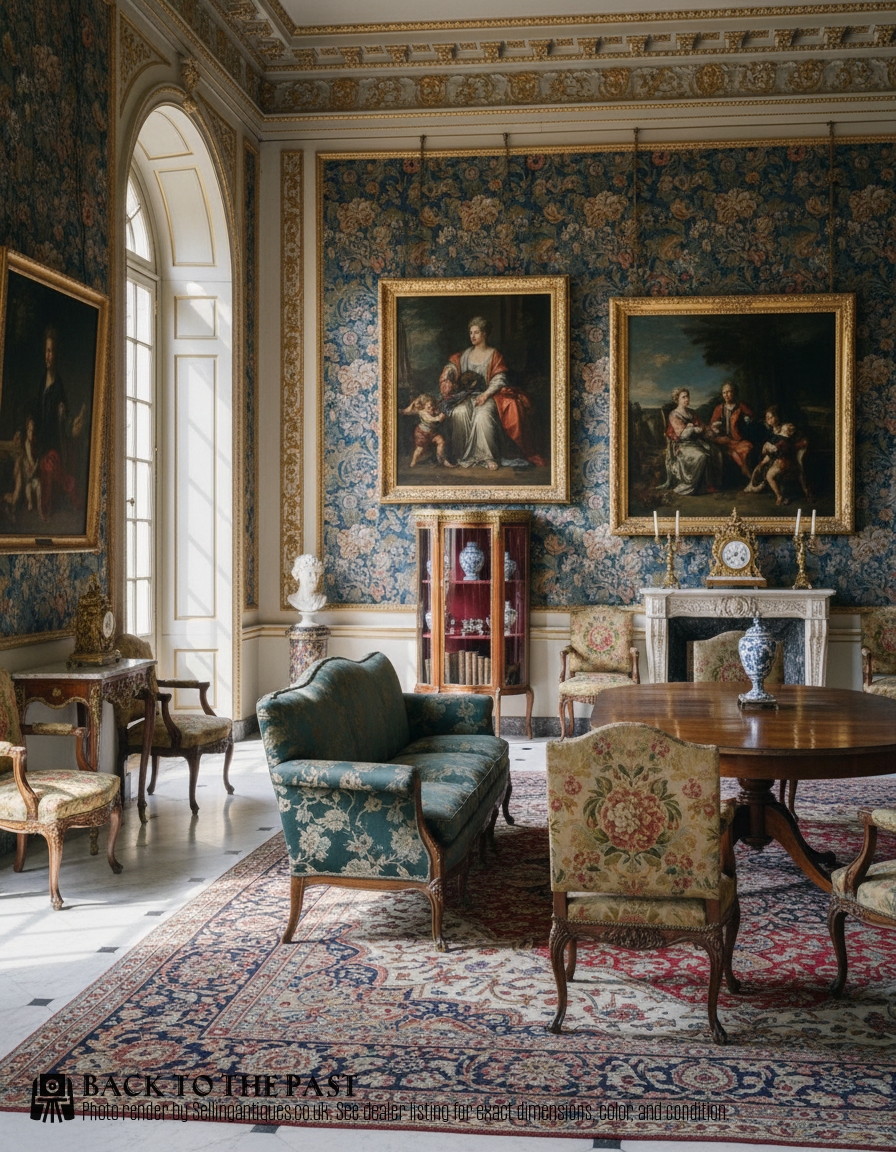
French Style Curio Cabinet
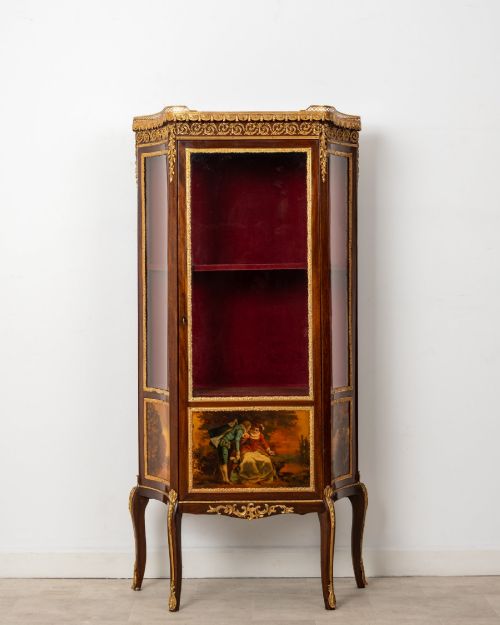
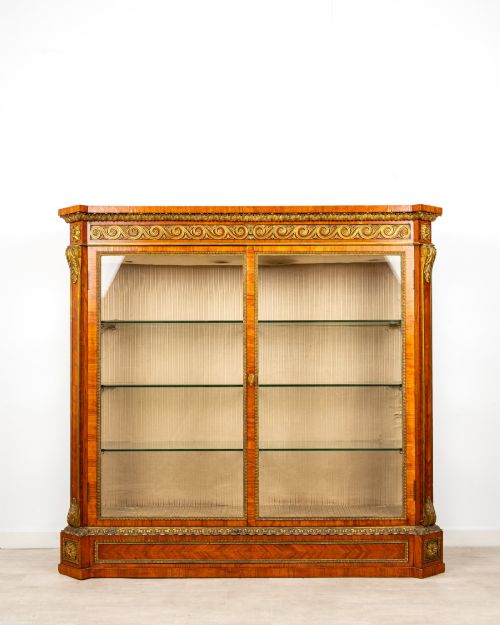
A French style curio cabinet is a glazed display piece designed to showcase porcelain, silver and small collections behind glass panels. These cabinets emerge primarily in 19th-century and Edwardian forms, drawing heavily on Louis XV and Louis XVI revivals.
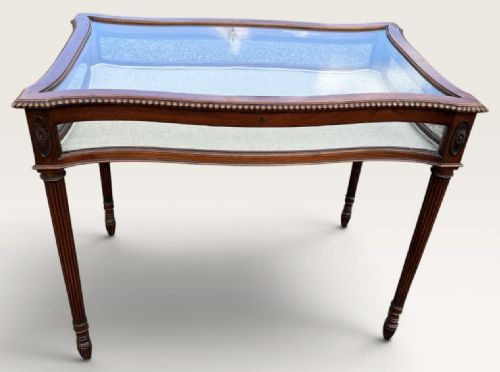
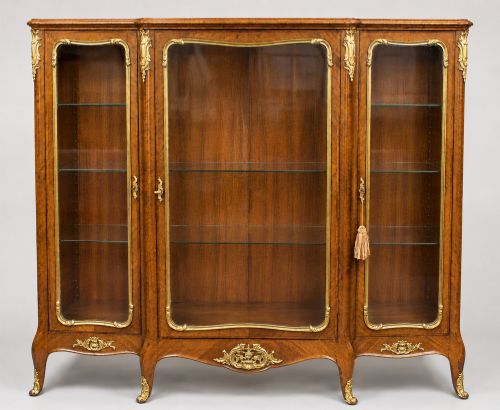
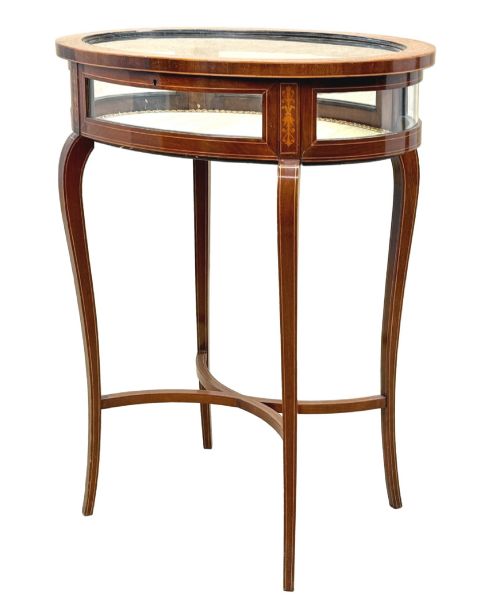
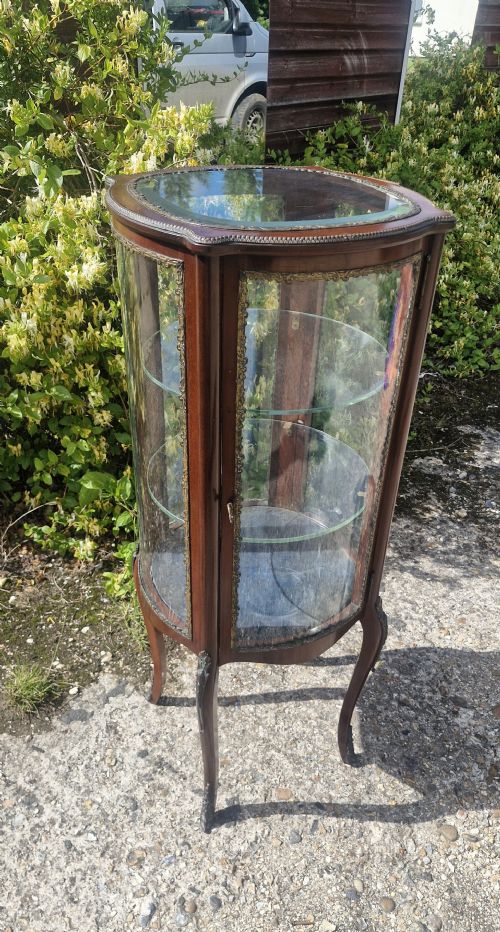
Buyers will most frequently encounter freestanding vitrines and serpentine-fronted cabinets featuring glass on multiple sides. Variants range from tall floor-standing display cabinets to compact table-top bijouterie pieces and wall-hanging vitreens.
Originating largely from French cabinet-making traditions, these pieces incorporate continental shapes like bombé profiles and oval display surfaces. They serve the dual purpose of protecting delicate ornaments whilst offering unobstructed views from various angles.
How They Were Made
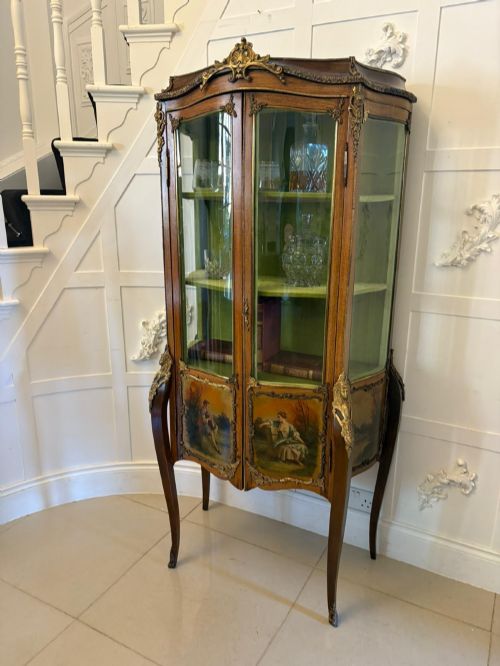
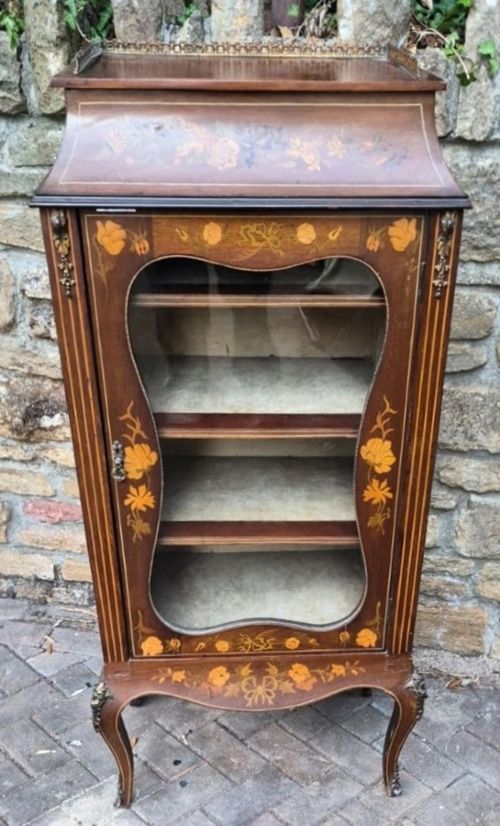
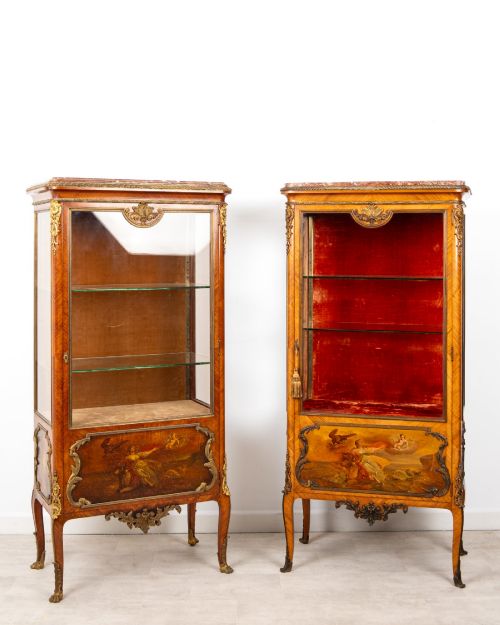
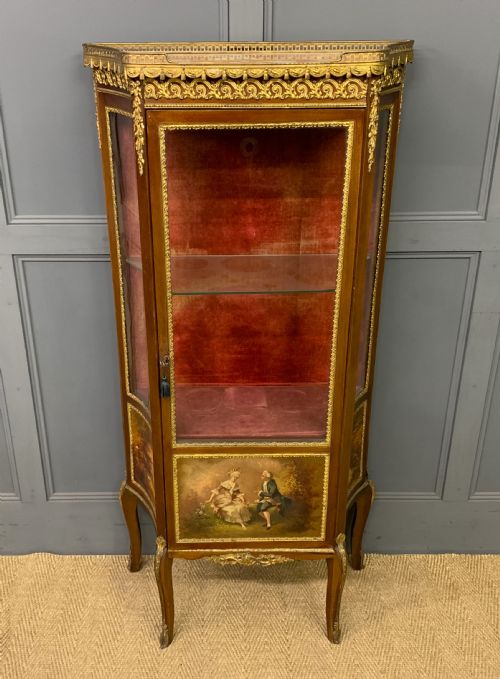
Craftsmen built these cabinets using foundational hardwoods such as mahogany, walnut and kingwood, frequently applying elaborate veneers and marquetry inlay. Cabinets often feature intricate parquetry or painted Vernis Martin panels depicting classical pastoral scenes.
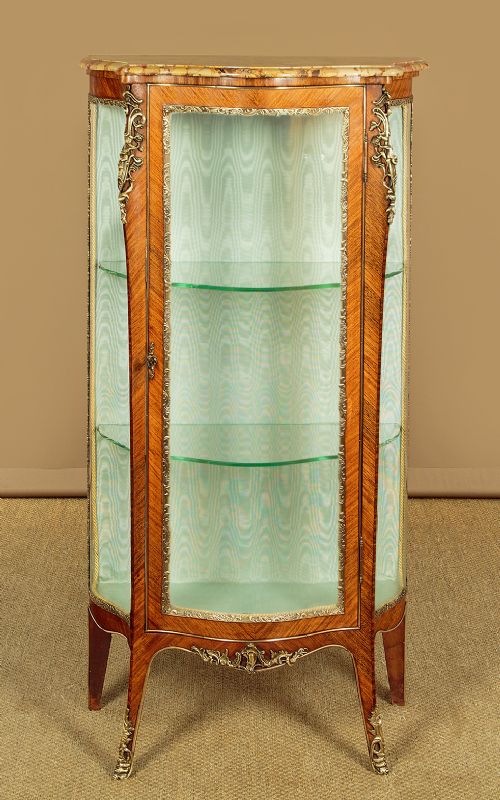
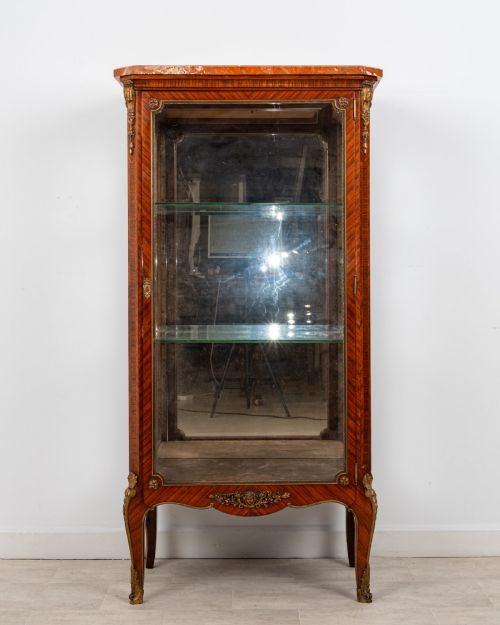
Ormolu and gilt-bronze mounts embellish the structural corners, frames and feet, providing a contrasting metallic sheen against the dark wood. Many examples incorporate shaped marble tops, fitted securely to the upper surface of the cabinet base.
Glazing techniques utilise large glass panes held within slender wooden or gilt-metal astragals to maximise interior visibility. Joinery methods include serpentine shaping and curved glass forming, particularly on Louis XV style and transitional pieces.
Materials recorded across the inventory include kingwood, mahogany, ormolu, marble and fabric-lined interiors.
What Varies in Quality
The sophistication of the bronze or ormolu mounts dictates the upper tier of quality, with chased and gilded mounts showing sharper relief and finer detail than cast substitutes. Hand-painted Vernis Martin panels also separate ordinary production from workshop pieces of high artistic merit.
Timber selection and veneer matching determine the visual depth of the cabinet, particularly in kingwood, rosewood and mahogany surfaces. Precision in the joinery of curved glass doors and serpentine fronts indicates the skill involved in construction.
Attribution to known makers or prominent workshops elevates the standing of a piece through documented provenance and superior finishing. The integration of authentic marble tops and original fabric linings further distinguishes better examples.
François Linke·H. J. Hatfield & Sons·Paul Sormani
The French Style Curio Cabinet Glossary
- Vitrine
- A glass-fronted display cabinet intended for showing delicate objects and porcelain. These pieces often feature glazed sides to permit maximum light entry.
- Bijouterie table
- A glass-topped display table with a shallow compartment for jewellery and small curiosities. They frequently stand on slender cabriole legs.
- Ormolu
- Gilded bronze mounts applied to furniture for decorative effect. The technique involves a mercury-gilding process on cast bronze components.
- Vernis Martin
- A simulated Japanese lacquer technique developed in France, featuring painted pastoral scenes under a clear varnish. It appears frequently on fine 19th-century vitrines.
- Louis XV Revival
- A decorative style inspired by the mid-18th-century French rococo period, characterised by asymmetry and curving lines. Cabinets in this style often display serpentine fronts and cabriole legs.
French Style Curio Cabinet: Frequently Asked Questions
What is a French style curio cabinet used for?
These cabinets serve to display fine porcelain, silver trinkets and small collectibles while protecting them from dust.
The glazed panels and mirrored backs allow light to circulate around the objects, making them fully visible from multiple angles in a drawing room or study.
How do I tell Louis XV and Louis XVI styles apart?
Louis XV style pieces are defined by curving lines, asymmetry, serpentine shapes and exuberant ormolu mounts. They embrace an organic, flowing aesthetic.
Louis XVI style furniture shifts toward neoclassical symmetry, featuring straight fluted legs, rectangular proportions and restrained geometric mounts.
Are marble tops original to these cabinets?
Many 19th-century French vitrines and display cabinets were constructed with fitted marble tops, particularly those influenced by Louis XVI designs. These stone slabs added weight and a refined surface texture.
White or veined marble varieties appear frequently on kingwood and mahogany cabinets from the period.
How do I clean and maintain an antique vitrine?
Dust the exterior wood surfaces regularly with a soft, dry cloth and avoid harsh chemical polishes. Preserve the condition of ormolu mounts by gentle dusting without abrasive cleaners.
Maintain stable room humidity to prevent timber movement and protect the delicate glazed panels during any relocation.