
Glazed Glass Curio Cabinet
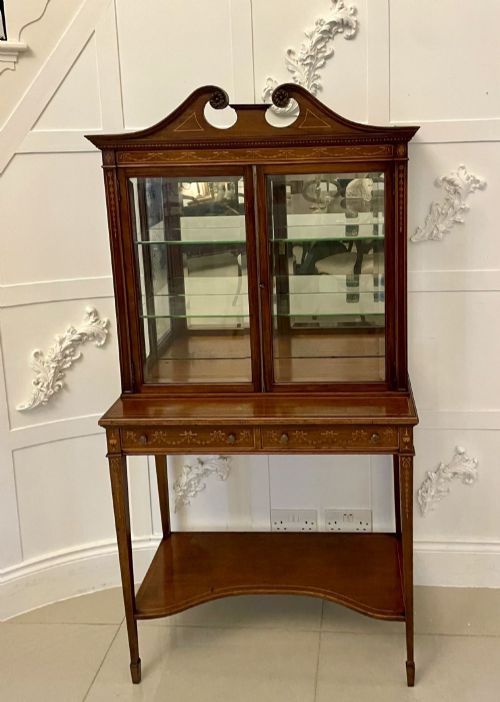
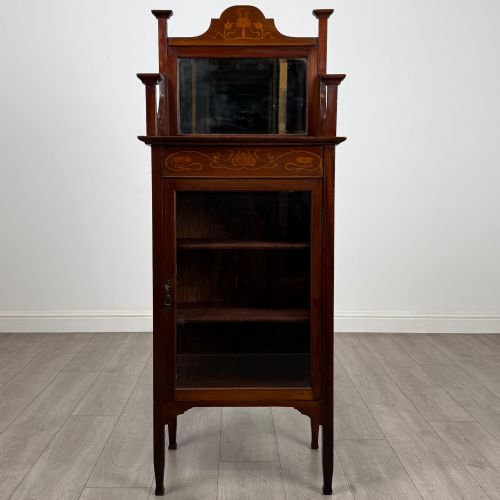
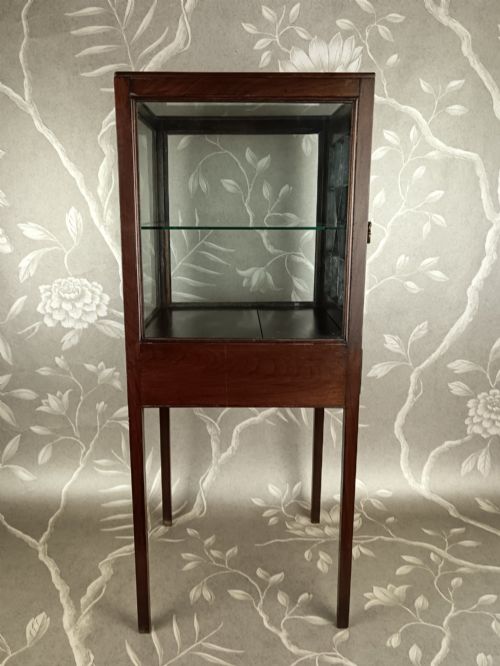
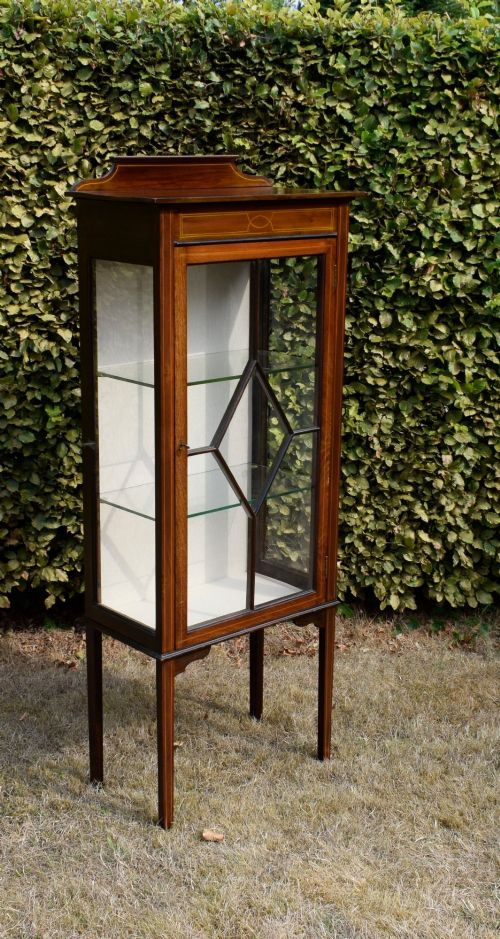
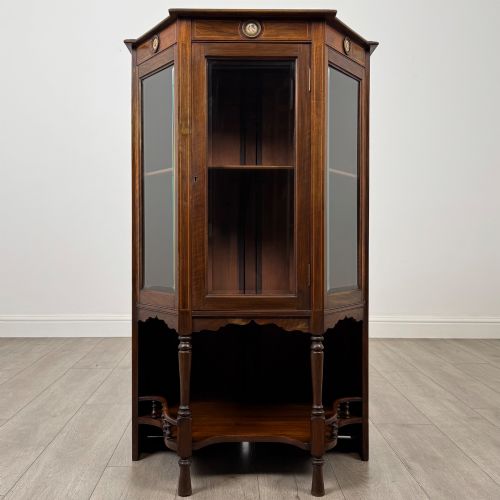
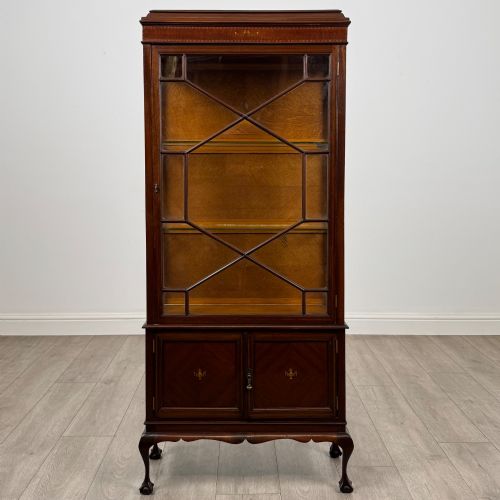
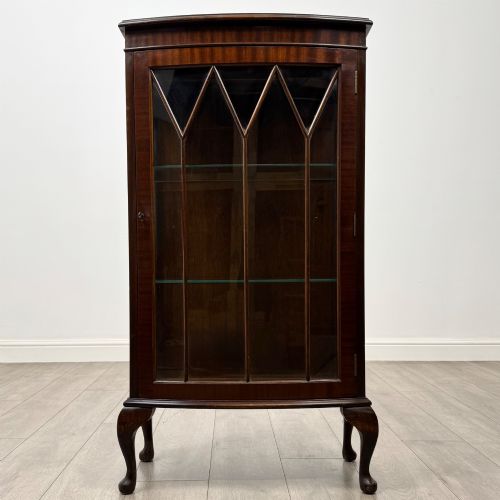
A glazed glass curio cabinet is a timber and glass showcase designed to hold treasured objects, bringing light to delicate collectables.
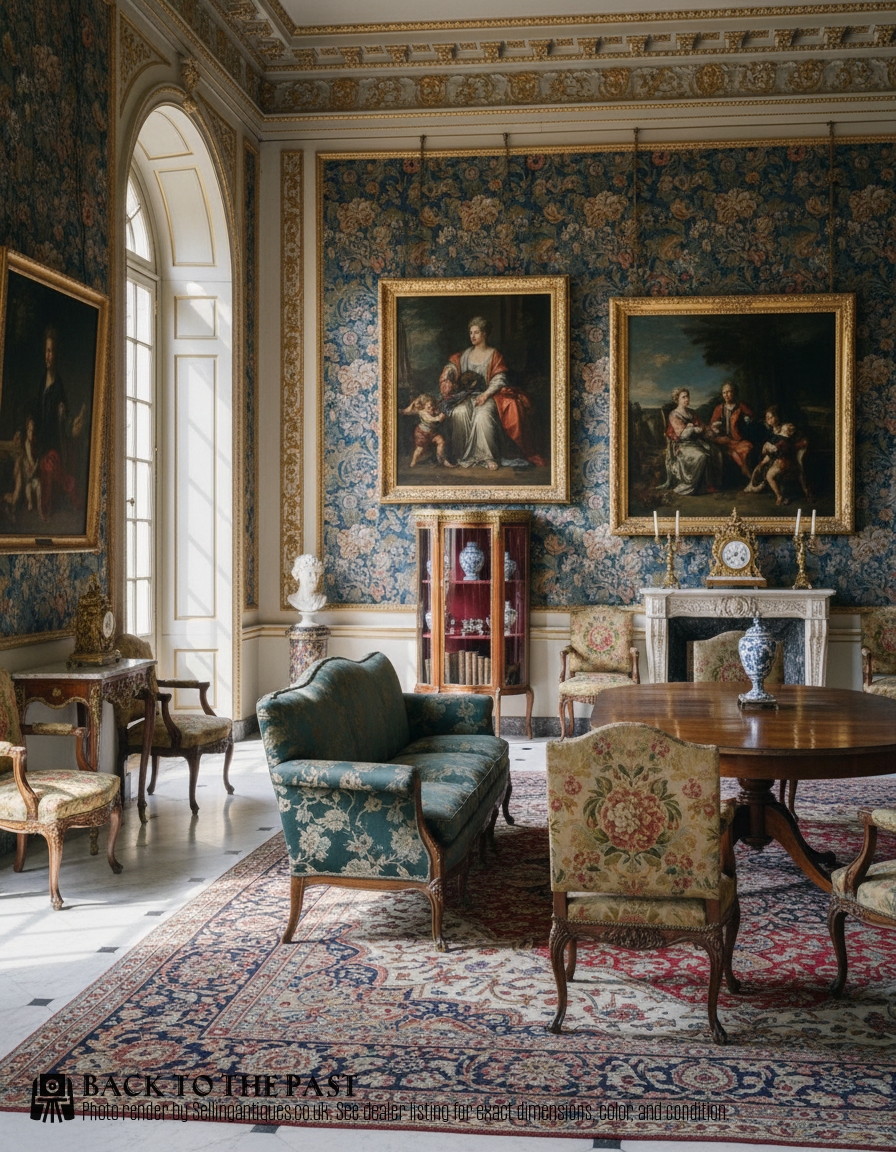
Glazed Glass Curio Cabinet
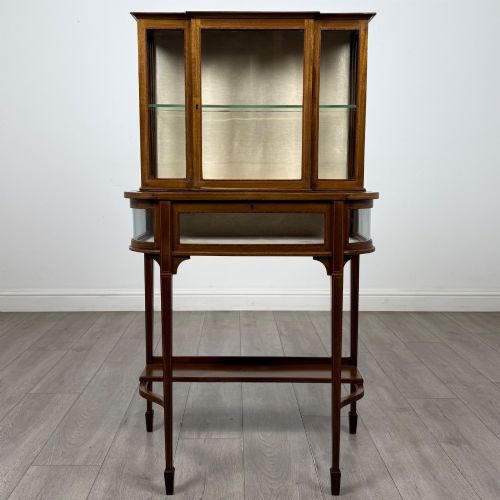
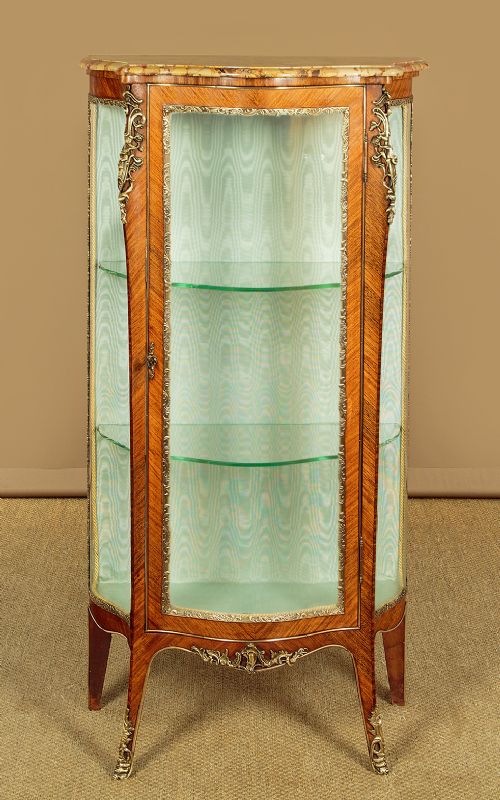
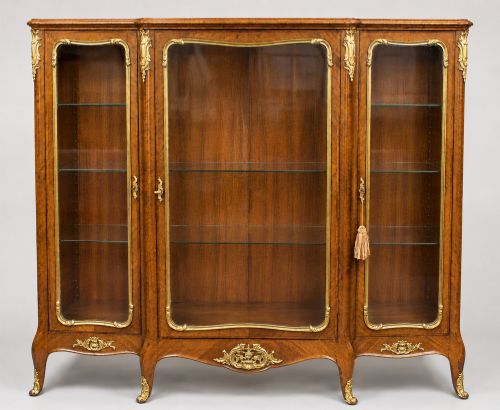
When you search for a glazed glass curio cabinet, you encounter timber display pieces designed to exhibit porcelain, silver, and small curiosities. The pieces on this page span the late nineteenth century into the twentieth century, with Edwardian and Victorian examples forming the core of the selection.
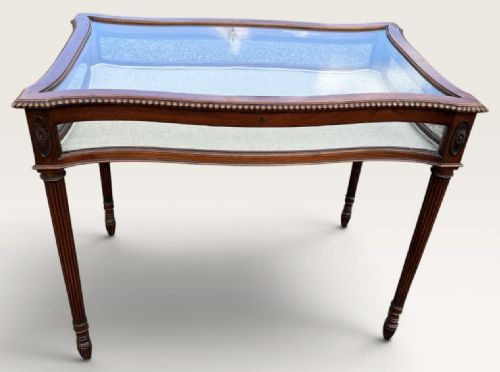
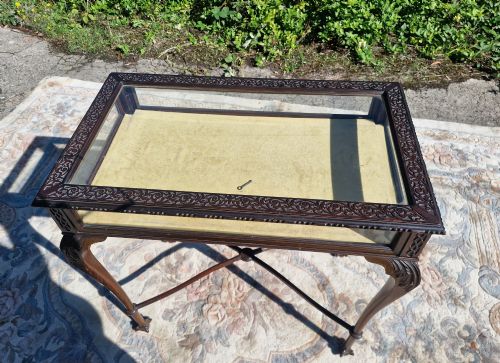
Most entries are upright vitrines or wall and pedestal display cabinets featuring extensive glass panels to maximise visibility. Alongside these vertical cabinets, the selection includes horizontal bijouterie display tables intended for tabletop viewing of small items.
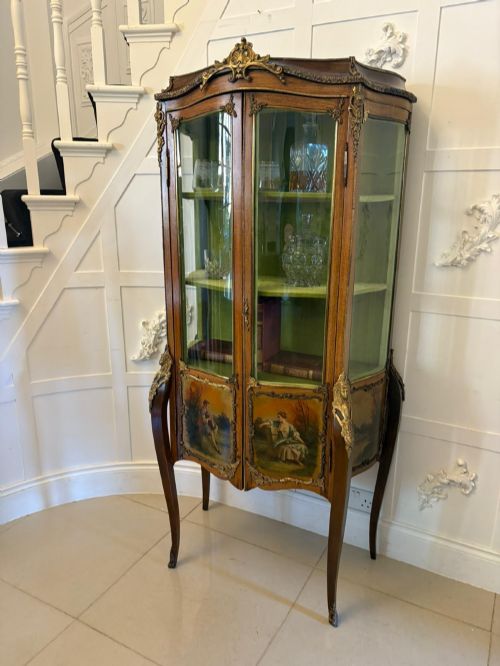
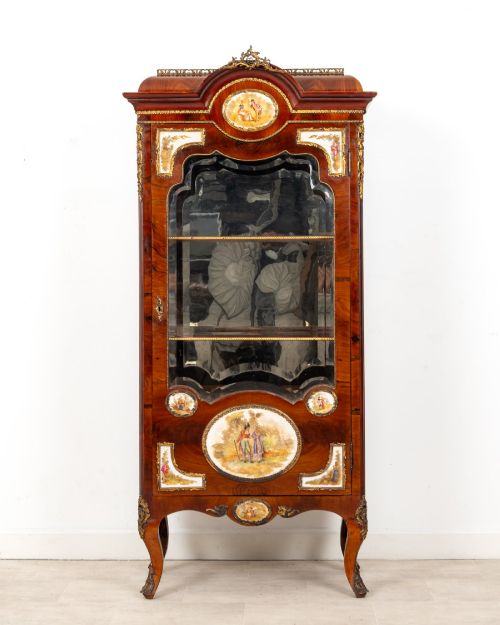
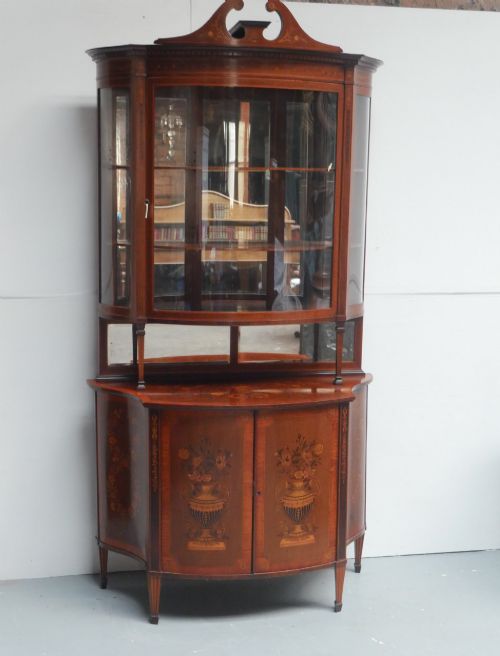
The origins vary between English workshop traditions and French decorative styles, including Louis XV and Louis XVI revivals. You will find standard freestanding cabinets alongside bow-fronted, serpentine, and two-part configurations.
How they were made
Cabinet makers utilised solid and veneered timbers including mahogany, walnut, satinwood, and kingwood. These carcases often received marquetry inlay, floral details, or red lacquer finishes depending on the intended decorative scheme.
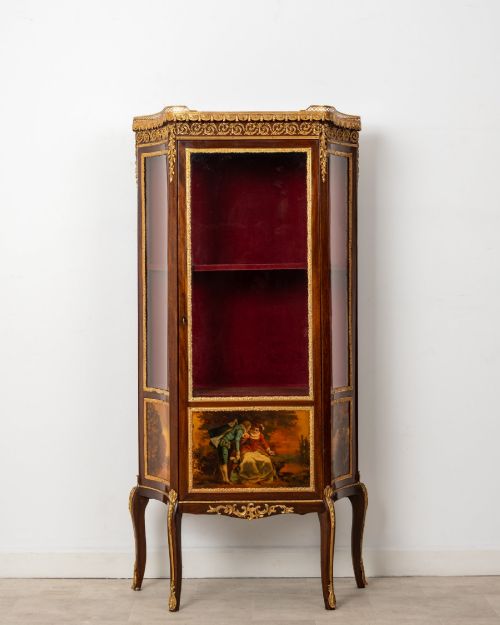
Makers integrated cast or gilt bronze and ormolu mounts to accent the framework, cornices, and feet. Glass panels were glazed into doors and sides, sometimes paired with marble tops on French vitrines.
Listings feature mahogany, walnut, kingwood, and satinwood, frequently paired with glass, brass, marble, and ormolu mounts.
What varies in quality
The distinction between standard cabinet work and exceptional production lies in the handling of timber and mounts. Finer examples display intricate marquetry, finely cast ormolu, and shaped serpentine or bow-front construction rather than plain rectangular carcases.
Construction details such as adjustable glass shelving, original brass hardware, and hand-painted Vernis Martin panels elevate certain cabinets above mass-produced utilitarian counterparts.
Edwards & Roberts·François Linke
The Glazed Glass Curio Cabinet Glossary
- Vitrine
- A glass-fronted cabinet designed for displaying fine porcelain and curiosities. They often feature glazed sides to allow light to reach the interior shelves.
- Bijouterie table
- A low display table with a glazed top and compartment for viewing jewellery and small collectables. These pieces frequently stand on slender legs.
- Vernis Martin
- A simulated Japanese lacquer technique developed in eighteenth-century France and replicated on later display cabinets. It uses layered varnishes to produce glossy painted scenes.
- Ormolu
- Gilded bronze mounts applied to the exterior of furniture for decorative effect. They are typically cast and chased before being fixed to the timber carcase.
- Marquetry
- Inlaid patterns formed by fitting contrasting veneers into a prepared wooden ground. Cabinet makers utilise floral and geometric motifs to ornament doors and friezes.
Glazed Glass Curio Cabinet: Frequently Asked Questions
What is a glazed glass curio cabinet used for?
These cabinets were historically manufactured to protect and display fragile ornaments, porcelain figures, and miniatures. The glass panels kept dust away while permitting light to illuminate the collection inside.
Today, they serve the same function in domestic interiors. They allow collectors to curate and present small objects safely within a room.
How do I distinguish Edwardian cabinets from Victorian ones?
Victorian cabinets often feature heavier carved mahogany or walnut timber with darker finishes and ornate Victorian styling. They tend to feel substantial and formal.
Edwardian pieces generally lean towards lighter satinwood or mahogany with delicate marquetry inlay and Sheraton revival influences. The overall visual weight is frequently reduced.
Where should I place a bijouterie table?
Bijouterie tables require a position where natural light can pass through the glazed top to illuminate the interior display. They function effectively as centrepieces or beside seating areas.
Because these tables have glass surfaces, they need placement away from heavy traffic areas to prevent accidental impact.
What are ormolu mounts?
Ormolu mounts are decorative gilded bronze ornaments attached to the corners, feet, and frames of French-style vitrines. They provide visual contrast against dark woods like kingwood and mahogany.
These mounts are cast and then finished by hand to create crisp surface details that catch the light.