




Vintage Serpentine Vitrine
These vintage serpentine vitrine pieces offer glass display space with curved fronts, built to showcase precious objects.
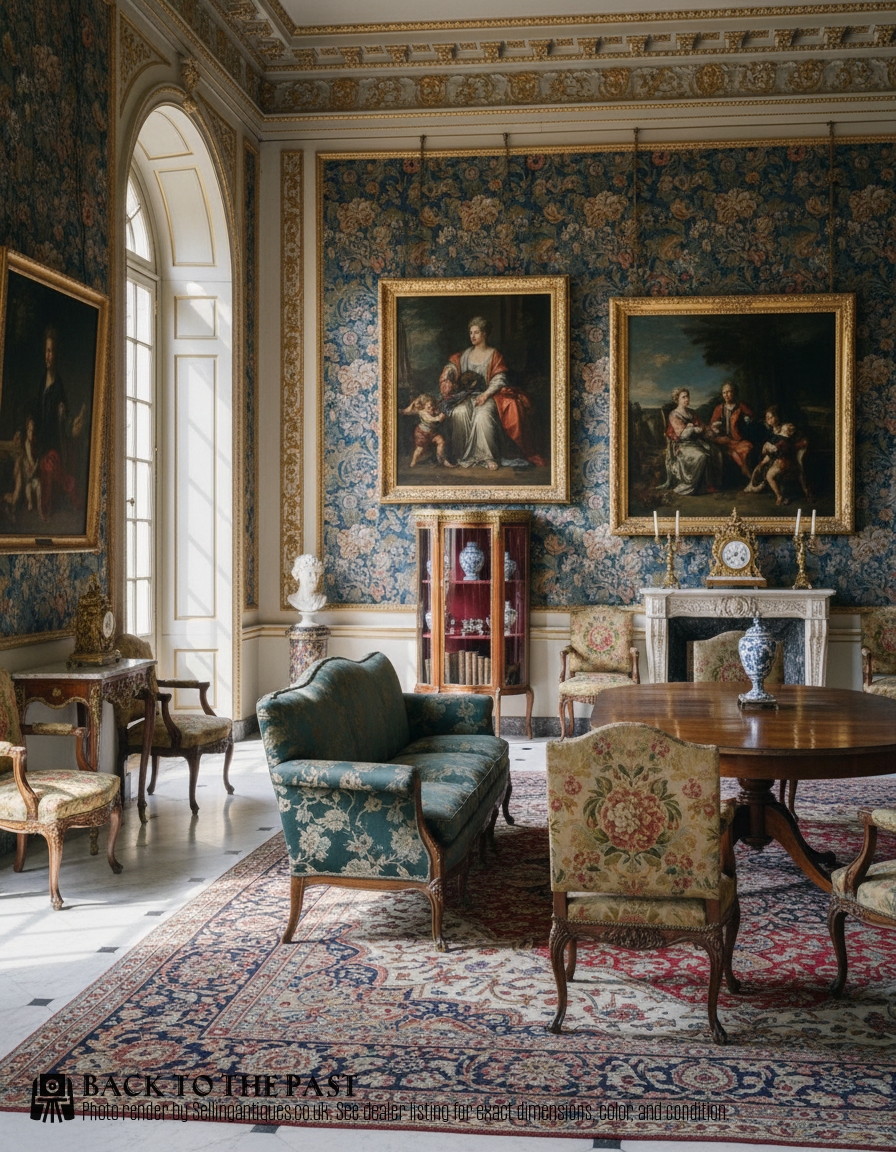
Vintage Serpentine Vitrine
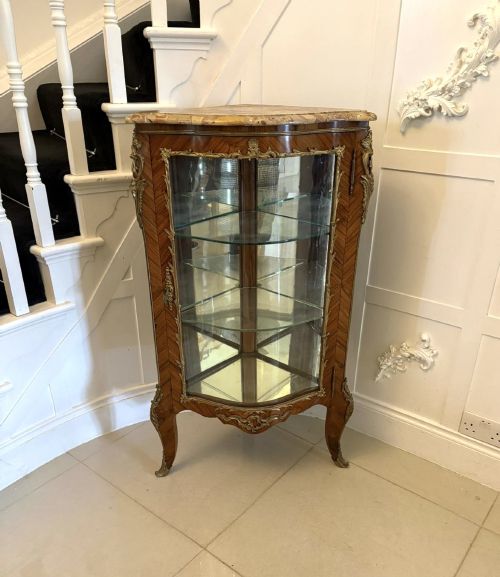
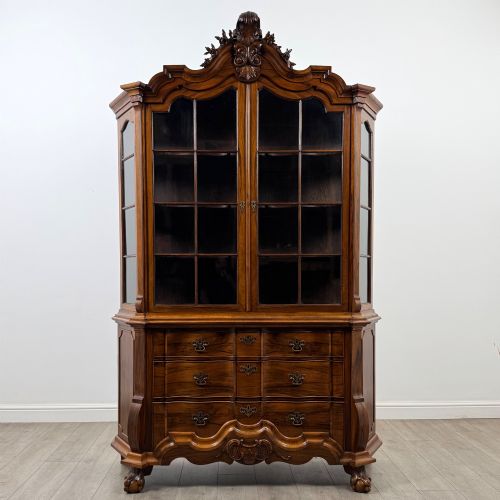
A vintage serpentine vitrine combines a glass front for display with a distinctive undulating curved shape. These cabinets appear across periods ranging from Victorian to Edwardian and through revival styles such as Louis XV and Chippendale.
The forms span standing corner cabinets, double height cupboards, and distinct vitrine display cabinets. Mahogany, kingwood, and satinwood form the primary carcass woods, often paired with marble tops and glazed doors.
Materials and construction methods
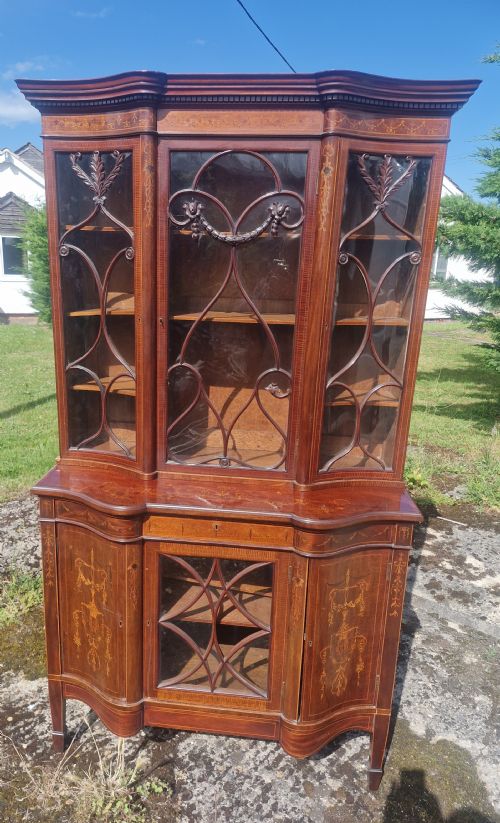
Cabinet makers utilised mahogany, kingwood, walnut, and satinwood, applying fruitwood marquetry and inlay across curved surfaces. The undulating serpentine shape required careful shaping of wooden panels to achieve the characteristic front profile.
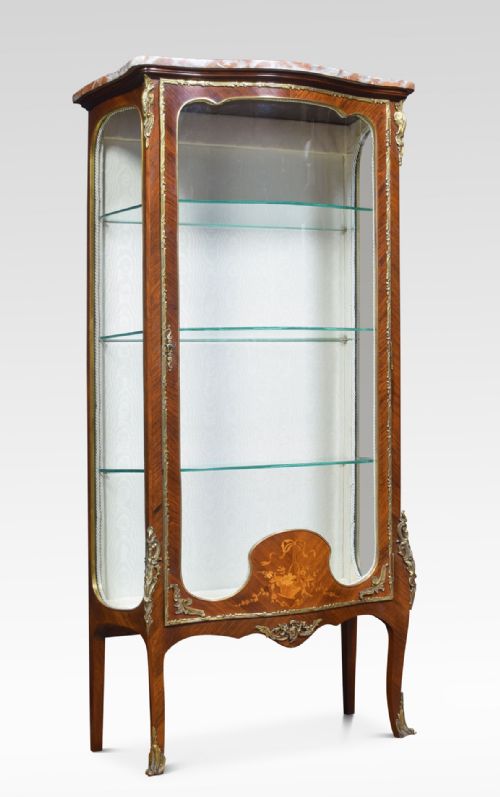
Mounts in ormolu and brass accent the corners and door edges, while glass panels fit into glazed doors and side panels to enclose the display interior. Marble tops frequently complete the upper surface of nineteenth century examples.
Cabinets switch gracefully from straight corners to undulating waves just to keep your porcelain guessing.
Quality distinctions in design
The sophistication of the marquetry and the precision of the serpentine curve distinguish finer examples from simpler production. Elaborate ormolu mounts and integrated marble tops mark out superior pieces.
Cabinet proportions and timber selection dictate the overall standing of an individual vitrine. Rich figuring in kingwood or satinwood elevates the visual presence of the cabinet.
Edwards And Roberts
The Vintage Serpentine Vitrine Glossary
- Serpentine
- A curved cabinet front that undulates outward in the centre and inward at the sides, creating a wave-like profile. This shape demands high levels of cabinet-making skill.
- Vitrine
- A glass-fronted display cabinet designed to hold and exhibit porcelain, silver, or curiosities. The term originates from the French word for glass.
- Ormolu
- Gilded bronze mounts applied to furniture for decoration. These metal details frame doors and corners on French and revival cabinets.
- Marquetry
- Decorative patterns formed from different coloured wood veneers applied to a carcass. Floral and scroll motifs frequently appear on these panels.
- Kingwood
- A dense, heavily figured exotic timber utilised in fine cabinet-making. It provides rich brown and dark tones for nineteenth-century revival pieces.
Vintage Serpentine Vitrine: Frequently Asked Questions
What is a serpentine vitrine?
A serpentine vitrine is a display cabinet featuring a curved, wave-like front profile and glazed panels for showing items.
These pieces combine storage with visibility, often standing on slender legs or corner bases.
How do I date a cabinet?
Dating relies on timber choices, revival styles, and construction traits recorded across Victorian and Edwardian periods.
Details like ormolu mounts and marquetry inlay provide further clues to the manufacturing decade.
Where were these cabinets placed?
These cabinets stood in reception rooms and parlours to display prized porcelain and collectibles.
Corner versions utilised neglected angles in smaller rooms while maintaining display space.
What woods were used?
Cabinet makers built these pieces using mahogany, kingwood, satinwood, walnut, and fruitwood.
Exotic veneers formed decorative marquetry panels across the doors and sides.