

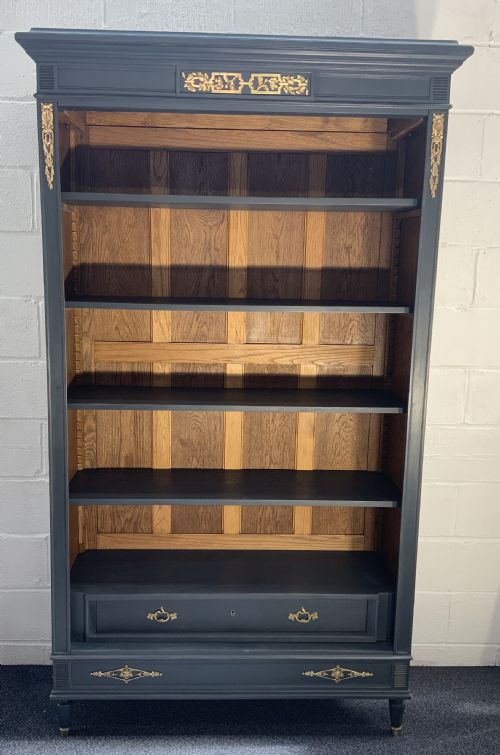
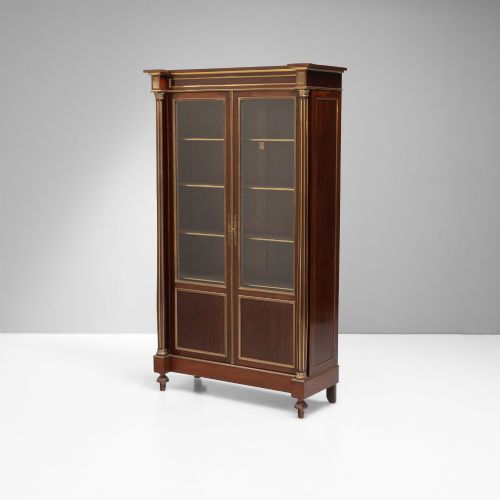


French Neoclassical Display Cabinet
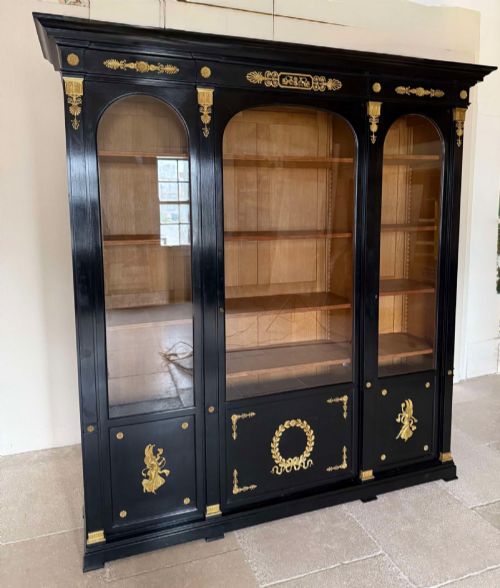
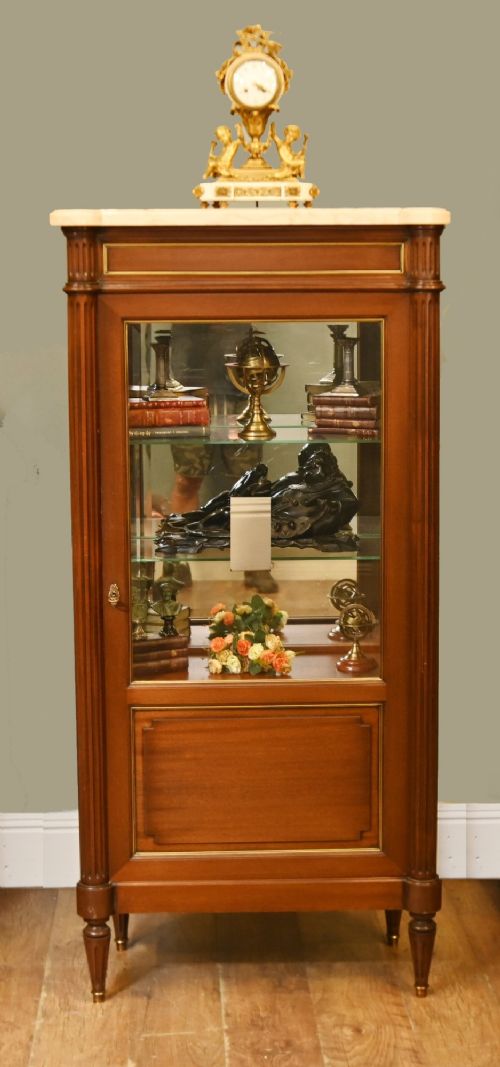
These french neoclassical display cabinet pieces combine glass and timber with classical restraint to show off precious objects.
French Neoclassical Display Cabinet
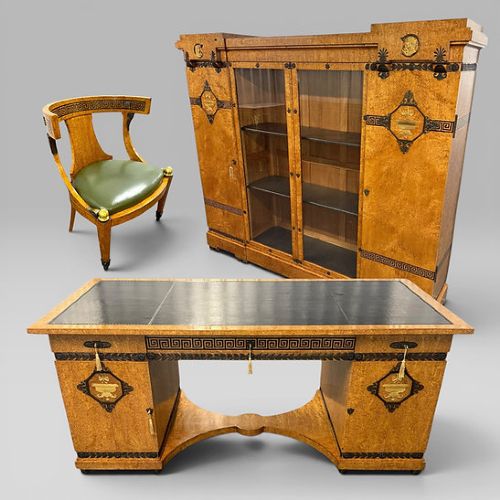
A french neoclassical display cabinet brings architectural order and formal symmetry into a room, serving primarily to protect and exhibit curated objects. Pieces on this page span the nineteenth century through to the mid twentieth century, drawing on Louis XVI, Directoire and Empire traditions.
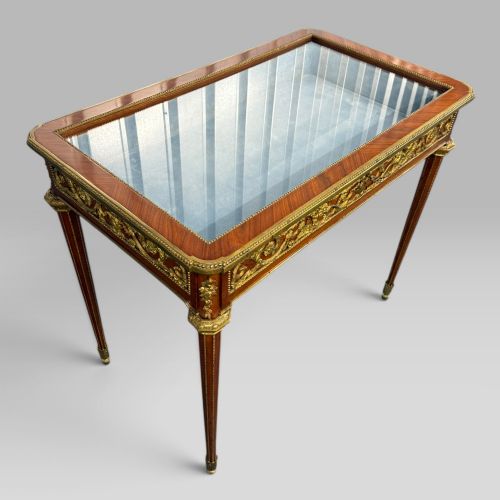
The forms vary from tall glass-fronted vitrines and bookcases to low bijouterie tables and boudoir cabinets. Mahogany, walnut and satinwood carcasses provide the structural foundation for glazed doors and velvet-lined interior shelving.
Makers working in these historical idioms utilise classical proportions, rectilinear framing and restrained ornamentation rather than exuberant curves. The resulting furniture balances functional storage with formal display.
Construction and Materials
Makers constructed these cabinets using dense timbers such as mahogany, satinwood and walnut, frequently applying veneers over secondary woods to achieve smooth exterior surfaces. Structural joints rely on traditional cabinet-making methods designed to support heavy glass panels and books.
Ormolu mounts, brass embellishments and gilt work provide decorative contrast against the dark or polished wood bodies. Cast bronze elements are chased and secured to corners, friezes and uprights to punctuate the architectural lines.
French Neoclassical Display Cabinet Retail Price Guide 2026
Typical asking prices for french neoclassical display cabinet among the pieces listed under this phrase on Sellingantiques today, from the lower quarter to the upper quarter. They describe what is for sale here now, not the wider market.
Listings span multiple decades, incorporating nineteenth century craftsmanship alongside pieces from the 1930s and 1960s.
Evaluating Quality
Superior examples separate themselves through the crispness of their cast ormolu mounts and the selection of figured wood veneers. Heavy, finely chased bronze hardware indicates a workshop of higher standing.
Proportion and execution define the hierarchy of these pieces, where refined glazing bars and tight joinery separate standard production from exceptional cabinet-making.
François Linke·Mercier Frères·Paul Sormani
The French Neoclassical Display Cabinet Glossary
- Ormolu
- Gilded bronze applied as decorative mounts to furniture. This technique involves amalgamating gold and mercury onto a bronze base.
- Vitrine
- A glass-fronted cabinet designed for displaying porcelain, silver or curiosities. The term derives from the French word for glass.
- Bijouterie table
- A glass-topped display table intended for small jewels and trinkets. These pieces often feature hinged lids and velvet interiors.
- Satinwood
- A durable, lustrous timber with a natural golden sheen. Cabinet-makers prize it for fine veneers and marquetry work.
- Directoire style
- A transitional French design period bridging Louis XVI and Empire styles. It favours sparse classical geometry over ornate flourishes.
French Neoclassical Display Cabinet: Frequently Asked Questions
What is a French neoclassical display cabinet?
It is a glazed cabinet or vitrine influenced by classical Greek and Roman architecture, featuring straight lines, symmetrical proportions and restrained ornamentation.
Such pieces were designed to hold books, porcelain or precious objects while maintaining an orderly aesthetic within a formal room.
How do I tell Empire style from Louis XVI style?
Louis XVI pieces display lighter proportions, fluted columns and delicate neoclassical motifs derived from excavations at Pompeii. Empire style pieces appear heavier and more imposing, incorporating military emblems and bolder ormolu mounts.
Both traditions sit under the broader neoclassical umbrella represented on this page.
Where should I place a vitrine?
A vitrine requires a stable wall space away from direct sunlight to protect interior items and sensitive wood finishes from fading. Placing it in a drawing room or study allows the glass panels and brass mounts to catch ambient light.
Ensure the floor is level so the large glazed doors hang true and close evenly.
What are bijouterie tables used for?
Bijouterie tables serve as waist-high display cases with glazed tops and hinged lids for viewing small collectibles. They were historically placed in boudoirs or salons for inspecting rings, miniatures and medals.
The lined interior cushions the objects while the glass top keeps them free from dust.